

Image 01 Image 03

Trump Immigration Tag

Another day, another judicial intervention trying to prevent Donald Trump from exercising his lawful Executive Branch powers. Of course, that's not the verbiage the court used, but it's a fair characterization of the San Francisco federal district court decision (full embed at bottom of post)(pdf.) in a lawsuit brought by Janet Napolitano on behalf of the California Regents seeking an injunction against Trump's plans to end the DACA program.

President Donald Trump's administration has decided to end special protections given to some El Salvador immigrants who came to America in 2001 after devastating earthquakes. Now, before you get all crazy, I'm seeing outlets bury this important detail: the protections will not end until September 2019. This will give those immigrants plenty of time to work on citizenship and stay in America. It will also give Congress time to work on immigration reform.

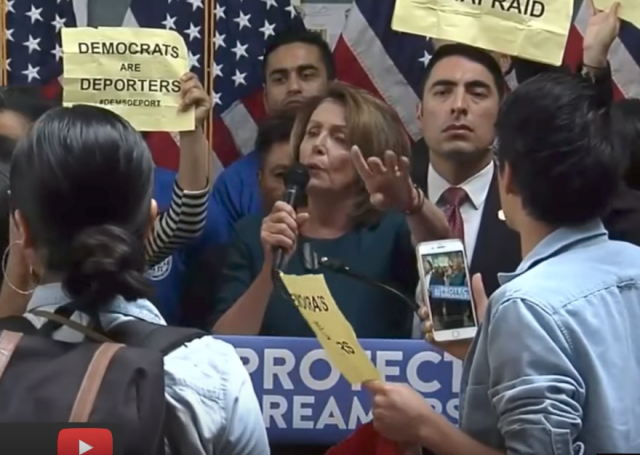
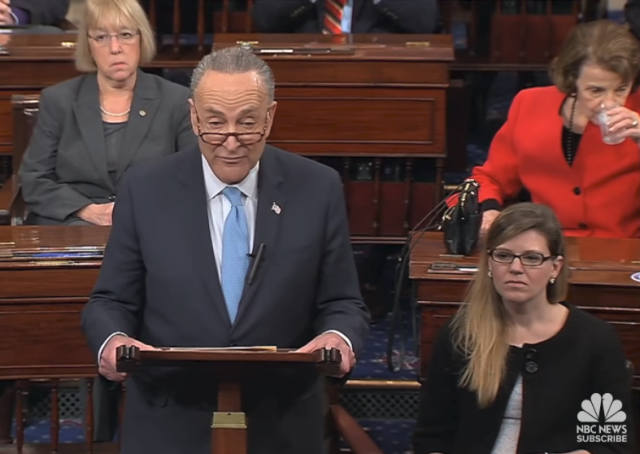
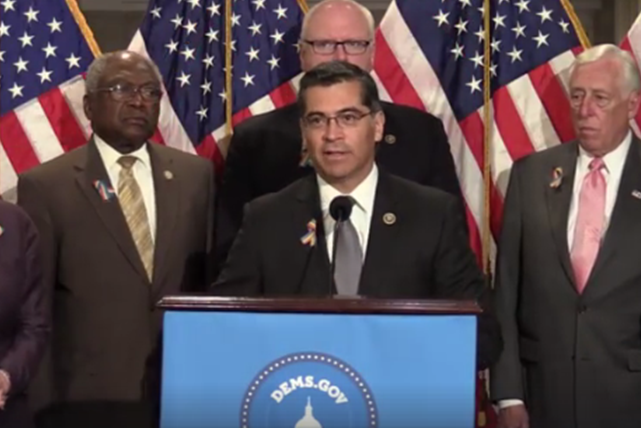
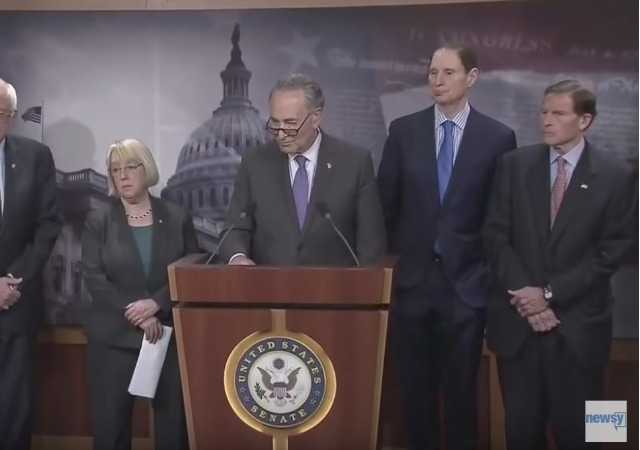
While everyone is gushing over Oprah Winfrey, the Democrats in D.C. can hide the fact that they're holding the spending bill hostage over the Deferred Action for Childhood Arrival (DACA) program. Before Christmas, Congress passed a short term spending bill to keep the government running until January 19. The Democrats have made it clear they want full legalization of DACA recipients while Republicans have mentioned a wall and actual reforms to our immigration system.

The Democrats hope to push through legislation to protect those in the Deferred Action for Childhood Arrivals (DACA) program, but President Donald Trump made it known today that will not happen unless there is funding for a wall and changes to our immigration system.

The U.S. Court of Appeals for the Ninth Circuit has ruled against President Trump's Third Travel Order on virtually the same grounds it blocked a March iteration of the order. A copy of the Opinion (pdf.) is embedded at the bottom of this post.

When Donald Trump announced a phased-out end to Obama's illegal DACA program, which made an executive branch end round around the Constitution and Congress, Trump made clear he wanted Congress to pass legislation dealing with the problem.

It doesn't look like Congress is going to act on Obama's unconstitutional Deferred Action for Childhood Arrivals (DACA) any time soon.  Listless Congressional Democrats, pressured by their base and DACA advocates, are reportedly mulling over attaching it to a budget bill in the hopes that they can pull enough GOP support to squeeze it through. The idea is that such a move will force the hand of Republicans who want to avoid a government shutdown over DACA.  The CBO released a report last Friday that estimated DACA passage would cost American taxpayers $25.9 billion over the next decade.

President Trump has kicked Obama's unconstitutional Deferred Action for Childhood Arrivals (DACA) back to Congress and stated that he will extend his initial six month deadline if Congress fails to act. While there doesn't appear to be much (any?) movement on this in either the House or the Senate, the Congressional Budget Office (CBO) released a report that legalizing Dreamers will cost U. S. taxpayers $25.9 billion over the next 10 years.

We've been covering the on-going DACA saga here at LI; President Trump tossed Obama's unconstitutional Deferred Action for Childhood Arrivals (DACA) back to Congress, initially giving them six months to get a bill to his desk that would enshrine some version of DACA into law. The president later announced that he would grant Congress an extension if they weren't able to get their act together within the original time frame.  Trump, in other words, will gladly sign a DACA bill should one make its way to his desk.

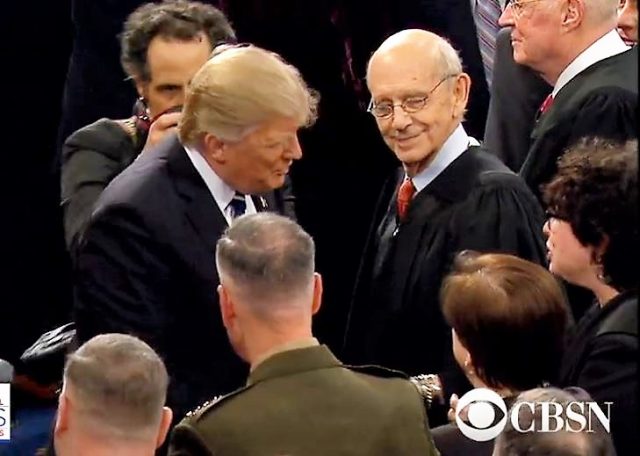
Friday night, the Supreme Court issued an Order (pdf.) staying a lower court ruling requiring the government to turn over thousands of documents related to the termination of DACA. The vote was 5 to 4, with Justice Breyer writing a 10-page dissent joined by Ginsburg, Sotomayor and Kagan.

The full Order and Dissent are embedded at the bottom of this post.

After clearly stating that as president he had no power to change immigration law, then-president Obama went ahead in 2012 with Deferred Action for Childhood Arrivals (DACA).  Obama himself referred to DACA as his "action to change the law," a power vested in the legislature, not the executive. In 2010, Obama told an audience of amnesty proponents that he's "not king" and "can't do these things just by myself."  In 2011, he explained further, "that he couldn't "just bypass Congress and change the (immigration) law myself. ... That's not how a democracy works."  And in 2012, he did it anyway. Then-presidential candidate Trump campaigned on ending DACA, and in September, he announced his decision to end DACA after giving Congress six months to pass it into law.  Passing DACA or some equivalent into law is perfectly within the purview of Congress.