

Image 01 Image 03

Obamacare Tag

The Congressional Budget Office (CBO) has released its analysis of the House Republican Obamacare replacement bill, which estimates that millions will lose coverage, but will bring down costs. The report has many people freaked out, with some saying its proof that repealing Obamacare will harm Americans. Most major media outlets and Democrats have failed to mention that many of those would "lose" coverage will do so because they choose to opt out. The AHCA repeals one of Obamacare's worst features -- the individual mandate.
"Repeal and replace" has been the GOP mantra since the Affordable Care Act, aka ObamaCare, was signed into law in 2010. Riding the wave of horror and outrage that inspired millions of Americans to rise up and rally, attend town halls, and become involved in the election process, the GOP has enjoyed enormous gains not only at the federal but at the state and local level across the nation.  They all understand how important this moment is to the Republican party, and they all comprehend that they have one chance to get this right. What is not clear is how much they get about the need for substantive changes to those parts of ObamaCare they can tackle with only a simple majority in the Senate.  As the prof noted, they are somewhat restricted in what they can do unilaterally; without a supermajority in the Senate, there are parts of ObamaCare that cannot be "fixed" via budget reconciliation.

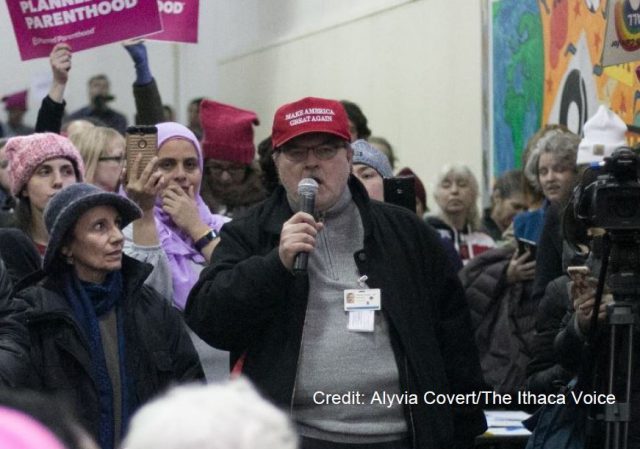
I don't know Dr. Tom Taylor. But I understand his situation when he decided to attend Republican Congressman Tom Reed's town hall this morning in Ithaca, NY, where I work at Cornell Law School. In case you were unaware, Ithaca is like Berkeley, California, only smaller. Ithaca is in the NY-23 District. Reed has won in landslides the last two elections against Democratic challengers backed by national money. While no one is a sure thing, he is in a very strong position in this mostly conservative district. Ithaca is an anomaly in the District. In fact, Reed twice ran campaigns lambasting "Extreme Ithaca Liberals." This ad against Martha Robertson in 2014 irked many Ithaca progressives:

I haven't had a chance to fully digest the House health care bill.  I'm just beginning the process of learning more. Trump supports the bill broadly, subject to some negotiations. And is promising a round 2 and round 3 of more market-oriented reforms. It appears that much of this procedure is driven by the desire to repeal Obamacare as a technical matter by the means through which it was passed -- the "reconciliation" process. That avoids the possibility of a Senate filibuster by Democrats, but also limits what can be done. I've seen many of the statements rejecting the bill, even if modified somewhat, from the conservative side (I've tuned out what Democrats are complaining about). The overall point, as I take it, is that the House bill institutionalizes the key concept of Obamacare - that the federal government not markets will drive health care.

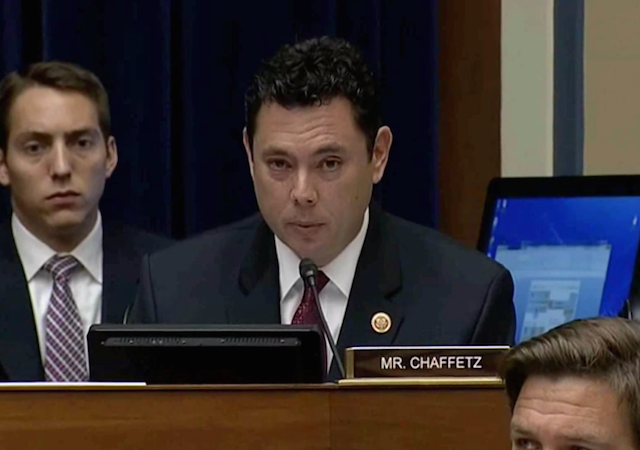
Outrage everywhere because House Oversight Committee Chairman Jason Chaffetz (R-UT) had the nerve to tell people they should prioritize their budget. On CNN, he spoke about healthcare with Alisyn Camerota:
"Well, we're getting rid of the individual mandate. We're getting rid of those things that people said that they don't want," Chaffetz replied. "Americans have choices, and they've got to make a choice. So rather than getting that new iPhone that they just love and want to go spend hundreds of dollars on that, maybe they should invest in their own health care.

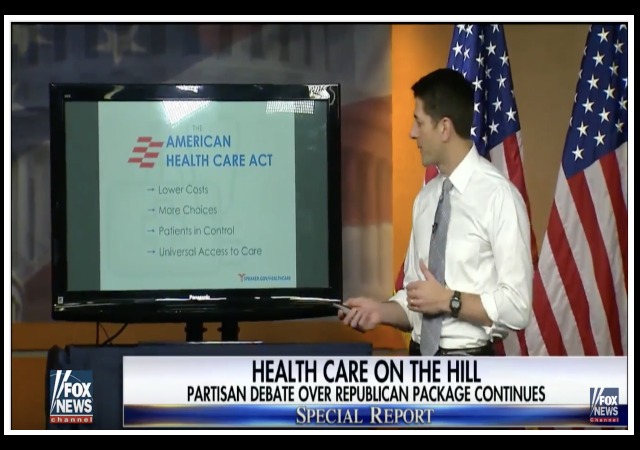
Monday evening, House Republicans finally unveiled eight years of campaign promises in the making, The American Health Care Act. Reviews are mixed but predictable -- Democrats, hair ablaze, have morphed into screaming banshees claiming all the children will be health insurance-less.* Meanwhile, most Republicans are calling the AHCA Obamacare-lite. What I can say is this -- there better be more "replace" in the legislative pipeline if Congressional Republicans plan to use this bill as proof of the long-awaited "repeal and replace" promise. Because as it stands now:

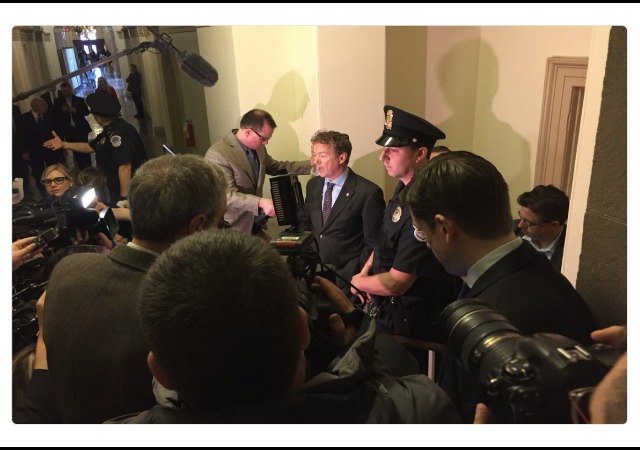
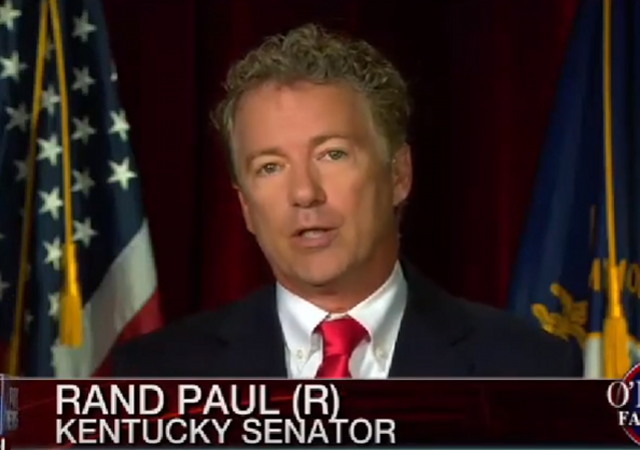
Sen. Rand Paul (R-KY) wanted to view the House GOP Obamacare replacement bill, but could not gain access to it from a secure room. This did not please the senator, who wants to keep everything transparent:
“If you recall where Obamacare was passed in 2009, 2010, Nancy Pelosi said we’ll know what’s in it after we pass it. The Republican Party shouldn’t act in the same way," Paul said in a circus-like atmosphere outside the offices of House leaders. “This is being presented as if it were a national secret, as it if it were a plot to invade another country. … That's wrong. It should be done openly in the public. And conservatives who have objections that don't want Obamacare-lite should be able to see the bill."

Democrats and supporters of Obamacare have tried using scare tactics to keep the law in place, claiming without the socialized health care plan people will die. However, a study by the Manhattan Institute has shown that Obamacare has saved zero people since it went into effect:
Certainly, there are individuals who have benefited from various of its provisions. But attempts to claim broader effects on public health or thousands of lives saved rely upon extrapolation from past studies that focus on the value of private health insurance.

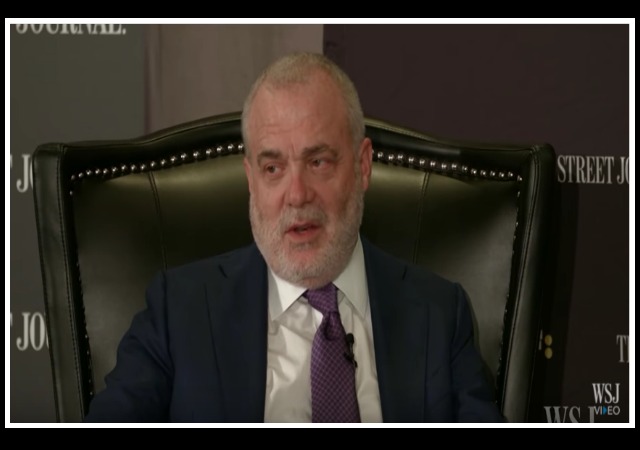
Aetna CEO Mark Bertolini continues his criticism of Obamacare as more health insurance agencies quit Obamacare or decide to scale back even more. The law has caused premiums to climb while healthy individuals opt out of the program altogether. Because of this, Bertolini claims that Obamacare "is in a death spiral."

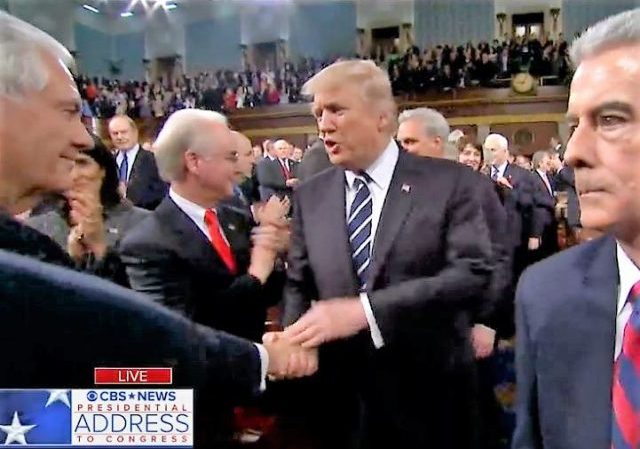
From the time it passed with zero Republican support, GOP politicians have promised to repeal Obamacare. There were numerous House votes to repeal Obamacare while President Obama was still in office, almost all of which were symbolic. No way would President Obama sign off on a bill repealing his hallmark legislation. President Trump also promised repeal and replacement of Obamacare, and that it would be done quickly. But quickly is relative. In a pre-Super Bowl interview with Fox News' Bill O'Reilly Sunday, President Trump said it could take a year to repeal Obamacare.

Who knows? It seems to change every single week. Senator Orrin Hatch (R-UT) and Sen. Lamar Alexander (R-TN) have now said that they would settle to repair Obamacare instead of a full repeal:
And Hatch, chairman of the Senate Finance Committee — another panel with a crucial role in the effort to repeal the ACA — said Thursday that he “could stand either” repealing or repairing the law. “I’m saying I’m open to anything. Anything that will improve the system, I’m for,” he said.

Sen. Rand Paul (R-KY) has delivered his plan to replace Obamacare. The GOP wants to repeal the law as soon as possible, but Paul has urged the party to wait until they have a proper replacement plan in place to activate. He also noted that President Donald Trump and House Speaker Paul Ryan (R-WI) agree with him. The Hill reported:
Paul’s plan includes a tax credit of up to $5,000 per person to use as part of a Health Savings Account to pay for medical care. That tax credit appears to be larger than those offered in other Republican healthcare plans.

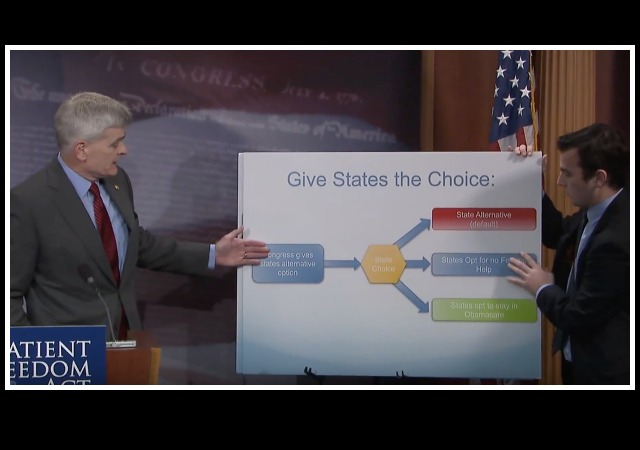
GOP Senators Bill Cassidy (LA) and Susan Collins (ME) unveiled one possible replacement for Obamacare called the Patient Freedom Act. This plan would leave the majority of the power to the states, letting each one decide "whether the want to keep ObamaCare." Fox News reported:
“We recognize that our bill is not perfect,” said Maine Sen. Susan Collins, who introduced the 2017 Patient Freedom Act with Louisiana Sen. Bill Cassidy, a physician and fellow Republican. “We need comprehensive legislation,” Collins continued. “It’s still a work in progress. ... But if we don’t start putting specific legislation on the table that can be debated, refined, amended and enacted, then we will fail the American people.”

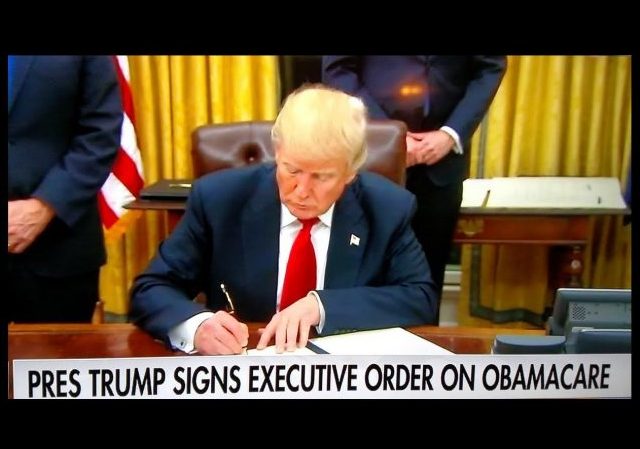
Having long promised to undo immediately as much of ObamaCare as he can by executive order, President Trump kept his word.  Mere hours after his swearing in, Trump signed a flurry of documents, including his first EO on ObamaCare. Because ObamaCare is, as the left is so fond of saying, "the law of the land," Trump can only do so much to undo ObamaCare via EO. That "only so much," however, is quite considerable given the overreach of his predecessor.