

Image 01 Image 03

Middle East Tag

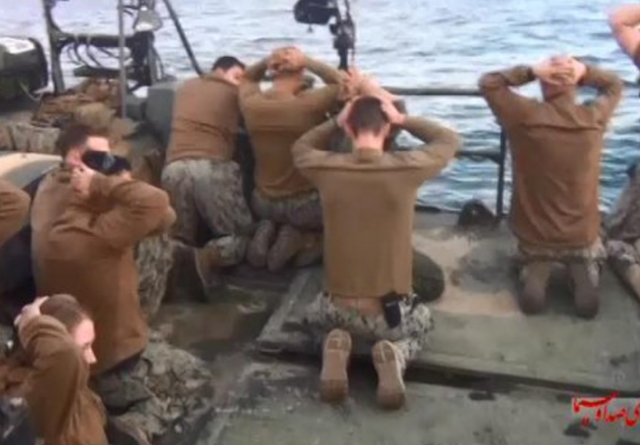
Three weeks ago, ten American sailors on two naval boats were seized by Iran. One of the first readouts of what happened came from the State Department with this tidbit:
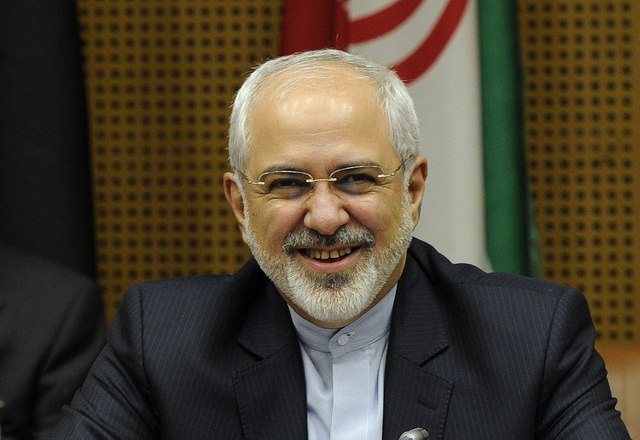
Now, the Secretary then got on the phone with Foreign Minister Zarif for the first time – I think the first of at least five phone calls they had during the course of that afternoon and evening – at about 1 o’clock in the afternoon. The main message that he – there were a few messages he wanted to convey to the foreign minister. One, to provide him with some information about our understanding of what had happened, which was not perfect but was sort of developing in real time. And we had gathered some information including that the sailors were in transit at the time of the incident, that they were in transit between Kuwait and Bahrain, that they may have had some sort of mechanical problem – although at that point we weren’t sure – that we had lost communications with them, and that we had indications that they were now located on Farsi Island in the Gulf. The Secretary made clear that our most important priority – and that this was critical – was that they be released, obviously, safely and unharmed and as quickly as possible, and that if we were able to do this – and this is something that he said to Zarif on a few occasions – if we are able to do this in the right way, we can make this into what will be a good story for both of us.
Think about that last line, "a good story for both of us."
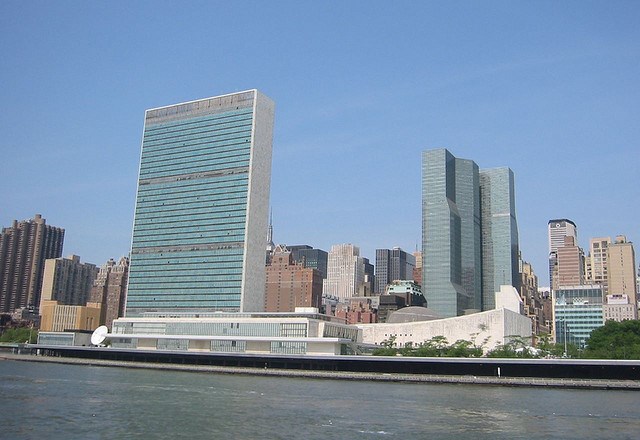
As negotiations to negotiate an end to the Syrian civil war plod along, the UN has admitted, internally, that it is powerless to enforce any Syria peace deal. According to Foreign Policy, the UN knows it cannot enforce or even monitor any peace deal it brokers:
In a confidential strategy paper exclusively obtained by Foreign Policy, the office of the United Nations’ top envoy to Syria warns that the U.N. would be unable to monitor or enforce any peace deal that might emerge from landmark political talks underway in Geneva. The paper raised concerns the world might harbor unrealistic expectations about the U.N.’s ability to oversee and verify a cease-fire in a civil war beset by a dizzying array of armed factions and terrorist groups. “The current international and national political context and the current operational environment strongly suggest that a U.N. peacekeeping response relying on international troops or military observers would be an unsuitable modality for ceasefire monitoring,” according to the “Draft Ceasefire Modalities Concept Paper” by U.N. envoy to Syria Staffan de Mistura’s team. In plain English, that means Syria will be far too dangerous for some time for traditional U.N. peacekeepers to handle.

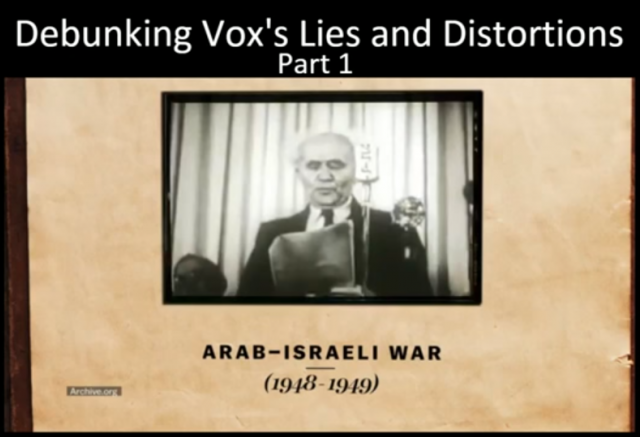
In the middle of January, I dissected Vox video purporting to distill the Arab-Israeli conflict into 10 minutes. But those ten  minutes were littered with countless errors and omissions. I wasn' t the only one weighing in, of course. Elder of Ziyon, one of the longest running pro-Israel bloggers has taken the criticism to a new level, in a video critique of the Vox video. This is no easy task - and I admire his patience and cool - as his critique of the first three minutes clocked in at 17 minutes. As Elder put it:
I'm not certain I will create parts 2 and 3, because I don't know who will want to spend maybe 45 minutes listening to a critique of a ten minute video. Literally every ten seconds I nI ceeded to stop to respond to another distortion or lie.
I certainly had that feeling reviewing the video:

Two ongoing news stories that broke this past week show the Obama administration's contrasting styles towards America's top Middle East ally and a rogue nation that continues to flout international law. Obama and his top officials have no problem playing hardball with Israel, but become like Rex the dinosaur in Toy Story, who doesn't like confrontations, when dealing with  Iran. First, last Tuesday The Wall Street Journal (Google link) reported that the administration excluded Israeli Prime Minister Benjamin Netanyahu from the list of foreign leaders it would not spy on after Edward Snowden revealed that the NSA regularly spied on friendly heads of state. Quoting current and former U.S. officials the spying on Netanyahu was deemed by Obama to be a “compelling national security purpose.” Of course the reason for this was Netanyahu's objections to the Iran nuclear deal. The fear was that Netanyahu would leak sensitive information he had been told by the United States in order to torpedo the deal. (Israel insisted that the secret details that it learned came from spying on Iran.)

A recent article from Adrienne Yaron has an important kernel of truth surrounded by a myriad of analytical errors and false conclusions.  The central point that BDS is a cover for defamation of Israel and development of a critical mass of anti-Israel and anti-Jewish hatred on false pretenses is sound.  The suggestions that BDS is incapable of having an economic impact and that BDS should therefore be mocked rather than substantively opposed is not. Yaron's core and accurate observation is that BDS's economic arguments are a vehicle for simple malice:
The real goal and purpose of BDS is to defame Israel, and attempt to discredit it in the eyes of foreign observers, in order to exert political pressure. BDS demonstrations are an opportunity for them to spew antisemitic vitriol and express their vicious hatred of the Jewish state. BDS’ [sic] only real power is in propagating its hateful ideology.
This is absolutely true, with ample evidence from BDS supporters' anti-Jewish and anti-Israel deceptions and violence, and the overlap between BDS and actual or implicit support for terrorism.

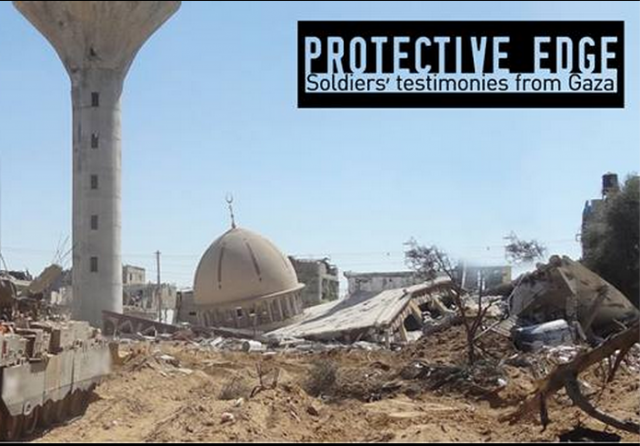
Anti-Israel bias in The New York Times isn't news. But an article this week once again highlights how the Times promotes those who criticize or demonize Israel pretty uncritically, Israeli Veterans’ Criticism of West Bank Occupation Incites Furor. The report in question was about the group Breaking the Silence, which the paper described as "a leftist organization of combat veterans that says it aims to expose the grim reality of Israel’s occupation of the West Bank." Of course that's not all, it also has brought up of accusations, often unsubstantiated, of IDF misconduct during war too. Still the story of Breaking the Silence is portrayed as a referendum on Israel and its morality. We read of the organization as being "at the center of a furor that is laying bare Israel’s divisions over its core values and the nature of its democracy," and "[highlighting] what it views as the corrosive nature of the occupation of the West Bank on Israeli society."

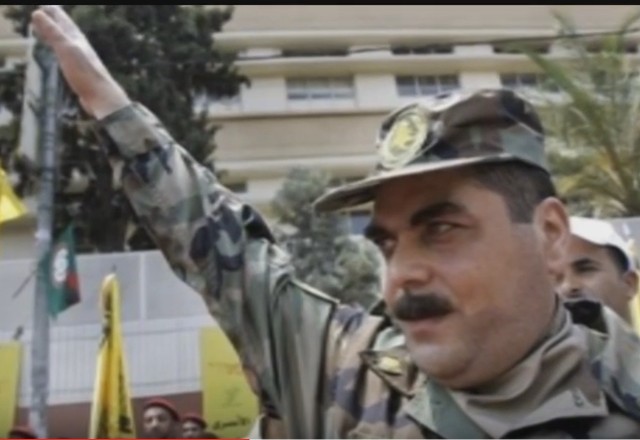
Iran and its allies have taken a beating in Syria according to recent reports. Perhaps the most spectacular was the airstrike overnight that killed the notorious child killer, Samir Kuntar and eight other terrorists in a Damascus suburb. Prof. Jacobson rightly called Kuntar "among the most notorious and vicious terrorists," for shooting Danny Haran to death in front of his four year old daughter, Einat, and then killed her by smashing her head against a rock with his rifle butt. Needless to say Kuntar was treated as a hero by Hezbollah, who traded the bodies of IDF soldiers, Eldad Regev and Ehud Goldwasser, to free Kuntar in 2008. He also received the Syrian Order of Merit from Syria's dictator Bashar al-Assad shortly after his release. But Kuntar's killing is just a symptom of the recently reported problems plaguing Iran and its allies who are backing Assad.

Russia's policy of bloody deterrence and intimidation is reaping battlefield victories, and exposing US fecklessness in Syria.  President Obama has decided the risk of alienating the Syrian population and providing propaganda fodder for ISIS and other anti-Western organizations outweighs the benefits of a substantive military intervention, but Russian President Vladimir Putin's s opposite strategy moots the theory.  Syrians afflicted by foreign military intervention and Islamists capitalizing on it are unlikely to parse their anger according to which foreign power actually caused their losses. Particularly since ISIS bombed a MetroJet airliner on October 31, 2015, killing 224 people, including 219 Russians, the Russian and American campaigns in Syria could not be more different.  Russia now operates four forward operating bases in Syria and claims to have flown more than 4,000 sorties and hit 8,000 targets since September 30, 2015 and to have conducted fifty-nine sorties on December 15 alone, hitting 212 targets, killing 321 ISIS fighters and destroying 100 oil facilities. After the MetroJet bombing, Russia also deployed ground forces to Syria for the first time.  According to Lt. Colonel James G. Zumwalt, USMC (Ret.):
Comparable to our own elite fighters of Delta Force, Russian special forces have an operational edge ours do not. While battlefield actions by U.S. forces will, appropriately, always be defined by the laws of land warfare, Russian special forces historically have tossed their moral compass aside. By doing so, they convey a clear message—in blood—to adversaries.

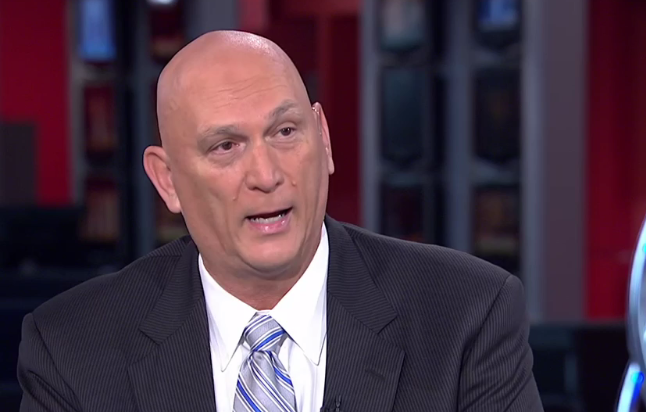
President Obama and the Defense Department are warning of the dangers of deploying ground troops to Syria without first answering whether ISIS can be defeated without them. Critics say the status quo is not doing the job.  Max Boot wrote in the Wall Street Journal on December 8 that air power alone cannot defeat ISIS.  The same morning, former Army Chief of Staff retired General Ray Odierno likewise told MSNBC’s “Morning Joe” that air power has never won any war in history, and added that “[y]ou can't defeat ISIS without having people on the ground.” On the other hand, Gen. Paul Selva, Vice-Chairman of the Joint Chiefs of Staff, testified before the Senate Armed Services Committee the next day that, “[i]t's clear from ISIL's strategy that their objective is to cause us to engage in what they believe is an apocalyptic war with the West.”  Selva added, “anything that we do to feed that particular frame of thinking counters our national security.”

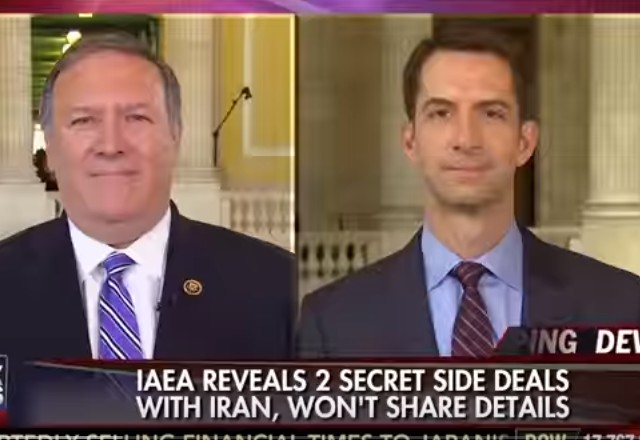
Rep. Mike Pompeo (R - Kan.) and Sen. Tom Cotton (R - Ark.) have a lot in common. Both are army veterans and both are graduates of Harvard Law School. And both have been doing a great job of exposing aspects of the nuclear deal with Iran that the administration would rather keep quiet. This week it was reported that an inquiry from Pompeo got the State Department to admit that the nuclear deal was never signed and is not "legally binding." Julia Frifield, the Assistant Secretary of State for Legislative Affairs, wrote in response to Pompeo's inquiry if he could see the signed agreement, in a letter reproduced at the congressman's website, that the nuclear deal was not binding and that it was not signed by any party. The key parts of the letter read:
The Joint Comprehensive Plan of Action (JCPOA) is not a treaty or an executive agreement, and is not a signed document ...

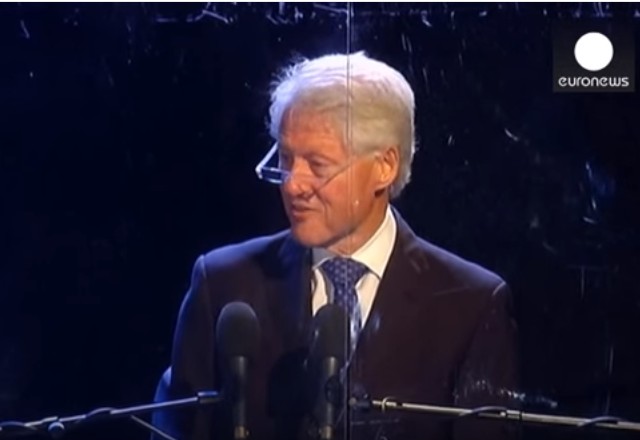
Former President Bill Clinton's said last week in Israel in commemoration of the 20th anniversary of the assassination of Israeli Prime Minister Yitzchak Rabin, that peace is up to Israel. As the Associated Press reported:
"He refused to give up his dream of peace in the face of violence," Clinton, who formed a close bond with Rabin when both were in office, said to roars of applause. "The next step will be determined by whether you decide that Yitzhak Rabin was right, that you have to share the future with your neighbors ... that the risks for peace are not as severe as the risk of walking away from it. Those of us who loved him and love your country are praying that you will make the right decision."
Even last year, Clinton indicated that he didn't believe that Netanyahu could make peace. But this is false history, as Jonathan Tobin at Commentary pointed out, "if there is anything that the last 22 years have taught us it is that it clearly not up to the Israeli people."

The Greek island of Lesbos has been a popular landing point for refugees fleeing the Middle East by boat. The numbers have been so great that rafts and other flotation devices are piling up on the shore. The UK Daily Mail reports:
Piled 12ft high, the ever growing mass of rubber dinghies and life jackets abandoned on Lesbos by migrants who have risked crossing the Mediterranean by boat Shocking images have emerged of a huge pile of deflated dinghies and life-vests, left behind on the Greek island of Lesbos by the refugees and migrants who have successfully made the perilous journey across the Mediterranean. The pile of abandoned dinghies, some still intact and others worn through by the journey, which tens of thousands have already made this summer. But the crossing is notoriously perilous. Some 34 refugees, including 15 children, died this week off the coast of the southern Greek island of Farmakonisi. The UN said the accident had the largest recorded death toll from any in Greek waters since the migrant crisis began. The youngest victim was just one-year-old. Some 132 people were travelling on the wooden fishing boat when it capsized at around 3am, off the tiny island which is primarily a military base.

The United States Ambassador to the United Nations, Samantha Power recently wrote a piece for Politico arguing the Congress not reject the nuclear deal with Iran. In short she argued that rejecting the deal would leave the United States, not Iran isolated and the ability of the United States would be greatly compromised in its ability to influence outcomes globally. Towards the end she summed up her argument:
The Iran nuclear deal has been championed by the president of the United States, every one of America’s European friends and countless other countries around the world. If Congress rejects the deal, we will project globally an America that is internally divided, unreliable and dismissive of the views of those with whom we built Iran’s sanctions architecture in the first place. Although it is hard to measure the precise impact of these perceptions, I and other American diplomats around the world draw every day on our nation’s soft power, which greatly enhances our ability to mobilize other countries to our side. While that soft power is built in many ways, two of its most important sources are the belief among other countries’ leaders and publics that we share similar values, and that America delivers on its commitments. Of course, there is no substitute for the essential deterrent and coercive effects rooted in the hard power of America’s unmatched military arsenal. But we should not underestimate the political capital we will lose—political capital that we draw upon for influence—if we walk away from this deal.
What makes Power's plea so inexplicable is her record. As Claudia Rosett explained back in July:

Both Rep. Donald Norcross (D - N.J.) and Rep. Brendan Boyle (D - Pa.) have announced that they will stand on principle and oppose the nuclear deal with Iran (a/k/a, the Joint Comprehensive Plan of Action or JCPOA.) I know almost nothing about either of these legislators, but I have tremendous respect for them. They are both freshmen and yet they have both announced that they will stand against their party's leader, President Barack Obama, even though the President has made it clear that the JCPOA is a priority. I have little doubt that both men understand the risk; the administration has made it clear that it will not tolerate apostasy. I give a lot of credit to Sen. Chuck Schumer (D - N.Y.) too, because he may have jeopardized his chances of a spot in the leadership by announcing his opposition to the JCPOA. The New York Daily News reported:
Josh Earnest, President Obama’s spokesman, ripped Schumer Friday after the senior New York senator broke with the President over the nuclear deal with Iran. Earnest all but encouraged Senate Democrats to consider Schumer's opposition to the pact when they vote next year to elect a new Democratic leader.

A number of stories have been reported since the signing of the Joint Comprehensive Plan of Action (JCPOA), as the nuclear deal with Iran is known, that raise serious questions about its effectiveness to prevent Iran from developing a nuclear weapon and even about whether or not it will stop a war.

Syria's Secret Chemical Weapons Stockpile

The Wall Street Journal reported on July 23 (Google link) that Syria, contrary to previous reports, had maintained “caches of even deadlier nerve agents.” Why it's important: The first reason is that Iran is the main sponsor of Assad regime. Given that it has supported the use of WMD in Syria and suffered no consequences for this will likely embolden it. The second reason is more practical. The chemical weapons inspectors were limited by the Assad regime where they could go. They also feared that if they reported something that would displease the authorities they would be barred from other sites. The same problem will exist with Iran. But being able to declare military sites out of bounds for inspections, Iran will limit inspectors' access, compromising the effectiveness of inspections regime.

By now, Sen. Jeff Flake's (R - Ariz.) announcement that he will oppose the Joint Comprehensive Plan of Action (JCPOA) has been overshadowed by Sen. Robert Menendez' (D - N.J.) Tuesday announcement of his opposition. Still, I'd like to revisit Flake's announcement because he was viewed by the administration, in the words of one report, as a "gettable" Republican. With Flake's announcement it now appears that President Barack Obama will not be able to claim bipartisan support for the JCPOA. I don't know how "gettable," Flake was. To be sure, at the July 23 Senate Foreign Relations hearing Flake was much less adversarial than most other Republicans on the committee, and that played a role in maintaining the impression that he perhaps looked favorably upon the deal. He also was less adversarial than Menendez. However, he asked Kerry some very solid questions and Kerry's responses were awful. How awful? Early in his question and answer session Flake asked Kerry about language in the JCPOA that allowed Iran to opt out if sanctions were re-imposed.

On July 16, Israel’s Christian Empowerment Council (CEC) released a short pamphlet titled Test The Spirits: A Christian Guide to the Anti-Israel Boycott Movement (BDS). It’s authored by Father Gabriel Naddaf, a Greek Orthodox priest from Nazareth in the Galilee. The new guide garnered some publicity in Israel. But here in the U.S., other than a press release featured by JNS and a few other websites, it hasn’t received a lot of attention. Spread the word about this terrific new resource. Test The Spirits rejects the isolation and vilification of Israel under the banner of Christian values. It’s an unreserved and heartfelt vindication of the Jewish state and the Jewish people. http://www.cecisrael.org/

President Obama defended his deal to Iran to Thomas Friedman of The New York Times yesterday. It was a bad deal and it represented a retreat on nearly every single element of the deal. In any case this is what Obama told Friedman:
“We are not measuring this deal by whether it is changing the regime inside of Iran,” said the president. “We’re not measuring this deal by whether we are solving every problem that can be traced back to Iran, whether we are eliminating all their nefarious activities around the globe. We are measuring this deal — and that was the original premise of this conversation, including by Prime Minister Netanyahu — Iran could not get a nuclear weapon. That was always the discussion. And what I’m going to be able to say, and I think we will be able to prove, is that this by a wide margin is the most definitive path by which Iran will not get a nuclear weapon, and we will be able to achieve that with the full cooperation of the world community and without having to engage in another war in the Middle East.”
And what about the opposition to the deal?