


MAHA Meets M&M’s: Candy Giant Reformulates, but Loses Key Colors
The natural dye currently proposed for blue and brown candies is expensive and hard to use. Mars hopes to have a complete, natural-dye-based pallete by 2028.
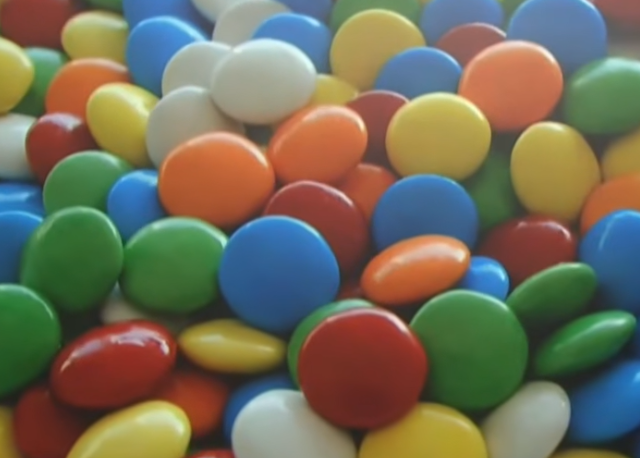
The last time I wrote about M&M’s, Mars (the maker of the iconic chocolate treat) had just announced it would be doing away with its ‘spokescandies’ after conservative commentators tore into the company for rebranding the mascots as an inclusive and woke cast of characters.
That was a little over 3 years ago. Since then, the Make American Health Again movement has gained traction, especially after Health and Human Services (HHS) Secretary Robert F. Kennedy Jr. began pushing firms to use natural food colorings.
Mars announced that it will make an artificial-dye-free version of its candies, but as a result, two of the colors will disappear from this product line.
As the iconic candy marks its 85th year this summer and in a broader effort to remove artificial dyes, M&M’s will debut a natural-ingredient version.
And while the brand can figure out how to make red, orange, and yellow M&M’s without artificial dyes, blue and brown are on the chopping block and will not be included in this new iteration.
As pressure mounts from Health Secretary Robert F. Kennedy Jr.’s MAHA movement to ditch synthetic food colorings, candy giant Mars is spending millions of dollars to reinvent one of America’s most recognizable treat.
But replacing the bright blue shell that has been part of M&M’s rainbow since 1995 has turned into a surprisingly sticky problem.
Are you ok with the colors being healthier even though you lose 2 of them?
M&M's are going healthy and as a result, the colors brown and blue may be on the chopping block. Red, orange, green and yellow can be made without artificial dyes, but no luck yet on brown and blue. Candy… pic.twitter.com/3nhD3toGBh
— Robbie Mouton (@mcgmouton57) June 19, 2026
The reason for the likely change in the color palette is spirulina, a blue‑green microalga used both as a source of natural blue and blue‑green food color via its main pigment, phycocyanin. When processed as “spirulina extract,” it functions as a color additive in a wide range of foods and beverages, often replacing synthetic blues.
It is expensive and causes complications in manufacturing.
Turmeric, for example, is available in bulk from most wholesalers for prices in the $9-$11 per lb. range. Spirulina, by contrast, can be significantly more expensive. The raw supplement can cost up to $20 per lb. at similar wholesalers, while the concentrated form most often used for food dyes is often priced at over $100 per lb.
Furthermore, spirulina’s viscous nature has caused clogging in M&M’s factory spray nozzles and created film build-ups in manufacturing equipment, creating a potential safety and health hazard, The Wall Street Journal reported.
The high costs associated with MAHA-ifying its products have driven Mars into a colorful dilemma, according to the Journal. Wanting to debut its altered product ahead of the company’s 85-year anniversary in August, Mars has spent millions in an effort to find alternatives.
MAHA Makeover: Mars, the maker of the iconic M&M's candies, will debut a new version in August that marks a milestone in the brand’s 85-year history: M&M’s made entirely without harmful synthetic petroleum-based dyes, replaced instead with natural alternatives sourced from… pic.twitter.com/E9HevoQWg4
— RedWave Press (@RedWavePress) June 19, 2026
The brown color is also derived, in part, from the blue dye. Therefore, this is a challenging roadblock for both colors.
Mars indicates they are working hard to have the complete color set available using natural dyes by 2028.
About 100 Mars staffers are now focused on the project, a quarter of them just on blue, as the company aims to have all six classic colors in natural form by 2028.
The new, more natural M&M’s will be sold only on Amazon for the moment; the artificial version will remain on store shelves. The Independent notes that other food manufacturers are also trying to go the MAHA route, including PepsiCo, which has debuted its “Simply NKD” line of snacks without artificial dyes or flavors, including Doritos and Cheetos.
It appears that MAHA pressure is reshaping product formulation while leaving the marketplace to sort out consumer preferences. By maintaining both artificial and dye-free product lines, Mars is effectively testing whether demand aligns with the policy push.
If consumers truly prioritize “natural” inputs, they will soon have that option, along with the higher costs associated with the technical limitations that come with it. If not, the continued availability of traditional formulations ensures choice remains intact.
The real outcome of the MAHA initiative may not be uniform reform but a bifurcated market where policy nudges, rather than mandates, ultimately let consumers decide what stays and what fades.
It will be interesting to see what M&M’s look like in 2028.
Donations tax deductible
to the full extent allowed by law.





Comments
As long as the green ones survive, the Republic is secure.
n the 1980s, the rock band Van Halen put a strange rule in their concert contracts: they wanted M&Ms, but with absolutely no brown ones.The band did not do this to be difficult. They did it for safety.Their concerts required massive stages and heavy equipment.If set up wrong, the stage could collapse or cause serious electrical accidents.The band buried the “No Brown M&Ms” rule in the middle of a very long contract.If they found brown M&Ms backstage, it meant the venue staff did not read the whole contract.This meant the staff might have missed important safety rules, too.
Red ones forever!!!
Red Orange Green Blue Yellow and then Brown.
Yeah, let’s wring our collective hands in quiet desperation about a minuscule amount of a food colorant and look right past the whopping amount of sugar in M&Ms.
Don’t get me wrong. I’ll east M&Ms until I collapse into a diabetic coma but this seems endemic in everything MAHA – a bunch of hysterical people concern trolling about things they don’t understand.
Honestly, the “don’t understand” is part of the reason to remove the “artificial” dyes. If we don’t understand it well, then maybe we should avoid them until we do.
Color of diversity hit hardest? Hm……
Paging Reverend Al!
It’s my least favorite, Always ate them last, Calor me racist,
Dye-versity
Nobody ever asked FOR brown M&M’s anyhow. The Blue? Well I might miss those, but no kid ever turned down M&M’s because there are no blues in the bag.
Frankly, who cares? This is another tempest in a tea pot. I do giggle a little though as I think: Goddammit! I’m an AMERICAN! Gimme my artificial colorings which are my constitutional right!
The blue ones are important, though, as they’re 1/3 of the M&Ms in a patriotic red, white, and blue bag. M&M offers those every summer and they should be particularly popular this summer.
Nice try but where de white M&M’s? Hmmm?🇺🇸🇺🇸🇺🇸 Can’t have America with whites!
THINKS Do I dare say that?
Oh! I should have actually READ your comment. Sorry
Insert embarrassed face here
Here:
https://www.mms.com/en-us/bulk-candy-bags/white-mms-bulk-candy/ct1143-p.html?cjdata=MXxOfDB8WXww&utm_term=100357191&ref=cj&utm_content=2603623&utm_medium=affiliate&utm_source=cj&utm_campaign=20%25+Off+Graduation%21+and+10%25+off+everything+else.+Use+Code+SCHOLAR&cvosrc=affiliate.cj.100357191&cjevent=47d9b4376e4d11f183ec05a70a82b836
“Nobody ever asked FOR brown M&M’s anyhow”
Ironic… since inside, they’re ALL brown.
It looks like M&M might be doing this partly because of public desire, rather than merely due to regulatory pressure. That’s important, IMO. A choice not a compulsion.
Why, BTW, don’t candy companies offer the entire spectrum? M&Ms leave out purple. SweeTarts leave out orange, IIRC. Skittles leave out blue, I think. Why not just do all 6?
I want ultraviolet M&Ms.
You should see how white they make your teeth.
I can’t imagine those would be natural dyes, unfortunately. Though, myab some deep sea octopus….
Don’t worry – Mars candy still has “bioengineered” food ingredients, so I wouldn’t be so quick to move them to the “safe to eat” column.
Don’t care.
Until M&M’s / Mars loses all its woke BS, the company is dead to me.
Happy Mars is eliminating artificial red. It is very bad for children with ADHD.
I’m cool with chocolate being chocolate colored. Glad they are making these obvious changes. not sure why we needed rainbow colored chocolate. The yellow one tastes just like the blue one, so who cares?
My guess it’s part of marketing to kids.
I smell a white vs multicolored Xmas lights thread brewing…