


Image 01 Image 03

diplomacy Tag

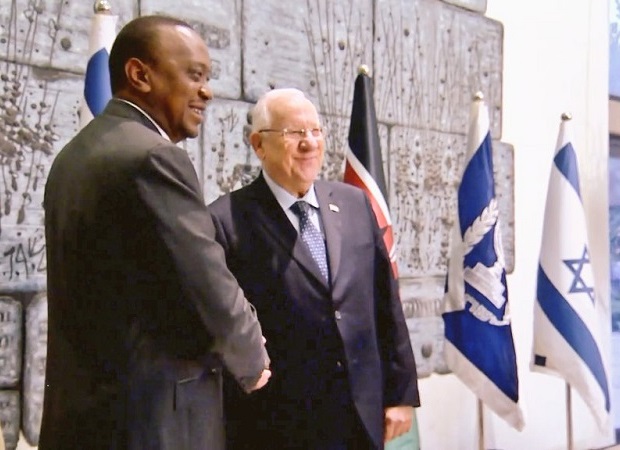
Theodor Herzl, founder of modern Zionism, the movement that led to the creation of Israel, wrote in 1902, “Once I have witnessed the redemption of the Jews, my people, I wish also to assist in the redemption of the Africans.” Today, the State of Israel is fulfilling Herzl's dream in the continent of Africa. The chief architect of Israel’s Africa Policy, Prime Minister Golda Meir regarded Israel's support for Africa as a “Jewish imperative”. Since 1950s, Israel has been involved in areas like agriculture, water management, higher education, vocational training, healthcare and industrial development in several African countries such as Kenya, Ghana, Sierra Leone, Ivory Coast and Nigeria. Now the Jewish State is seeking to renew its historic bond with the African continent.
China has been a global hub for manufacturing counterfeit electronics and consumer goods, but as the Asian giant asserts its dominance in the Asian Pacific and beyond, its defense establishment is using the same approach to modernise its vast armed forces.  Despite its large standing and reserve army, Chinese Armed Forces technologically lags behind US, Russian and NATO forces. China has decided to manufacture ‘counterfeit’ high-end defense technology on a large scale to overcome its existing strategic weakness. According to a recent report published by the US Naval Institute, China is using military espionage and reverse engineering to build a modern army with “cloned weapons.” Using cyber espionage and by making secret deals with US arms buyers, China has managed to obtain advance US weapons technology. China is reportedly also targeting Russia in its quest for high-end military technology. The Chinese often buy single units of Russian advanced military systems on a “trial” basis and reverse-engineer the weaponry to produce a large-scale Chinese version:

India’s largest corporate house Reliance Industries has announced its plans to make big and long-term investments in Israel. Reliance Industries, a Fortune 500 Company owned by billionaire Mukesh Ambani, is the largest private sector company in India with a market capitalisation of well over $40 billion. Founded in 1966, Reliance Industries made its initial fortune in oil and natural gas sector. Recently, the company has invested billions of dollars in building a telecommunications network across India. The state-of-the-art nationwide cellular network build at the cost of estimated $15 billion opens new possibilities in retail, finance and healthcare. The company is looking for Israeli know-how and talent to fully exploit these possibilities, creating services for 100-200 million potential customers across the Indian sub-continent. Talking to Israeli media, managing partner of the company’s venture capital arm GenNext, Vivek Rai Gupta said that his company was working to build a nationwide customer base and there would be “no limit” on company’s investment in Israel. Israeli financial news website Globes Einglish quoted Gupta saying:
"We want to hook up to the Israeli ecosystem, and to discover more innovative companies that can enhance the value of the cellular network whose deployment we're completing right now," GenNext managing partner Vivek Rai Gupta, currently visiting Israel, said in "Globes" interview. "The network [mobile network reaching 800 cities] we're setting up is only a pipeline, and we're looking for interesting things through which we can provide value for our users in India."
Mobile-based technology carries the promise of improving everyday life for millions of Indians living in rural and remotely accessible regions -- from proving healthcare, vocational education, banking to even coordinating disaster relief.

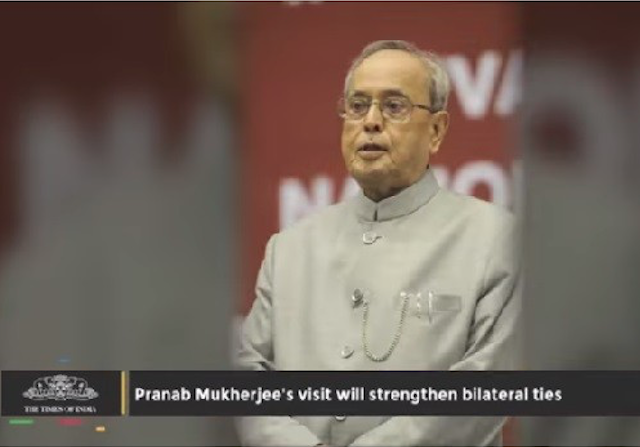
India-Israel diplomatic relations will turn a new chapter with the Indian President's historic state visit to Israel. Pranab Mukherjee became the first Indian Head of the State to visit the Jewish State. The state visit is an initiative of Prime Minister Narendra Modi’s 17-month old government that seeks to strengthen commercial and diplomatic ties with Israel. However, right at the onset the Indian President’s visit was marred by a controversy, when media reports surfaced early this week that Mukherjee reportedly quoted Mahatma Gandhi during his stay to Jordan, saying, “Palestine belongs to the Arabs in the same sense that England belongs to the English and France to the French.” Jerusalem Post reports:
Speaking in Amman at the University of Jordan, [President Mukherjee said],“India’s traditional support to the Palestinian cause remains steadfast and unwavering while we pursue strong relations with Israel. Our bilateral relations [with Israel] are independent of our relations with Palestine.”





