

Image 01 Image 03

Author: William A. Jacobson

Profile photo

William A. Jacobson

William A. Jacobson is a Clinical Professor of Law and Director of the Securities Law Clinic at Cornell Law School.

He is a 1981 graduate of Hamilton College and a 1984 graduate of Harvard Law School. At Harvard he was Senior Editor of the Harvard International Law Journal and Director of Litigation for the Harvard Prison Legal Assistance Project.

Prior to joining the Cornell law faculty in 2007, Professor Jacobson had a highly successful civil litigation and arbitration practice in Providence, Rhode Island, concentrating in investment, employment, and business disputes in the securities industry, including many high profile cases reported in leading newspapers and magazines.

Professor Jacobson has argued cases in numerous federal and state courts, including the Courts of Appeal for the First, Fifth and Sixth Circuits, and the Rhode Island Supreme Court.

Professor Jacobson has a national reputation as a leading practitioner in securities arbitration. He was Treasurer, and is a former member of the Executive Committee and Board of Directors of the Public Investors Arbitration Bar Association, a professional organization of attorneys dedicated to protecting public investors. He frequently is quoted in national media on issues related to investment fraud and investor protection, and in the past has served as one of a small number of private practice attorneys who trained new arbitrators for the Financial Industry Regulatory Authority.

Professor Jacobson is co-author of the Securities Arbitration Desk Reference (Thomson-Reuters), updated annually.

Professor Jacobson is frequently quoted in the media on political and legal topics, has authored many Op-Eds in major publications, and appears on television and radio to discuss politics and the law.

A more complete listing of Professor Jacobson's professional background is available at the Cornell Law School website. The views expressed here are his own and not those of any employer or organization,

The best way to reach Prof. Jacobson is by e-mail here.

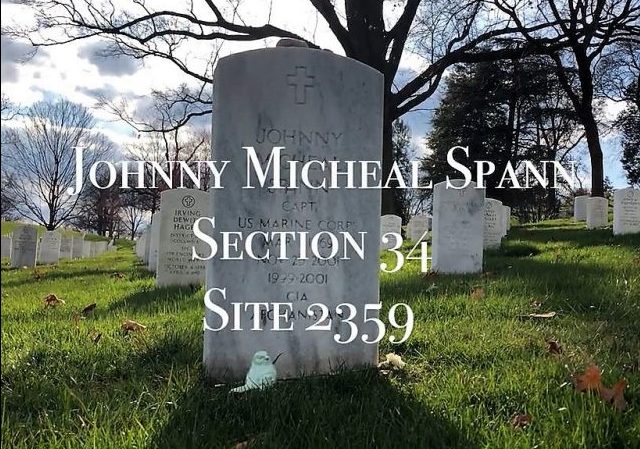
Every year on November 25 we remember Johnny Micheal ("Mike") Spann, the first American killed in Afghanistan after the 9/11 attacks. It was on that date in 2001 that Spann was killed during a Taliban prisoner uprising at the Qala-i-Jangi fortress. The "American Taliban" John Walker Lindh was being held and interrogated at the fortress, though it remains unclear what if any direct role he played in Spann's death.

When news first broke that Nur Barake, a senior Hamas operative responsible for attack tunnel construction, was killed in an Israeli commando operation in Gaza, it was assumed that the operative was the target. In the ensuing firefight, six more Hamas operatives were killed, as well as an Israeli special forces soldier. That soldier, along with a wounded comrade and others in the raid, were extracted from Gaza in a rescue mission under heavy Israeli air cover.

I wasn't planning on a "Thanksgiving" post. This is a late in the day inspiration, now that we have returned home from a relative's house and I'm fighting my best to keep from falling asleep.

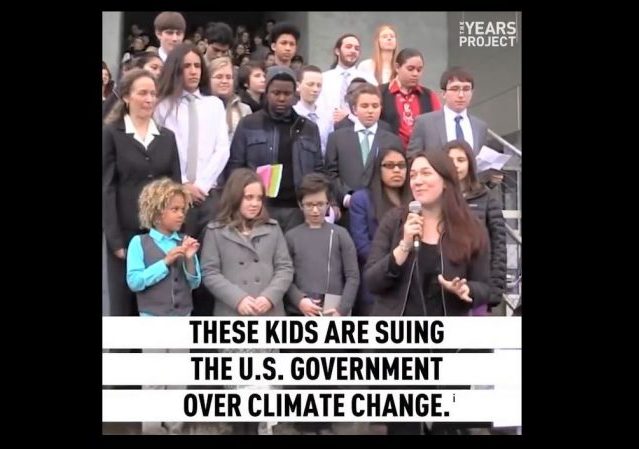
The so-called Kids Climate Change Lawsuit seeks to hold the U.S. government liable for climate change and to compel remedial action. Seriously. It's a ludicrous lawsuit that was supposed to go to trial in late October 2018, after surviving a motion to dismiss.

Airbnb has been under a sustained pressure campaign by anti-Israeli activist groups to cease listing homes and apartments for rent in Israeli Jewish settlements in Judea and Samaria (the "West Bank"). The area was ethnically cleansed of Jews by the Jordanians after Jordan captured the area in Israel's War of Independence. The 1949 Armistice Line was where the fighting stopped, and left many historically Jewish areas, including the Jewish Quarter of the Old City of Jerusalem, in Jordanian hands. Israel recaptured the area in 1967.

Jim Acosta and CNN were granted a Temporary Restraining Order on Friday, November 16, 2018, restoring Acosta's White House "hard pass," to allow him privileged access to the White House grounds for press briefings and other events, pending further court action. The White House promptly announced that it would promulgate rules governing press conduct and discipline, to address the court's concern that Acosta was not afforded due process.

On Friday, November 16, 2018, the federal District Court in D.C. granted a temporary restraining order compelling the White House to reinstate CNN's Jim Acosta's "hard pass," that gives him privileged access to the White House for press briefings and events. As described in our coverage of the decision, there is no written opinion or transcript as of now that can be reviewed to understand the precise parameters and reasoning of the judge. As of this writing, we only have media reports as to the judge's stated reasons.

Judge Timothy J. Kelly, a Trump appointee, has just ruled on the motion of Jim Acosta and CNN for a temporary restraining order restoring Acosta's White House “hard pass”. Based on reports from reporters in the media room, it appears that the Judge ruled that while the White House doesn't have to allow any reporters into the White House, by setting up a credentialing process it owes people like Acosta due process, and that it confers a First Amendment interest entitled to protection. The Court appears to have ruled that Acosta's First Amendment rights supercede the White House interest in orderly press conferences, and that Acosta was not given due process in the revocation process.

The Judge will rule today on the motion for a temporary restraining order filed by Jim Acosta and CNN. While most of the media supports Acosta, One American News Network filed late on November 15, 2018, for permission to file an amicus brief (pdf.) (full embed at bottom of post) opposing the motion.

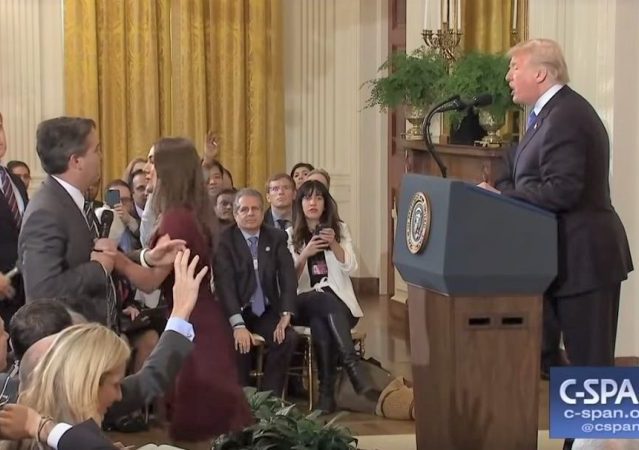
"Bad facts make bad law" is a common saying. What that means is that bad facts in a specific case can create legal precedent that is damaging to others, not just the bad actor in the case. Nowhere is that more clear than in the pending motion by Jim Acosta and CNN, publicly supported by over a dozen major media outlets, requesting a Temporary Restraining Order and Preliminary Injunction forcing the White House to restore Acosta's press "hard pass." The court is scheduled to rule Friday, November 16, at 10 a.m.

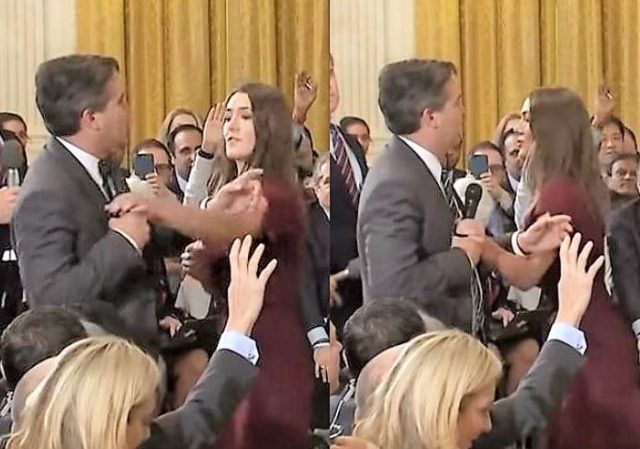
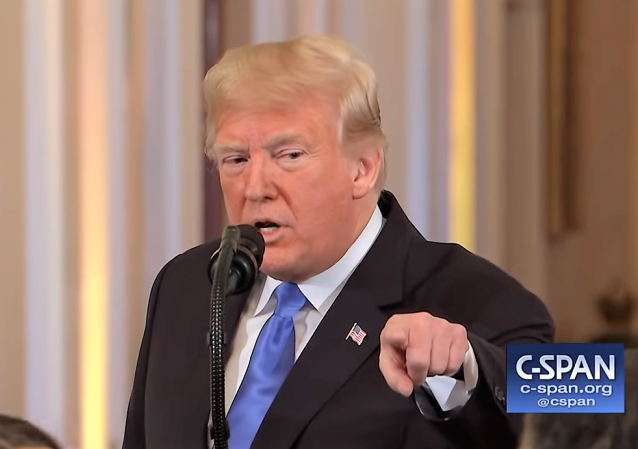
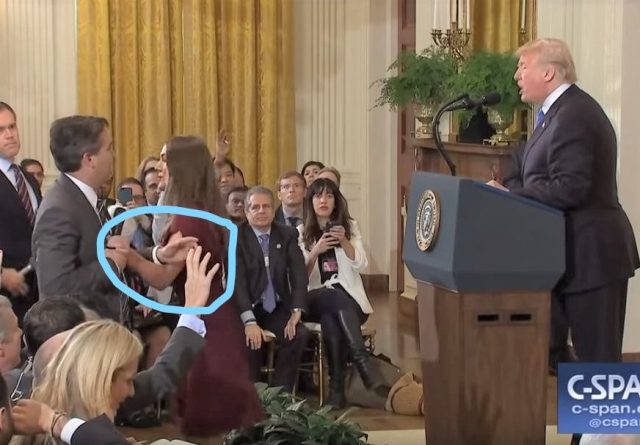
UPDATE: The Judge has postponed the decision from 3 p.m. Thursday to 10 a.m. Friday. A federal District Court Judge in D.C., Timothy Kelly, heard two hours of argument today on the motion for a temporary restraining order requested by CNN and Jim Acosta regarding his White House "hard pass". The hard pass was revoked after an incident on November 7, 2018, when Acosta refused to yield the microphone when Trump wanted to move on to other reporters. Acosta physically blocked a White House intern from retrieving the microphone.