


Nevada Discovery Could Rebuild America’s Tungsten Supply Chain
However, potential development of Railroad Valley has hit a NASA roadblock.
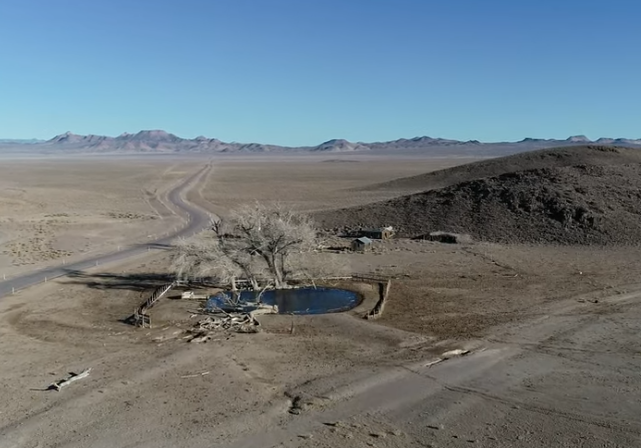
America may have just found a critical minerals mother lode beneath Nevada’s Railroad Valley: An estimated 1.78 million tons of tungsten, alongside enormous lithium, potash, and boron resources.
The discovery matters because the United States stopped mining tungsten roughly a decade ago and now relies on imports for a metal essential to defense, manufacturing, and advanced technology. This is precisely the supply chain vulnerability that President Trump’s executive order seeks to address by accelerating domestic critical-mineral production and processing.
The entire deposit may be worth $3.5 trillion and is significantly larger than the biggest tungsten source currently being utilized in this country.
As per 3PL, the deposit is reportedly five times larger than the biggest tungsten resource currently listed in the US and comes at a time when the country relies heavily on imports for the strategic metal. Its in-situ value is estimated at about USD 152 billion based on current market prices.
…The report also confirmed another 31 million tons of measured lithium carbonate equivalent, 533 million tons of measured potash, and 87 million tons of measured borate minerals within the same salt complex. Combined, the resources feature an estimated in-ground value of USD 3.5 trillion.
At current consumption rates, the resources could provide the U.S. with tungsten for hundreds of years, 3PL said. The Railroad Valley project spans approximately 39,000 acres and covers an extensive sodium-rich salt basin in eastern Nevada.
They can't keep getting away with this
US hits jackpot with 1.78 million tons of tungsten in Nevada Desert https://t.co/vUBAugCsb7
— Heskel Balas 🚁 (@heskelbalas) August 6, 2026
Tungsten’s price has climbed nearly 600% since early 2025, propelled by growing aerospace, defense, and industrial demand just as Chinese export restrictions tightened an already constrained market. China still accounts for roughly 80% of global tungsten output.
Recognizing that vulnerability, the Trump administration has elevated critical-mineral security as a national priority and designated Railroad Valley for the FAST-41 process, which we have previously reviewed as a way to make federal permitting for major infrastructure projects more coordinated and predictable.
And while this is an exciting development, it will still take time and capital to develop this resource.
As a strategic critical mineral that is difficult to substitute, tungsten has prompted the United States to continue advancing the reconstruction of its domestic supply chain.
As early as last year, 3PL’s Railroad Valley project was included in the US federal FAST-41 fast-track approval process to shorten the cycles for environmental assessment and mining permit approval. The Trump administration continues to list the security of critical minerals as a strategic priority. Concurrently, US mining investment institution Cove Capital has also reached a cooperation agreement with Kazakhstan to establish tungsten mining and smelting processing plants.
The combination of significant resource discovery and supply chain tension has drawn attention from various sectors in the US to this tungsten mine, but the industry generally remains cautious about the pace of project implementation. Eurasia Group analyst Timothy Puko pointed out that the significant surge in tungsten prices this round has attracted more than twenty junior mining companies globally to accelerate the advancement of mineral development projects.
However, the mineral development cycle is lengthy. Even if various obstacles such as land ownership and approvals are smoothly resolved, it takes at least five years for a mine to go from exploration to production. Within such a long cycle, market prices and the policy environment are subject to significant variables.
However, there is a potential roadblock to some of this land being developed.
NASA opposes mining on about one-third of the company’s claims. The agency uses the flat Nevada desert to calibrate satellite instruments and says mining would interfere with a unique site used to receive and verify satellite signals. The Bureau of Land Management withdrew roughly 17 square miles from mining and exploration in 2023 at NASA’s request.
US hits jackpot after finding multi-million-ton critical mineral reserve in Nevada | Georgina Jedikovska, Interesting Engineering
The deposit holds 1.78 million tons of inferred tungsten.
A U.S. critical minerals company has recently confirmed the nation’s largest known… pic.twitter.com/V0YWaQtJl9
— Owen Gregorian (@OwenGregorian) August 6, 2026
The Bureau of Land Management approved NASA’s request to withdraw nearly 23,000 acres of the area in 2023, before the focus on rebuilding our critical mineral supply chain.
Railroad Valley presents the sort of interagency conflict that should be solved, not allowed to calcify into another self-inflicted strategic vulnerability.
NASA’s calibration mission is plainly important, but so is access to a significant domestic supply of tungsten and other critical minerals currently dominated by China.
Hopefully, the administration, NASA, and 3PL can identify a technically credible accommodation that protects essential satellite work while allowing Americans to develop American resources responsibly.
Donations tax deductible
to the full extent allowed by law.






Comments
gonna need another 20 mules…
I first thought it was going to be because of sand crabs
Or something
Exactly what is a “junior mining company”?
One that is behind on campaign contributions?
NASA can find another flat spot somewhere. If they want to.
If SpaceX doesn’t need it NASA can go pound sand.
Burning man campsite comes to mind
It’s amazing how little wild spaces are left, even in the desert
Spent much time in Nevada –outside Las Vegas or Reno? Wyoming? Montana? General four corners region?
Great. Need this for Rods from God!
I can hear the Econazis whining now. Mine it and tell them to get stuffed.
When they protest convict the, and sentence them to work in the mine.
I have been all over Nevada. That area is not the only flat spot. Don’t forget the acreage was withdrawn under Biden when NASA was run by idiots adhering to the green new deal bs.
I know that there is a small base southwest of Railroad Valley. right at the junction of Routes 6 and 375 that does testing. I imagine they just don’t want to spend the money to relocate to another part of Nevada.
I know the base. I was stationed at MWTC Bridgeport and did medical support occasionally for China Lake. When saying the need for critical minerals and a flat spot that needs moved, you choose moving the base. In the overall scheme 3.5 trillion in proven national security minerals and forcing a base to be moved to another part of the flat Nevada desert. I’ll choose moving the base.
Google Earth calls that intersection Warm Springs and there’s nothing shown except more nothing. But there’s what looks like a dry lake bed to the northeast that appears to have some kind of tracks on it.
.
Company: “We would like to mine a billion dollars worth of strategic minerals from this location.”
NASA: “No, we’re using that place.”
Company: “What? There’s nothing there, and I mean nothing.”
NASA: “Exactly. We use that nothing for really critical stuff. Like stuff we just can’t do anywhere else.”
I used to swear that companies could go to the most godawful remote place on the planet to conduct a mining operation and the Greenies would be there a day later with signs and protests. I didn’t think anybody would take me up on the challenge. I really expect this to continue.
Company: “Never mind, we can mine the same stuff in this remote mountain range.”
NASA: “Nope. We use that too. For…um…mountain stuff.”
Company: “How about this swamp?”
NASA: “That too.”
Company: “Don’t you have a rocket to blow up or something?”
Cheaper and easier to move the satellite calibration site. We need those ores and minerals.