


Colorado River Crisis Brings Major Cuts for California, Nevada, and Arizona
Phoenix is planning to dip into its emergency water bank as a result.
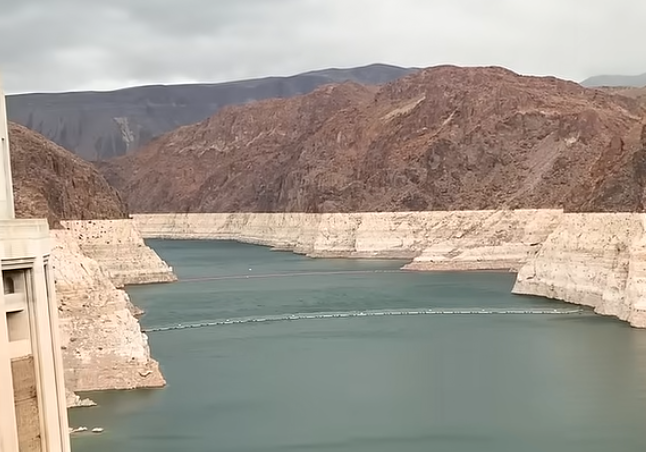
Federal officials are ordering the West to live within the limits of a Colorado River system drained by decades of over-allocation, drought, and policy delay.
California, Nevada, and Arizona allocations will be cut a combined 1.25 million acre-feet annually for the next two years, while the upstream states evade mandatory reductions for now.
Arizona will see the biggest cuts, while states upstream — Colorado, Utah, Wyoming and New Mexico — do not face any for now.
Meanwhile neighboring Mexico will reduce its intake by 250,000 acre-feet (about 310 million cubic meters) under a U.S.-Mexico treaty.
“We’ve been in this 26-year prolonged drought period,” said Andrea Travnicek, the Interior Department’s assistant secretary for water and science. “We continue to see a prolonged drought in our future. So continuing to work together as a whole within the basin is going to be extremely important.”
The current rules governing the use of the river’s water are set to expire in October, and the seven states have been unable to reach a consensus on sharing it over the long term.
Federal officials announced sharp water cuts for the next two years on Friday for three Western states that rely on the imperiled Colorado River.
Years of overuse combined with drought and rising temperatures due to climate change have depleted the country's two largest… pic.twitter.com/OsVdsaFKMN
— ABC7 Eyewitness News (@ABC7) August 23, 2026
Arizona will see the largest cuts, with annual water deliveries reduced by 31%. As a result, the city of Phoenix is planning to dip into its emergency water bank.
Arizona’s large cut results from agreements and court fights over water rights more than 100 years ago.
The result was that Arizona got the lowest priority for Colorado water in times of shortages, and California the highest priority. That’s what the state is living with today.
The City of Phoenix has been preparing for this day.
The city’s plan starts with dipping into an emergency water bank for the first time since its creation more than 35 years ago.
Arizona will lose 31% of its Colorado River water over the next two years — the largest cuts of any state. Phoenix is now tapping its emergency water bank for the first time in more than 35 years to keep water flowing to residents.https://t.co/pb7ZUzlE0X pic.twitter.com/ZBaqR20f5K
— 12 News (@12News) August 22, 2026
The cuts could significantly affect Nevada, which has been enjoying robust real estate development as Californians flee the Golden State.
In Southern Nevada, Kyle Roerink, senior adviser at the conservation group Great Basin Water Network, said efforts to build a new airport and shopping malls and some public land sales have not progressed, reflecting the dire hydrology inked in the federal documents. Further cuts could slow real estate development in metro Las Vegas, he said.
River water levels are so low that hydropower plants may no longer generate power.
The river’s health often is determined by how much water is in Lake Mead and Lake Powell, the two largest human-made reservoirs in the U.S. Together, the reservoirs are at their lowest point since they began filling, according to a recent paper by Colorado River experts, and approaching levels where they could no longer produce hydropower.
Hoover Dam could lose the ability to generate hydropower if Lake Mead falls below its minimum power pool, reported as roughly 950 feet above sea level. At lower elevations, there is not enough usable water intake to operate the turbines.
It gives a whole new meaning to “Deadpool“.
The minimum level to generate power is 950 feet, and if the level drops to 895 feet, then that’s the dreaded Deadpool.
Deadpool is the point when water can no longer flow downstream from the dam, and if that happens, then the system as we know it fails.
Lake Mead’s reported water-surface elevation is 1,039 feet above sea level, about 190 feet below full pool and approximately 27% full.
Even though this plan is final, the threat of litigation looms.
Tribes, states or other groups are now able to sue Reclamation over its final plan, and could argue that the agency erred in how it conducted its environmental review.
Some tribes, like the Gila River Indian Community (GRIC) in Arizona, have indicated that drastic federal water cuts could force a lawsuit. Many tribes in the basin also have water rights on paper that have never been fully realized.
GRIC Gov. Stephen Roe Lewis said that while litigation is certainly not the community’s first choice, it is an option.
“The community … will not hesitate to turn to the courts to protect our interests and our future,” he said at a CU-Boulder water conference in June.
Perhaps the anticipated historic El Niño will bring the Southwest the rain and mountain snowpack needed to offer the Colorado River system some breathing room.
But precipitation alone will not solve a crisis worsened by decades of over-allocation, political procrastination, and an aversion to building the reservoirs, recharge projects, and other infrastructure needed to capture water when it actually arrives.
The real test will be whether Western leaders can move beyond emergency rationing and litigation long enough to prepare for both the next wet cycle and the inevitable dry one.
Finally, and as a much needed reminder, severe droughts have occurred periodically in this region of the US….long before Henry Ford invented the car.
Look carefully at this figure.
Tree-ring reconstructions show the American West experienced megadroughts lasting hundreds of years long before industrial CO₂ emissions. Cook et al. report that Medieval drought conditions persisted, with few interruptions, for “a few hundred… https://t.co/jgFEktkKQv pic.twitter.com/06Cm4XuDSk
— Dr. Matthew M. Wielicki (@MatthewWielicki) August 25, 2026
Donations tax deductible
to the full extent allowed by law.






Comments
“The result was that Arizona got the lowest priority for Colorado water in times of shortages, and California the highest priority.”
Meanwhile, California is pissing away their stormwater into the ocean, while Arizona is not.
You can’t count on much in this world, but betting that California will choose the worst possible solution to a problem they themselves caused is as close to a sure thing as there is.
Yes; as sure as the day is long.
It’s built in…then they’ll blame something or someone else for their failures.
I live in Nevada and the state is allocated about 300,000 acre feet. Compare that to Cali’s 4.5 million acre feet. And the feds are going to take water away from my state? It’s outrageous. Places like Las Vegas are showcases for water conservation. They usually come in below the allocation. Then there’s Callifornia which dumps water into the ocean. THAT pisses me off to no end.
What about ALL those Vegas golf courses? Gonna let those fairways go brown?
Newscum: “We got water, we got hair oil. Things are good.”
Sixteen million Mexicans have moved to the United States in the last 40 years. I’m sure that has no effect on the shortage of water in our country since they all drink tequila.
One of the arguments that dissuaded me from relocating to the Las Cruces area was that river water was allocated between US and Mexico by treaty, but aquifer water got grabbed by all comers. And if you’ve ever viewed the border at El Paso, it’s obvious who’s won that game.
California needs to do a couple of things. They need to use the water that flows through the state rather than let it flow to the sea for agriculture, industry and consumption. They need to use modern desalinization plants to provide water to the coastal areas. They would have to use nuclear power to do the latter which in California is a non-starter. I guess the Californicators need to suck it up and suffer their man made drought.
Lived in Ca for almost 60 years. Both the south and the north. Can’t even count how many times I watched water running into the street gutter from sprinklers water some fool’s pristine lawn. More water is used and wasted for ornamental irrigation than you can imagine. Anyway, i like salmon more than green lawns!
Upcoming Democrat Pronouncements:
“Trump’s Fault!!”
“Climate Change!!”
“Water is Racist!!”
Golly gee whiz, its almost as if water rights not only exist but also set draw limits on how much water may be consumed. For a while I owned a NM property with deeded SR water rights to 5 acre feet per year. Unfortunately the prior owners hadn’t continued to draw the water allocated. That’s a problem out West where generally water rights are established in order of seniority (age) but also depend on a sort of ‘use or lose’ principle. In sum lots of competing interests for scarce water asserting claims which may/may not be currently valid and/or may exist as a practical matter only in times of abundance when all more SR claims have been fulfilled.
“climate change”
Putzes.
It’s always their go to excuse…and they have PDJT also.
Hell, sounds like they ought to install more data centers. Obviously not enough water waste
One of those 200 year droughts wiped out the Anasazi.
The Anasazi are only one of many civilizations believed to have suffered from drought. On a geological timescale you can see the changes, but mankind lives such ephemeral lives, we only focus on the now, for the most part.
Come here, you see this? Huh? This is sand, yeah it‘s sand. You know what it’s going to be 100 years from now? It’s going to be sand! You live in a fu***** desert!!!!!
Some folks have common sense.
Sam was right! Blunt, but right.
Does anyone believe that leftists/socialists/environmental whack-jobs managing water supplies is a good idea? I think that none of them could be trusted to manage an ice cube factory in Antarctica.
We are still in emergence from an ice age.
When the flood-season next returns, the armchair experts like the ones quoted above will be pointing out that “the main problem” is that the authorities failed to raise the dams sufficiently to store all the excess snowmelt / runoff.
And that’s why longtime residents of the Intermountain West pay no attention whatsoever to what they say in coastal California.
————
Here’s a little prediction for what will happen if the Fed Intervention goes as described above. Farms & communities will relocate (from AZ/NV) across state lines to St-George (Utah), in order to take advantage of the expanded aqueduct bringing Lake Powell water over to the upper Virgin River valley (Zion Canyon / Washington County). They’ve already built an Airport there to serve a metropolis 2-million strong. Said Airport straddles the AZ-UT border & is an easy drive from the Vegas metroplex.
————
Immediate relief from the present SNAFU could be obtained by cutting off Southern California (30 millions of people) from AZ-NV-UT-generated hydroelectric power and from the long-distance canals serving their otherwise dry-as-Death-Valley farmlands. Let lowland California desalinate ocean water (Pacific / Sea of Cortez), just like they do in Israel and the Persian / Arabian Gulf States.