


When Ebola Hit Texas: The 2014 Cases That Shaped Trump’s Playbook
Applying lessons learned during the historic 2014 outbreak, the Trump administration is also restricting entry from high-risk regions and concentrating screening at designated airports.
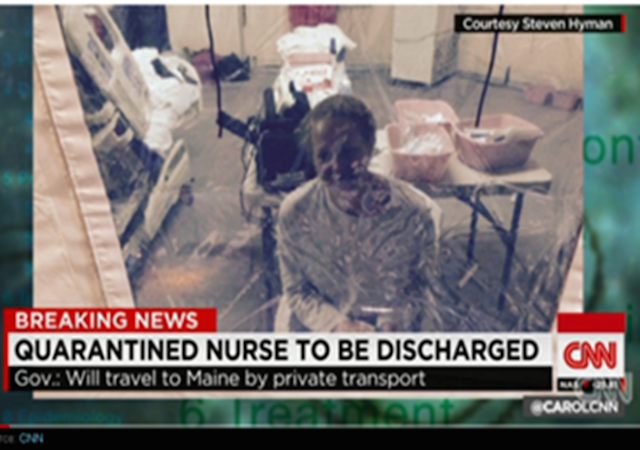
I went through the Wayback Machine to find our reports on the three Ebola cases that occurred in Dallas, Texas, in 2014.
A 45‑year‑old man from Liberia, later identified as Thomas Eric Duncan, arrived in Dallas in mid-September 2014. Several days later, he went to the hospital suffering from fever, abdominal pain, and headaches, but was discharged with a presumptive diagnosis of sinusitis. He returned to the same hospital a few days later with a persistent fever and diarrhea. He was immediately isolated and became the first patient diagnosed with the disease in the U.S.
Two nurses attending Duncan also contracted the hemorrhagic disease. While they survived their bout with infection, Duncan passed away.
The media attention and public concern over the developments were significant enough that then-President Barack Obama canceled an international trip to address the situation.
Clearly, President Donald Trump took that lesson to heart. It is being reported that his administration plans to send U.S. citizens exposed to the Ebola virus to Kenya rather than bring them home for observation and treatment.
The approach is a stark contrast to the way previous administrations responded to outbreaks, during which health care workers and other U.S. citizens exposed to the virus were brought home to be treated at specialized medical units. The administration this month flew an American doctor who developed symptoms to a hospital in Germany, and transported six other Americans for monitoring in Germany and the Czech Republic.
The Ebola outbreak in the Democratic Republic of Congo is estimated to have ballooned to more than 1,000 cases and more than 200 deaths in just the 11 days since it was first announced, making it the third largest on record already. Aid cuts by the Trump administration shut down crucial disease surveillance networks and medical supply chains that might have detected and contained the epidemic sooner.
Last week, the Trump administration invoked a public health law known as Title 42 to bar immigrants and legal permanent residents who had been in Congo, Uganda or South Sudan in the previous 21 days from entering the United States.
🚨 JUST IN: Amid the reported Ebola outbreak, the Trump admin has just BANNED foreigners from entering the US who have traveled to the Congo, South Sudan, or Uganda in the past 21 days, per STAT
This is an order from the CDC.
We should make this ban PERMANENT, to be honest. pic.twitter.com/Rx60pgghCX
— War Correspondent (@warDaniel47) May 26, 2026
Additionally, the Centers for Disease Control and Prevention (CDC) sent an “urgent request” to its workforce to recruit personnel to screen passengers arriving from Central Africa for potential signs of Ebola.
The email was sent by acting CDC Director Dr. Jay Bhattacharya. An HHS official confirmed the authenticity of the letter to ABC News.
Last week, the CDC temporarily barred entry of non-U.S. citizen travelers who had previously visited the Democratic Republic of Congo, Uganda or South Sudan in the last 21 days.
Any travelers entering the United States from these countries would need to travel to one of three airports: Dulles International, Hartsfield-Jackson Atlanta, and George Bush Intercontinental Airport in Houston.
CDC staff are being recruited to these airports across jobs series and pay grades, according to the email, including public health advisors and emergency management specialists as well as licensed medical providers.
The CDC sent an "urgent request" to its workforce to recruit personnel to help screen passengers coming from Central Africa for any potential signs of Ebola illness, according to an internal email to staff obtained by ABC News. https://t.co/S1taM6YKoL
— ABC News (@ABC) May 26, 2026
The head of the World Health Organization (WHO), now roughly $1 billion poorer following the United States’ withdrawal from the organization, chose this moment to warn that the current Ebola outbreaks in the Democratic Republic of Congo and Uganda are outpacing global response efforts. He noted the latest number of suspected deaths stands at 220.
Addressing an online meeting of the African Union about the outbreak, WHO Director-General Tedros Adhanom Ghebreyesus said a delay in detecting Ebola cases meant responders were now “playing catch-up” and the epidemic was likely to get worse before it gets better.
Tedros said he would travel to Congo – the epicentre of the outbreak – on Tuesday with another senior WHO official responsible for addressing health emergencies, Chikwe Ihekweazu.
Earlier on Monday neighbouring Uganda reported two more Ebola cases, taking its total number of confirmed cases to seven, and Tedros said other countries bordering Congo were at high risk and should take immediate action.
The WHO has declared the outbreak of the rare Bundibugyo strain of Ebola a public health emergency of international concern.
WHO chief Tedros said Monday that delayed detection has left responders “playing catch-up” in an Ebola outbreak with 220 suspected deaths. https://t.co/7h6EeeUh67 pic.twitter.com/twHLw8SqG6
— NEWSMAX (@NEWSMAX) May 26, 2026
As a reminder, the 2014-2016 Ebola outbreak was historic. The toll in Africa exceeded 28,000 cases and over 11,300 deaths. The sheer number of infections also allowed health professionals to conduct extensive follow-up studies on survivors, leading to the identification of what is now known as “post-Ebola syndrome,” a condition associated with vision loss and long-term poor health.
Taking a look at the unfolding developments, I would note that in contrast to the confusion and reactive posture seen in 2014, the current approach reflects a more precautionary, containment-focused strategy that prioritizes limiting domestic exposure while still supporting response efforts abroad.
By restricting entry from high-risk regions, concentrating screening at designated airports, and utilizing overseas treatment and monitoring for exposed Americans, the Trump administration is clearly applying lessons learned from past missteps.
While no response is without trade-offs, the emphasis on early intervention, controlled logistics, and risk reduction at U.S. borders demonstrates a more disciplined and arguably more effective framework for managing a fast-moving and deadly outbreak.
Donations tax deductible
to the full extent allowed by law.






Comments
“he went to the hospital suffering from fever, abdominal pain, and headaches, but was discharged with a presumptive diagnosis of sinusitis”
Leaving us with the question of whether it was the patient or the doctor who had his head up his a*?
“his administration plans to send U.S. citizens exposed to the Ebola virus to Kenya rather than bring them home for observation and treatment.”
The fact that he isn’t sending them to Little Somalia or EPIC City is your first clue that Trump isn’t a Fascist Nazi King.
The head of the World Health Organization (WHO), now roughly $1 billion poorer following the United States’ withdrawal from the organization, chose this moment to warn that the current Ebola outbreaks in the Democratic Republic of Congo and Uganda are outpacing global response efforts. He noted the latest number of suspected deaths stands at 220.
———
It’s all Trump and Americans fault
It’s as if declining to participate in other people’s epidemics makes us bad people.
The US is not the only country to initiate travel protocols as a result of this outbreak. Over 15 countries have enacted rapid travel measures including Canada and Mexico, most of the mideast, Thailand and India are all doing the same. Only Europe is not taking this seriously. Europe has deliberately chosen not to implement any travel bans, entry restrictions, or airport passenger screenings.
“Wouldn’t want to discriminate among our Monkeypox-prone visitors”
Insane
Then European Union deserves everything it’s going to get when Ebola emerges in the EU.
The primary difference between now and 2014 is Trump doesn’t worry about “how it looks” to ban people flying in from Africa. He put up with all the screaming-at-the-sky when he did his travel ban in 2017. I think he now figures they’re going to rant anyway, so might as well do the right thing.
I wonder how things might work if he set up travel restrictions based on the number of health “emergencies” in various countries. “You seem to be a center for diseases that threaten the rest of the globe; how about we don’t let you travel anywhere?”
What a refreshing change — Trump quarantining sick foreigners in their own countries, rather than Biden quarantining healthy Americans out of their own schools, workplaces, churches, restaurants, and stores. I guess it did take a “stable genius” to recognize the right approach.