


DOJ Accuses Denver of Banning ‘Constitutionally Protected Semi-Automatic Rifles’
Acting Attorney General Todd Blanche: “The Constitution is not a suggestion and the Second Amendment is not a second-class right.”
The Second Amendment: A well-regulated Militia, being necessary to the security of a free State, the right of the people to keep and bear Arms, shall not be infringed.
The DOJ Civil Rights Division has sued Denver, CO, over an ordinance that makes it “a crime to carry, store, keep, manufacture, sell, or otherwise possess a so-called ‘assault weapon’ (as defined in Denv., Colo., Rev. Mun. Code ch. 38, art. IV, § 38-116(1)) within the City.”
The DOJ accused Denver of unconstitutionally banning “certain constitutionally protected semi-automatic rifles.”
The law, which has been in place since 1989, restricts “the possession and sale of guns with magazines carrying more than 15 rounds — which includes AR-15-style rifles as well as other types of guns.”
“I have directed the Civil Rights Division, through our new Second Amendment Section, to defend law-abiding Americans from restrictions such as those we are challenging in these cases,” said Assistant Attorney General Harmeet K. Dhillon of the Justice Department’s Civil Rights Division. “Law-abiding Americans, regardless of what city or state they reside in, should not have to live under threat of criminal sanction just for exercising their Second Amendment right to possess arms which are owned by tens of millions of their fellow citizens.”
The DOJ immediately pointed out that “assault weapon” is not even a real term:
The Ordinance uses politically charged rhetoric. The term “assault weapon” is not a technical term used in the firearms industry. Rather, as Justice Thomas has aptly noted, “assault weapon” is a rhetorically charged political term developed by anti-gun publicists. See Stenberg v. Carhart, 530 U.S. 914, 1001 n.16 (2000) (Thomas, J., dissenting) (quoting Bruce H. Kobayashi & Joseph E. Olsen, In Re 101 California Street: A Legal and Economic Analysis of Strict Liability for the Manufacture and Sale of “Assault Weapons,” 8 Stan. L. & Pol’y Rev., Winter 1997 41, 43) (“Prior to 1989, the term assault weapon did not exist in the lexicon of firearms. It is a political term, developed by anti-gun publicists to expand the category of assault rifles so as to allow an attack on as many additional firearms as possible on the basis of undefined evil appearance.”)
“The Constitution is not a suggestion and the Second Amendment is not a second-class right,” said Acting Attorney General Todd Blanche. “Denver’s ban on commonly owned semi-automatic rifles directly violates the right to bear arms. This Department of Justice will vigorously defend the liberties of law-abiding citizens nationwide.”
Denver has stood its ground against the DOJ, which has been demanding that the city repeal the laws.
“Your request is baseless, irresponsible and a clear overreach of the federal government’s power,” City Attorney Miko Brown wrote in the response, as reported by The Denver Post.
Oh, honey. Nobody at the city, state, or federal level can violate the Constitution. It’s a shame that too many courts have upheld these gun bans and restrictions.
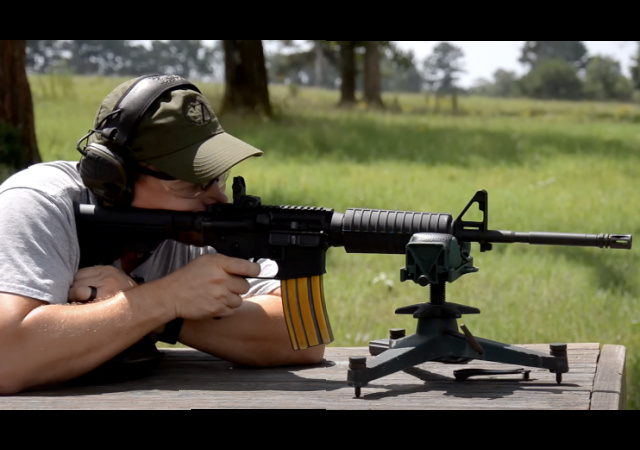
The AR-15-style rifles are the most popular rifles in America.
I will never stop telling people that AR-15-style rifles are the best guns for women, especially those with handicaps.
My left side is handicapped. My AR-15 only requires my right arm to use it. The rifle is lightweight enough for my left hand to hold. There is hardly any kickback helping me aim better.
Donations tax deductible
to the full extent allowed by law.






Comments
and yet thuggy after thuggy when caught with a weapon and especially when under strict orders to not being in possession of any weapons when a criminal…the weapons charges are dropped
why you’d think the left wants criminals to have guns!!
And criminals hardly ever use rifles of any sort, let alone these specific ones.
It was easy to make it sound evil – The Black Rifle.
Rhode Island’s ban is the goal of all dems.
Also it seems to be policy of dems to use taxpayer money for these infringements while knowing it’s wrong but betting they can out wait the SC to change and get more katanji dei’s put on the court to agree with them.
if not, well it costs law abiding citizens time and money to defend against the infringement on our Constitutional rights..
The politicians that write and vote to pass these laws should have no immunity from personal lawsuits. They should have to suffer for their actions.
“Your request is baseless, irresponsible and a clear overreach of the federal government’s power,”
Pretty sure George Wallace said something very similar.
He did.
.
About time (and I don’t even own a gun). All the gun laws need to be struck down. You want to ban them, submit a constitutional amendment. That is the way our system was designed and I’m tired of politicians and their pet judges thwarting it because they are too lazy and scared to do the hard work involved in changing the constitution.
I have always supported the Second Amendment, even when I did not own firearms. Then the Lightbringer was “elected”…
But can you? The Bill of Rights was Amendments 1 through 10, which were required to be in place before the states would ratify the Constitution as a whole. It seems that if any one of them were removed or re-written, it would nullify the entire Constitution (not that we’re using it as written now as evidenced by the infringements that are taking place everywhere.)
It would certainly take some level of government action to strip people of their right to keep and bear arms under the same amendment that declares the government shall not infringe upon that right.
You can amend the constitution into wet Charmin, but nothing you do will “strip people of their right to keep and bear arms.” All you will do is remove the federal guarantee that domestic governments will never suppress it and thereby become human rights violators.
US v. Cruikshank.
Exactly. Amending the constitution can’t affect rights that the constitution never created in the first place. But it would put us in the same position as aliens who are outside US jurisdiction; they have all the same fundamental human rights as we do, but our constitution doesn’t protect them. If the US government violates their rights, there’s nothing any US court can do about it.
Yes, you can. Any part of the constitution can be amended, except the states’ equal representation in the senate — and even that can be amended in two stages, by first amending Article 5 to remove that restriction and then making the substantive amendment to Article 1.
Also, it is not true that the first ten amendments “were required to be in place before the states would ratify the Constitution as a whole”. The constitution came into effect on June 21, 1788, when nine states had ratified it, and by July 26 eleven states had ratified it. The Bill of Rights wasn’t even proposed until September 25, 1789, and didn’t come into effect until December 15, 1791, by which time there were already 14 states.
That is correct. The issues in the First 10 simmered before and after the adoption by a majority. Eventually , but rather soon, it was realized that the founders could not trust the followers.
“Required” was the wrong word. In practice, ratification was secured with a political deal that ensured adoption of the Bill of Rights.
There was a promise that if the constitution was first ratified there would later be a chance to amend it. That promise was kept. Some amendments were proposed, and of those some were adopted.
The premise of the OP was that the constitution would not be ratified until the Bill of Rights was in place, so that it should be regarded as a deal-breaker, and repealing any of its 10 amendments should be regarded as repudiating the original deal and thus invalidating the entire constitution. That is just not so.
The constitution was ratified before any of the amendments were even proposed. And although certain provisions of the constitution were insulated from the amendment process, these were not. They could have been, but they weren’t. So it’s invalid to regard them as sacrosanct and beyond the reach of the amendment process.
Too late for even an amendment. The right to arms has already been recognized. Having been recognized as a right, it has become subject only to “due (judicial) process” (which is the process of accusing, trying, and convicting a person of a crime, and then subjecting them to punishments of various sorts that deny the criminal his rights). Legislation against firearms ownership is unconstitutional for not providing the required process. The same would be true of the amendment process – it would not meet the standard necessary to divest from any person any of their rights.
That’s my argument, and if you don’t like it, I have others.
Sorry, Dave, that argument is ridiculous for several reasons.
1. The right has only been recognized as protected by the 2A. Repeal the 2A and there is no longer a protected right.
2. Amending the constitution doesn’t change our inherent rights, but it does change what rights the law protects. Aliens living in other countries have the same inherent freedom of speech that we do, and yet the US government can punish them for their speech and they have no legal recourse. Likewise they have the same inherent right of privacy, and yet the US government can spy on them with no legal recourse.
3. Banning things by legislation does not violate due process. If the 2A were to be repealed, and Congress were to legislate banning all weapons, a person charged with owing a weapon would be entitled to due process — but that would merely consist of a fair trial at which the jury was presented with valid evidence proving beyond reasonable doubt that the accused did indeed own a weapon. No argument that this was not a crime would be allowed.
The DOJ accused Denver of unconstitutionally banning “certain constitutionally protected semi-automatic rifles.”
Why the qualifiers? You could have replaced the “” with just firearms.
Because
(1) Denver hasn’t banned all firearms, only certain ones.
(2) It’s not necessarily the case that all firearms are constitutionally protected. A state can probably ban a firearm that’s inherently dangerous, such as the SIg Sauer P320.
I understand what you’re saying, but all firearms are inherently dangerous. They would be of little utility if they weren’t. Sig’s problem is a product liability issue, not a criminal issue. (And the problem is merely perceived, as it has not yet been proven. Multiple investigations into the P320 have failed to reveal a flaw in its design or manufacture. I believe it may be a problem of tolerance stacking that only occurs in a few guns.)
No, all firearms are not inherently dangerous. They’re tools, and are perfectly safe for the user if used properly. And they’re what the RKBA protects. A weapon that can go off by itself, or that can explode and harm its user, is inherently dangerous, and the RKBA doesn’t include it, so a state could decide to ban it.
You seem to forget that product liability is a matter of state law. Manufacturers are only liable because the law says so, and if all guns were absolutely protected from any laws affecting them then manufacturers of defective guns could not be held liable, because they’d have the right to produce and sell their products. The reason they can be held liable is that the RKBA doesn’t include such weapons, and therefore the 2A doesn’t protect them.
Your comment is correct, with exceptions. Why did a firearm fail? Was the ammunition at fault, excessive powder charge. Improper maintenance, obstruction to the barrel? Some actions by the user? An object entering the holster that contacted the trigger? I’ve seen all these issues cause a firearm to discharge. These must all be evaluated before a liability claim can be made and proved.
tmm, what I’m saying is that if a state decides that a specific weapon is inherently too dangerous to allow people to have it, because it can harm people even when properly handled by a responsible person, then the second amendment would not prevent the state from banning it, because the RKBA doesn’t include such a weapon.
If the RKBA did include even such a weapon, then product liability suits for it would be unconstitutional as well. The only way product liability suits for defective guns could be constitutional is if the RKBA doesn’t include them; and since it doesn’t, the state could outright ban them as well.
No state has banned the P320, several range facilities and firearms instructors have prohibited their use in classes. The final story has yet to be told. As example, the Swiss military just placed an order for 50K P 320 pistols. If they had concerns I doubt the order would be made.
Methinks that Milhouse was tongue-in-cheek about the P320, but sarcasm doesn’t tend to play well online.
I am aware that no state has banned it; what I’m saying is that I believe a state could ban it, because the RKBA has never included such weapons, and therefore a ban doesn’t infringe the RKBA, and thus doesn’t violate the 2A.
My point being that just as the freedom of speech doesn’t include all speech, so the RKBA doesn’t include all arms.
When it comes to the second amendment, I am an absolutist. The constitution says “shall not be infringed” which I read literally. I believe laws and regulations that touch upon weapons should be null and void.
With the exception of nukes, biological and chemical weapons I’d agree. The history of the Republic is littered with examples of individual Citizens bringing their own weapons to whatever ‘fight’ was at hand. Then there’s the not so insignificant Congressional power to issue Letters of Marque and Reprisal…. seems obvious that for Congress to grant those to Privateers to wage war upon our enemies that those same Privateers would need not just the weapons to do so but the training/familiarity with the weapons to make effective use of them.
Maybe Trump should start issuing those to US flagged ships traversing the strait. Also to any Billionaires with yachts wanting to get in on the fun. Then sell them second hand weapons of (gasp) war and let them go to town.
For sh”ts and giggles issue one to Kerry as well.
I believe you have a right to whatever weapon/tool is necessary to protect your life. However, it must be used responsibly. If you had a need to defend your life with a nuke (or chemical/biological weapons) and could do so without harming any innocent persons, you’d have a right to use that nuke. The use of a nuke would be constrained by the same considerations that might restrain the use of any other weapon – you are responsible for all the damage you do with your chosen self-defense weapon. Generally, you shouldn’t employ a firearm in an environment where injury or death to innocent persons is likely to result from what might otherwise be a lawful use of force. A nuke’s use would be restrained by this same consideration. The fact that such a scenario (that the nuke wouldn’t cause collateral damage) is almost impossible to imagine doesn’t mean that the situation is ruled out by law.
The government doesn’t have to wait until you’ve done the damage before acting against you. You can be preemptively enjoined from doing things that pose an unreasonable risk to your neighbors.
If you have a basement full of nitroglycerine, your neighbors can sue you simply for having it, and can get an injunction forcing you to get rid of it. They don’t have to wait for your house to explode first.
“Shall not be infringed” is indeed absolute, but saying that therefore there can be no laws about weapons begs the question. It assumes that all such laws infringe the RKBA, and that’s not true.
Consider the first amendment. Congress can’t make any law abridging the freedom of speech, but it doesn’t follow that it can’t make any law restricting speech, because not all such laws abridge the freedom. First you must define what the freedom of speech is — what it protects. The freedom of speech has never been understood to protect all speech whatsoever; it’s always been understood that there are kinds of speech that are not free, and that the government may ban or regulate without in any way abridging the freedom. Defamation, fraud, incitement, true threats, breach of copyright, etc.
In the same way, Congress can’t make any law infringing the RKBA, but it doesn’t follow that it can’t make any law restricting arms, because not all such laws infringe the right. Just as there are restrictions on speech that don’t abridge the freedom of speech, there are restrictions on arms that don’t abridge the RKBA.
That’s what Bruen is all about. How do we know whether a given restriction abridges the RKBA? One clue is if people in the republic’s early days, when they took the RKBA seriously, accepted such a restriction and thought it didn’t infringe.
Of course some laws from those days did infringe the right, and people knew that, but they didn’t protest because they didn’t care about certain people’s rights. If you’d asked people in those days, doesn’t this infringe those people’s RKBA they wouldn’t deny it, they’d just say those people’s rights don’t matter. Now that we accept that everyone’s rights matter, and we’ve extended the 2A to the states, such laws are unconstitutional even if they’re very old. But laws that an ordinary person in the late 18th century would have said don’t infringe the right at all, were valid then and remain valid now.
Preamble to the Bill of Rights:
THE Conventions of a number of the States having at the time of their adopting the Constitution, expressed a desire, in order to prevent misconstruction or abuse of its powers, that further declaratory and restrictive clauses should be added: And as extending the ground of public confidence in the Government, will best insure the beneficent ends of its institution…
The first ten amendments to the Constitution were a guarantee that Congress had no authority to legislate over certain matters. Period. Any finding of authority to, for instance, make any firearms legislation, would be a “misconstruction or abuse” of Congress’ legitimate powers.
The exercise of rights does not require regulation. No innocent persons are intentionally harmed when a person exercises his rights. By definition, the exercise of a “right” is not a crime. Rights are therefore self-limiting, requiring no regulation. As soon as a person intentionally harms an innocent person, a crime is committed. Legislation defining and setting punishments for crimes is not the same as “regulating” a right. They are entirely different animals. People are arrested and charged for “committing crimes,” not for “abusing their rights.”
Dave, you appear to be babbling. Your words don’t make sense.
First of all, the first 10 amendments are no more entrenched than any other part of the constitution. If the 1A were to be repealed, then the rights it protects would no longer be protected, and Congress would be free to legislate to censor newspapers, ban guns, search and seize our properties with no warrant and no compensation, etc, just as the states were free to do so before the 14A.
Second, the freedom of speech doesn’t include all speech. That is the only reason there can be laws against defamation, or breach of copyright, or fraud. If it included all speech, including fraud, then the government could not charge people with fraud. In exactly the same way the RKBA doesn’t necessarily include all weapons.
The preamble to the Bill of Rights says the first ten amendments are meant to guarantee to the States that Congress has no authority to break into any of our rights (with the 9th Amendment covering all unenumerated rights). It’s not just that government can’t infringe, it (according to the BOR’s preamble) has no authority to make firearms legislation at all. (Not even via the commerce clause. If it had been imagined that the commerce clause would allow Congress to “regulate” firearms, the Bill of Rights, coming later, has rescinded any such authority. But I don’t believe that’s the case. The authority simply never existed, and the BOR guarantees, according to its preamble, that this interpretation of the federal government’s authority is correct.)
In addition to the reasons I gave above, the preamble you cited has no force of law whatsoever.
Now go after Massachusetts, which enacted the same “ban” years ago. Can’t buy an AR-15 in MA, but the chicken shit Governor (and former AG) Maura Healey has not yet moved to confiscate such existing guns owned by residents.
Let her try, it will Lexington and Concord, Part II.
I will be surprised if the Supremes go along with the DoJ on this. Very pleasantly surprised, but previous cases regarding AR-15s don’t give me much hope.
It’s good to see an AG defending our rights, rather than defending government legislation and acts that infringe upon them. I’ve long thought AGs to be schizophrenic in this regard.
As I wrote elsewhere a few years ago (expressly concerning State AGs):
Isn’t a state’s attorney general supposed to defend the law? Aren’t the state’s constitution and the US Constitution any state’s supreme law? Then why aren’t state AGs defending their constitutions (and their states’ citizens), instead of defending their legislatures’ statutes? At least, are they not in a position of conflict of interest? They will defend citizens from predatory business practices, but when the state is accused of violating the law, the AG comes to its defense. Is this not, at least, odd?
“It’s good to see an AG defending our rights, rather than defending government legislation and acts that infringe upon them.”
“Acting Attorney General Todd Blanche: “The Constitution is not a suggestion and the Second Amendment is not a second-class right.”
Blondi would have thrown up on stage before she got this sentence out.
Good riddance to her, and a pox on Trump for nominating her despite our warnings.
Perhaps instead of suing, which appears to be akin to whack-a-mole, the Feds should announce that government officials who willfully enforce or order the enforcement of a particular state or local law that deprives citizens of their constitutional rights will be arrested and prosecuted under 18 U.S. Code §§ 241 and/or 242.
If automatic shotguns were more popular then odds are they’d be deemed assault weapons, assuming they aren’t already so deemed. It seems like assault weapons are whatever form of firearm assaults the sensibilities of the anti-gun crowd.
The only real definition of “assault weapon” is “scary gun”.
An assault rifle is one that can shoot more than one round with a single trigger pull. The best known examples are the military versions of the AK-47 and the AR-15, although the military version of the latter is the M16 and later the M16A4, shortened to M4. There are others, but those are the best known.
That lookalikes (civilian AR-15s and AK-47s, and others) are mischaracterized does not mean that there’s no working definition of an assault weapon. It mean that the Karens (of both sexes) who call non-assault rifles assault rifles are showing their ignorance.
RandomCrank, we are talking about “assault weapon“, not “assault rifle“. An assault rifle is an actual thing, with a real definition. An “assault weapon” is not a thing; it’s a term made up to scare people, and its only definition “a gun that looks scary”.
I usually agree with you, but this time you’re being needlessly and immaterially pedantic.
Here I thought I’d heard of every gun and shot half of them, but not automatic shotguns. Yep, they exist. I never knew.
Being the owner of 15 firearms (including Ye Olde AR-15) and 30,000+ rounds plus the usual accessories, I’m something of a 2A maximalist. But I’m okay with carry permits as long as they are “shall issue,” and okay with quasi-prohibition of automatics, and okay with requiring a class to get the carry permit, and a hunter safety class for a hunting license.
Past that, nada. I realize that 26 states don’t require a carry permit. I wouldn’t be part of any movement to change that, which means that my support for carry permits is mild. The reason I am for carry permits is that I think it’s reasonable to require a gun carrier to learn the four commandments of gun safety and to sit through a presentation about the law of armed self defense.
Oh, and I’m 100% for stand your ground and for the castle doctrine. Invade someone’s home at peril of your life. Endanger someone’s life or equivalent, or that of someone near him anywhere, and say your prayers. Oh and one more thing: No waiting periods, no purchase limits, no registration, no ban or limitation on suppressors.
I’m okay with background checks, but would change the mechanism to further reduce the de facto compilation of an ownership list. I’m sure there are some knees jerking here about my support for carry permits and de facto automatic bans, but other than those two issues, I’m a very happy gun nut. Hate me now.