


“Leave No Man Behind”: The Historic Significance of Daring and Solidarity
The present-day stance of the United Kingdom and France, which are refusing to cooperate with the United States in the Iran war, is a far cry from the prevailing ethos at the times of Churchill
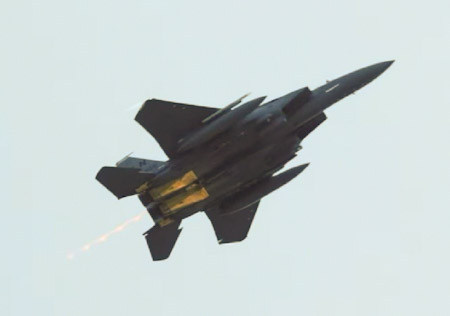
The bold rescue mission that recently saved the U.S. airman who was missing after an F-15 aircraft was downed in Iran was fascinating in more ways than one. The allied forces of the United States and Israel demonstrated superb courage, coordination, and precision, along with ingenious intelligence efforts.
What I consider especially remarkable is the historic significance of “leaving no man behind” as a civilizational imperative. Loyalty toward one’s “brothers in arms” and allies is paramount not only for the physical but especially for the moral survival of Western civilization. The Greek historians Herodotus and Thucydides frequently used their accounts to serve as a didactic example for posterity of traitors and acts of betrayal, to emphasize the value of loyalty and expose the ethical and strategic consequences of treason.
At first glance, it might seem unreasonable and unduly dangerous to venture behind enemy lines and potentially risk multiple lives and resources to save one. This, however, is where the signature blueprint of Western civilization lies: every human life is inherently worthy. No one should be abandoned, especially in battle, just as a ship crew would make every effort to save even a single person fallen overboard. This solidarity is pivotal for military and public morale. It is not a coincidence that millions of children in and outside France have grown up with the heroic stories of Alexandre Dumas’ three (technically four) musketeers and their legendary motto: “One for all, and all for one.”
One of the most audacious instances of venturing behind enemy lines, to boost British and allied morale, is described in the book and subsequent film Ill Met by Moonlight. In 1940, Churchill launched the Special Operations Executive (SOE), a clandestine British organization during World War II, aiming to “set Europe ablaze.” The SOE supported local resistance movements and operated behind enemy lines.
In the spring of 1944, two SOE agents, William Stanley Moss, author of Ill Met by Moonlight, and Patrick Leigh Fermor, aided by trusted Greek resistance fighters, carried out the amazing abduction of the German Major-General Heinrich Kreipe, Commander of the forces occupying the island of Crete, while he was traveling from his residence to his headquarters. This episode, like the musketeer tales in France, inspired generations of British and American youth.
By contrast, the present-day stance of the United Kingdom and France, which are refusing to cooperate with the United States in the Iran war, is a far cry from the prevailing ethos at the times of Churchill or Alexandre Dumas. Such a critique may not be an accurate portrayal of the population at large in these countries, but it reflects the official position of their governments. These governments are acting not in the best interests of their own nations or in the noble traditions of allied solidarity, but are loyal to a globalist anti-Western agenda that is threatening to turn Europe into an open-air museum of glory that once was.
Not surprisingly, the mainstream media’s reaction to the rescue operation in Iran that brought the second U.S. crew member to safety has been of the type: “Trump’s Biggest Gamble: How Special Forces Pulled off Daring Extraction That Came Close to Disaster.”
This brings to mind a witty recent caricature, circulating across social media, which depicts President Trump as rescuing a baby from the jaws of sharks while surrounded by rabid protesters clamoring incessantly: “Trump starves sharks!” Margaret Thatcher reportedly remarked: “If my critics saw me walking over the Thames, they would say it was because I couldn’t swim.”
For the leftist politicians and media of today, no amount of factual evidence and historic achievements would cause them to credit their opponents where credit is due. That is why those “fighting the good fight” ought to gain further popular support through alternative media outlets, effective policies, and broad educational campaigns, so they could succeed in restoring the values that made the West uniquely great. “Leaving no man behind” is one of the enduring marks of civilizational greatness.
Nora D. Clinton is a Research Scholar at the Legal Insurrection Foundation. She was born and raised in Sofia, Bulgaria. She holds a PhD in Classics and has published extensively on ancient documents on stone. In 2020, she authored the popular memoir Quarantine Reflections Across Two Worlds. Nora is a co-founder of two partner charities dedicated to academic cooperation and American values. She lives in Northern Virginia with her husband and son.
Donations tax deductible
to the full extent allowed by law.







Comments
Thank you, Nora. Our Judaeo-Christian society has the attitude of the worth of the individual because we are made in the Image of God.
Your article reminds me of what my wife heard years ago: “If Trump developed a cure for cancer, the left would complain about all the oncologists thrown out of work.” Also on the topic of people who refuse to be satisfied, my late mother had this little rhyme: “Some people, if they died and went to Heaven tonight, would fuss and complain because the lights are too bright.”
.
Leadership….
What a romantic, sophisticated piece. I read Ill met by Moonlight, as a child, and it was jolly good stuff. I also enjoyed watching the Dam Busters and especially enjoyed the dog being called for.
But, the airman was NOT rescued because of some ethos mumbo jumbo. He was rescued because if captured he would have been exploited as an Iranian propaganda tool, and this would have been gleefully joined by our execrable domestic press.
This is the one victory Trump can hang his hat on until he turns Iran into glass.
Don’t forget, that airman could have been a woman.
Did he decline sex surgery?