

Image 01 Image 03

US Supreme Court Tag

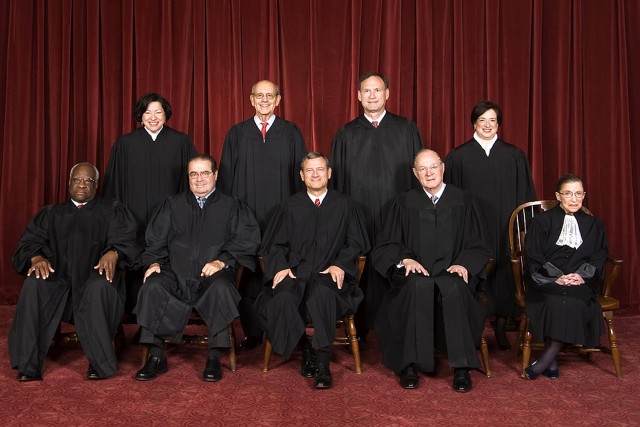
On June 30, 2015, I appeared on the Joe Thomas Show on WCHV in Charlottesville, VA, to talk about the state of the Supreme Court, and the two recent blockbuster decisions in gay marriage and Obamacare. We touched on the rulings, the reaction, and proposals to put limits on the Court, such as judicial-retention elections suggested by Ted Cruz, and proposals for term limits. The article I reference during the interview is from Roll Call, Reagan Aides Foresaw Kennedy Gay-Rights Views That Conservatives Now Lament. Bottom line: We have reached the point of absurdity when the nation waits anxiously to find out how one person -- the swing vote on the court -- will vote on issues that decide the course of the nation.
"Think how absurd it is for a nation to be waiting by the radio, or the TV, or nowadays the internet, how is the Supreme Court going to decide an issue as fundamental as the issue of marriage, and everybody knew it would come down to one vote. So we're waiting on one person to decide the future of our country, and whether you like it or not, if you like the decision, what if it had gone the other way by one vote, how would you feel? So I think we really do have a situation where so many things are decided by a single vote in the Supreme Court that we really have to wonder if that's how we want to run our lives as a nation."
Society no longer is governed by "one person, one vote," but by one person's vote. This is no way to run a country. Here's the audio below:

When the Supreme Court handed down its ruling in Texas Department of Housing v. Inclusive Communities Project last week, social justice activists claimed a major victory in the battle against segregated housing. The decision endorsed a "disparate impact" analysis as applied to a Texas program that plaintiffs claimed distributes federal low income housing credits disproportionately, awarding too many credits to inner-city, predominately black neighborhoods and too few to suburban, predominately white neighborhoods. The Inclusive Communities Project, plaintiffs to the case, said that the government had actually caused continued racial segregation in the Dallas area via its credit allocation program, and sued to force the State of Texas to alter their selection criteria to encourage the construction of low income housing in suburban communities. The playing field changed mid-posture when the HUD secretary issued a regulation interpreting the Fair Housing Act to encompass disparate impact liability and instituted a burden-shifting framework that would make it easier for plaintiffs trying to prove instances of subtle discrimination. Regulatory tango aside, ICP's argument won at the Supreme Court in a 5-4 decision authored by Justice Kennedy and joined by the usual, left-leaning suspects. Back in January, Tulane Law prof Stacy E. Seicshnaydre and Inclusive Communities Project board member laid out better than I could the social justice argument that the plaintiffs brought to the Court:

Why, Mr. Sulu? WHY? George Takei of Star Trek fame made a wild accusation in an interview with Phoenix-based Fox affiliate. The televised portion of the interview went as you'd expect: long-time gay rights advocate is thrilled with advances in gay rights. "We're overjoyed, we're proud, and we feel fully American," said Takei. George discussed having to stay in the closet so he could have a career in Hollywood and the disappointment he felt when Governor Schwarzenegger vetoed California's gay marriage legislation. "We're doing this for the straight couples of today because they're going to having the gay babies of tomorrow and they won't have to have those discussions." The televised interview:

Charles Krauthammer appeared on the O'Reilly Factor last night and was asked by Bill O'Reilly to name three reasons for the recent rapid changes in America, with a focus on recent U.S. Supreme Court cases. Krauthammer cited culture as one of the reasons and he's absolutely right. Andrew Breitbart frequently voiced his belief that politics is downstream from culture. Watch the entire exchange below: Krauthammer recently called the SCOTUS ruling on gay marriage a loss for democracy.

The Supreme Court ruled against the Environmental Protection Agency 5-4 this week, saying the EPA erred in not considering costs when implementing new regulations governing toxic emissions from coal-fired power plants:
The 5-4 decision Monday went against an Environmental Protection Agency mercury rule that forces utilities to shutter old coal plants or invest billions of dollars in equipment to clean up the emissions from their smokestacks. The court said the EPA should have considered the costs and benefits before deciding whether to impose those limits on the toxic emissions. “The agency must consider cost -— including, most importantly, cost of compliance -— before deciding whether regulation is appropriate and necessary,” Justice Antonin Scalia wrote in the majority opinion. “Reasonable regulation ordinarily requires paying attention to the advantages and the disadvantages of agency decisions.”
Ironically, the rule could stay on the books while the EPA performs the analysis:
The decision to send the regulation back to a lower court to decide what happens next leaves open the possibility that the 2011 rule, called the mercury and air toxics regulation, could be left on the books while the agency does the analysis that the high court said it should have done long ago. It could take a few months for that lower-court decision.
Despite the victory, it may have come at a cost that is too late to recover. The rule went into place several years ago and the impact has taken its toll:

Could the Supreme Court's latest actions result in a set-back for the pro-life community? Wednesday, 10 of Texas' 19 abortion clinics were set to close thanks to a law passed by the Texas Legislature in 2013. The law that would've required abortion clinics to maintain hospital-like standards was enough to force 10 clinics out of the abortion business. Those standards included, "minimum sizes for rooms and doorways, pipelines for anesthesia and other infrastructure," according to the Texas Tribune. In addition to the hospital-like standards requirement, physicians conducting abortions were required to, "have admitting privileges at local hospitals," reported the Washington Post.

The Supreme Court today refused to accept a case which sought to allow states to supplement a federal voter registration form so as to require proof of citizenship to vote. Such proof is particularly important given how freely many states are handing out drivers licenses to illegal immigrants, and the Obama administration's unilateral implementation of quasi-amnesty deferrals (some of which were stopped in court). It's just not enough anymore that someone is here legally (or at least, is not being deported). The Petition for Certiorari and other filings in Kobach v. United States Election Assistance Commission are here. The 10th Circuit decision is here. ScotusBlog summarized the issues:
Issue: (1) Whether Article I, Section 2 and the Seventeenth Amendment of the U.S. Constitution require the U.S. Election Assistance Commission to defer to the states’ determination that provision of documentary evidence of citizenship is necessary to enforce the states’ voter qualifications; and (2) whether Article I, Section 2 and the Seventeenth Amendment of the U.S. Constitution permit a dual voter rolls system in which some voters who are qualified to vote for federal office holders are not also qualified to vote for those “in the most numerous branch of the state legislature.”
Bloomberg Politics reports on the development:

Forty-eight hours after the Supreme Court's monumental gay marriage decision, and progressives are already calling for an end to tax exemptions for churches. Anticipating the Supreme Court's eventual ruling on Obergefell v. Hodges, Senator Mike Lee and Rep. Raul Labrador introduced the First Amendment Defense Act. The bill would protect religious institutions who, for religious beliefs, do not actively participate in gay wedding ceremonies. In an op-ed published two weeks ago in the Deseret News, Sen. Lee explained:
This is a bill that would prohibit the federal government from penalizing individuals or institutions on the basis that they act in accordance with a religious belief that marriage is a union between one man and one woman. The First Amendment Defense Act, which Rep. Raúl Labrador, R-Idaho, will introduce in the House of Representatives, would prevent any agency from denying a federal tax exemption, grant, contract, accreditation, license or certification to an individual or institution for acting on their religious beliefs about marriage.
Supreme Court Gay Marriage Oral Argument Fox News Tax Exemption After hearing the oral arguments in Obergefell v. Hodges, Sen. Lee was most disturbed by a question asked by Justice Alito.

In response to the U.S. Supreme Court’s same-sex marriage decision, much of social media instantly descended into a mob of gleefulness, unrestrained by reason or critical thinking. People were so ecstatic at the arrival of nationwide same-sex marriage that they could not realize what they were losing in the process. Last Friday, the Supreme Court stole from them, and all of us, something fundamental: the right to govern ourselves. The decision last week was not about whether gay marriage is a good or a bad idea. Reasonable people can disagree about that. The question was: who decides? Do the people decide by debate and deliberation, through referendums, legislative action, protests, and other democratic activity? Or do nine lawyers decide the issue by majority vote, without accountability to the people? Justice Kennedy’s opinion -- which reads like a sociological treatise rather than a legal judgement -- is nothing less than a sweeping assertion that constitutional text and history can be dispensed with when making judicial determinations.

Last week's breathtakingly disappointing Supreme Court decision in the King v. Burwell Obamacare subsidy case still has activists reeling. Where do we go from here? Burwell was a narrow case, but its ruling is one more brick we'll have to deal with when tearing down the health care house that Barack built. Still, progressives are riding high in the wake of the ruling, using it as a tactic to bolster confidence in the program and fight back conservative opposition to the health care law. Former HHS Secretary Kathleen Sebelius took to the airwaves to praise the ruling and above all, defend her pet program---by insisting that people stop her on the streets to thank her for Obamacare. Watch, via Real Clear Politics:
I think this law has always been about people who wanted and needed desperately affordable health coverage. There's 6.4 million people who now know the coverage that they have, can continue on with subsidies and millions more who can take advantage of it. I've been a lucky one, I've always had affordable available health care. So I feel great for the people who talk to me every day in the grocery store and on airplanes and stop me on sidewalks and tell me that this has changed their life forever. They no longer have to worry about affording health care if they get sick, taking care of their kids and this is a very good day for those Americans.

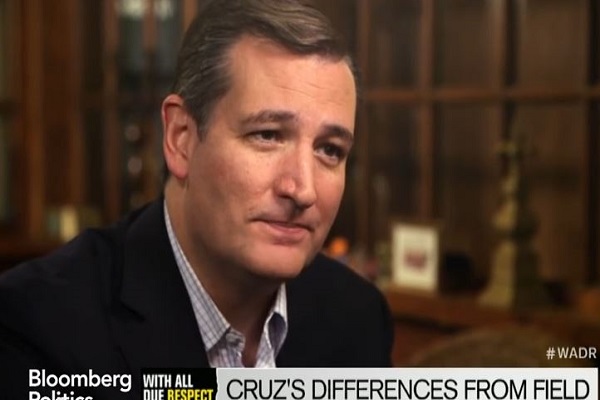
Ted Cruz is not at all happy with the recent Supreme Court decisions regarding ObamaCare subsidies and gay marriage, and  his solution is bound to be controversial. He's proposing a constitutional amendment that would make the Supreme Court justices subject to judicial-retention elections. Here's his tweet about it: He also wrote a lengthy piece for The National Review in which he argues that the Supreme Court has rendered decisions that are lawless examples of judicial activism and that undermine the Court's very legitimacy.  Cruz writes:
The Framers of our Constitution, despite their foresight and wisdom, did not anticipate judicial tyranny on this scale. The Constitution explicitly provides that justices “shall hold their Offices during good Behaviour,” and this is a standard they are not remotely meeting. The Framers thought Congress’s “power of instituting impeachments,” as Alexander Hamilton argued in the Federalist Papers, would be an “important constitutional check” on the judicial branch and would provide “a complete security” against the justices’ “deliberate usurpations of the authority of the legislature.”

Following the surreal decision of the Supreme Court regarding ObamaCare subsidies, Texas Representative Brian Babin (R) wants to ensure that the justices take full advantage of the law they just contorted in order to save it.  Picking up Justice Scalia's comment that the decision effectively turns ObamaCare into SCOTUScare, Babin has introduced a bill that requires Supreme Court justices to sign up for ObamaCare. Watch: From Babin's website:
U.S. Representative Brian Babin (TX-36) issued the following statement today after introducing the SCOTUScare Act (H.R. 2905), which finally eliminates their exemption and requires all U.S. Supreme Court Justices and their employees to sign up for Obamacare:

Today, The NY Times turned its entire front page above the fold to celebrating yesterday's Supreme Court decision on gay marriage: NY Times Supreme Court Gay Marriage Headline Front Page Many national and major regional papers did the same. But is any diversity of news coverage permitted on such a huge cultural victory? If you want to know what the future of the post-SCOTUS SSM culture war looks like, take a look at this tweet by former MSM exec. Betsy Fischer Martin (h/t @bryanjacoutot) complaining that a north Louisiana paper had a larger headline about a local pageant than the Supreme Court's gay marriage decision. The Supreme Court decision was front page, above the fold, right hand side, double column, and was followed just below it with another report about the impact of the decision. But that a local pageant story had more column space apparently was unacceptable:

Today's ruling in the Obergefell same-sex marriage case sent shockwaves rolling across the nation. Fox News correspondent Shannon Bream read the decision on the air as the crowd outside the Court cheered: The scene outside the Supreme Court right now is kind of a circus:

A dissent has no power except the power of its words and its logic. So Justice Scalia's dissent in King v. Burwell (joined by Alito and Thomas) is satisfying only in the rhetorical and intellectual sense. But it is so good that I'm highlighting it again anyway. Here are some excerpts:
[T]he plain, obvious, and rational meaning of a statute is always to be preferred to any curious, narrow, hidden sense that nothing but the exigency of a hard case and the ingenuity and study of an acute and powerful intellect would discover.” Lynch v. Alworth-Stephens Co., 267 U. S. 364, 370 (1925)...Under all the usual rules of interpretation, in short, the Government should lose this case. But normal rules of interpretation seem always to yield to the overriding principle of the present Court: The Affordable Care Act must be saved... ...The somersaults of statutory interpretation [this Court has] performed (“penalty” means tax, “further [Medicaid] payments to the State” means only incremental Medicaid payments to the State, “established by the State” means not established by the State) will be cited by litigants endlessly, to the confusion of honest jurisprudence. And the cases will publish forever the discouraging truth that the Supreme Court of the United States favors some laws over others, and is prepared to do whatever it takes to uphold and assist its favorites.

My soundbite: "The Supreme Court today rewrote Obamacare in order to save Obamacare. The plain meaning of the term 'Exchange established by the State' was contorted to mean established by the State or Federal government. That contortion, Justice Scalia correctly noted in dissent, effectively has turned Obamacare into SCOTUScare." ---------- Decision just in in King v. Burwell. Here. In a 6-3 ruling authored by Chief Justice Roberts, the Court held that subsidies are available on the federal exchanges. Those voting in the majority were Roberts, Kennedy, Ginsburg, Breyer, Sotomayor, and Kagan. Had the court ruled otherwise, it would have put all of Obamacare in jeopardy, since 38 states do not have exchanges and Obamacare is too expensive for most people without a subsidy. The issue was whether only state-established exchanges could issue tax credits, or whether the federal exchanges could also. Challengers to IRS regulations pointed to the words “established by the State” in the legislation as clear and unambiguous that subsidies were limited to state exchanges. The Court rejected this assertion:

Possibly as soon as Thursday morning, but certainly by early next week, we will know how the Supreme Court rules on the issue of whether denying same-sex couples the ability to marry violates the U.S. Constitution. Lyle Denniston at ScotusBlog summarized the case as follows:
Taking on a historic constitutional challenge with wide cultural impact, the Supreme Court on Friday afternoon [January 16, 2015] agreed to hear four new cases on same-sex marriage. The Court said it would rule on the power of the states to ban same-sex marriages and to refuse to recognize such marriages performed in another state.... The Court fashioned the specific questions it is prepared to answer, but they closely tracked the two core constitutional issues that have led to a lengthy string of lower-court rulings striking down state bans. As of now, same-sex marriages are allowed in thirty-six states, with bans remaining in the other fourteen but all are under court challenge. Although the Court said explicitly that it was limiting review to the two basic issues, along the way the Justices may have to consider what constitutional tests they are going to apply to state bans, and what weight to give to policies that states will claim to justify one or the other of the bans....
I hate trying to predict court rulings, but the political winds have changed dramatically the past few years, so if I had to bet, I'd bet that the ruling is 5-4 for gay marriage. [Warning - my bets tend to be counter-indicators.] Don't think for a second that politics and public opinion doesn't influence such historic cases. I also expect Elena Kagan to be one of the five, based on her comments during oral argument, via NY Times: