Image 01 Image 03

Sonia Sotomayor Tag

In a complicated ruling, the Supreme Court substantially upheld the inclusion of a census question regarding citizenship, but procedurally held that more inquiry was needed into C0mmerce Dept. reasoning in seeking to add the question. So the bottom line is that there might be a citizenship question, but it's unclear if there is time to get it resolved under deadlines for printing census forms.

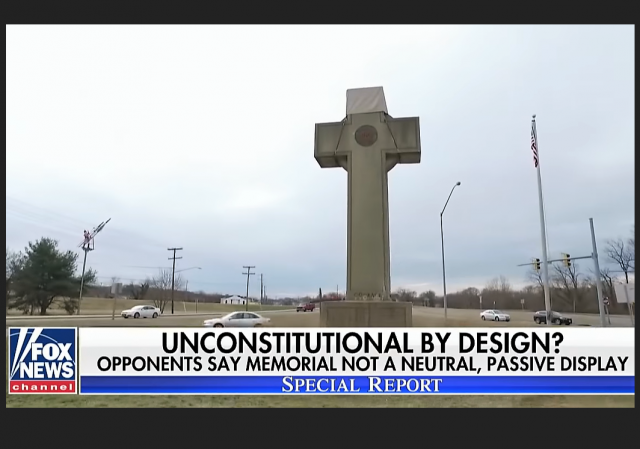
The U.S. Supreme Court has reversed the 4th Circuit Court of Appeals, and has ruled that the 1925 'Peace Cross' Memorial erected to remember World War I dead can stay on public land. The Opinion is here. Here is an explainer about the case from The Federalist Society:

The Supreme Court heard oral argument on the issue of whether the Commerce Department can add a citizenship question to the Census.  Various District Courts ruled against the Trump administration, and the administration sought the unusual remedy of direct review by the Supreme Court. We previously covered the issues in our post when the Supreme Court granted direct review, Supreme Court agrees to hear Census citizenship question case.

The Supreme Court issued Orders in two cases involving the Trump administration decision not to permit transgender persons to serve in the military. The Orders stayed District Court preliminary injunctions that had prevented the ban from going into effect. The votes split along ideological lines, with the four liberal Justices voting to deny the stay (i.e., allow the injunctions to continue).

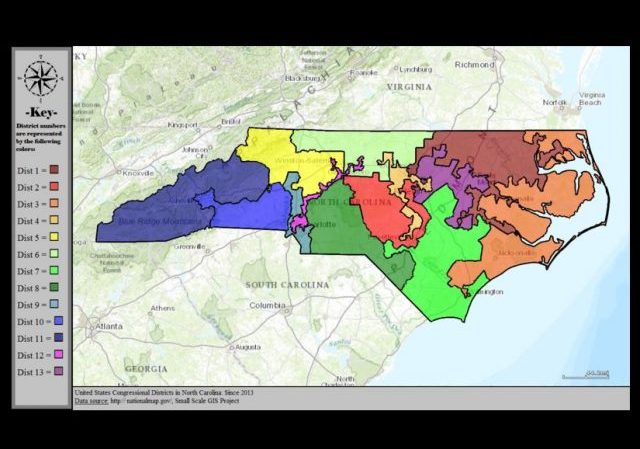
The Supreme Court announced Friday that it would, once again, consider whether partisan gerrymandering can be so extreme that it violates the Constitution. The move comes after a term in which the justices had looked poised to impose some limits on partisan influence in redistricting, but ultimately seemed unable to agree on a workable standard for evaluating when state lawmakers cross a constitutional line.

The Supreme Court in a 5-4 ruling that did not split on traditional ideological lines, upheld South Dakota's ability to require that out-of-state internet sellers collect state sales tax on goods sold into South Dakota. The case involved the internet retailer Wayfair and South Dakota. The case is being misrepresented in many media reports as involving whether states can tax internet sales. They can, and that was not in issue. The issue was whether states can force internet retailers to collect the sales tax and turn those proceeds over to the state.

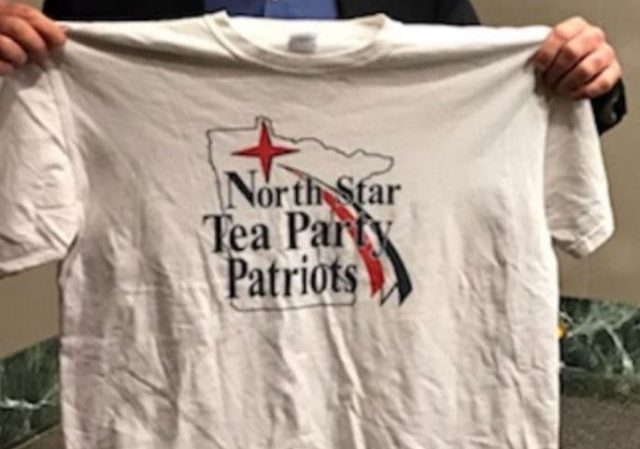
The Supreme Court, in the case of Minnesota Voters Alliance v. Mansky, ruled that a Minnesota law that banned “political badge, political button, or other political insignia" at polling places on Election Day was unconstitutional. The case was brought by voters who, among other things, wanted to wear a Tea Party Patriots tee shirt (see featured image, via MVA Facebook):

The Supreme Court ruled 7-2 in favor of the Colorado baker who refused to bake a wedding cake for a gay couple. From USA Today:
The verdict criticized the state's treatment of Jack Phillips' religious objections to gay marriage, ruling that a civil rights commission was biased against him. As a result, the decision did not resolve whether other opponents of same-sex marriage, such as florists and photographers, can refuse commercial wedding services to gay couples.
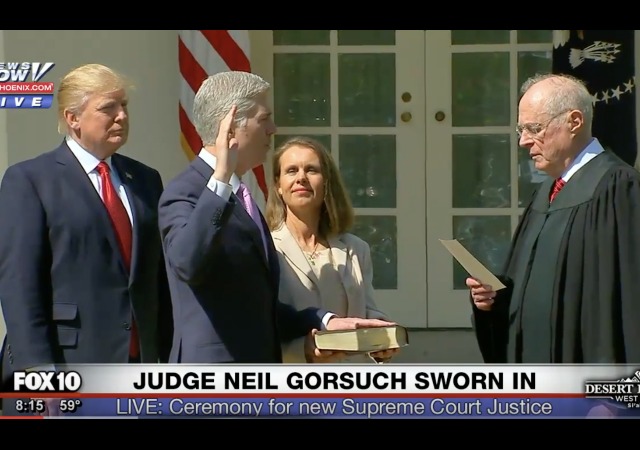
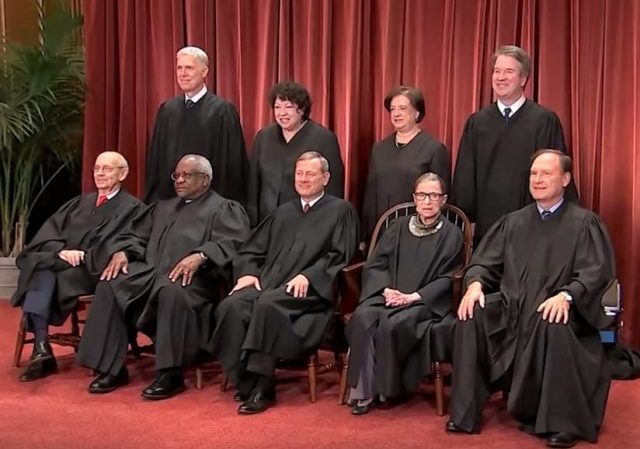
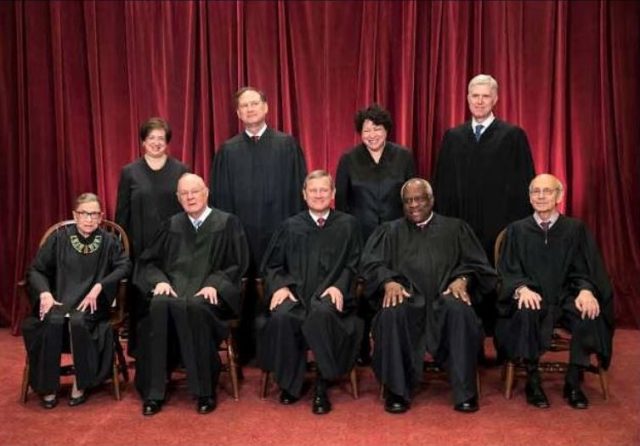
Has it really been a year? Yes, on April 10, 2017, Neil Gorsuch was sworn in as Associate Justice of the U.S. Supreme Court. Remember, Gorsuch only was nominated for the Scalia seat because Merrick Garland, Obama's nominee, was not given a Senate hearing much less vote (it's highly unlikely he would have been confirmed by the Republican Senate even if given a vote). Mitch McConnell recently commented that stymying the Garland nomination was the "most consequential" decision of his career.

The Supreme Court just handed down a police use-of-force decision, Kisela v. Hughes (pdf.)(full embed at bottom of post), the most notable characteristic of which is the gutting of a typically nutty Ninth Circuit court of appeals ruling and a typically silly dissent by Sotomayor (joined, unsurprisingly, by Ginsburg). The legal issue in play is whether a woman who was shot by a police officer should be permitted to sue that officer personally.

Friday night, the Supreme Court issued an Order (pdf.) staying a lower court ruling requiring the government to turn over thousands of documents related to the termination of DACA. The vote was 5 to 4, with Justice Breyer writing a 10-page dissent joined by Ginsburg, Sotomayor and Kagan.

The full Order and Dissent are embedded at the bottom of this post.
We previously wrote how the U.S. Supreme Court was likely to dismiss the two Travel Order cases before it, one from the 4th Circuit (via Maryland District Court) and one from the 9th Circuit (via Hawaii District Court) on grounds of mootness. Both of those cases went against Trump. The 4th Circuit case became moot in late September because the Travel Order at issue (Travel Order No. 2) expired. In this context, mootness means there no longer is an actual case and controversy (a constitutional requirement for federal courts) to be decided by the court, because the Travel Order expired by its own terms.

If one Supreme Court Justice gets her way, there will be a religious test for the next SCOTUS nominee....as well as the standard abortion litmus test! Not happy with the proposed nominee offered by President Obama, Sonia Sotomayor offered her faith-based suggestions:
Justice Sonia Sotomayor says the Supreme Court needs more diversity, amid the politically charged debate about filling a vacancy on the high court. "I … think there is a disadvantage from having (five) Catholics, three Jews, everyone from an Ivy League school," Sotomayor, the court's first Latina justice, said Friday at Brooklyn Law School. However, she did not mention by name Judge Merrick Garland, a white male with a Harvard Law School degree whom President Obama recently nominated to fill the vacancy of Justice Antonin Scalia, a conservative voice on the court. Scalia died unexpectedly in January.

Like I said, with regard to the nomination of Sonia Sotomayor, in my prior post Yes To Sotomayor. Here's an excerpt from reliably conservative Pat Toomey's Op-Ed today:When John Roberts and Samuel Alito were nominated to the Supreme Court, Republicans argued that they should be...