

Image 01 Image 03

Cyberwar Tag

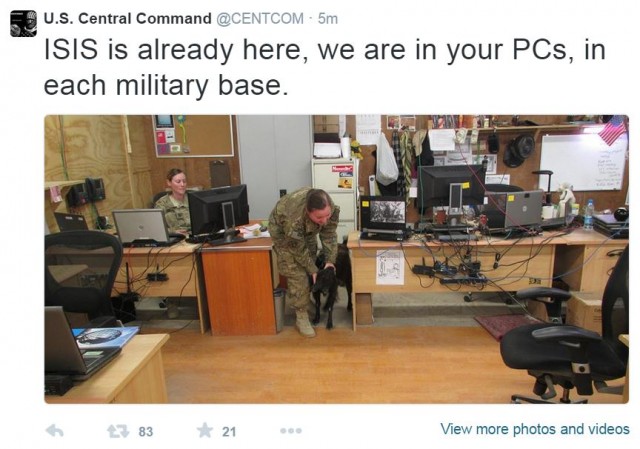
Hackers claiming a connection with the Islamic State have taken control of two social media accounts owned by the U.S. Central Command. Via the Washington Free Beacon:
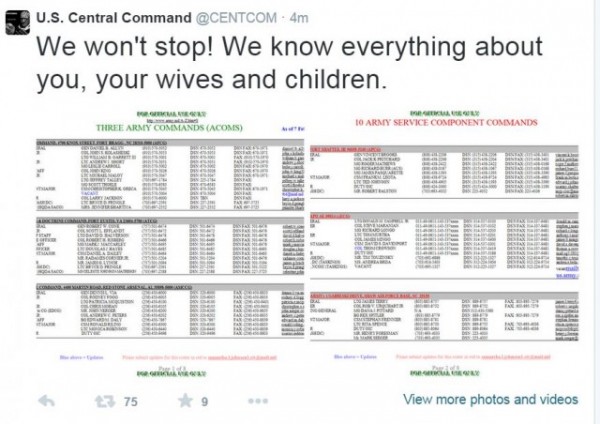
“ISIS is already here, we are in your PCs, in each military base. With Allah’s permission we are in CENTCOM now,” said one tweet sent from CENTCOM’s account. The apparent hack came as President Obama addressed the nation regarding cyber security. He is expected to propose two pieces of cyber security legislation and to address the effort in his upcoming State of the Union address. The hackers subsequently tweeted images of spreadsheets containing the home addresses, phone numbers, and email addresses of dozens of current and former senior U.S. military officers. “AMERICAN SOLDIERS, WE ARE COMING WATCH YOUR BACK,” one tweet stated.
The hackers have also posted to PasteBin sensitive and personal information they claim they obtained by breaking in to mobile devices. A search of the Google cache reveals the tweets posted to CENTCOM's now-suspended Twitter account: Twitter Centcom Hack We know everything

Despite widespread media and social media claims that the North Koreans were not behind the Sony hack, the U.S. government stands by the assertion that North Korea is the culprit. Obama signed an executive Order today imposing sanctions, as The Washington Post reports:
President Obama, while vacationing in Hawaii, signed an executive order authorizing the sanctions, saying the repressive government was trying to stifle freedom of speech by American artists and businesses. The Treasury Department imposed financial measures on 10 North Korean officials and three government agencies. They include the country’s main intelligence agency, believed to have orchestrated major cyber operations, as well as agencies responsible for weapons deals and military research and development. The newly sanctioned officials include those operating out of Namibia, Iran, Syria and China....

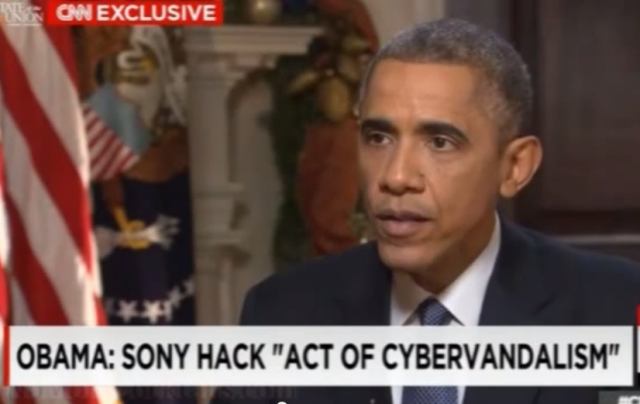
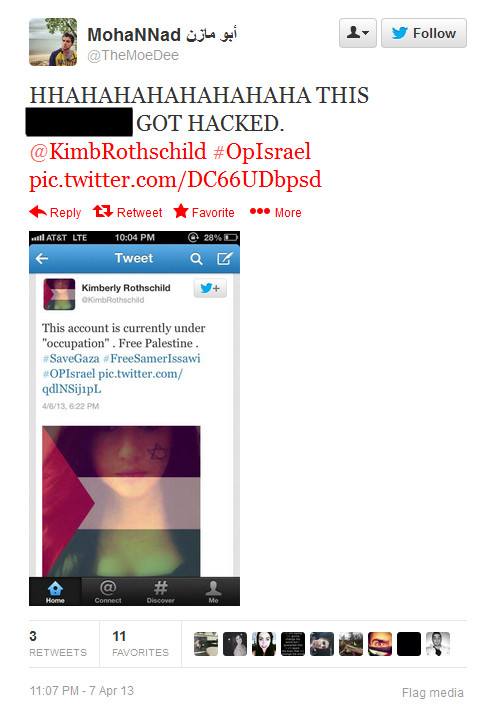
Hijacking someone's Twitter account and putting up stupid pictures or political statements might reasonably be called cyber-vandalism, and a criminal one at that. Like this: rothschild-hacked-old But the Sony hack allegedly by North Korea which led to terrorist threats against movie theaters and a national self-censorhip? Is that really all it was, "cyber-vandalism"? According to Obama, yes, Obama: North Korea hack ‘cyber-vandalism,’ not ‘act of war’:
President Obama said in an interview broadcast Sunday that he does not think a recent North Korean cyberattack against Sony Pictures Entertainment was "an act of war." "No, I don't think it was an act of war," Obama said on CNN's "State of the Union." "I think it was an act of cyber-vandalism that was very costly, very expensive. We take it very seriously. We will respond proportionately."

The speculation as to who the U.S. government thinks was behind the Sony hack is over. The FBI now is on record blaming North Korea, via NBC News:
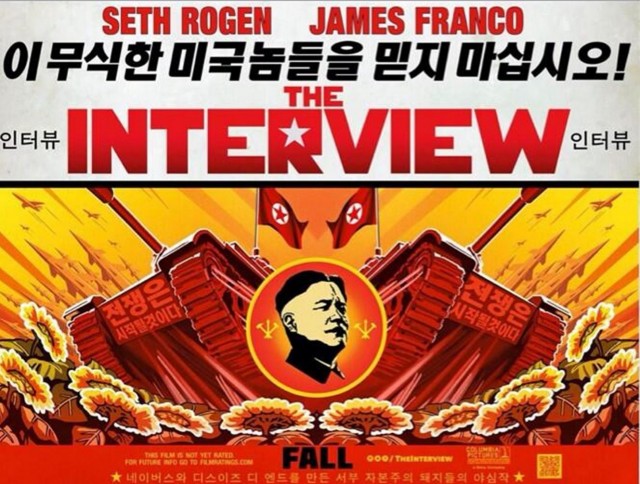
The FBI on Friday formally accused the North Korean government of the hacking attack that led Sony Pictures Entertainment to cancel the movie "The Interview." "North Korea's actions were intended to inflict significant harm on a U.S. business and suppress the right of American citizens to express themselves," the bureau said in a statement. "Such acts of intimidation fall outside the bounds of acceptable state behavior." U.S. officials had said privately earlier in the week that they suspected North Korea. The FBI said Friday that technical analysis had revealed links to North Korean-developed malware, including lines of code and encryption algorithms.
Here is the full FBI statement (via Business Insider):

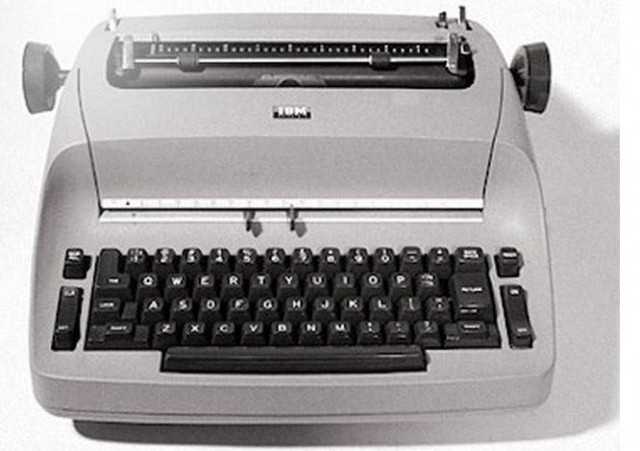
How expansive is electronic espionage? Israeli Prime Minister Benjamin Netanyahu reportedly does not have a computer in his office, does not use email and does not have a private phone. I read a while ago that he even uses hand signals in some situations, although I can't find the link now. There's every reason to believe many major national intelligence agencies have similar capabilities, they just don't have Edward Snowdens willing or able to walk off with the proof. You know, imprisoned or dead families could be the consequence elsewhere. So frustrated with U.S. snooping is Germany that it is considering going to old school typewriters, via The Guardian, Germany 'may revert to typewriters' to counter hi-tech espionage:
German politicians are considering a return to using manual typewriters for sensitive documents in the wake of the US surveillance scandal. The head of the Bundestag's parliamentary inquiry into NSA activity in Germany said in an interview with the Morgenmagazin TV programme that he and his colleagues were seriously thinking of ditching email completely. Asked "Are you considering typewriters" by the interviewer on Monday night, the Christian Democrat politican Patrick Sensburg said: "As a matter of fact, we have – and not electronic models either". "Really?", the surprised interviewer checked. "Yes, no joke", Sensburg responded.
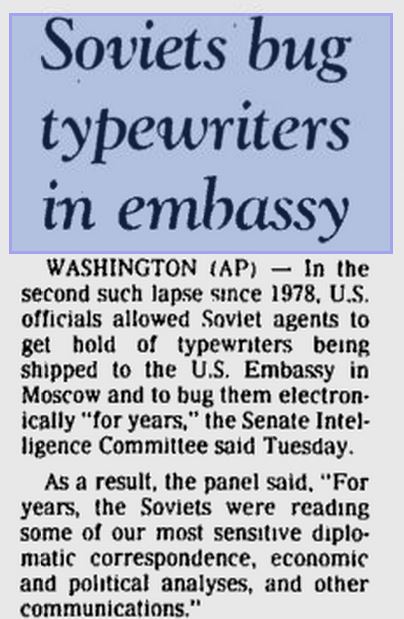
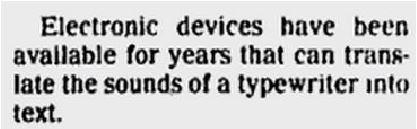
While typewriters might be harder to spy on, they hardly are foolproof, as the U.S. Embassy in Moscow discovered back in the day (1986): Soviets Bug Typewriters in U.S. Embassy * * * Soviets Bug Typewriters in U.S. Embassy sounds More on the typewriter espionage here:

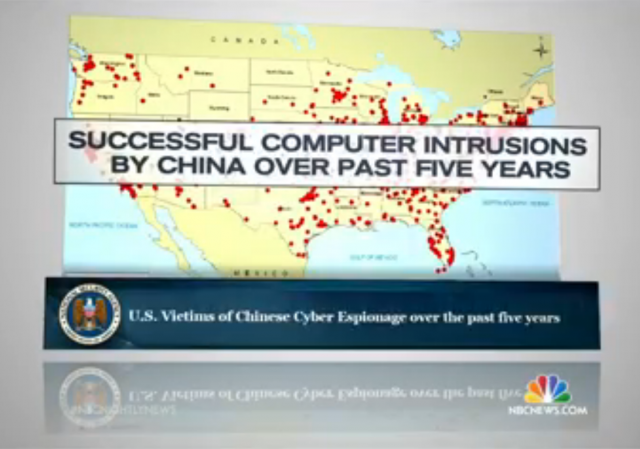
In May, the Obama Administration announced a crackdown of Chinese cyber espionage. The grand jury indictments charged five Chinese People’s Liberation Army members with hacking the computers of a number of U.S. businesses and organizations. Now the U.S. government alleges that Boeing was the target in a new round of Chinese cyber spying.
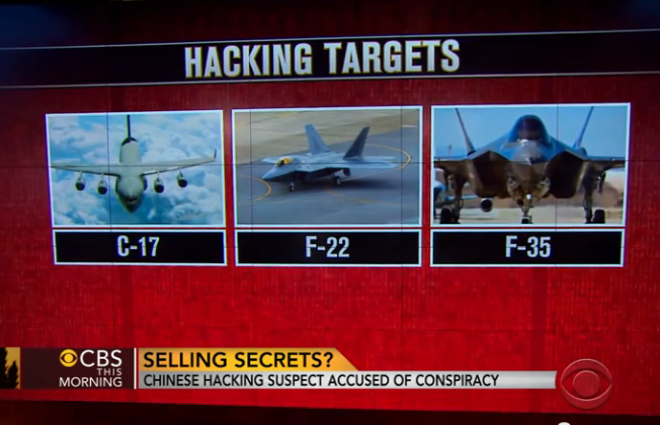
Su Bin, the owner of a Chinese aviation-technology company with an office in Canada, conspired with two unidentified individuals in China to break into the computer networks of U.S. companies to get information related to military projects, according to charges unsealed yesterday in federal court in Los Angeles. Su advised the two others in China on what data to target, according to the charges. Su’s alleged co-conspirators claimed to have stolen 65 gigabytes of data from Boeing related to the C-17 military cargo plane, according to the criminal complaint. They also allegedly sought data related to other aircraft, including Lockheed Martin’s F-22 and F-35 fighter jets.
As was the case with the indictments in May, there appears to be direct evidence linking Su Bin and the Chinese government.

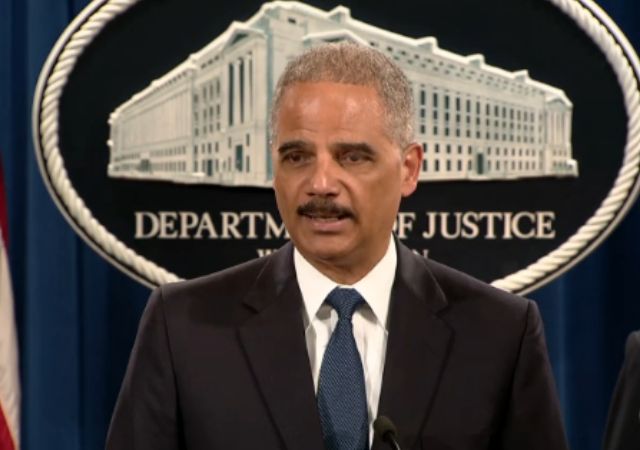
The Justice Department today announced the indictment of several Chinese military officers over accusations of economic cyber espionage against American companies and organizations. From the Washington Post:
A federal grand jury in Pittsburgh has found that five Chinese People's Liberation Army members hacked into the computers of a number of businesses and organizations in western Pennsylvania -- including U.S. Steel, Westinghouse Electric, and United Steel Workers. According to an indictment unsealed Monday, the Chinese men -- Wang Dong, Sun Kailiang, Wen Xinyu, Huang Zhenyu and Gu Chunhui --  have been collectively charged with 31 crimes. This is the first criminal indictment against state-sponsored hackers who allegedly engaged in cyberespionage for economic purposes, according to the Justice Department. And the FBI said it's just the beginning of a larger crackdown. The government said the accused were members of  PLA Unit 61398, a military group based in Shanghai. Last year in a widely reported investigation, the cybersecurity firm Mandiant identified this group as a source of economic cyberspying. At a press conference Monday morning, government officials alleged the defendants hacked into the computer networks of companies as they engaged in trade disputes or competed against Chinese companies for major contracts -- stealing both technical trade secrets and strategic information. In some cases, the U.S. government alleges, the stolen information was used to benefit Chinese state-sponsored companies.
While many suspect it’s unlikely the accused will ever be brought to justice, U.S. authorities emphasized that they were specifically “exposing the faces and names behind the keyboards in Shanghai used to steal from American businesses.”

The group of pro-Assad hackers calling itself the Syrian Electronic Army hacked The Guardian news outlet over the weekend, marking the latest in a string of cyberattacks from the same organization.  The incident emphasizes the potential threat such attacks could pose if executed for goals far more malicious than intimidation or mere gain of public attention.  And news outlets are among the most useful targets to such groups. The attack on The Guardian was in apparent retaliation for the outlet’s coverage on the conflict in Syria.  Last year, The Guardian also published a cache of emails between Syrian president Bashar al-Assad and his inner circle, in articles that were, not surprisingly, not very flattering of Assad. On April 15th, the same organization hacked NPR and several of its Twitter accounts, also over the outlet's coverage of Syria.  Only days later, the Syrian Electronic Army hacked several of CBS’ Twitter accounts and sent out pro-Syrian propaganda, including false claims that the CIA is arming Al-Qaeda terrorists in Syria. The same week, the group also compromised Twitter accounts of the Associated Press to tweet out a false message, causing the Dow to temporarily plummet.
The false tweet said there had been two explosions at the White House and that President Barack Obama was injured. The attack on AP's Twitter account and the AP Mobile Twitter account was preceded by phishing attempts on AP's corporate network. […] The false tweet went out shortly after 1 p.m. and briefly sent the Dow Jones industrial average sharply lower. The Dow fell 143 points, from 14,697 to 14,554, after the fake Twitter posting, and then quickly recovered.
And in March, several of BBC’s Twitter accounts were also hacked by the same group.  They tweeted out snarky messages such as, “Saudi weather station down due to head-on collision with camel.” But these attacks from the Syrian Electronic Army aren’t limited to recent weeks.

An update on Flame, from BBC: The creators of the Flame malware have sent a "suicide" command that removes it from some infected computers. Security firm Symantec caught the command using booby-trapped computers set up to watch Flame's actions. More technical details at Symantec: Late last week, some Flamer...

This is a little scary, particularly if it were put in the wrong hands. Via The Times of Israel: A new, unprecedented computer virus called “Flame” (or “sKyWIper”) has hit Iran, the West Bank, and other Middle Eastern locations. It is already considered one of the...