

Hillary goes full Clintonian with midnight tweet
on March 05, 2015
44 Comments
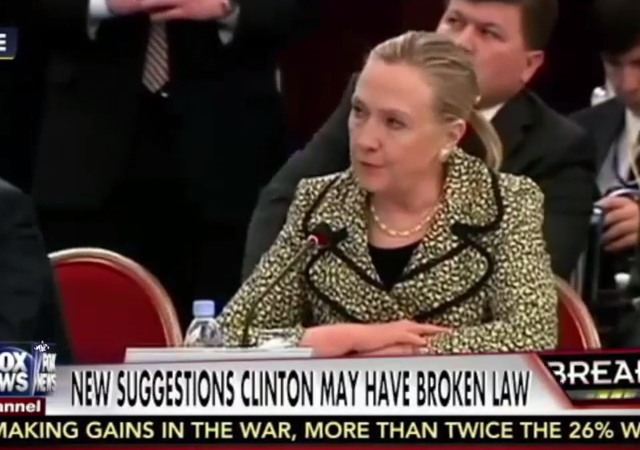
The Hillary Clinton email scandal is growing worse by the day. We now know that she not only used a private email account in her time at the State Department but she even hosted it on a private server in her New York residence.
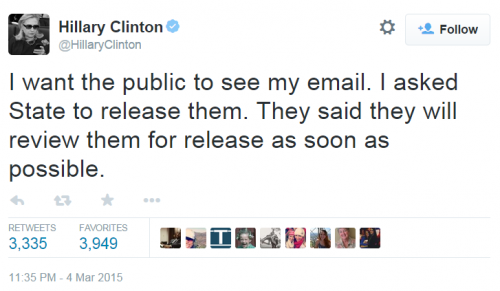
In classic Clintonian doublespeak, Hillary tweeted just before midnight last night that she really, truly, wanted everyone to see her emails, so she told the State Department to release them.
But the issue is not what she turned over to State, but what she didn't. Hillary's team selected what was turned over to the State Department, so her tweet is a complete distraction that doesn't address the problem:
 Other issues involve why she set up a home-based email server for official business, which gave her complete control over access in violation of public records laws.
Other issues involve why she set up a home-based email server for official business, which gave her complete control over access in violation of public records laws.