


Republican AGs Demand SEC Probe of Credit Ratings Agencies’ ESG Practices
“Moody’s Report nevertheless urged investors, insurers, and lenders to ‘stress-test exposure’ in light of estimated risks from the implausible RCP 8.5 scenario.”
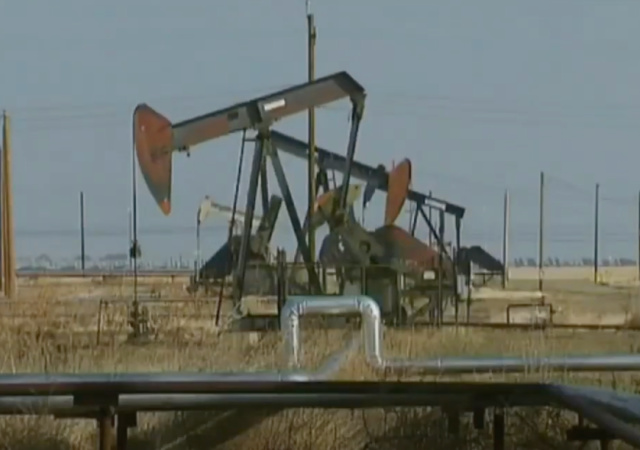
Montana Attorney General Austin Knudsen and 21 other Republican attorneys general demanded the Securities and Exchange Commission’s (SEC) Office of Credit Ratings investigate three credit rating agencies for allegedly punishing fossil fuel states.
The other states include Alabama, Arkansas, Florida, Georgia, Idaho, Iowa, Indiana, Kansas, Kentucky, Missouri, Nebraska, North Dakota, Ohio, Oklahoma, South Carolina, South Dakota, Tennessee, Texas, Utah, West Virginia, and Wyoming.
The move follows an April 2026 priority letter sent to the SEC about how Moody’s Corporation, Fitch Ratings, Inc., and S&P Global Ratings “downgraded fossil-fuel companies, industries, States, or municipalities based on highly speculative ESG [Environmental, Social, and Governance] predictions and goals.”
The SEC lists Moody’s, Fitch, and S&P as the nationally recognized statistical rating organizations.
“Credit ratings assess a borrower’s ability to repay its debts, meaning a downgrade can increase borrowing costs and make bonds less attractive to some investors,” according to The Daily Caller.
In other words, a downgrade from those three companies could ruin a borrower.
Well, Moody’s released a report showing the rating companies still use ESG predictions. Incorporating those ESG predictions can harm fossil fuel energy companies, states, and industries that depend on energy revenue.
The attorneys general wrote (emphasis mine):
Now, a report issued by Moody’s in August 2026 (the “Report”) demonstrates the Ratings Agencies’ continuing reliance on false ESG predictions, which materially contravenes stated methodologies and is consistent with undisclosed material conflicts of interest. In the Report, Moody’s estimates heat-and-water risks to industry in States based on an extreme climate scenario that was abandoned months earlier because of its implausibility—the Representative Concentration Pathway 8.5 scenario (“RCP 8.5”). Moody’s Report nevertheless urged investors, insurers, and lenders to “stress-test exposure” in light of estimated risks from the implausible RCP 8.5 scenario. Moody’s website also cites to a $41 trillion damage estimate based not only on the implausible RCP 8.5 scenario, but also on a paper that was retracted due to serious errors.
RCP 8.5 was a climate scenario that predicted global temperature would rise from 3.5°C [38.3°F] to 5.5°C [41.9°F] by 2100.
The AGs referenced a paper that the journal Nature retracted in December 2025, which focused on the RCP 8.5 scenario and predicted multi-trillion-dollar impacts and a massive global GDP decline.
In April 2026, the World Climate Research Program abandoned RCP 8.5 and labeled it as “implausible.”
The United Nations’ Intergovernmental Panel on Climate Change also abandoned this implausible global warning scenario.
And yet Moody’s still uses it:
Moody’s continues to estimate staggering $41 trillion losses to U.S. GDP, but that estimate relies on another climate paper that was withdrawn due to fatal errors. A widely publicized 2024 study warned of devastating economic losses from the physical effects of climate change, much like the implausible RCP 8.5 scenario. Other scientists quickly flagged serious issues with the 2024 study, and those exposed flaws led to the study’s retraction. However, even after the retraction, the Network of Central Banks and Supervisors for Greening the Financial System (“NGFS”) used the retracted study as the basis for its widely used “Phase 5” damages model. Moody’s $41 trillion estimate is built on the Phase 5 model, which in turn relies on the retracted study, and Moody’s estimate also uses the implausible RCP 8.5 scenario. Moody’s continues to prominently feature its $41 trillion estimate on its site, despite the fact that the estimate uses two abandoned or retracted climate projections. This once again demonstrates Moody’s ongoing contravention of stated methodologies and undisclosed material conflicts of interest related to ESG.
Credit ratings should reflect financial reality, not an ESG agenda,” Jason Isaac, CEO of the American Energy Institute, stressed to The Daily Caller. “When rating agencies rely on implausible climate scenarios and retracted studies to influence credit decisions, they undermine the integrity of the ratings investors depend on and can drive up the cost of capital for American energy producers.”
Donations tax deductible
to the full extent allowed by law.






Comments
These places still have any credibility since “The Big Short?”
How about automatic reduction of a State or Municipal credit rating to bbb status when their pension liability is less than 80% funded? Then apply automatic one level drop when their essential services like fire/PD have less than 95% of authorized personnel in service. Maybe another automatic one level reduction if the % of their public sector retirees staying in their community/State post retirement is less than 75%. If the folks with the most ‘insider’ institutional knowledge about the future direction of their hometown are bailing out in significant numbers that would seem to indicate the future may not be as bright as officials claim.
The first two are OK, but the last one is misguided. Lots of retirees bug out not because their state is failing, but because its climate sucks, or they no longer need to endure high taxes to enjoy job availability.
Bad climate? High taxes? Both are valid reasons for bailing out but are equally applicable to everyone already there and to those businesses/individuals looking for a new destination which ultimately impact the local/State economy, shrinking the tax base resulting in either a reduction services or increased taxes on whomever remains …and that means less ability to repay public debt, which should result in a lowered credit rating.
Objective measures applied automatically are often imperfect BUT they also remove the ability to ignore their implications, continue to make unrealistic forecasts or otherwise engage in ‘head in the sand’ ‘see/hear/speak no evil’ shenanigans of rating agencies.
“but are equally applicable to everyone already there”
Except for my point, which is, when you RETIRE, your constraints loosen.