


California’s ‘Sustainability’ Bureaucracy Takes a Big Sip from Napa Valley’s Iconic Vineyards
“Sustainability” has essentially become the bureaucratic equivalent of a blank check, invoked to justify new fees and new layers of government management.
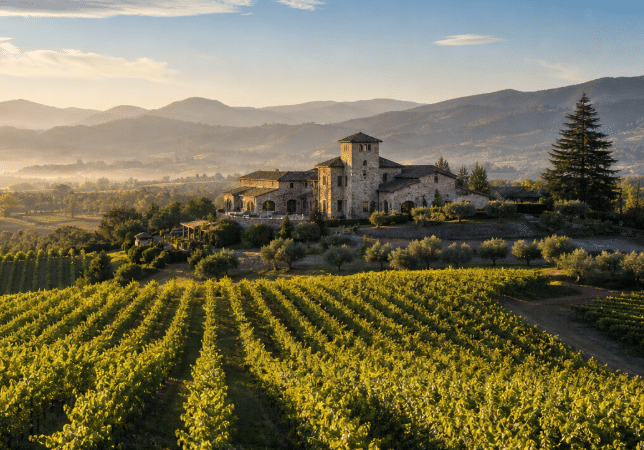
“Sustainability” once had a real meaning: using resources responsibly, reducing unnecessary waste, and protecting the environment in balance with the needs of mankind.
That is not what it always means now.
Increasingly, sustainability is used as a feel-good justification for government agencies to expand their authority and funnel taxpayer dollars into a growing ecosystem of regulators, consultants, grant administrators, and politically favored contractors.
The real-world consequences of this new kind of “sustainability” include more permits, more paperwork, higher costs, delayed projects, and another set of rules that businesses must somehow finance and navigate.
It will also mean less delicious California wine.
At the end of last year, the Napa County Groundwater Sustainability Agency (NCGSA) Board of Directors adopted a resolution that authorized the agency to impose groundwater-sustainability fees on users within the Napa Valley Subbasin.
The fee applies only to groundwater using parcels inside the Napa Valley Subbasin. The fees will be used to fund the NCGSA’s implementation of the approved Groundwater Sustainability Plan (GSP) under the state-mandated Sustainable Groundwater Management Act (SGMA) of 2014.
The NCGSA was created by the Napa County Board of Supervisors in December 2019 to serve as the GSA for the Napa Valley Subbasin, as required by SGMA. The NCGSA submitted its GSP in January 2022 and received approval from the California Department of Water Resources (DWR) in January 2023. The GSA has been working to implement the plan to achieve sustainability by 2042. Since the GSA’s inception, the annual cost of the program has been funded entirely by the County’s general fund with about $2.8 million in grant funding from the DWR.
This “sustainability” fee could mean vineyards face a $25,000 annual bill, at a time when they are trying to trim costs and navigate a changing market.
“Right now we’re looking at these extra costs at a time where all of our clients are asking for price reductions and less fruit due to the downturn in the market,” General Manager Jim Lincoln told The California Post.
His company supplies grapes to about 120 wineries producing Cabernet Sauvignon, Chardonnay, Pinot Noir and Sauvignon Blanc.
“We’re not making a profit right now. Labor’s going up and every client that we have has asked us for a price cut. Costs are going up, prices are going down… see where this ends,” he said.
Napa bosses slap water fees on struggling wineries to achieve lefty 'green' goals https://t.co/wGbQqCdH5L pic.twitter.com/pvumnr8lJS
— California Post (@californiapost) August 11, 2026
The outrage over the “sustainability” consequences was so strong that the board went back to reduce the fees…temporarily.
Fees for pumping groundwater on the Napa Valley floor this fiscal year should be less than half the maximum amounts that some grape growers feared might become reality.
The Board of Supervisors decided in June to lower the inaugural year groundwater fees. But the county had yet to crunch the numbers to come up with the amounts.
A new county report describes the proposed amounts for the 2026-27 fiscal year that runs from July 1 through June 30. The Board of Supervisors could adopt the fees during its 2 p.m. session Tuesday in the county administration building, at 1195 Third St. in downtown Napa.
Despite this reduction, industry experts indicate that it will make producing wine in this region less sustainable.
And while the rates are less than half the maximum amounts initially feared, wine industry leaders have warned that any new expense comes at a brutal time for the region’s wineries and growers.
“To have this fee come now is very difficult for our members and our industry to weather,” Napa Valley Vintners’ Michelle Novi told supervisors in June.
The county has been spending about $2 million a year in general fund cash on the groundwater agency but has slashed that contribution to $500,000 this fiscal year.
The rest of the agency’s operating budget will be covered through the new fees and its savings.
Rural homeowners and businesses that rely on wells in the area are also being charged. These potential impacts are such that fee waivers are being offered.
To help alleviate financial burden for residents, Napa County is offering fee waivers for households whose income does not exceed 80% of the area median income. Individuals interested in a waiver can contact the county by July 10.
“Sustainability” has essentially become the bureaucratic equivalent of a blank check, invoked to justify new fees and new layers of government management.
Napa’s growers, wineries, rural homeowners, and small businesses are now expected to absorb the costs of a program whose definition of environmental stewardship apparently excludes keeping local agriculture viable.
If California policymakers truly want sustainable communities, they might begin by ensuring that the people who grow the grapes and make the wine can still afford to remain in business.
I will simply point out that wine grapes can be grown in Texas.
Donations tax deductible
to the full extent allowed by law.







Comments
It is time to pick up arms and stop all this nonsense…diplomacy is now rife with fraud.
Shades of Fresno the mini-series back in 1986. There are two levers the socialists always grab: Money and Control. There’s a healthy business going through hard times in Napa, and the socialists can only see the short-term gain of grabbing cash without seeing the long-term loss as these businesses go under and all the employed people they have been tapping for tax dollars become dependent on them for bread and housing.
I’m not convinced that getting more people on welfare and dependent on the largess of the state isn’t their goal.
You can’t fundimentally transform a healthy society.
Color me dumb founded. Over-extraction of groundwater has been going on for a long time. They started “mining” water out of the Ogalalla formation aquifer east of Denver to support population spread in Colorado in the 70’s. At least Colorado recognized and planned for the depletion that let the users pay the price.
While groundwater in the lower Napa valley may be sustained by rainfall from the hills moving into the valley, the valley is likely suffering from too many wine producers removing water. California has had a water supply problem created and sustained by big agriculture, more so than just population.
While the wine industry withers, the whine industry grows!
You say “California has had a water supply problem created and sustained by big agriculture, more so than just population.”
You are wrong to say ‘More so’. You have no rational basis for that claim. It comes from your prejudice.
The number of acres farmed in CA has fallen from 33.3 million to about 24.5 million since 1976. That is a 26% decline. Take that as a proxy for agricultural water usage. Meanwhile the state’s population has risen from 21.9 million to 39.4 million. That is an 80% increase.
Agriculture uses less water. Population uses more. The ‘problem’ as you say is most obviously caused ‘more so’ by the population increase. Agriculture has reduced its water usage in absolute terms.
In general yeah maybe but in fairness the amount of demand decline for less agriculture acres would depend on what ‘crop’ was grown on the acres. If I reduce my total agricultural acres from 200 down to 100 but then put in a ‘crop’ on that remaining 100 acres that requires 2.1 x the amount required for prior ‘crop’ on 200 acres my water use increased even though I am using half the prior amount of acres.
Again in general yes less acres probably means less water but not necessarily, especially when the crop with higher water requirements has a higher cash value per acre to offset cost of more water use. People absolutely use a lot more water than they realize. In water scarce regions that use adds up very quickly when the population keeps expanding well beyond the carrying capacity of normal rainfall/runoff to replenish it. Over expansion beyond the carrying isn’t limited to the dryer West, Atlanta has been ‘stealing’ water for decades b/c they expanded too much. Sooner or later the Cities in similar positions gonna have to have a reckoning and supply cut off.
You seem to imagine there is a correct amount of water and ownership such that someone ‘steals’ by using and another one ‘restores’ by not using. What is the correct amount? On what day was the volume ‘correct’? Who owns it? There are water laws in CA that the CA governments (city, county, & state) do not abide by. I am one county over from Napa. We have a water sustainability agency in my county too and its legal basis for existing was invented out of thin air.
To be very clear I’m not implying the existence long-standing legal reality of water rights, I am stating they absolutely exist and are very relevant to the discussion. Especially so in Western States with their relative lack of water compared to the Eastern States and that they follow a different system of establishing water rights in the West v the Eastern States. If you’re unaware of this and involved in agriculture and/or depend on water flow as part of your business you really need to consult with an Attorney out there who handles water rights claims.
I am also making the point that the Western States are not alone in facing scarcity due to population expansion of large metropolitan areas. The Eastern States have large metros that gobble way more water than their rights allow on paper. The Atlanta area is but one. There was a three way battle over water flow between Alabama, Georgia and Florida in both the Apalachicola-Chattahoochee-Flint river basin and the Alabama-Coosa-Tallapoosa river basin.
Similar to what occurred/is occurring in CA the courts ultimately sided with large metropolitan populations to prioritize the ‘big city’ over the remaining holders of water rights. At some point even those reflected flows won’t be enough and the big cities gonna have to have their water use curtailed b/c once they literally drink the rivers dry (and watering suburban lawns in ever expanding Atlanta metro and more recently data centers) there’s not more available.
Full in the knowledge that what I’m offering is an anecdote, I have a good friend that works at the interface between regulators and agriculture in California.
He is quite certain that agriculture as we know it today will cease to exist in California because of the crushing weight of regulations.
My dad worked in the power generation division of a large South Florida utility company…he often did joint consulting work with PG & E…he said that the environmentalists in California are going to make the state a very dark place…at every turn they want more regulation and control over Pacific, Gas, and Electric…and they HATE energy production more than anything.
As Rush would have said in regards to the fee waivers. “They’re suspending liberalism temporarily”.
Wine grapes can be grown in many locations in the US, including the Finger Lakes region in New York, the Southeast, Eastern Washington State, as well as in California. It takes time to develop blends and modify the grape varieties to get the taste and aroma that wine drinkers like. In the process, new tastes can be discovered and marketed that can appeal to the ordinary person as well as the high-nosed crowd. The Bride and I like a couple from our own neck of the woods (y’all), but a semi-sweet reisling from Washington also is a favorite.
Competition. It’s another stresser to the Napa Valley wineries at a time when it seems their own excuses for governments are determined to drive them out of business. The golden goose continues its decline in health and the PTB are withholding treatment.
.
Here is the real question. Both Newsome and Pelosi own vineyards. Were theirs effected in any way or were theirs somehow overlooked. That’s what I want to know.
California is jacking up costs for everything by far for all basic items for people. My wife’s cousin in Marin county has had her electrical monthly house bill go up to $600 and that is 35 cents per kw in a small house without AC.
We are California natives that now live on the east coast due to business moving us in the 90s. We have retired to Charleston Metro, SC and our electric costs are less than 0.15 cents per KW and we run usually $140 per month including taxes and fees and we run AC.
‘…make sure the growers stay in business’ ….Do what? That’s not the role of govt to ensure a business remains operational …unless its a communist govt.
The real problem here is the lack of commitment in CA over many decades to increasing the available water supply within CA. Instead of building reservoirs and viaduct/pipes to move water to dry areas with insufficient rainfall the govt CA has not only refused to build more infrastructure they’ve worked to dismantle the existing infrastructure of prior generations. Without irrigation many of these areas are not viable for agriculture and if ensuring availability of irrigation infrastructure wasn’t enough of a priority until now …that is you problem. Imagine for a moment if there was a Thanos snap and all the illegal aliens + their progeny that were allowed to stay in CA disappeared. How much would the population of CA drop? How much demand for water would shrink? How many millions of gallons of water consumed over decades would still be available in the water table?
I suspect a large number of the folks in the wine industry and agricultural industry in general weren’t consistently voting against the politicians and the political party which championed those goofy policy decisions. I doubt that they were organizing protests and funding credible candidates, organizing ballot measures and all the other hard work of political opposition to overcome it. I every much suspect they went along with these goofy environmental policies b/c they approved of them or didn’t wish to ‘rock the boat’. Now the bill is coming due and they wanna be upset about it? Nah man, as Emperor Palpatine said ‘Now you will pay the price for your lack of vision’.
CA was mostly farmland 100 years ago. The farmers built dams, reservoirs and irrigation systems. the population increased. The new people were mostly not farmers. They outnumbered the farmers and voted for ‘city’ priorities. The city people, who are the majority, voted to not maintain and then delete the dams. It was not up to the farmers. Thought they built the dams initially, they were forbidden from maintaining them. The state and feds took that role.
You are ignorant and should shut your mouth because it spouts misinformation based on false assumptions about the efficacy of ‘hard work and organizing’ in the face of superior numbers.
Nah, I’m not ignorant about the outline of CA agricultural history nor the lack of new reservoirs built in the last five decades, nor the nationwide shift from large numbers of people involved in agricultural production relative to today. Victor Davis Hansen has several enlightening books very relevant to this topic in general and to CA agriculture in particular. Especially topical are his points re illegal aliens and agricultural communities with the transformation of CA.
As for ‘hard work and organizing’ …. in 1967 in Alabama the d/prog held the Gov, LT Gov, AG, both US Senator seats, all HoR seats, both chambers of the State Legislature and practically every other Statewide office from Sec State to all the various commissions. Basically opposite the opposite was true in CA. Heck Ronald Reagan was Gov. Today in 2026 this mirror image of one party political domination remains between Alabama and California but today the GoP controls Alabama every Constitutional office, both Senators, 5/7 HoR seats (in Jan to be 6/7 post redistricting) both chambers of the Legislature. That didn’t happen b/c the d/prog let it, the GoP had to work their tails off for.decades to get it done. The GoP in CA meanwhile began with the clear advantages of incumbency and near one party control yet today the d/prog have long since achieved one party control. Yes rural voters are always outnumbered by city population but allowing illegal immigrants, turning a blind eye to get farm workers and cheaper labor by many in agriculture led to lots of population growth in those towns/cities which with their several generations of descendants now overwhelm the rural/GoP vote.
You point to a before picture: CA=R and AL=D. Then you point to an after picture: CA=D and AL=R. Then you say the change must be because hard work and/or the lack of hard work. Where is your evidence about cause? You don’t offer any. You just declare:’work’. You only gesture towards end state. Potential other causes include: internationalization of CA via waves of immigration: vietnamese, cambodian, filipino, korean, northern triangle of latin america. (population of CA grew 110% while AL grew 50%). Silicon valley growth brought internationalization.
Well I was part of the hard work for a short while. My Father was very much part of it for the.duration. I can offer my anecdotal experience/knowledge supported by common sense. That position is buttressed by your own prior comments re ‘efficacy of hard work and organizing in the face of superior numbers’ which seem to imply that it is an ‘impossible task’ yet the voter registration advantage was totally lopsided in Alabama and the d/prog effectively had a one party State. Hard work and organizing overcame that.
I agree 100% not only about the population doubling in CA but also the change in demographic composition of the population. CA isn’t unique in the dramatic decline in % of workers in Agriculture 100 years ago to today.
Somewhat unique in CA is the composition of the town/city population becoming far more immigrant heavy. This was a policy CHOICE by CA voters often driven by the Agricultural sector who wanted cheaper workers for labor intensive crops.
That deliberately proto open borders/lax immigration enforcement policy choice had severe downstream impacts. The imported farm laborers had children. Those children had their own children and here we are after 50+ Years of ‘begating’ and those folks live in towns/cities and they vote.
Couple the deliberate choice to import a new immigrant wave (legal and illegal), the deliberate choice to refuse building additional water infrastructure to support the population increase, the deliberate policy choice to adopt Cray Cray eco/green policies and other leftist/woke shibboleth such as goofy soft on crime, allowing/inviting homeless camps, tolerance for open air drug sales/use, embrace of tranny ideology …
The bottom line is the CA GoP held the levers of power and could have stopped most of these things. Instead IMO they were overly accommodating to Agriculture sector and construction sector in allowing a culture of willful ignorance/blind eye about illegal aliens. That fed the population doubling. The higher population needs more water than when it was half the size. Unfortunately the policy preferences of the increased population of CA skews leftist/woke.
“Sustainability” once had a real meaning”
But few people ever even heard the term… until it became a cultish ejaculation.
Like “Allahu Akbar,” or “No Kings.”
Once that happened, meaning took a backseat to mindlessness, which it always does.
As a retired person that is required to take my Required Minimum Distribution (RMD) from my tax sheltered IRA by year end, sustainability to me is when my IRA investments income is equal or greater than the RMD.
The outrage over the “sustainability” consequences was so strong that the board went back to reduce the fees…temporarily.
———————————–
Reminds me of when our township politicians salaries were put up every year for a vote by the residents.
The board and manager would get their neighbors and friends to stand up and propose those hard(ly) working people should get a $4,000 raise.
The audience would get rowdy and the designated “good” politician would say “hey, that’s way too much. $2,000 would be fair. The rowdy crowd hearing the amount cut in half would give a sigh of relief and vote for the $2,000 raise – which is what the board wanted all along.
I guess I’m mostly surprised the crooks are even cutting the amount in half temporarily.
Keep that UHaul number handy.
I believe the French traditionally do not water the vineyards. Last I heard, some pretty nice wines come out of there!
Climates vary. France’s main wine regions have 5-8 rainy days per month in the summer growing season. Napa has an average of zero rainy days per month during the summer growing season.
They grow pretty nice wines in Deming, New Mexico and Tombstone, Arizona.
Now that’s sustainability.
The water agency needs to be evaluated to determine it is needed.
Assuming it is needed, it (along with every government disbursement,) should start each year with a zero-based budget.
Government should only spend money when it is actually needed.
“Sustainable “ agriculture is when you make enough this year to be in business next year.
‘Achieve sustainability by 2042’.
What a freaking joke. 2042?
The punch line is when they keep moving the goalposts, tightening your belt more every year.
California might want to be looking at the state governmental structure itself for sustainability particularly given the revenue shortfall, influx of illegal immigration, shrill demands for reparations, and out going high earners.
Thanos snap the flood of illegal aliens which were often brought into the.State at the behest of and in coordination with many in CA agricultural sector plus all their descendants and the population of CA is drastically lower and so would be the demand for water from metropolitan areas. Doubling the CA population since 1970 and not increasing the water storage and transmission system in the past five decades, in fact deliberately pouring out available water into the ocean as a result of goofy political choices to include lax immigration enforcement which rapidly transformed CA voting patterns set CA on their current course.
Leave a Comment