


Trump Moves to End New Wind, Solar Tax Subsidies
“Wind and solar take a lot of land, 100 times more land for a similar amount of energy. They take an enormous amount of materials, energy intensive materials.”
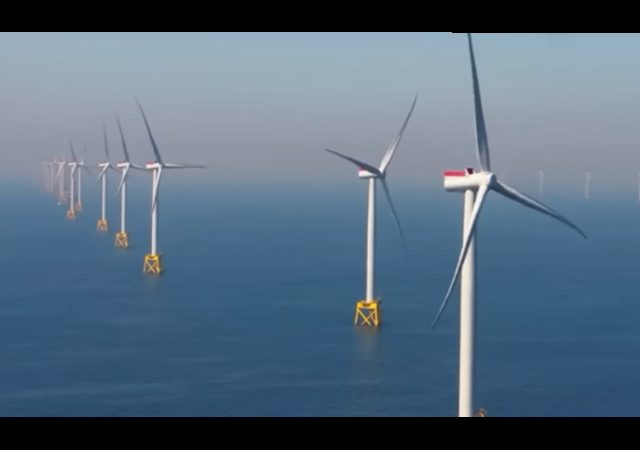
Federal tax subsidies for new wind and solar projects expired today, July 4, under the Working Families Tax Cut, and President Trump has now signed an executive order directing the Treasury and the Interior Department to ensure they stay dead.
Energy Secretary Chris Wright made the administration’s position plain on July 2.
“I’m thrilled to report that after about 35 years, on July 4th, we will end the subsidies for wind and solar, thanks to the Working Families Tax Cut,” Wright said.
Wind and solar have pulled federal subsidies for roughly 35 years and still accounted for only about three percent of total U.S. primary energy consumption in 2025. Wright’s case against the programs:
“Wind and solar take a lot of land, 100 times more land for a similar amount of energy. They take an enormous amount of materials, energy intensive materials like steel and cement and polysilicon.
“They take an enormous amount of additional transmission lines to connect their large land, far flung production back to where there’s demand centers.
“And what do we get for all that is a relatively small amount of low value energy. It’s low value because the wind doesn’t always blow and the sun doesn’t always shine.
“So they drive up the system costs and increase Americans’ electricity prices.
“Enough of raising electricity prices. We’re going to drive them down. Thank you.”
Wind and solar tax subsidies cost taxpayers more than $141 billion between 2010 and 2023, more than any other energy source, according to an analysis by the Texas Public Policy Foundation. Before Congress rewrote the law, the Congressional Budget Office (CBO) projected the investment and production tax credits alone would add $308 billion to the federal deficit between 2026 and 2035.
Trump’s executive order puts Treasury and Interior on a 45-day clock. Treasury must issue updated guidance to close off developer attempts to game the “beginning of construction” definition and to extend eligibility for credits that have now expired. It must also implement tightened Foreign Entity of Concern restrictions written into the One Big Beautiful Bill Act. Interior must scrub its own regulations, guidance, and agency practices for any preferential treatment given to wind and solar over dispatchable energy sources and eliminate what it finds. Both departments must report their actions directly to the president.
Trump signed the order, charging that federal policy had for years “forced American taxpayers to subsidize expensive and unreliable energy sources like wind and solar” while building dependence on foreign-controlled supply chains.
“It is the policy of the United States to:
“(a) rapidly eliminate the market distortions and costs imposed on taxpayers by so-called ‘green’ energy subsidies;
“(b) build upon and strengthen the repeal of, and modifications to, wind, solar, and other ‘green’ energy tax credits in the One Big Beautiful Bill Act; and
“(c) end taxpayer support for unaffordable and unreliable ‘green’ energy sources and supply chains built in, and controlled by, foreign adversaries.”
In June, U.S. District Judge Colleen Kollar-Kotelly vacated an IRS rule that had narrowed the definition of when a renewable energy project qualifies as under construction for tax credit purposes. The court found that the Treasury had failed to provide adequate justification for eliminating a longstanding 5% cost safe harbor that developers had relied on for a decade. The ruling sent the IRS guidance back for further consideration.
The Solar Energy Industries Association estimated developers had locked in more than 200 gigawatts of solar capacity, enough to secure projects through 2030. The wind industry managed only 23 of an expected 46 gigawatts.
Donations tax deductible
to the full extent allowed by law.







Comments
Good, if it makes economic sense then we should have no reason to subsidize it. If it doesn’t then subsidizing it is stupid.
Listening to Al Gore is the freeway to stupidity.
Energy production is a matter of national security. The US is spending heavily on new nuclear plants and the next kWh for sale will be no sooner than 2030. The government sees energy as its territory.
I just thought you would like to know that solar and wind are not the only technologies with government money involved. We have a Department of Energy after all, plus energy committees in Congress and state legislatures, public utility commissions in every state, and government ownership of the Tennessee Valley Authority, the Bonneville Power Authority, Hoover Dam, and many municipal utilities like the ones in Los Angeles, Sacramento, San Antonio, Austin, the entire state of Nebraska, and smaller towns across the US.
If you look at what projects are in the development pipeline for connection to the grid you will find mostly solar, wind, and batteries as a buffer. Gas turbine manufacturers are doing what they can but they are backlogged. Any nuclear plants of old or new technology won’t open for several more years.
Texas now gets 24% of its electricity from wind and 14% from solar. More is built every year and it is a good thing to keep up with the growth.
I watch the ercot.com dashboard. Routinely ERCOT gets from solar and wind well over 20 GW power. A couple of days ago the batteries produced 10 GW at sundown, thus alleviating the need for gas peaking plants to come on. Nuclear provides it steady 10 GW, but is a minor player.
ERCOT’s entire aggregate demand is somewhere between 50 GW and 85 GW all year round. Having 20 or more GW from solar and wind is the way it works.
This has been going on for 20 years now, literally decades.
I just thought people should know that solar and wind are mainstream sources across the US and around the world. You might not have noticed. Wind became significant about 2010, solar about 2020, and batteries about 2025. All three are growing. The grid has changed from the 20th century version using coal, natural gas, and hydro.
Stop the “Green New Grift”!
South Dakota, June 29th. So much for that…
https://x.com/McMillinWx/status/2071645751982141741/photo/1
What happened to all the lubricants that those monsters require?
Wind power is a failed experiment.
See, this is a prime example of why Trump is different than most any other President we’ve had in the 50+ years. He’s not a politician first, he’s a BOSS first. A chief executive, trying to get his company out of the red and back into the black.
past 50+ years. Maybe in another 50+ we’ll finally get an edit option here.
Hope reigns supreme.
One of a few core reasons why he’s so hated by so-called leaders around the world. This and his nationalist (and therefore, by default anti-globalist) attitude. Several other world leaders are generally reviled for the same (latter) reason (Putin, Meloni, Farage, Milei, Le Pen, usw.
Even with the subsidies rooftop solar would have saved me only $30 per month over the 20 year financing period. If I had to replace my roof, the solar company would charge me $500 to remove and replace the panels.
Profits for the solar industry and the Chinese manufacturers – at the expense of the neighbors and the electric company.
Is this a fair view of your situation? My house would be that same case.
It is now possible to generate your own electricity at a price that is about the same as buying power from the utility company.
This has never been the case until the mid 2020s. I spend about $1500 on 10,000 kWh per year. I could now generate 10,000 kWh or more from my roof for a cost of $30,000 or so. The sunshine will hit my roof whether I make electricity out of it or not.
The actual case is not that simple. Solar panel electricity has its special characteristics that are different from purchased energy.
Is there a coherent argument there?
“And what do we get for all that is a relatively small amount of low value energy.”
How much does it cost?
I’ll buy it!
The time is all we’ve lost.
I’ll try it!
Don’t forget the next couple of lines:
“He can’t ever run his own life,
I’ll be damned if he’ll run MINE.”
Until the inevitable #Resistance judge rules otherwise. Unelected – and increasingly authoritarian – judges are gaining control of the government at all levels. Consider the following:
Whether it is “longstanding” or not this Clinton judge has ZERO authority to do this. There is no such thing as a republic of unelected judges, yet it is increasingly the way we are being ruled.
Yes, she does have the authority. The government can’t just arbitrarily and suddenly change rules on people just because it feels like it.
Yes. It can. Unless Congress has said otherwise.
And this was a rule that went through standard rule procedures.
The monarch in black robes should not have a say.
Again, see the APA. Congress has said otherwise. And has explicitly given judges precisely this authority.
Not saying you’re wrong, Milhouse, but judges, by admitting Congress has more authority to direct the Executive than the Constitution would suggest or admit (violation of separation of powers) are able to extend their own power by going along with such a sham. It can put them in a position of conflict of interest or an ethical conundrum.
At a minimum, the executive should be able to un-make rules by processes broadly similar to the way in which they made them in the first place. Unless directed by Congress, if certain rule making has been left to the executive, that would seem to allow the executive to exercise his authority as granted by the Constitution to make and unmake rules at his discretion and by such processes as he directs.
Milhouse…I reserve this comment for only a select few…but to actually write a sentence that “the government can’t just arbitrarily and suddenly change rules on people just because it feels like it…”.
You sir are an ignoramus of the highest order and are likely thoroughly addicted to either psychotropic drugs or any number or combination of controlled substances.
Just wait until the various “clean” energy associations (AWEA, ACP, etc. ad nauseum) start whining about the loss of their subsidies. The last time the wind subsidies were up for renewal they all pointed out that NONE of the projects were economically viable without the subsidies. That right there tells you everything you need to know about the scams. Of course, the ones that are already in place will continue to be completely subsidized by both the ratepayers and the taxpayers on a per-kWH basis, even though neither wind nor solar sources are required to put the same amount of reactive power into the grid as do coal, nuclear and gas sources. That’s just another hidden subsidy along with the direct generation subsidy.
There are some locations where relatively small consumers can utilize solar and/or wind effectively. They are typically very remote locations that share a lot of things in common:
– Low power usage
– Cost of running power line is prohibitive (or power lines are barred)
– Plentiful sunshine (think desert locations)
– Or plentiful wind (islands)
– Enough battery back-up (see “low energy usage” above) to ride through the days when the wind isn’t blowing, or the nights when the sun isn’t shining
– Benign weather conditions: no hailstorms to devastate the solar panels like they did in MN, or high wind conditions to topple the poorly designed supports or break the blades like they just did to that windfarm in the Midwest.
There just aren’t a lot of sites which meet those criteria. And none of them should be subsidized.
Commercial power generation projects to service the grid shouldn’t be subsidized. There’s plenty of existing, reliable technology to produce all the power needed. Point of use solar/wind might be worthy of some limited subsidies as they reduce/eliminate the need for new transmission lines, don’t require new substations and don’t need new eminent domain actions to acquire (take land for property owners) land/easement. The homeowner and small business owner getting a slight break is one thing. A corporation looking to lock in grifting subsidies/tax breaks as a business model is very different IMO.
My dad built power plants for about 20 years…he was spot on when he said wind and solar are COMPLETE LOSERS according to every metric. Not one single world wide utility company builds them without the subsidies…they lose money and provide unreliable power to the grids they’re connected to…and their use is detrimental to the customers…from the very beginning.
This is pure unadulterated leftist ideology in which billions are wasted on these projects in the name of saving the planet.
If we were to phase out solar and wind electricity in the US, what fraction do we need to get from some other source?
17%. It would be a big undertaking. Wind and solar together are about the size of current nuclear, 17.7%, or coal, 16.6%.
Source:
https://www.eia.gov/energyexplained/electricity/electricity-in-the-us.php