


Rebels, Hospital Worker Strikes, and Ebola: How Fractured Governance Is Fueling Congo’s Outbreak
Public health response cannot succeed where governance is fractured, logistics are crippled, and trust is already in short supply….no matter how robust the “pandemic response plans” are.
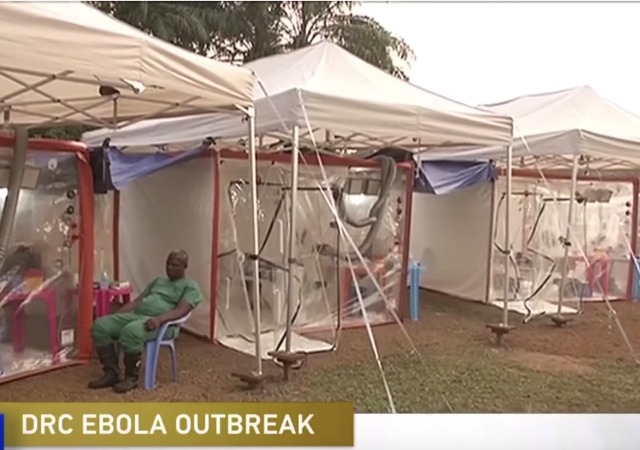
The Democratic Republic of Congo (DRC) Ebola situation continues to present challenges, with more than 500 lives lost as a rare Bundibugyo strain cuts through Ituri and neighboring provinces.
At least 500 people have died out of over 1,500 confirmed cases in Congo’s Ebola outbreak, authorities said, as frontline workers threatened to go on strike on Monday over unpaid benefits and poor working conditions.
The outbreak has recorded 1,561 cases, including 506 deaths, since it was declared on May 15 as the spread continues to outpace response, Congo’s Ministry of Health said in its latest update on Sunday night.
Daily Ebola update:
– Cases: 1,729 (+84)
– Recovered: 298 (+8)
– Deaths: 582 (+59) pic.twitter.com/Etm1XUGGZD— BNO News (@BNOFeed) July 8, 2026
Hospital workers in the region are now threatening to strike, claiming they have not been paid.
Compounding the response, front-line health workers in Ituri Province, the epicenter of the outbreak, have begun striking over unpaid wages and bonuses dating back to when the outbreak was declared on May 15.2 Affected staff include epidemiological surveillance teams, safety and security personnel, community outreach workers, and burial teams.
A member of the epidemiological surveillance committee in Ituri’s capital, Bunia, reported that since the Ebola outbreak was declared, workers have been demanding payment for their work, according to The Associated Press, noting that nonpayment exposes workers and their families to significant socioeconomic difficulties and seriously undermines living conditions.
Some workers staged a protest outside the Rwampara Ebola treatment center, setting tires on fire before police intervened. Officials attributed the payment delays partly to logistical disruptions. Furthermore, the closure of the Bunia airport hampers the implementation of the response, particularly for certain aspects of funding.
Some health workers in Congo's Ebola outbreak go on strike over pay issues as deaths near 600 https://t.co/OZoKWyAonW pic.twitter.com/FV59LR0r6E
— New York Post (@nypost) July 8, 2026
Officials are now beginning to worry about what could happen if Ebola cases erupt in highly populated areas held by M23. This powerful rebel group seized vast swaths of territory last year.
Ebola cases have already been reported in the rebel zone, including one infection in the city of Goma, the rebel headquarters. Transmission for the moment appears to be low there, according to figures released by Congo’s health ministry, but hot spots are getting closer and closer to occupied areas, moving south from the epicenter in the province of Ituri.
When M23 seized territory last year, thousands of people were killed, and hundreds of thousands were displaced. Now, the rebels impose taxes, control public utilities and present themselves as the only legitimate authority in their territory, which includes two provincial capitals, Goma and Bukavu.
Officials say a full-scale outbreak in M23-controlled areas would be devastating for civilians trapped by fighting and the virus. But it may also present an opportunity for the rebels. If M23 manages to contain Ebola successfully, it could bolster the image it has cultivated as a legitimate authority, at a time when the Congolese government is struggling to get the outbreak under control.
M23 rules over a population that is highly skeptical of Ebola. Some Congolese have called the virus a hoax meant to line the pockets of government officials and foreigners. Isolation wards in Ituri have recently been burned and medical workers violently attacked.
Earlier this month, the World Health Organization (WHO) and the DRC launched a clinical trial to test experimental treatments specifically against the Bundibugyo strain. The trial has begun enrolling patients in affected regions of the DRC. Still, it is expected to take several months to generate meaningful efficacy and safety data, potentially up to about a year, depending on case numbers and enrollment.
Legal Insurrection readers who followed our COVID-10 coverage may recognize 2 of the treatments: Remdesivir and monoclonal antibodies.
The trial is due to assess whether using the monoclonal antibody therapeutic MBP134, remdesivir, an antiviral approved for the treatment of COVID-19, and effective in treating some Ebolavirus strains, or a combination of the two therapies, might help improve survival.
“The first treatment, MBP134, is made up of two human monoclonal antibodies (ADI-15878 and ADI-23774) isolated from a survivor of the 2013-2016 West African Ebola outbreak,” Gandhi explained.
“MBP134 targets binding sites on the ebolavirus that are common to multiple strains, including neutralizing multiple strains, including Ebola (Zaire), Sudan, and Bundibugyo,” she detailed.
“A study in non-human primates show complete reverse of symptoms of a Sudan strain of Ebola with administration of MBP134. The second treatment, remdesivir, is a well-known antiviral used to treat SARS-CoV-2, the agent of COVID-19, and both treatments are being studied alone and in combination,” Gandhi added.
Residents in eastern Congo cling to hope as a new Ebola treatment trial begins https://t.co/r7FWRr6TqG pic.twitter.com/kv5T4tI3JH
— New York Post (@nypost) July 6, 2026
The convergence of a lethal Ebola strain, unpaid and striking health workers, and insurgent-controlled territory certainly presents challenges. Public health response cannot succeed where governance is fractured, logistics are crippled, and trust is already in short supply….no matter how robust the “pandemic response plans” are.
Unless those fundamentals are addressed quickly, even the most effective and promising therapeutics will be of little use in this particular outbreak.
Donations tax deductible
to the full extent allowed by law.







Comments
Remdesivir….
I guess they had some left over and are intent on killing more people
“Hospital workers in the region are now threatening to strike, claiming they have not been paid.”
But free healthcare is a human right of everybody!
Isn’t it?
That BNO News story at the top is certainly crappy. In the space of a few paragraphs:
– At least 500 people have died
– including 506 deaths
– Deaths: 582 (+59) (implying the previous report was 523)
The progs are blaming this (and every other death outside the US) on the USAID cuts.
Hate to say it, but deepest, darkest Africa has been a cesspool for as long as I can remember, and most likely will remain that way long after I’m gone. There is a common denominator here that is beyond any chance of civilizing. Along with their fellow “man”, and nature, their house will be continually cleaned out!