


NYC’s ‘Legionnaires’ Summer’ Continues With 5 Dead, Over 80 Infected
NYC risks another Legionnaires’ Summer without real reforms.
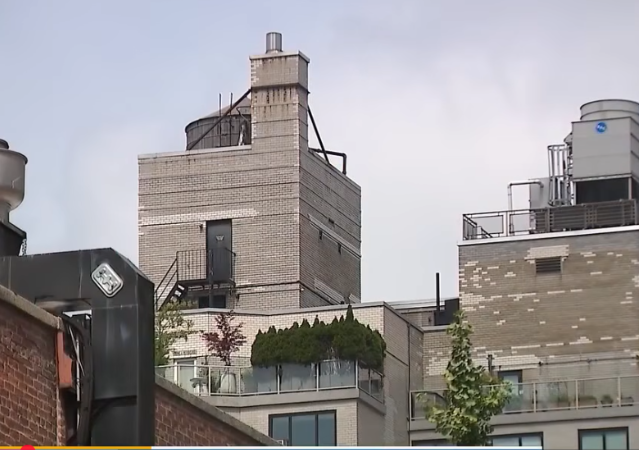
The death toll and the case count continue to climb in New York City’s most recent outbreak of Legionnaires’ Disease.
As of July 21, there have been five deaths and 82 diagnoses linked to the Upper East Side outbreak, according to the New York City Department of Health and Mental Hygiene. Eight patients remain hospitalized.
Health officials said no new cases had been reported in the previous six days, suggesting the source of exposure has likely been eliminated, although the investigation remains ongoing.
Fifth death reported in NYC Legionnaires’ outbreak https://t.co/djGCuFpy28
— Off The Press (@OffThePress1) July 22, 2026
Seven people are currently hospitalized with infections, and approximately 50 buildings have tested positive for live bacteria.
More than a dozen Upper East Side buildings have been added to the list of addresses that tested positive for the live bacteria causing the Legionnaires’ outbreak, the health department said in its latest update.
The addendum comes two days after health officials released a preliminary list of 33 buildings with cooling towers that yielded positive results for live Legionella.
They had said more addresses may be added, and still more addresses may be added as new test results are reported. That doesn’t mean any particular one of them is the source of the Legionella exposure in the current cluster, officials note.
That initial list release came as the city announced a fifth outbreak-related death. With another seven remaining hospitalized as of Wednesday night, according to the health department, more fatalities are possible.
The latest update on the Legionnaires' outbreak:
• 84 confirmed cases
• 7 people hospitalized
• 5 deathsThe City has tested 183 cooling towers, with 51 confirmed to contain live Legionella bacteria. Every one has been cleaned and disinfected.
For a full list of buildings,… pic.twitter.com/DJNi6yLhxm
— Virginia Maloney (@vmmaloney) July 23, 2026
Residents of the Lower East Side are adopting third-world tactics to address bacterial contamination that may be present in their buildings’ water systems.
Residents at a building on the Lower East Side say they have not been taking showers for a month, and say they are getting little to no guidance from the Department of Health.
For resident Dana Cruz, preparing a bath for her 8-year-old son might as well be like preparing a four-course meal.
“Because I’m using cold water in the bathtub. I have to boil… get these to boiling point just to make them warm enough that my son will be screaming that he’s in a freezing ice bath,” Cruz said.
The department of health is however not advising residents to boil water due to Legionella.
As I noted in a previous post, this year marks the second consecutive summer that Legionnaires’ disease has swept through New York City, with last year’s Upper East Side outbreak already exposing how vulnerable the city’s cooling tower infrastructure remains to contamination.
With dozens of buildings again testing positive and residents left without clear guidance on basic water safety, it’s evident that stopgap inspections and after-the-fact building lists aren’t solving the underlying problem.
If city and public health officials don’t implement year-round, proactive maintenance and testing requirements now, then I am likely to be back next year -…perhaps with even higher case counts and more sad statistics coming from what was once a world-class city.
Donations tax deductible
to the full extent allowed by law.






Comments
Reason 4360 why I’ll never set foot in NYC again.
“more sad statistics coming from what was once a world-class city.”
Yahwell… as far as that goes, Legionnaire’s is now maybe down to tenth on the list of reasons why NY is no longer a world-class city, and fixing it won’t help the rating much if at all.
Didn’t one of our commenters here say a few days ago that it wasn’t a big deal because it isn’t transmittable or contagious?
I don’t recall seeing that comment, but it’s obviously true that it would be a lot worse if it were contagious. If it could be transmitted from one person to another then we wouldn’t be talking about just five deaths.
This soubnds like a problem that can be easily solved and monitored. Or am I reading this wrong? So why is it still happening, what’s the long term prevention plan?