


Death Toll Rises to Three in Recent NYC Legionnaires’ Disease Outbreak
It appears that the source of this particular outbreak may have been contained and controlled. However, will similar outbreaks be a new normal for NYC summers?
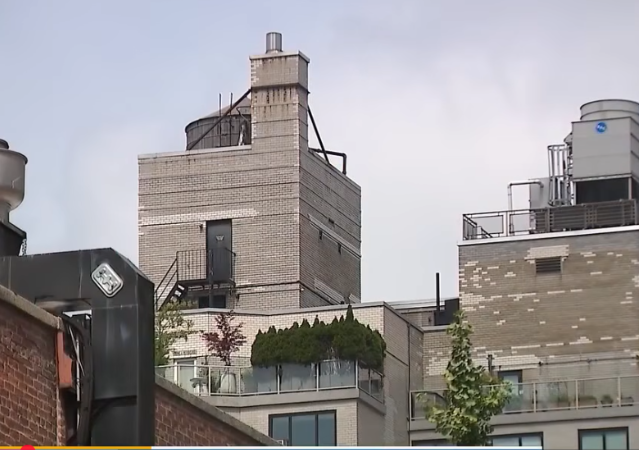
I recently reported on the outbreak of Legionnaires’ disease in New York City, which had logged over 60 confirmed cases at the time of posting.
Presently, over 70 buildings in the area are reported to have cooling towers that tested positive for Legionella bacteria.
The current spate of cases has now resulted in three deaths.
For the third day in a row, the New York City Health Department has announced a death in the Upper East Side Legionnaires’ disease cluster.
Health officials say three people have died in connection with the outbreak.
“Our hearts are with their family and friends as they mourn their loss. Out of respect for their personal privacy, we will not be releasing any additional information about their passing,” Health Commissioner Dr. Alister Martin said in a statement, in part.
…As of Sunday, a total of 74 Legionnaires’ disease cases have been connected to the cluster, health officials say. Of those 74 patients, three have died, eight are currently hospitalized, 51 have been discharged from the hospital, and 12 did not need to be hospitalized.
Death toll rises to three in NYC Legionnaire’s disease outbreak https://t.co/SKJFsRvZCz
— CompuChris (@compuchris) July 20, 2026
The family of one of the deceased is filing a lawsuit.
Ronald Katter, a lawyer who said he was representing the family of the second victim, described him as a retired businessman and Air Force veteran who had been married for 50 years.
“He was just enjoying his retirement with his wife, and they were about to start a renovation for their apartment,” said Mr. Katter, who has represented victims of past outbreaks of Legionnaires’ disease. “They were future-oriented.”
Mr. Katter said that the man was hospitalized on July 2, after his wife had returned home in the afternoon and found him feverish with a temperature of 104 degrees. He lived in the East 70s of Manhattan. Mr. Katter said that the family did not want to release identifying information.
Every year, on average, several hundred people in New York City are sickened with the disease. Cases are more common during the summer, when buildings use their rooftop cooling towers, which are part of their air-conditioning and refrigeration systems.
⚠️ A third person has died from Legionnaires' disease in New York City
The New York Post reports that 74 cases have now been confirmed, with more than 59 people hospitalized. The outbreak is centered in Manhattan's Upper East Side. pic.twitter.com/7JqCJG2yHJ
— NEXTA (@nexta_tv) July 20, 2026
And while a number of people remain hospitalized, the rate of new cases being identified is decreasing. It appears that the source of this particular outbreak may have been contained and controlled.
Eight people remain in the hospital as of Sunday night, officials said.
An average of one new case had been reported per day between July 10 and July 17, a sharp decline from the first week of July where an average of over eight new cases were being reported daily, officials said.
Health officials have also not identified anyone with new symptoms for more than a week — which means the city likely terminated the source of the outbreak, Martin said.
All victims of the outbreak have been on the Upper East Side from the cluster in the Carnegie Hill and Yorkville neighborhoods.
Legionnaires’ disease is a serious type of pneumonia caused by Legionella bacteria, which people usually contract by inhaling mist or tiny water droplets from contaminated man-made water systems (e.g., cooling towers, showers, or hot tubs).
Symptoms typically begin 2–14 days after exposure and include cough, fever, shortness of breath, muscle aches, and headaches. The disease is not generally spread person-to-person and is treatable with antibiotics, but it can be life-threatening, especially for older adults or those with weakened immune systems.
It must be noted that, based on currently available data, New York City is the only clearly documented major U.S. city with multiple, separate Legionella outbreaks in different consecutive years.
For example, a 2014–2015 outbreak in Flint, Michigan, recorded 88 illnesses and 10 deaths, but it needs to be viewed as one large outbreak spanning two years, not as separate consecutive‑year outbreaks, which seem to be the trend for NYC.
The 2023-2024 outbreak in Grand Rapids, Minnesota resulted in 34 cases and 2 deaths. The Minnesota Department of Health classifies this as a single outbreak.
Las Vegas, Nevada; Chicago, Illinois; and Orange County, California have recorded multiple events in different years, but they are separated by at least one year, with no clear evidence of distinct outbreaks in back‑to‑back years at the same city.
Given the above information, it will be interesting to see whether NYC summers will now regularly include outbreaks of Legionnaires’ disease. And, if they do, what does that say about the current priorities related to building maintenance and public health?
Given Mayor Mamdani’s war on landlords and his team’s focus on collectivized housing, I suspect that the chances for repeated outbreaks of Legionnaires’ disease in NYC are high. I hope I am wrong.
Donations tax deductible
to the full extent allowed by law.






Comments
This is what should have been front and center for the last 3 weeks. People have died unnecessarily.