


California’s Packaging Law: Fees, Nonprofits, and Higher Consumer Prices
17 states are suing over SB 54, which imposes “impact fees” that are collected by a “Producer Responsibility Organization” as part of the Newsom-Nonprofit Complex.
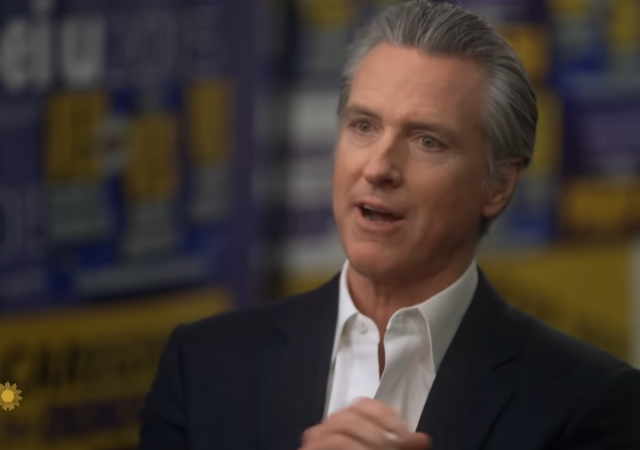
California’s Gov. Gavin Newsom and his Democratic supermajority in Sacramento have once again chosen high‑profile virtue signaling over practical governance with Senate Bill 54 sweeping packaging “producer responsibility” scheme.
SB 54, formerly known as the Plastic Pollution Prevention and Packaging Producer Responsibility Act, was signed by Newsom in 2022 after several years of negotiations and to head off a more sweeping plastics ballot initiative. It establishes a statewide Extended Producer Responsibility (EPR) program covering “covered material,” defined as single‑use packaging and single‑use plastic food service ware.
The key to this green-grifting monstrosity is the “impact fees.” SB 54 requires producers of single‑use packaging and plastic food service ware to pay fees to a state-designated producer responsibility organization (known as the Circular Action Alliance) based on material type, weight, recyclability, and recycled content, with plastics generally carrying higher rates than non‑plastics.
SB 54 fees are set and collected by Circular Action Alliance, the PRO running the program. Fees are calculated per material type, per unit of weight, and modulated by recyclability and recycled content. The mechanics break down into three layers:
Layer 1, Base fee per material type. Each material category (PET, HDPE, PP, mixed plastic, paper, fiber, glass, aluminum, etc.) has a base rate per metric ton. Materials that are harder to recycle in California carry higher base rates because they cost the system more to handle.
Layer 2, Eco-modulation. The base fee is adjusted up or down based on design choices. Higher post-consumer recycled (PCR) content reduces the fee. Designs that contaminate recycling streams (PVC labels on PET bottles, dark pigments that defeat optical sorting, mixed-material laminates) increase the fee.
Layer 3, Reuse and refill credits. Producers that demonstrate verified reuse, refill, or take-back programs can offset part of their fee. The crediting framework is still maturing, so most producers in 2026 are paying close to base + modulation rather than relying on credits.
So, in other words, these tax dollars are headed to an “Environmental Quality, Protection, and Beautification” organization designated as a 501(c)(3).
Circular Action Alliance (CAA) is a U.S. Producer Responsibility Organization (PRO) dedicated to implementing effective Extended Producer Responsibility (EPR) laws for paper and packaging. As a nonprofit, producer-led organization, CAA is committed to helping producers comply with EPR laws, delivering harmonized best-in-class compliance services and to working with governments, businesses and communities to reduce waste and recycle more. CAA was founded in 2022 and is guided by producers representing the food, beverage, consumer goods, restaurant and retail industries.
The fiscal status of CAA is fascinating. California just legislated a way to send “fees” directly to an “independent organization” that sounds suspiciously like an NGO.
Finance information on Circular Action Alliance, a green-grifting "environmental" organization that is now collecting "impact fees" from manufacturers of plastics packagings. pic.twitter.com/m8gfXafbJj
— Leslie Eastman ☥ (@Mutnodjmet) July 13, 2026
And while the marketing of the “impact fees” may be directed by manufacturers, the reality is that the costs will slam consumers.
California shoppers could soon be paying even more at the checkout line as a sweeping new state recycling measure threatens to send grocery prices soaring, with dairy manufacturers warning some businesses may be forced to shut down or flee the Golden State.
Senate Bill 54 is now entering its first phase of implementation, with companies expected to receive their first bills as early as next month, reported SFGATE.
…It charges companies impact fees on products they sell while also requiring them to phase out packaging that cannot be adequately reused, recycled or composted.
The dairy industry says it stands to be among the hardest hit because many of its products rely on packaging that does not currently meet the measure’s requirements.
Misery for California shoppers as grocery bills set to spike due to new law https://t.co/HIdkttfvBI pic.twitter.com/LCcXBHQY8U
— California Post (@californiapost) July 12, 2026
The potential for impact on interstate commerce is such that 17 state attorneys general are suing over the measure.
A group of 17 states led by Nebraska Attorney General Mike Hilgers and joined by the National Association of Wholesaler-Distributors (NAW) has filed a federal lawsuit challenging California’s Plastic Pollution Prevention and Packaging Producer Responsibility Act, also known as Senate Bill 54. Washington-based NAW says it is joining as the only business plaintiff in the case.
Along with Nebraska, the attorneys general of Alabama, Florida, Georgia, Idaho, Indiana, Iowa, Louisiana, Missouri, Montana, North Dakota, Oklahoma, South Carolina, South Dakota, Texas, Utah and West Virginia have joined the lawsuit. They are asking the court to block enforcement of S.B. 54, which establishes a statewide extended producer responsibility (EPR) program for packaging in California, while the case proceeds.
…The coalition argues California’s law violates four constitutional principles by:
- discriminating against businesses selling into the state in violation of the Commerce Clause;
- imposing content-based restrictions on speech in violation of the First Amendment;
- compelling NAW members to join CAA in violation of the First Amendment; and
- delegating to a private entity government authority to regulate and impose mandatory taxes and fees on businesses selling into California without adequate legislative standards or public oversight to a private organization
“California cannot reach across state lines and force businesses in Nebraska, or any other state, to adopt California’s preferred environmental policies,” Hilgers says. “California does not get to set national policy. Nebraska is leading this coalition because the constitutional problem here belongs to every state.”
SB 54 exemplifies how California’s governance is drifting toward an opaque “Newsom–Nonprofit complex,” where quasi‑public authority and billions in fee revenue are funneled through lightly accountable nonprofit structures, creating significant risks to fiscal discipline and transparency. The result is a policy regime that passes extraordinary costs onto consumers, distorts interstate commerce, and massively expands regulatory power.
Other states should treat California as a cautionary case in 2028, not a model… especially given Newsom’s tendency to expand Nonprofit-Democrat partnerships.
Donations tax deductible
to the full extent allowed by law.







Comments
https://x.com/rduke0071/status/2077001264898920733
Democrats should consider that Republican states could watch their model then apply a similar regulatory environment.
Worse, they could tweak it so that allied non-profits receive funding from Democrat states whilst Republican states could sign onto a by invite only multi-state agreement whereby they all hold to a similar model – taxing Democrat states and funding Republican aligned non-profits, and exempting their own businesses.
But Democrats seem to believe that lawfare only flows one way. Sadly all too often Democrat judges seem to agree.
Fabian socialism is alive and well – well that is for the Fabian socialists.
The IRS should take a long look at the non-profit NGO receiving the money. And how that money is spent on accordance with applicable law.
Circular Action Alliance. lol
Such a grift. You can’t make this up.
CA empire of fraud.
IMO we’d be better served to stop playing whack a mole with every Cray Cray regulatory scheme dreamed up in blue States. Instead I’d propose a simple limiting principle for ‘extra’ regs beyond basic health/safety:
States can put whatever regs they want onto products that are produced in AND consumed in their State but not on anything that doesn’t meet that general criteria.
If CA Legislature wants to impose super duper fuel efficiency standards they can but only on vehicles both manufactured and sold in CA. Same for applicability of this bill. This way we’re done with whack a mole and have set a broad, very clear prohibition on attempts to impose goofy CA ‘bright ideas’ onto the rest of the Nation.
When the Soviet Union collapsed, Cuba was put in a lurch with the loss of their support.
I remember the PRC stepping up and donating 10,000 bikes to Cuba.
Maybe the PRC can help Comrade Gavin and Sacramento Politburo?
What does this mean? Of course any independent organization is by definition a Non-Government Organization! Government organizations are not independent! You make “NGO” sound like something suspicious and creepy, when you are part of LI, which is an NGO.
Don’t play stupid, Milhouse.
You know full well that when we excoriate NGOs, we’re referring to money-laundering nonprofits that receive taxpayer funds from government entities as their source of income… and proceed to blow that money on things the government wants done but cannot legally do itself (often including funding some partisan street army of some sort, up to and including kickbacks to candidates), or (if that’s forbidden) re-granting those funds to a less-regulated nonprofit who can ultimately do those forbidden things.
This fits the circumstances of Circular Jerk Alliance completely — same as Acorn, Feeding Our Future, or SPLC’ Vote Your Voice. It does not at all fit the circumstances of LI, the NRA, the Rotary Foundation, or the Ronald McDonald House.
You know this, same as you know that when we com[plain about “money laundering” we’re really not criticizing Treasury’s Mutilated Currency Redemption program.
No, Milhouse, LI is NOT a NGO. The point of the name “Non-Governmental Organization” is to distinguish those orgs who receive government money to do things the government doesn’t want to do directly.
(Wikipedia tries really hard to make it apply simply to ANY organization that isn’t government. But that’s inherently stupid in application, as there are all sorts of names for those orgs already. The only point of using the term – seen in the fact it first appears in a UN document – is to distinguish orgs that interfere in the conduct of nations’ affairs but are not, technically, governments themselves.)
This is a perfect example of your pedantry (insisting on a strict literal interpretation of the individual words) getting in the way of your brains.
“discriminating against businesses selling into the state in violation of the Commerce Clause;”
“California cannot reach across state lines and force businesses in Nebraska, or any other state, to adopt California’s preferred” (insert California’s product regulation preference here)…
Been saying this for years, in particular about any State’s gun laws that affect how firearms are designed, distributed, and sold (or, indeed, banned). These laws violate Congress’ exclusive legislative jurisdiction over interstate commerce. When States make any such laws, regarding any article of trade that moves in interstate commerce, it extends its jurisdiction into other States, affecting the manufacturers/producers in those other States. The Commerce Clause was meant to prevent States from confounding interstate commerce with their own laws regulating same. Such laws make interstate commerce less regular (we might say such laws make the laws governing interstate commerce “non-uniform”), the object of the Clause.
For instance, CA made regulations concerning egg-laying chickens and how they must be housed. This raised the cost of eggs produced within the State. But, so as not to price their own producers out of competition for egg sales, CA also extended these requirements to all eggs sold in the State. CA hurt their own producers, and balanced this by requiring out of state producers to adhere to the same regulations. This is exactly the sort of State interference with manufacture and production in other States the Commerce Clause was meant to prevent. The Commerce Clause was meant to allow Congress to “regulate” commerce between the States – to make commerce “regular,” that is to encourage interstate commerce, and to remove State barriers to & prevent State interference with interstate commerce.
CA has permission from Congress to set its own auto emission standards.* The State needed this permission because to make and enforce its own emission standards would have affected manufacturers in other States and would have made interstate commerce less “regular” due to CA’s irregular/non-uniform emission standards. Without the grant of authority from Congress, CA auto emissions standards would not be legal and would have been subject to the same sort of challenge that is being mounted here in the article.
*Because this allowance grants CA with specific authority under the Commerce Clause, and because CA uses that authority to thwart the purpose of the Clause, this allowance is likely unconstitutional itself. The Constitution grants authority over interstate commerce to Congress in Article I, and there’s nothing in the Article that authorizes Congress to transfer that authority, much less to transfer it to an authority not of its own creation and outside of the federal government. It’s questionable whether Congress can lend any of its authority to any State. It should be obvious that it can’t lend its authority to a State so that the State can abuse it.
“signed by Newsom in 2022 … to head off a more sweeping plastics ballot initiative.’
Which tells us all, what? That as stupid as this arrangement is, there were reasons to believe that the voters themselves were likely to approve something even stupider.
Don’t cry for California, America.
requires producers of
So, don’t produce it in California. And don’t sell directly to California. They can’t impose those fees on you if you don’t directly do business in California. Right?
They don’t want plastic in their landfills, then don’t sell them any. And, if you refuse to adopt some BS scheme for packaging with “less impact” then California just stops getting… anything. And they can live exactly how they like. Do it with gasoline and energy, as well. They wanna live “organic” let them see how that works.
The gun community has a term for exactly this sort of righteous shunning: “Barretting:”
The big catch is, this requires merchants of principle, and not rope-selling capitalists (like Glock).
Just say NAW to PRO and EPR!
Just a silly thought that popped up while reading about this.
I am living this madness in my job; I work for a large company selling food. Unfortunately, California has ~ 11% of US population, so it’s not a market we can ignore. There is no good way to segregate for California only SKUs, so we are forced to change our entirely portfolio and pay the extortion fees in order to sell into the state.
Wonder how Gruesome Newscum would react to a major environmental tax on hair oil.
I wonder how long it would take to reverse this if bottled water companies, Amazon, and other industries hit by these fees simply stopped operating in California?
I doubt they have the fortitude to take a stand and absorb the initital revenue loss, even knowing that in the long run it will save them billions.
and still no “impact fees” for wind turbine blades.