


Green Energy Groups Sue to End Pentagon’s ‘de facto moratorium’ on Wind Power
For years, green energy developers treated the approval pipeline as a rubber stamp. The Pentagon’s pause is simply the first time a federal institution has had both the legal authority and the political will to say no.
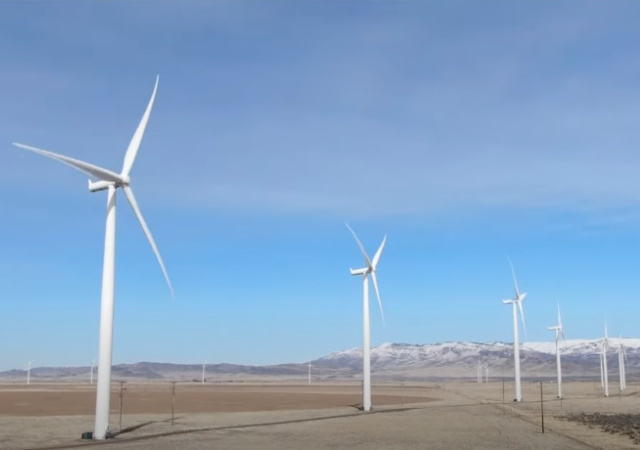
Renewable energy may be “green,” but it’s not bulletproof, and now America’s wind warriors are in open legal combat with the Pentagon.
Renewable energy trade groups have filed a federal lawsuit against the Pentagon, arguing that the Department of War has effectively frozen national security reviews for new onshore wind farms on private land.
Renewable energy groups are suing the U.S. military because they say national security reviews for new wind farms on private land have been effectively frozen for months. The groups say this logjam jeopardizes $47 billion in investments and thousands of jobs in 21 states.
President Donald Trump has frequently talked about his hatred of wind power and calls turbines ugly. Currently, about 10% of the electricity generated in the United States comes from wind farms, making it the nation’s largest source of renewable energy. Solar is the fastest-growing.
The lawsuit against the Pentagon and Defense Secretary Pete Hegseth was filed in U.S. District Court in Oregon by nine groups, including Renewable Northwest and the Advanced Power Alliance. They allege that a policy of inaction “poses an existential threat to the wind energy industry across the nation by effectively halting all new development activity.”
The Pentagon says it has to balance new sources of energy against military needs. A military office known as the siting clearinghouse, which checks energy projects for national security risks, is actively evaluating these projects — but it’s a complex process where different agencies have to work together, the Pentagon says. The Pentagon evaluates land-based wind energy projects during the Federal Aviation Administration review.
Immediately upon taking office, President Donald Trump took significant action against offshore wind projects. He signed an executive order that halts all new and renewed approvals, permits, leases, and loans for both onshore and offshore wind projects.
Late last year, a number of large-scale windfarm projects were paused.
- Vineyard Wind 1
- Revolution Wind
- CVOW – Commercial
- Sunrise Wind
- Empire Wind 1
However, as of February, a series of judicial rulings have allowed these monstrosities to proceed.
It turns out that the Pentagon approach may be the nation’s best line of defense against the green energy grift.
Before any large wind farm can begin construction, its developers need to apply for clearances from the Federal Aviation Administration, which regulates the national airspace. As part of that process, the F.A.A. refers the application to the Pentagon, which checks to see whether a project might interfere with military radar or nearby air bases.
In the past, many wind projects have quickly received “no hazard” determinations, allowing them to move forward. But some projects do create issues, and they typically need to reach a mitigation agreement with the Pentagon. That might involve the company paying to upgrade nearby radar systems or modifying the layout of its turbines.
This process was for years considered routine and predictable, with deadlines set by Congress. But since last August, wind developers began encountering severe delays, the lawsuit said. Companies that had negotiated mitigation agreements could not move forward because top Pentagon officials would not deliver the final signatures needed.
Then, in April, the review process halted entirely, and Pentagon staff were directed to stop work on wind projects, the lawsuit says. Meetings with developers were suddenly canceled.
An American Clean Power (ACP) expert says that it is a “de facto moratorium” on these windfarms.
However, Jason Grumet, CEO of ACP, said there has never been anything remotely comparable to a backlog of this size or a near-systemwide halt in transmittals back to FAA. Calling it a “de facto moratorium” on new land-based wind energy development, he said if the projects remain stalled, it would dramatically obstruct the industry at a time when the power is needed to meet skyrocketing demand and help lower utility bills.
More than 250 projects are pending in over 30 states, totaling at least 30 gigawatts of energy that could power millions of homes if the wind farms are built, ACP said.
As a reminder, Americans opposing these projects have been ignored by previous administrations and local politicians.
Residents objected to the visual impact of turbines, cited concerns over property values, and complained about noise and changes to the local seascape (especially in the wake of the Vineyard Wind incident).
Fishermen warned about the potential loss of fishing grounds, the disruption of fish habitats, and difficulties navigating safely within and around turbine arrays. They feared impacts to fish populations due to noise, surveys, and construction. They also argued that substantial portions of valuable fishing areas may become inaccessible, threatening their livelihoods.
Environmentalists regularly complain about threats to marine biodiversity, such as risks to birds, marine mammals, and ocean ecosystems during both construction and operation.
The renewable energy industry’s legal blitz against the Pentagon includes an army of lawyers and “experts”, but it collides directly with a wall of bipartisan statute and documented military necessity.
Classified Pentagon assessments completed in late 2025 identified specific vulnerabilities tied to large-scale wind development near critical defense infrastructure, the kind of hard intelligence no activist judge or ACP press release can wish away.
For years, green energy developers steamrolled fishing communities and coastal residents, treating the approval pipeline as a rubber stamp. The Pentagon’s pause is simply the first time a federal institution has had both the legal authority and the political will to say no.
We will see if the Department of War will be forced to certify that gutting America’s national security is an acceptable price for tax-credit-subsidized electricity.
I sure hope not.
Donations tax deductible
to the full extent allowed by law.







Comments
Once again…
Three things you need to build a wind farm:
1 Lots of land with lots of wind.
2 Proximity to high voltage transmission lines.
3 SUBSIDIES. Other people’s money.
Simple as that. These groups are leeches.
Actually, the only governing factor is point 3. Points 1 and 2 are optional and arent all that important when it comes to feasting on the teat of public money.
1) You don’t actually need any wind to profit from a wind turbine. The State and Federal subsidies are so generous that you are guaranteed a huge profit so long as the turbine is connected to the grid. Even if it doesn’t produce any energy at all, you still win.
2) Proximity to transmission. Remember a decade or two back when we were getting bombarded by TV ads from T.Boone Pickens about wind energy? The reason why he was spending vast sums on nationwide ads was because he wanted legislation to be passed in Congress – to get taxpayers to foot the bill for the transmission lines for the wind turbine “farms” he wanted to build.
3) Spot on. Want to kill wind energy permanently? Eliminate the taxpayer subsidies. Without the subsidies, no one would ever build a wind turbine.
“…the kind of hard intelligence no activist judge or ACP press release can wish away.”
Activist judge says hold my non-fat double caff soy caramel latte.
The only thing green about green energy are the greenbacks they gobble up, and the only thing renewable about renewables is how frequently they have to be renewed (these monstrosities’ operational lives are 10-15 years vs. 50-60 for conventional power plants).
And, as far as I know, no bonds were required for the dismantling of these monstrosities, when the time is up, leaving those costs up to the ratepayer ie me and you.
Revolution Wind, off the coast of Rhode Island is built on Cox’s Ledge, a unique breeding ground for many marine animals. It’s equivalent to building them on a coral reef.
There’s no such thing as green energy.. windmills cannot be recycled or reused or refurbished.. They fill up the landfills the same way with. batteries for electric cars… and solar panels
“Slay the birds. Tuppence a blade.”
The Pentagon and the services have just now started getting their own acquisition contracts after the chaos that has been DOGE and Hegseth. There’s no world that wind farm approval should take precedence.
What do you mean, the chaos of DOGE and Hegseth
If you remember what Pete did to those old fat flag officers, to them that was chaos
I absolutely hate wind farms
I’m with you on that 💯 %
Given that the Pentagon has “the kind of hard intelligence no activist judge or ACP press release can wish away”, it seems to me that the Renewable energy trade groups are tilting at windmills.
If this goes before an activist judge in oregon, evidence the Pentagon provides will not count.
I am a native Californian but have moved out of the state due to business. I watched the build of the Altamont Wind Farm off I580 and how it has operated since. It has not been good as the area kills many birds on north-south travels plus over time many turbines are not working. This will happen with any wind farm and that is why we should not have them.
Wind Farms require wind, but the power production changes based on wind so it is not steady. Further each turbine has individual connection into a central point so the power production costs more since Gas or Nuclear Power Plants are more central and produce more stable power for less cost.
Oh, Goody! I love the idea that we shut down our defense, maybe losing radar and airport operations because the wind quits blowing.
Leftists want this guano, install it on their property. Bill Gates has LOTS of farm land where he could install this “marvelous technology”
There is no such thing as green energy.. windmills have to be worked on monthly.. They can’t be refurbished. They can’t be recycled. They just fill up landfills… the same thing happens with solar panels and batteries for electric cars.. all they do is fill up landfills..
These wind farms have been in existence long enough to have produced empirical results, good or bad. Where is that solid data, and why isn’t it made public and used by the government to determine if this is a good investment before handing out more money?