


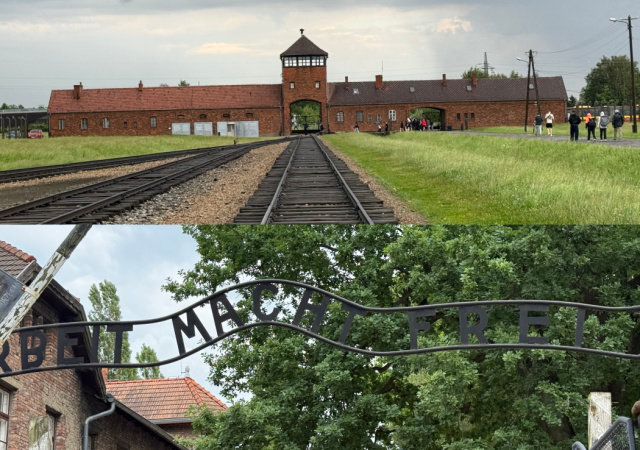
My gosh. I’ve fallen in love with Poland. But when you visit Krakow, you must tour Auschwitz-Birkenau, a literal hell on earth.
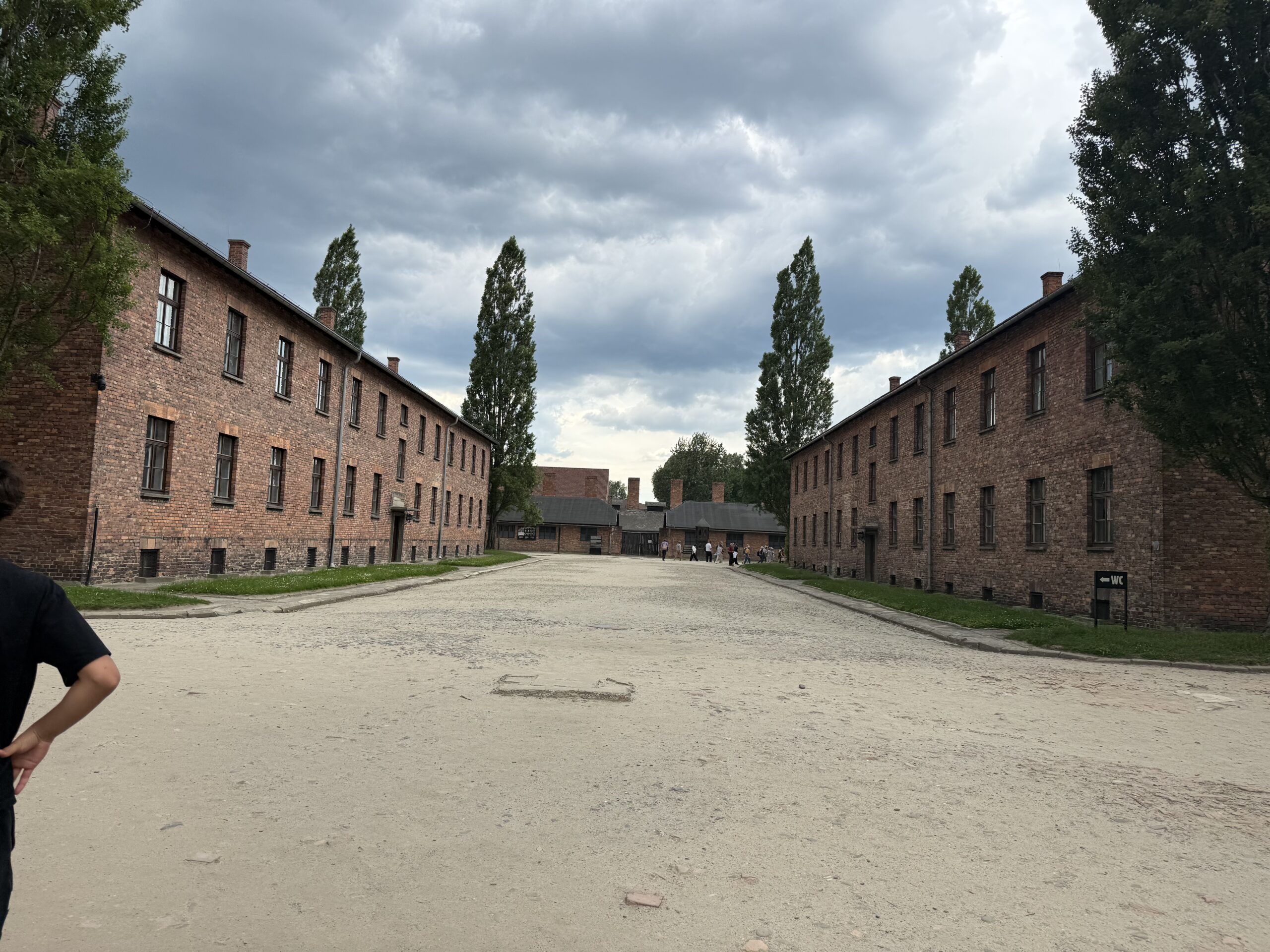

The drive is about 90 minutes away. You’re surrounded by lush green grounds and vibrant neighborhoods. It’s hard to absorb the sight of happiness and life going on, knowing where you’re headed.
Then you remember you’re headed to a place designed to exterminate specific groups of people. I smiled, enjoying seeing those parts of Poland bursting with adults, children, businesses, and schools. You smile because you know the Germans failed.
The Germans established Auschwitz I in 1940, using barracks erected by the Poles before the war.
They extended the camp with Auschwitz II-Birkenau, the largest part of the complex. Birkenau housed most of the gas chambers and ovens.
I took many pictures, but I couldn’t bring myself to take pictures of the death wall, gas chambers, or the ovens.
Auschwitz
After you exit the tunnel where you hear the names of the victims, the silence instantly hits you. No birds. No other animals. Only the trees if there is a slight wind. It’s almost as if nature remembers what happened at Auschwitz.
Then you notice the sign.
Arbeit macht frei.

“Work sets you free.” What a lie.
The barbed wire.
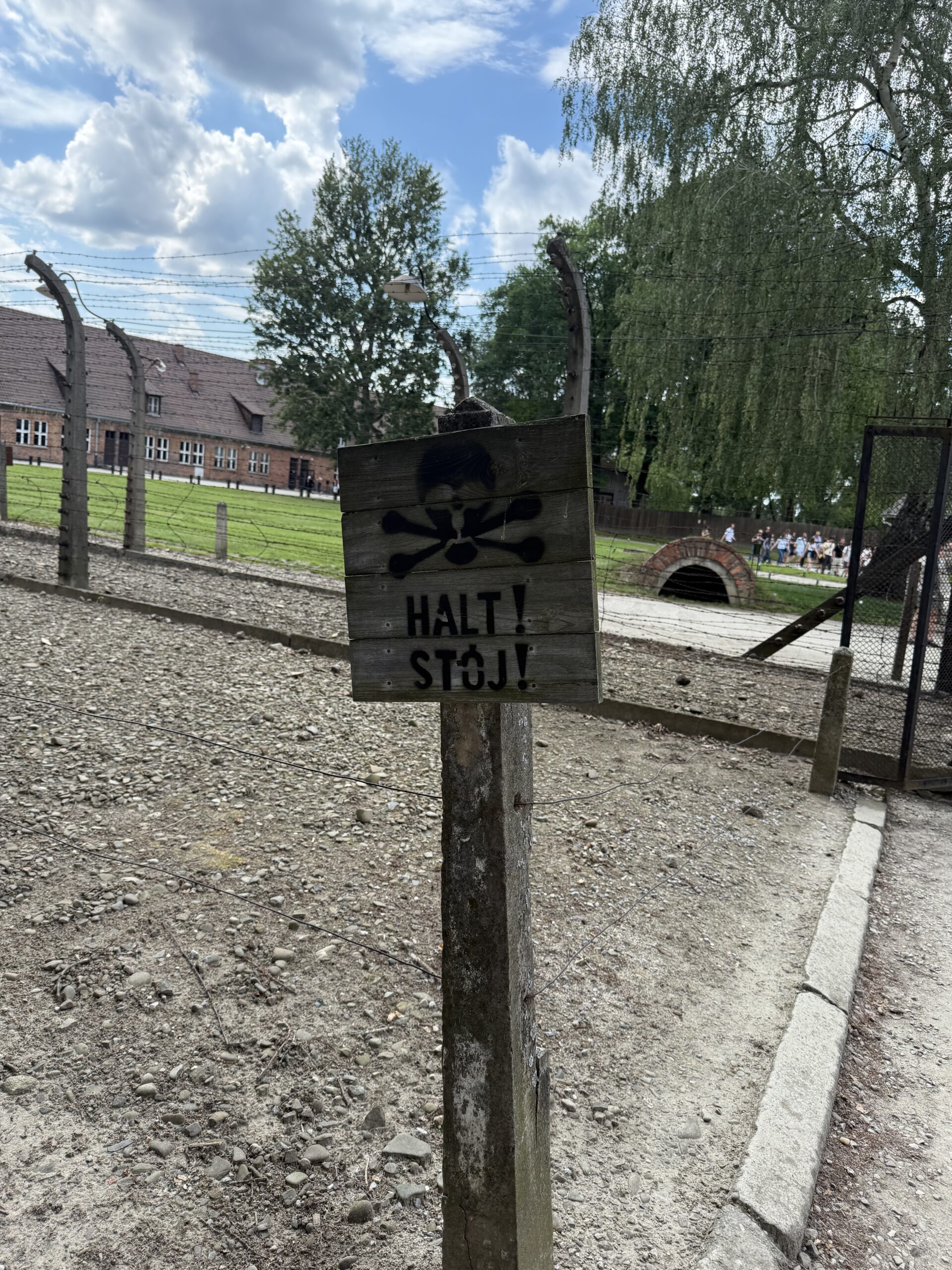
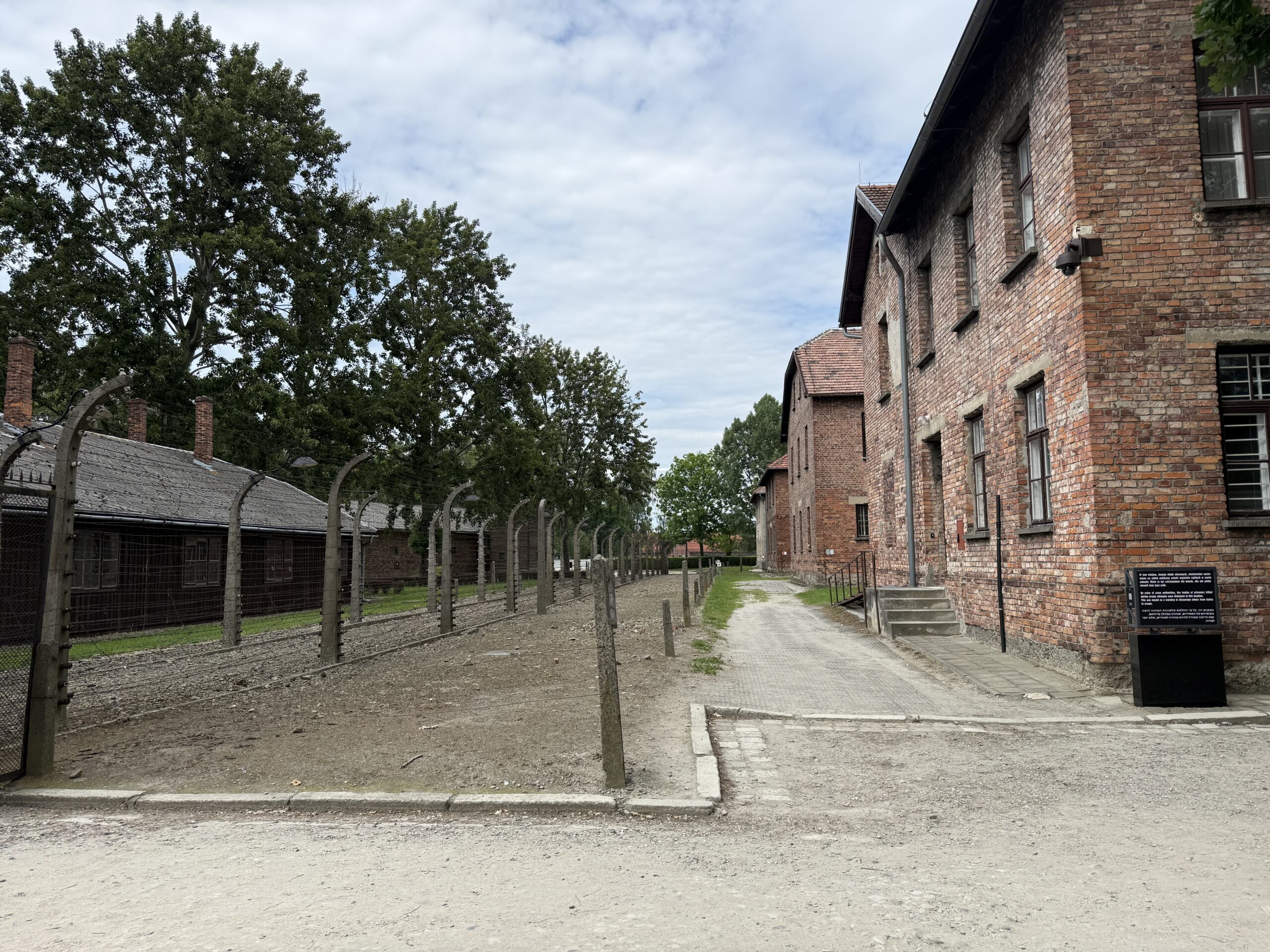
Again…the silence.
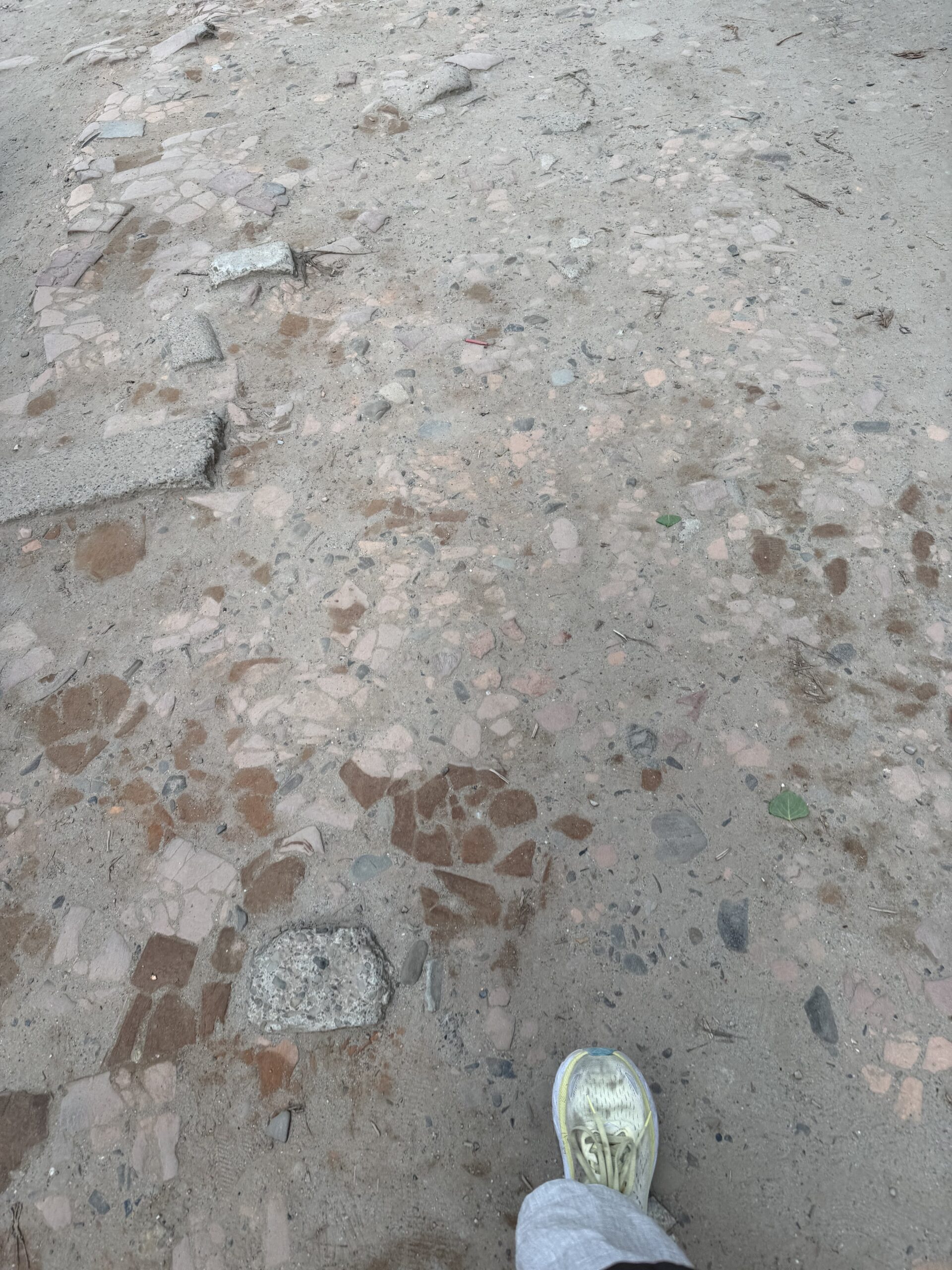
Don’t forget you are walking on the same ground as the millions murdered by the Germans.
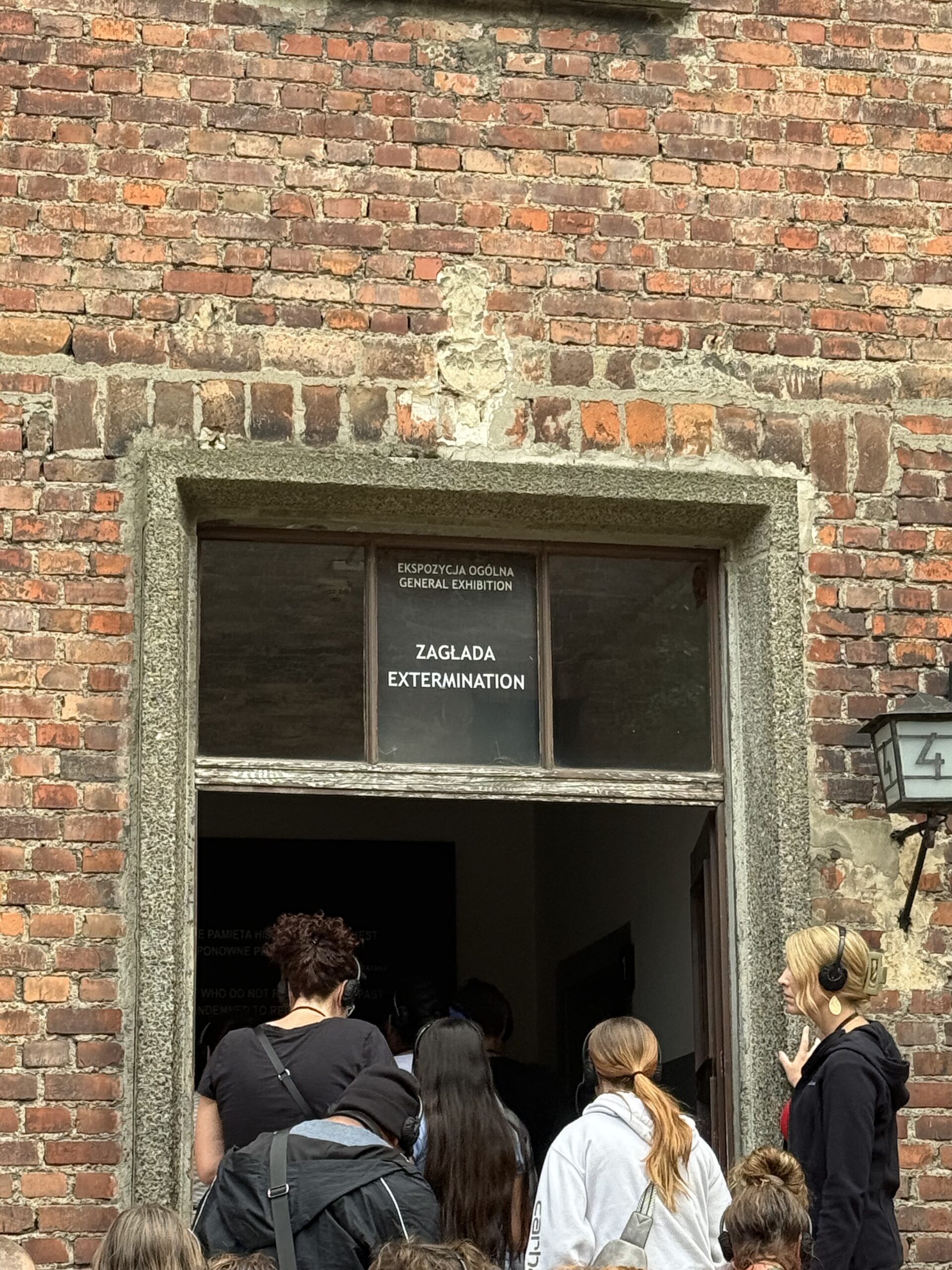
Visitors can enter a few buildings. The first one introduced you to how the Germans slaughtered over a million human beings at the camp.
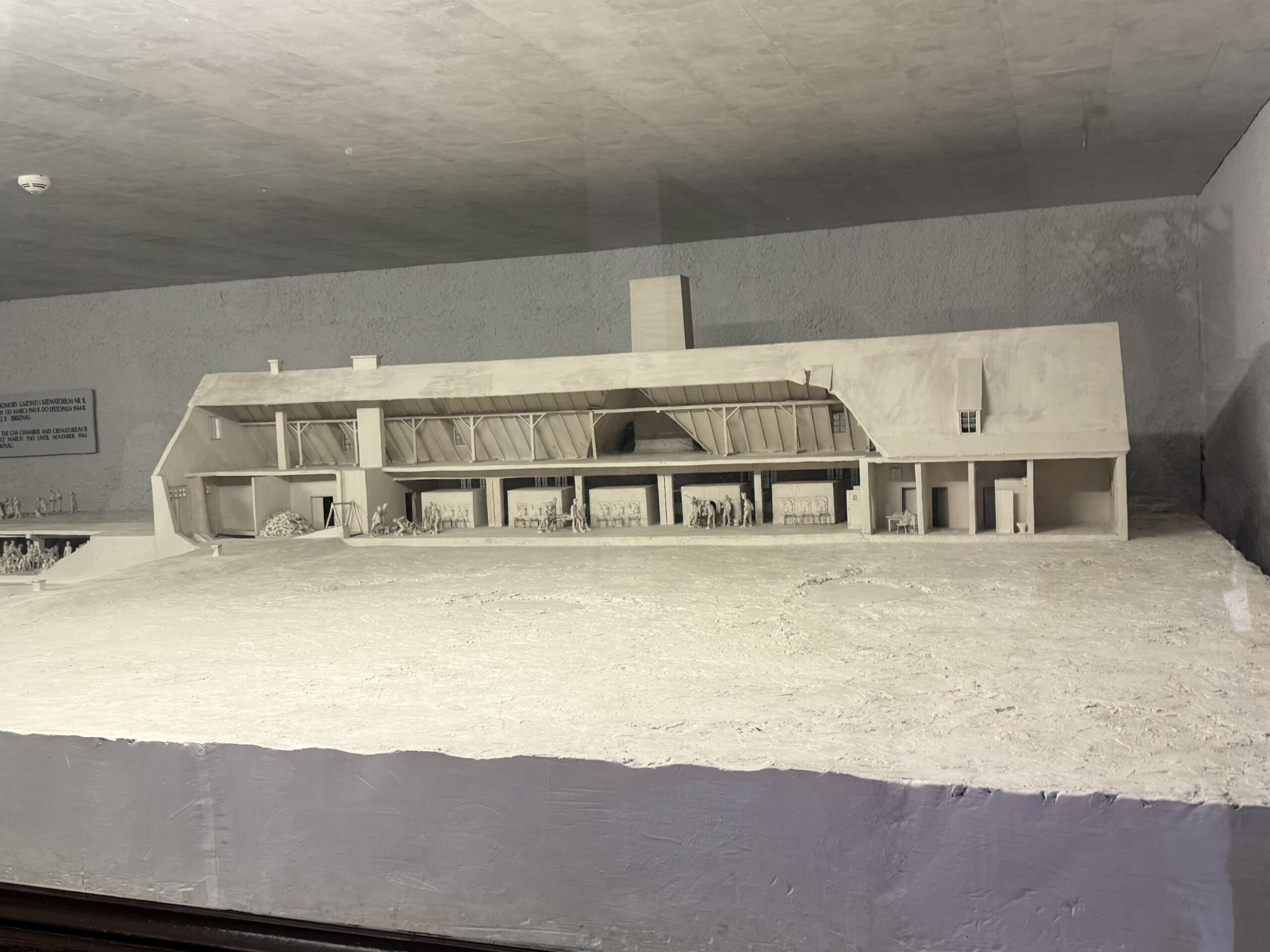
The Germans destroyed the majority of the gas chambers and ovens as the Russians made their way across Poland.
So we have a recreation of the gas chambers and ovens.

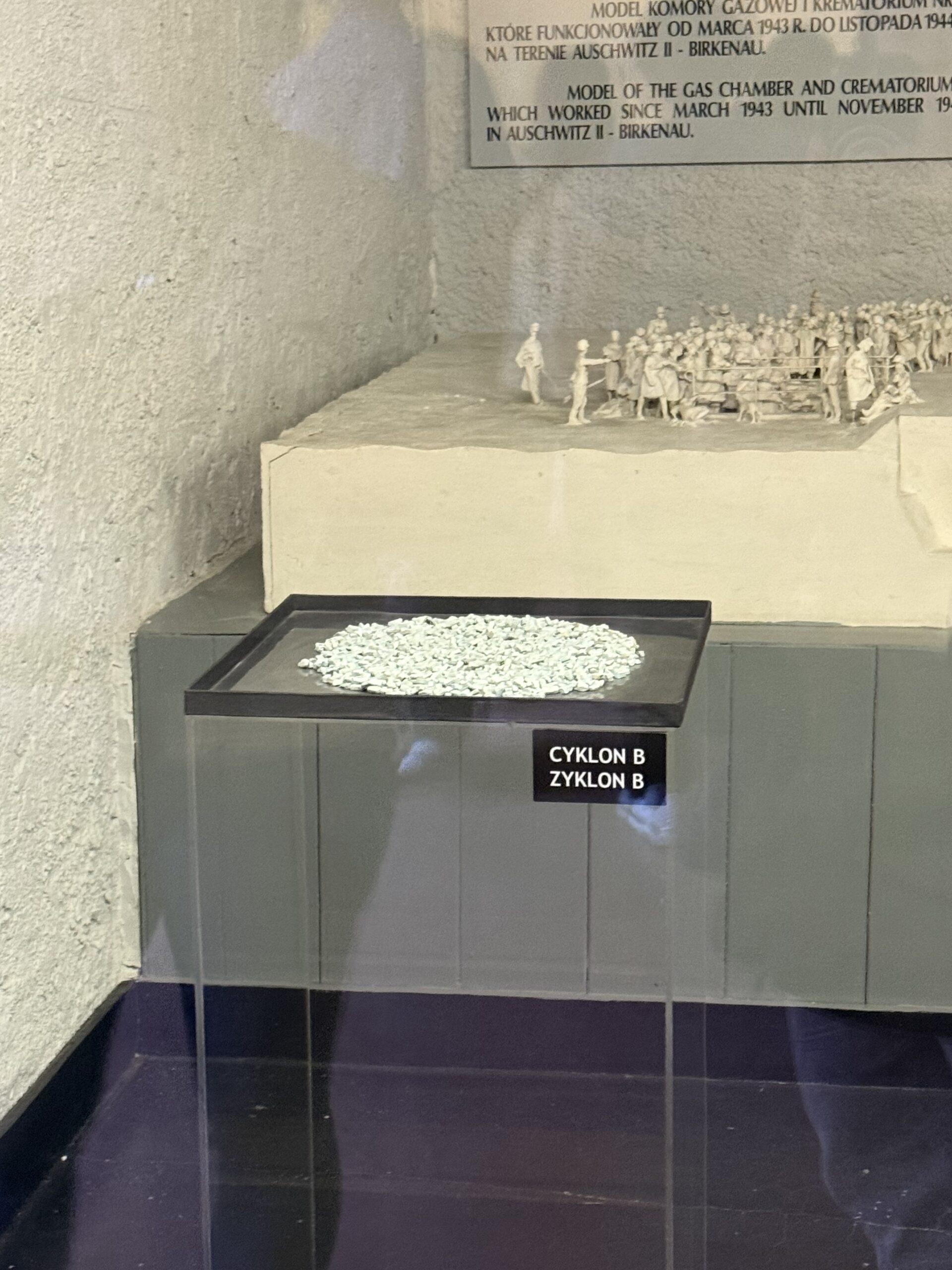
Next to it are pellets of Zyklon B, a pesticide containing hydrogen cyanide. It suffocates a person for between two and twenty minutes.
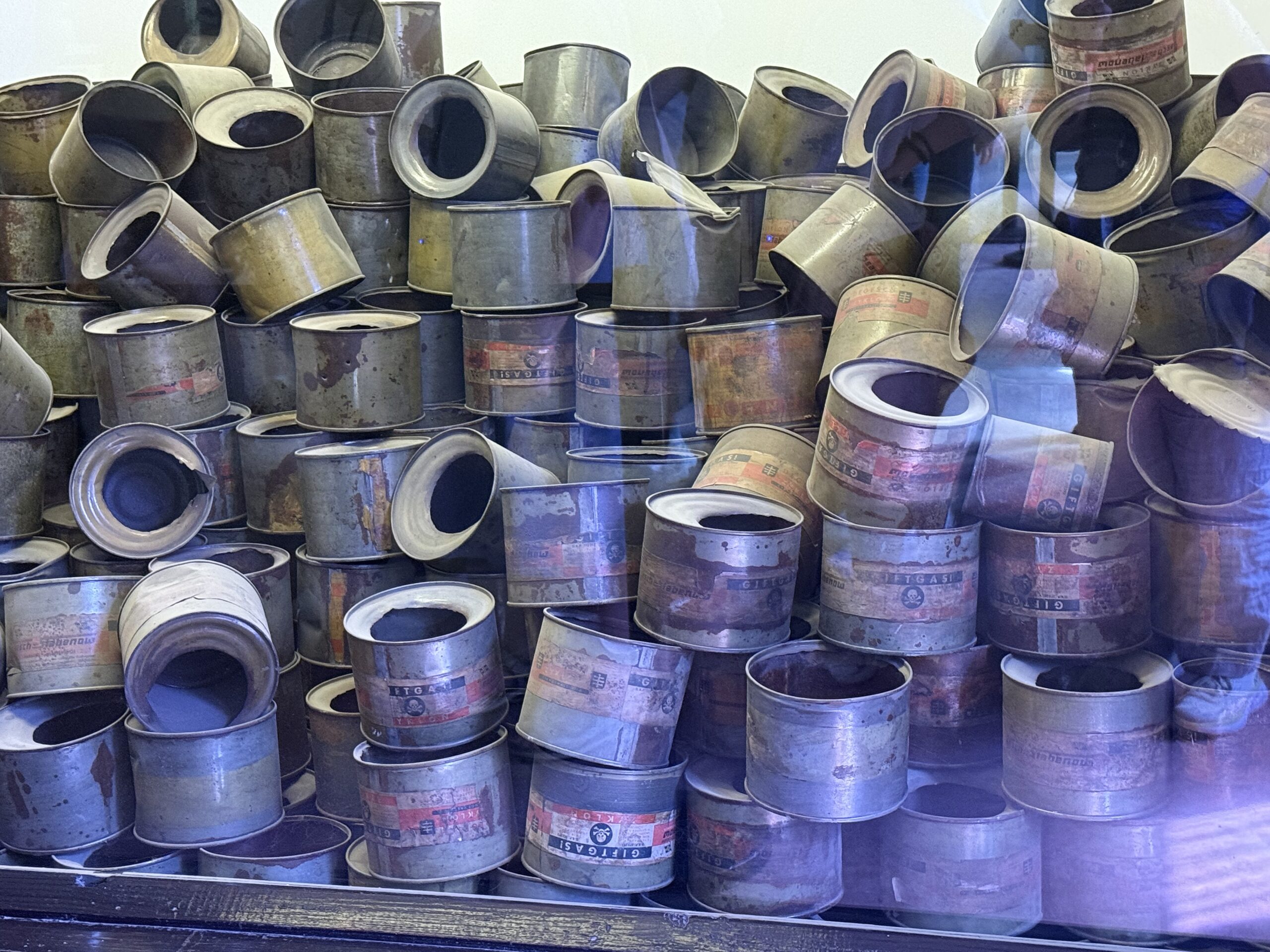
Jewish prisoners would move the dead and dispose of the bodies in numerous ovens.
If you haven’t watched the 2001 HBO movie Conspiracy, do it today. It’s about the Wannsee Conference, where Reinhard Heydrich and Adolf Eichmann introduced the Final Solution to others in the upper echelon of the Nazi regime.
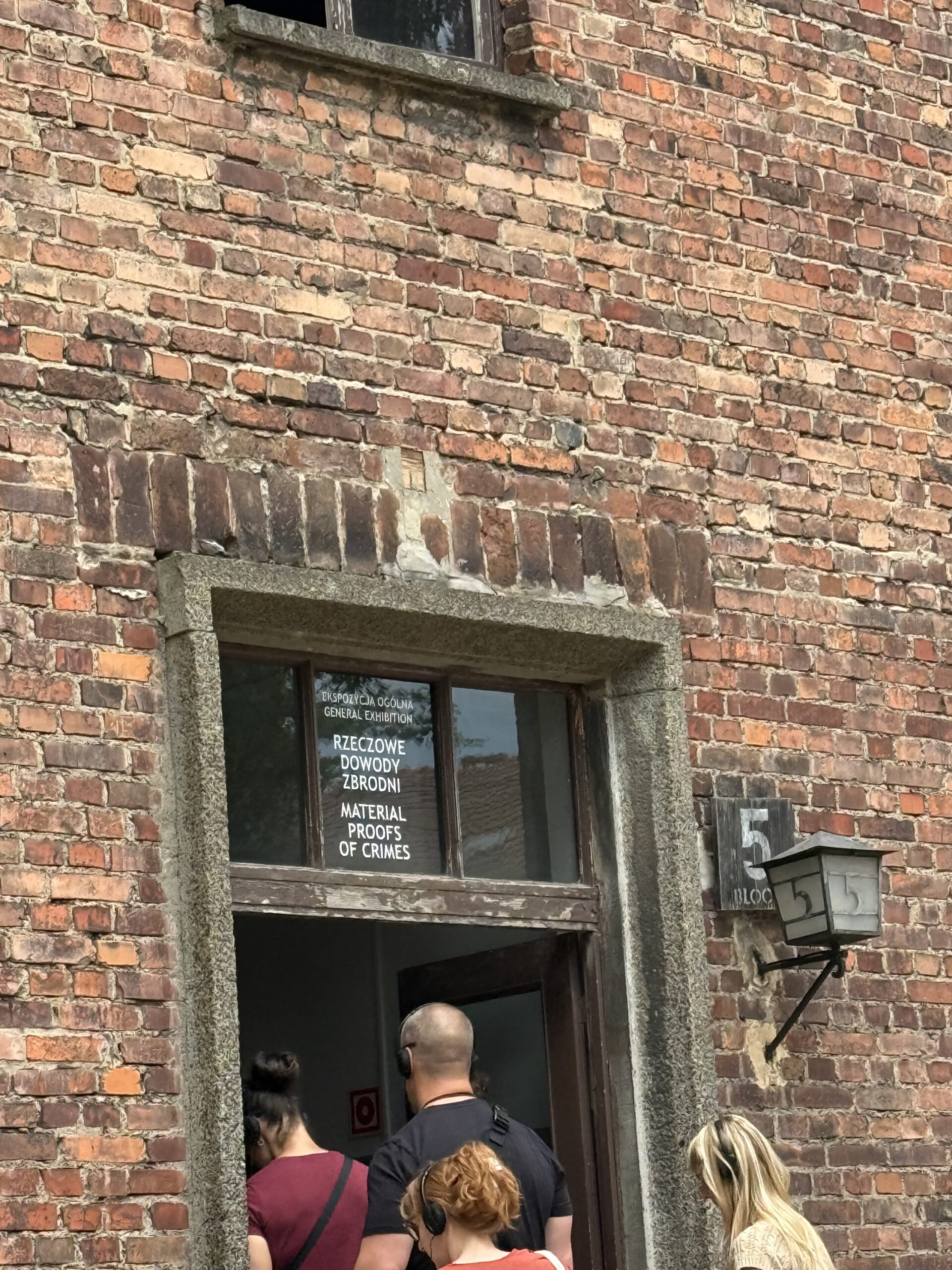
Block 5 contains evidence of the German crimes, including personal items of the prisoners.
The museum has a case that occupies the entire length of a long wall, holding… human hair. We could not take a picture of it, and I doubt I would have done so. The Germans used this hair to make clothing, among other things, for the German army.
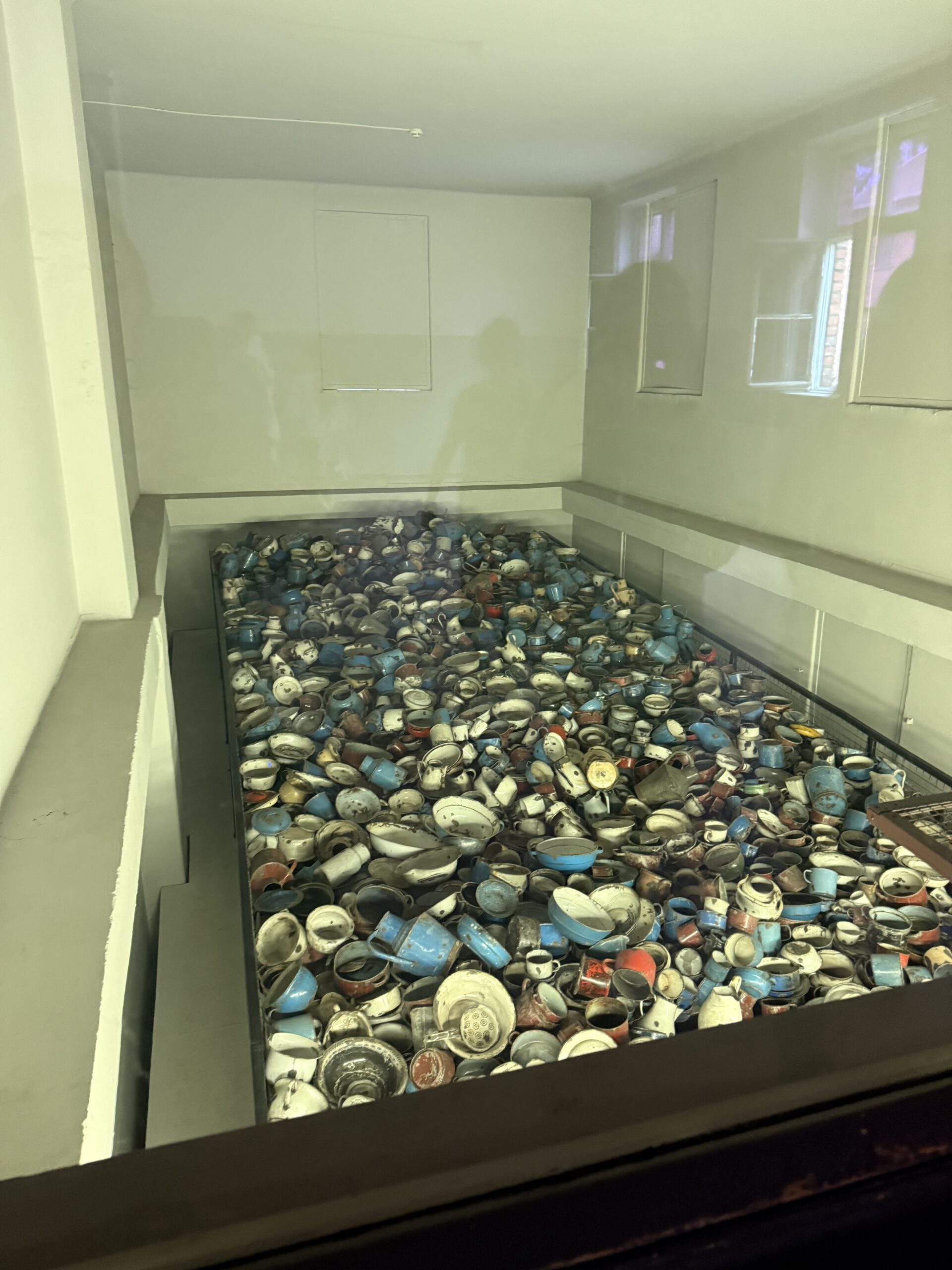
We also saw glasses, pots & pans, suitcases, prosthetics, and the shawl Jewish men wear over their shoulders.
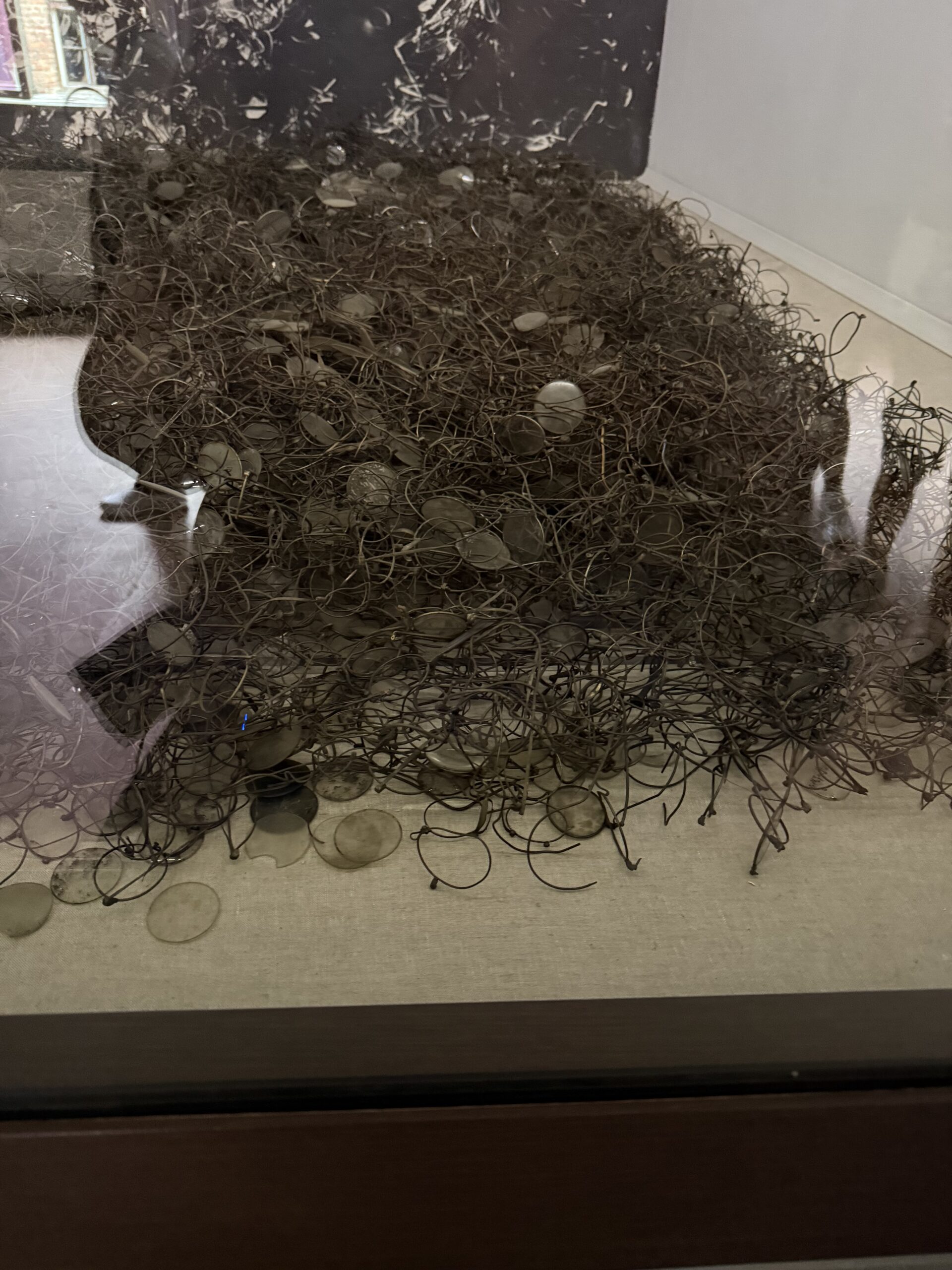

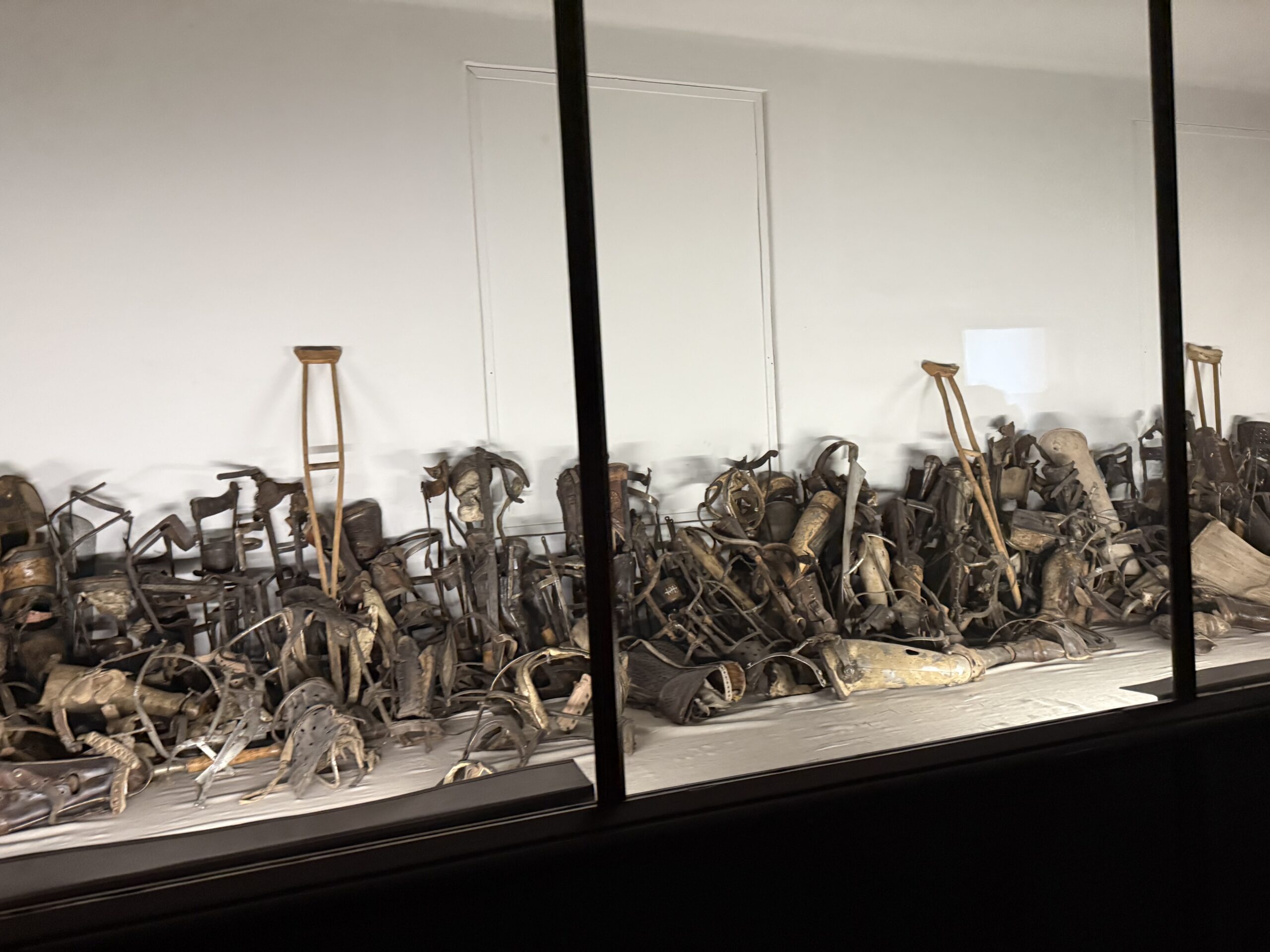
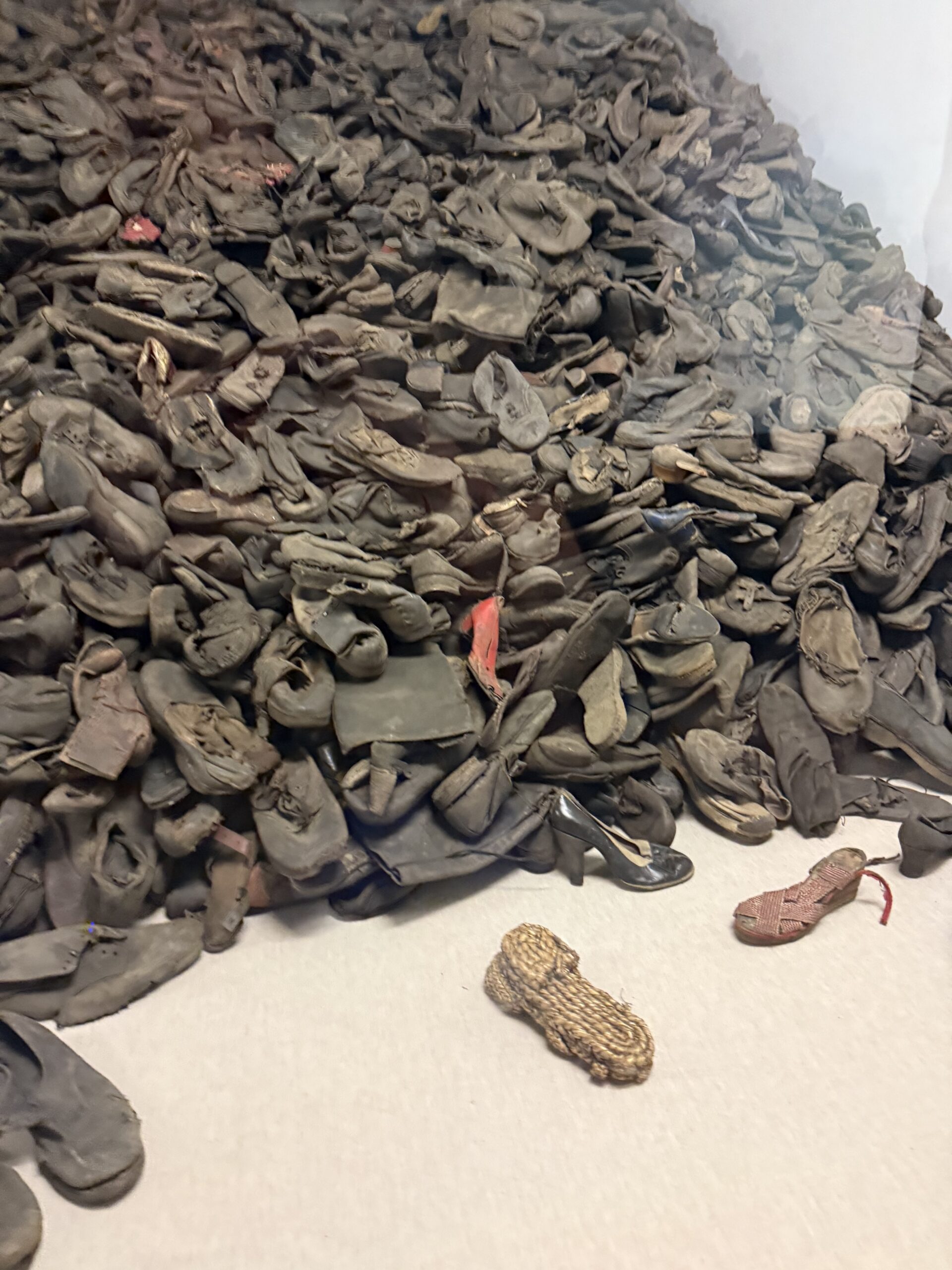
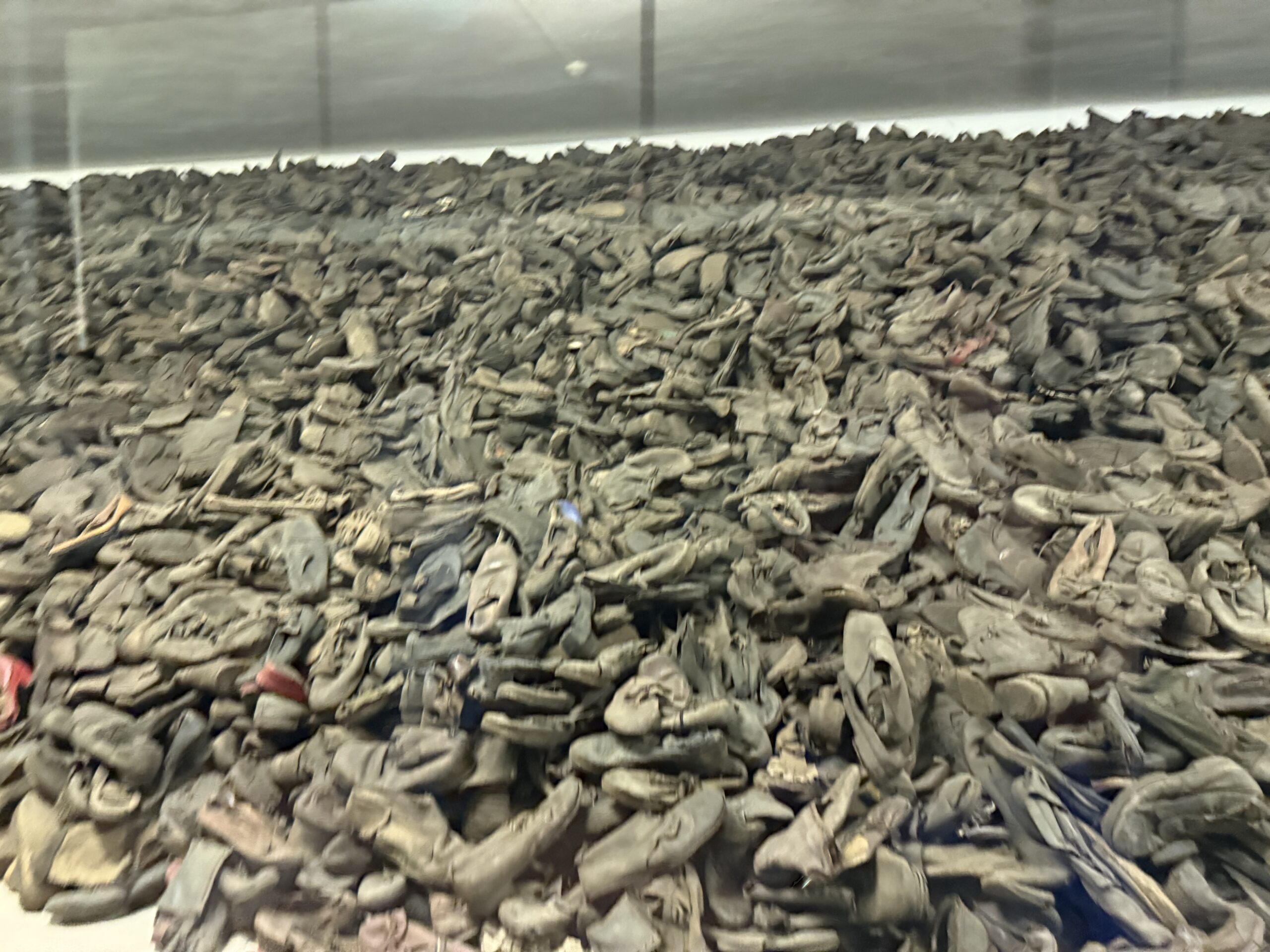


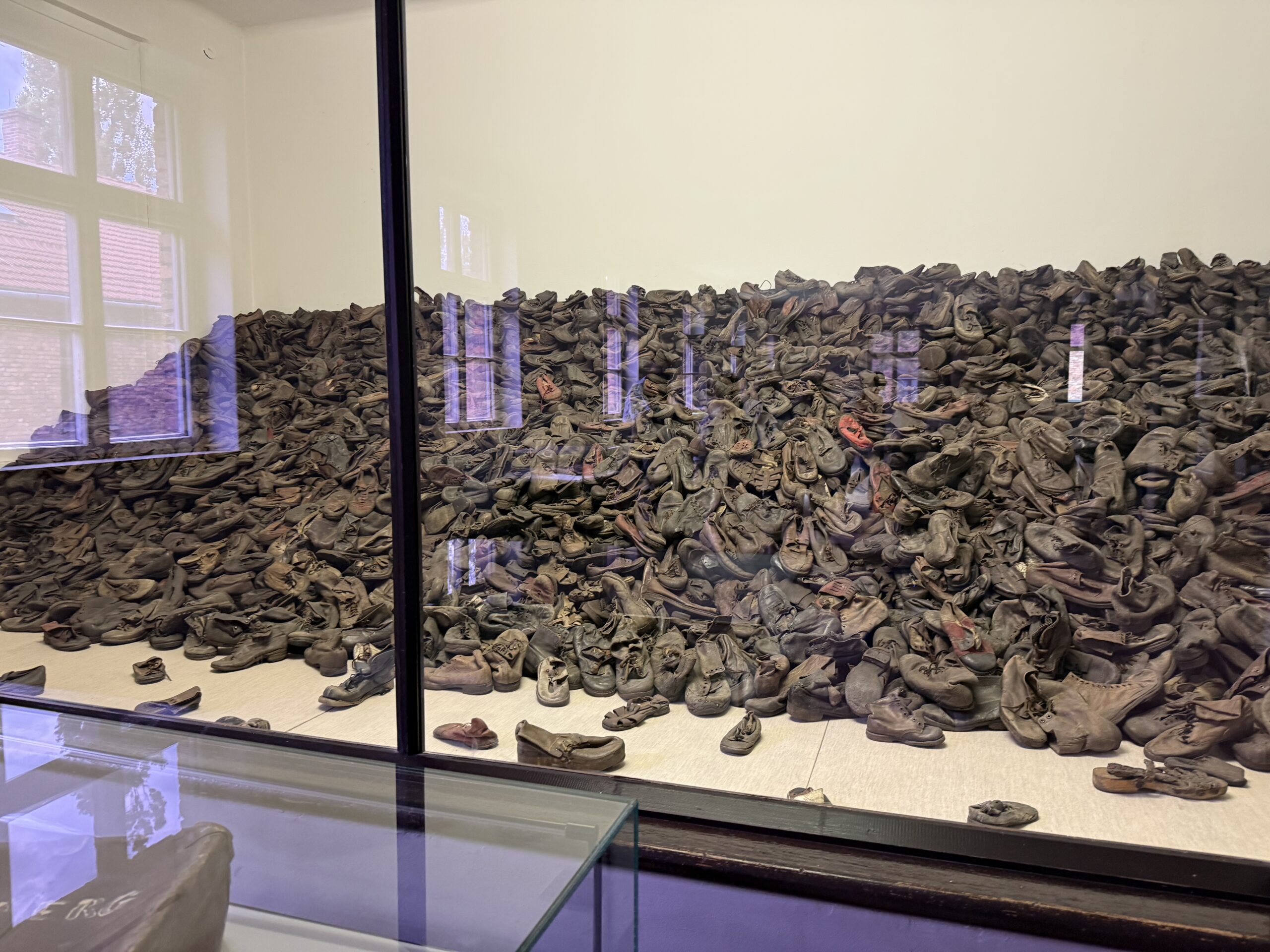
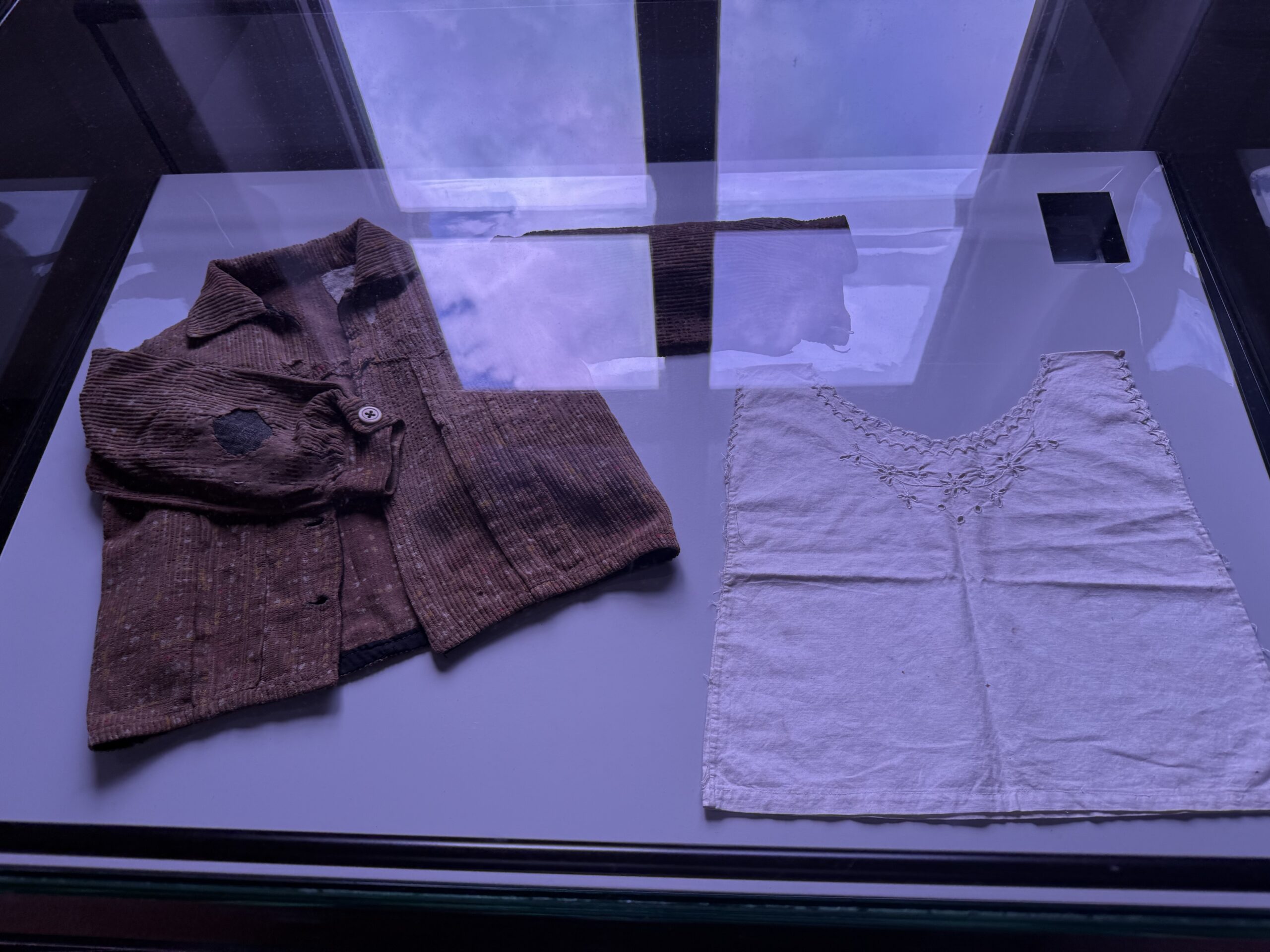
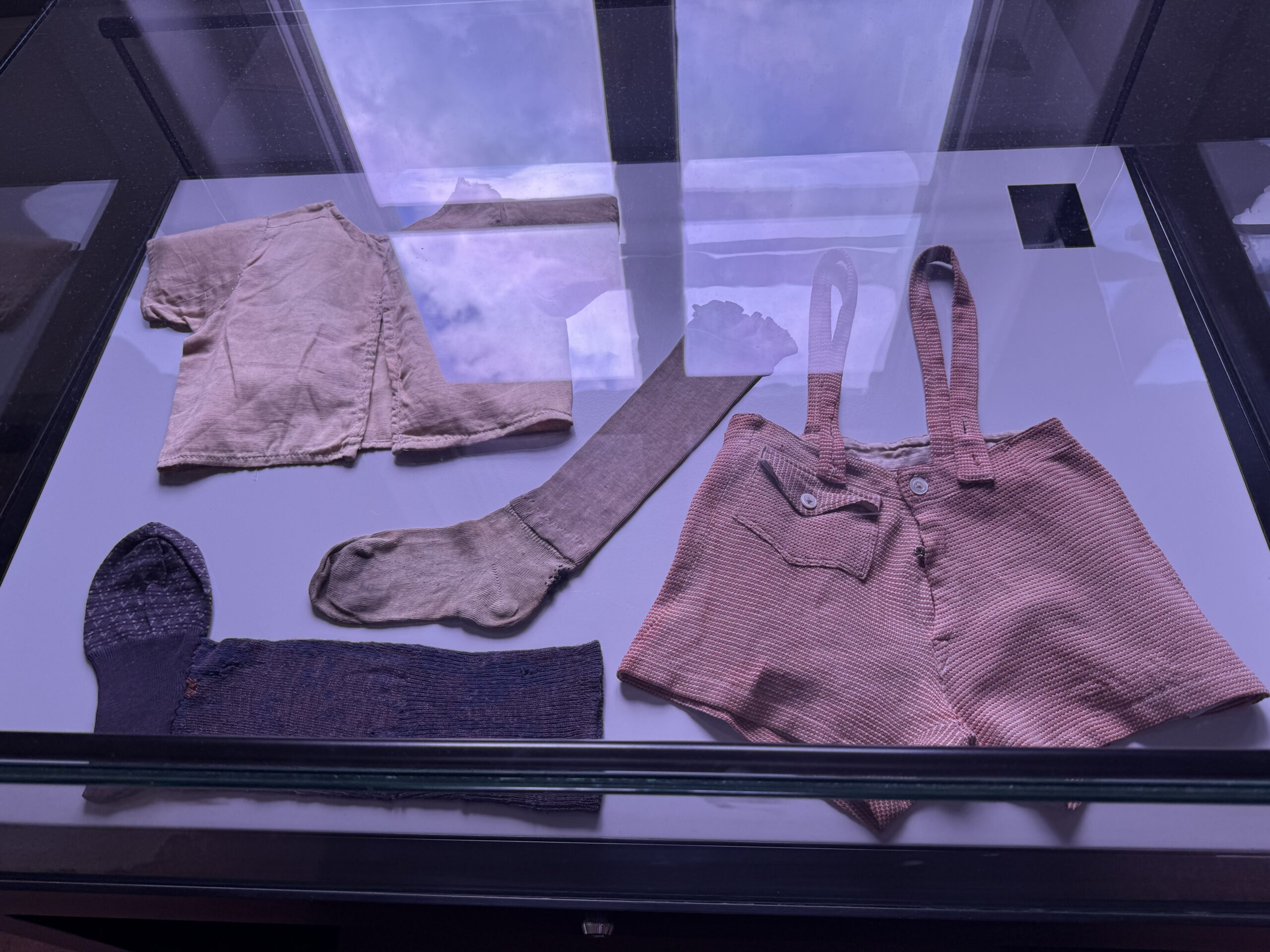
We also saw children’s shoes and clothing.
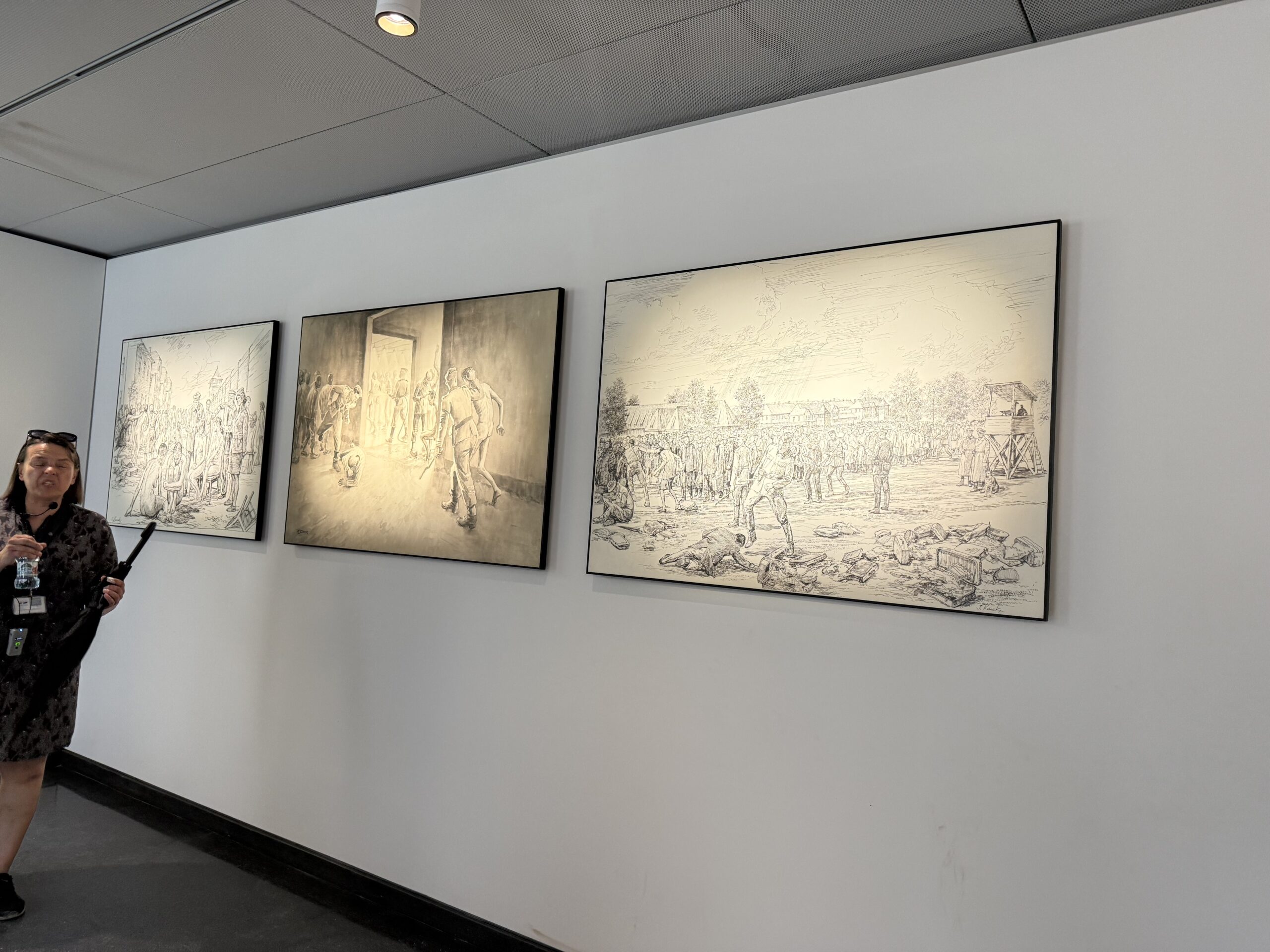
The next building introduces you to drawings made by survivors portraying the torment and torture they endured.
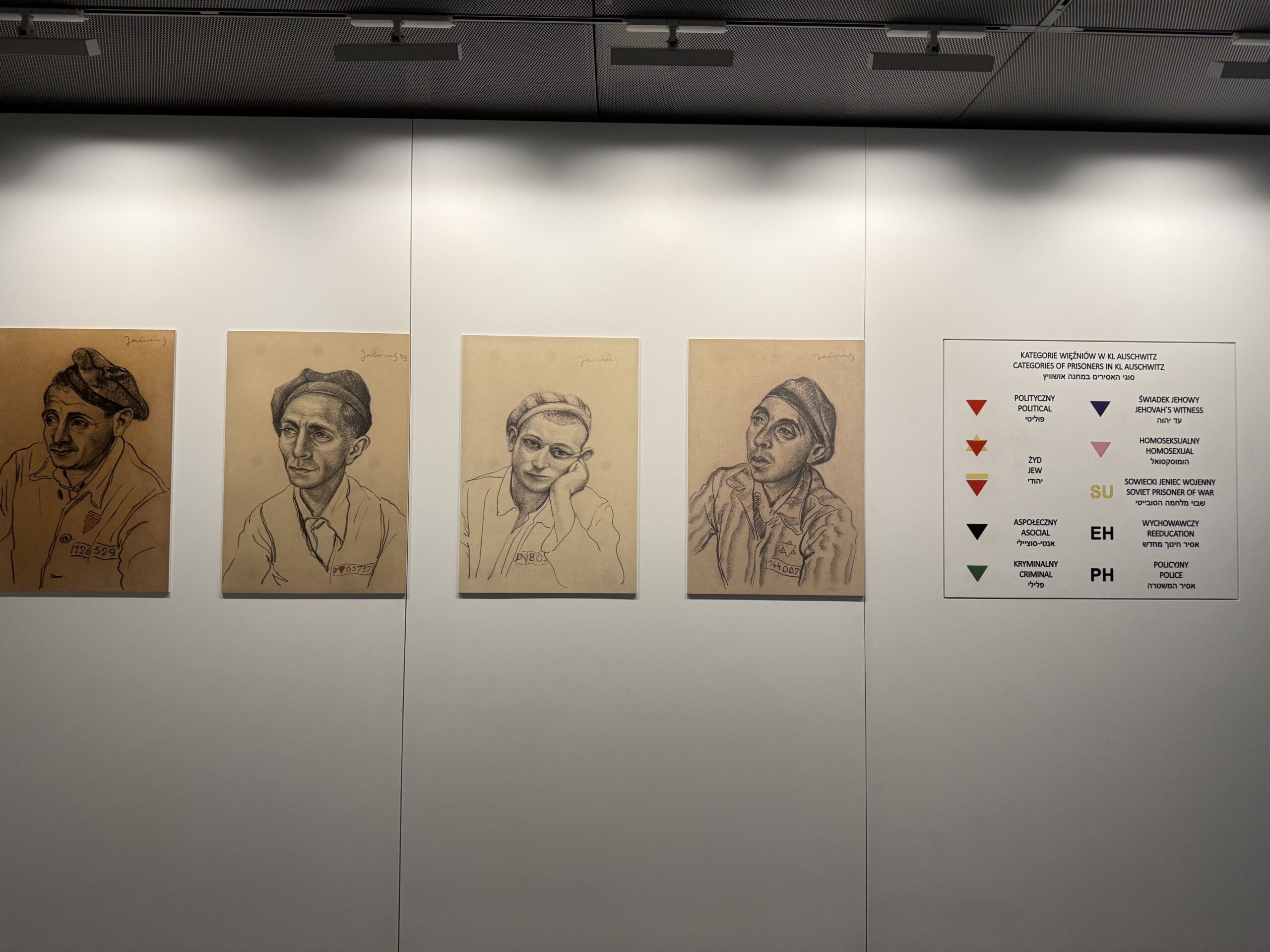
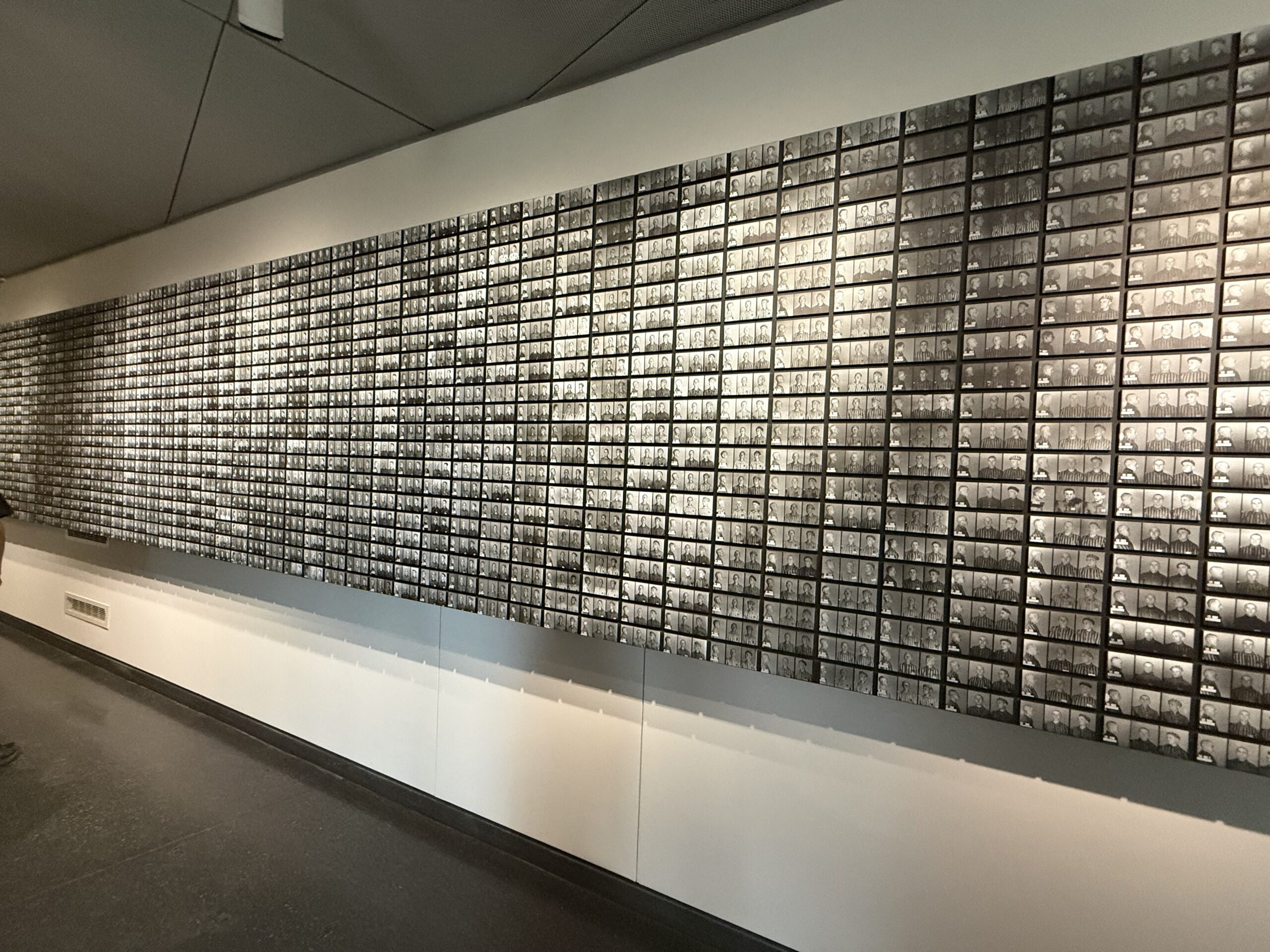
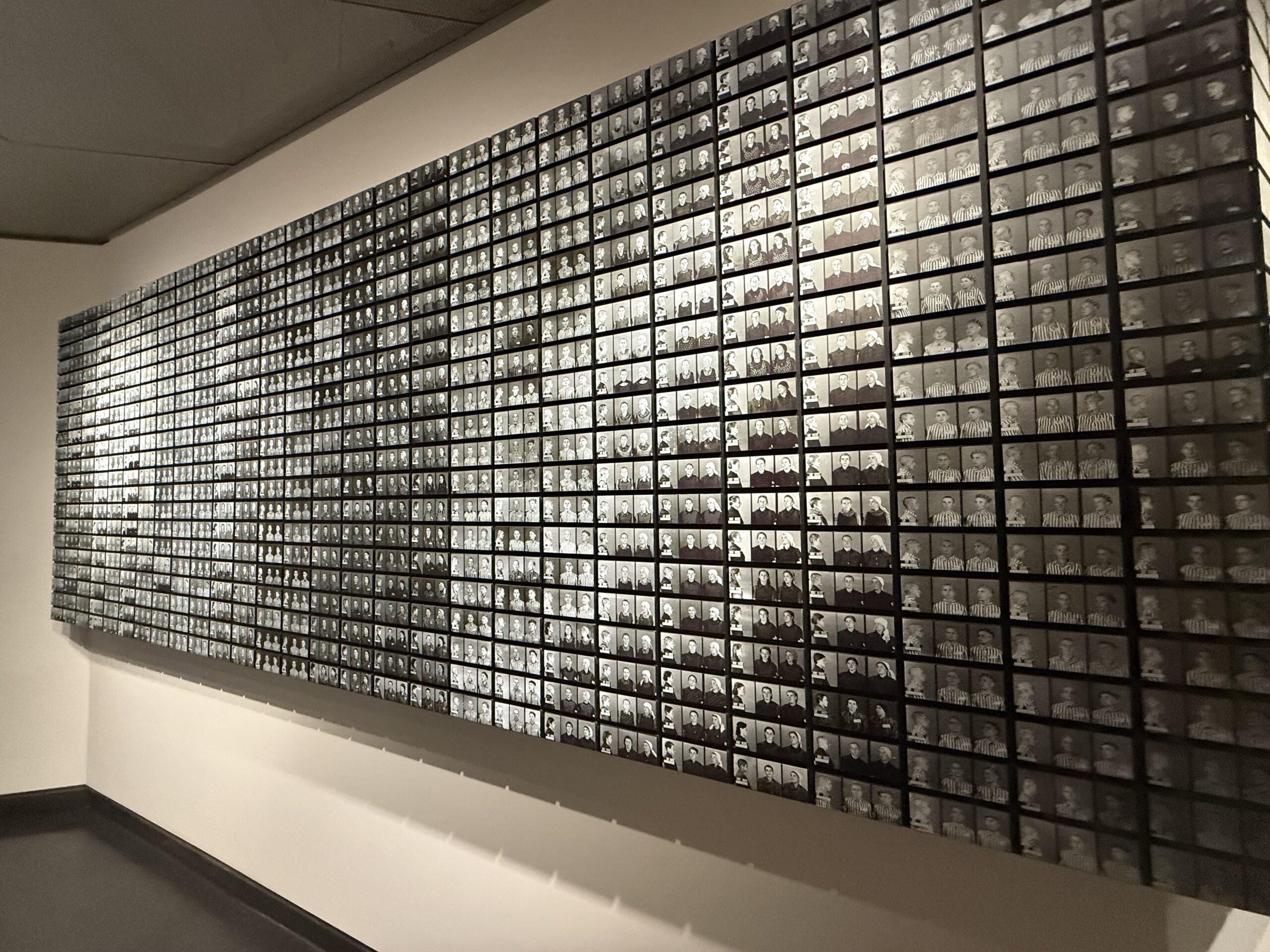
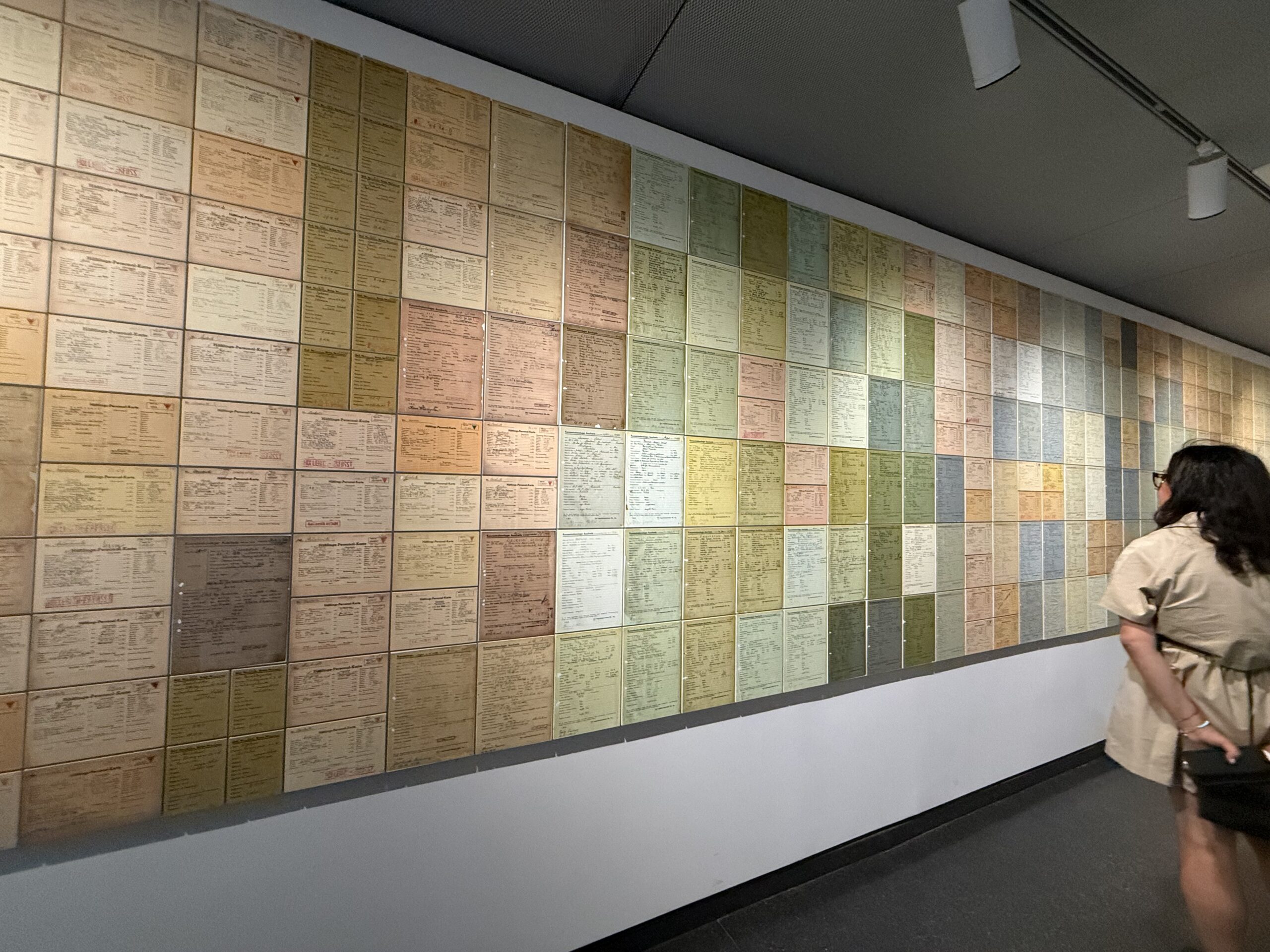
Pictures of prisoners and victims, along with their registration cards greet you in the next hall. The prisoners lost their identification, were reduced to a number, and they had to learn German right away or face punishment.
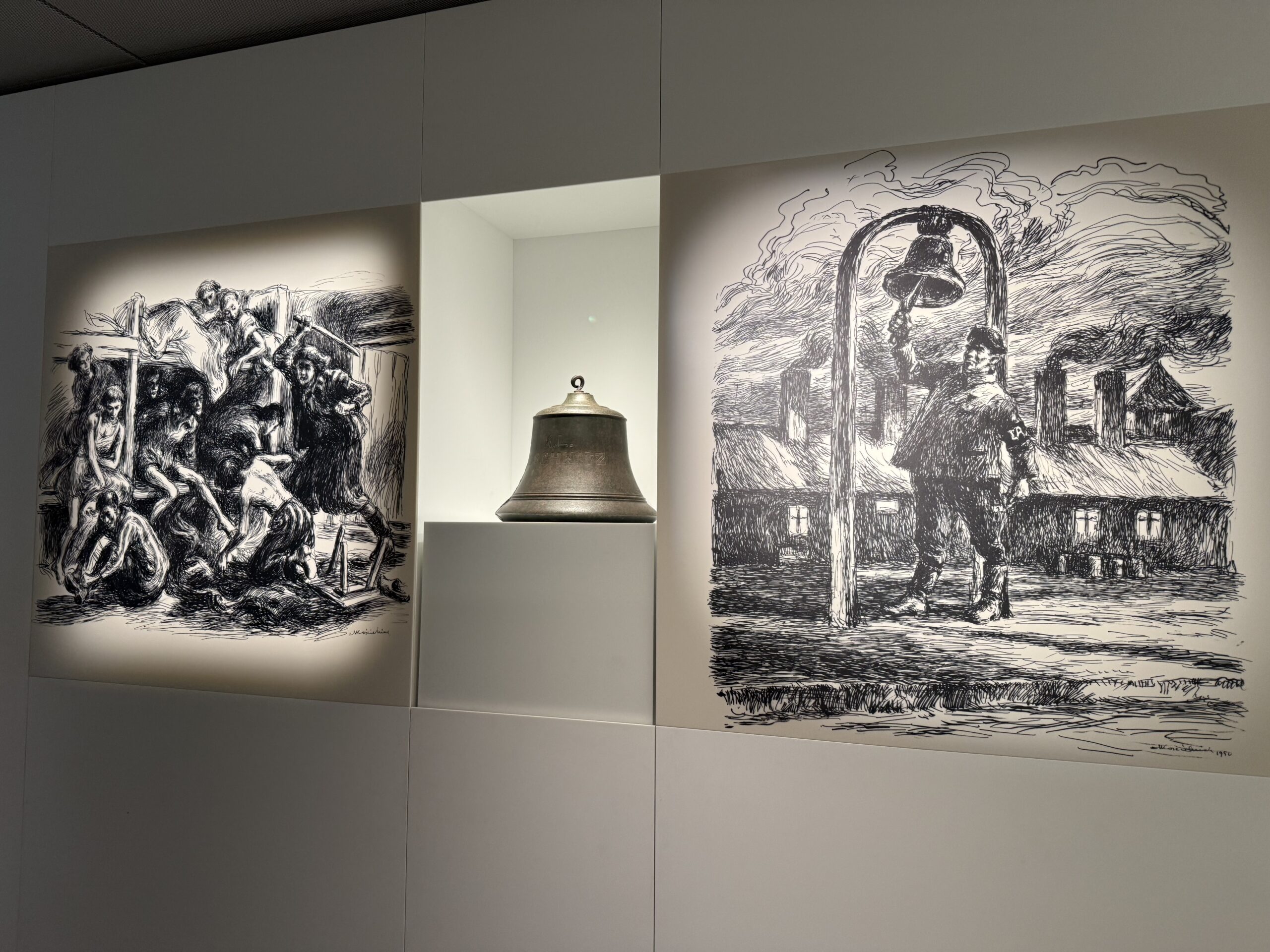
This bell was rung every morning. The leaders had to submit the roll call card.
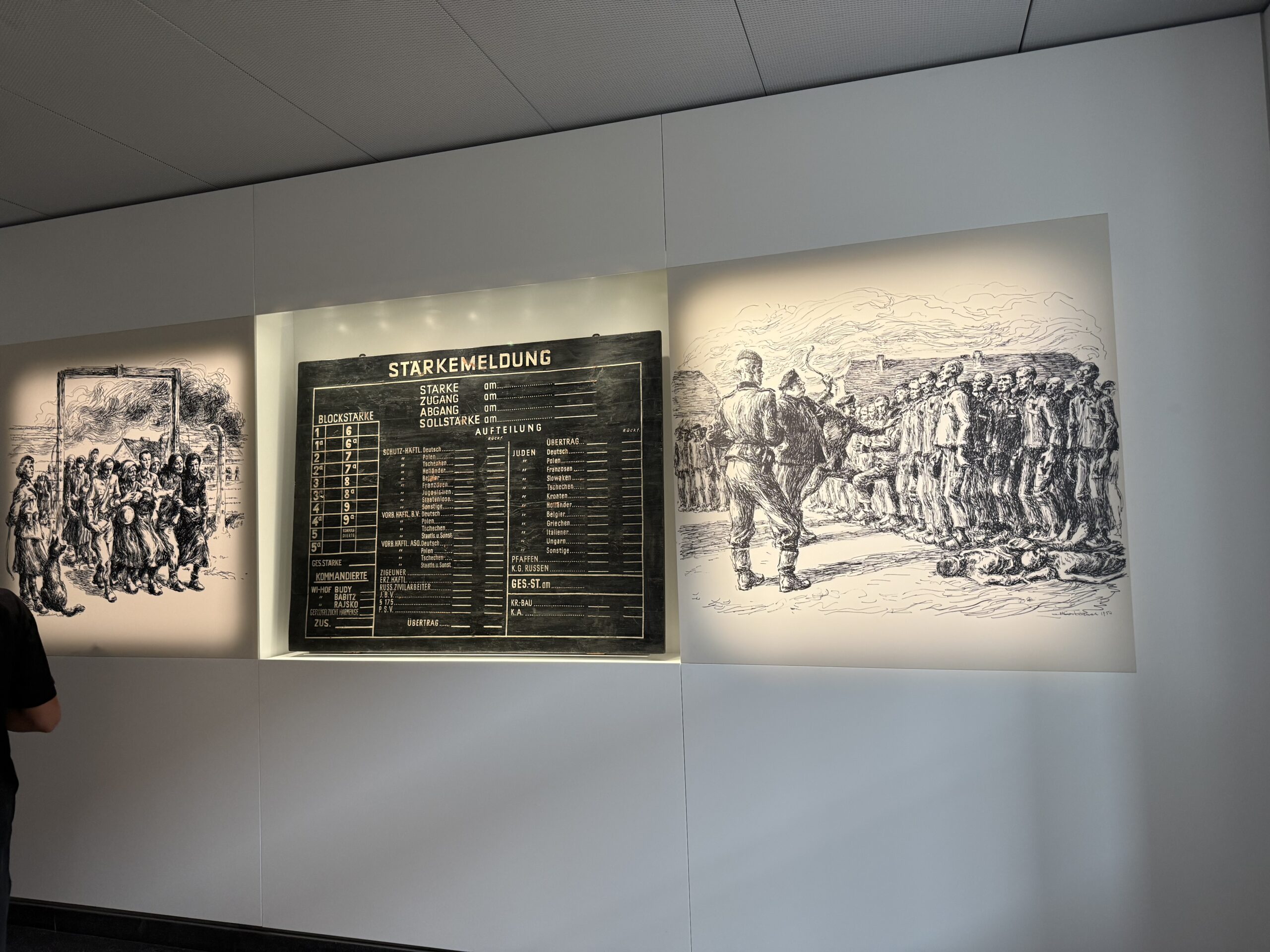
The men’s and women’s camps also had an orchestra. The museum has a clarinet, music stand, and sheet music.
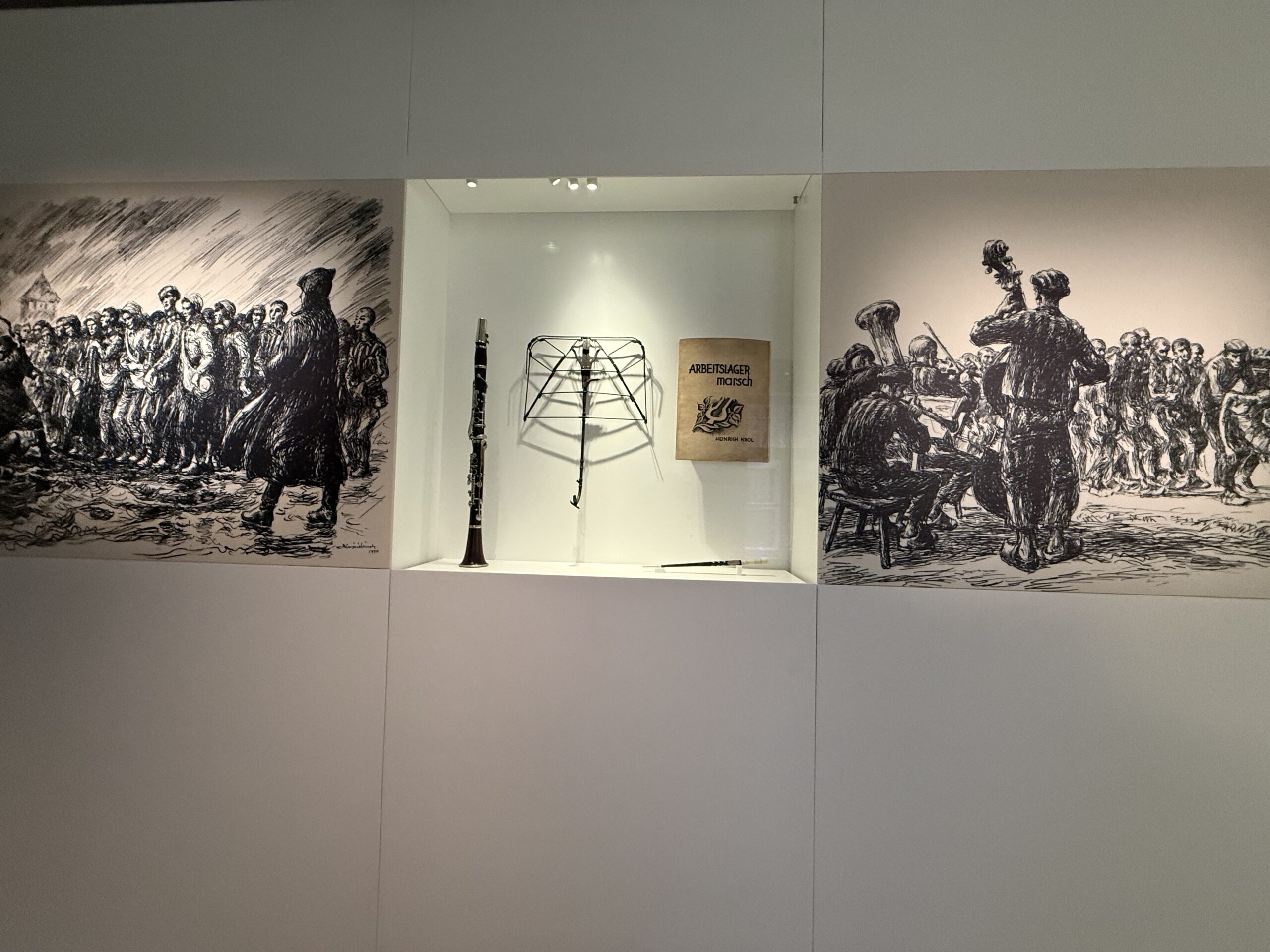
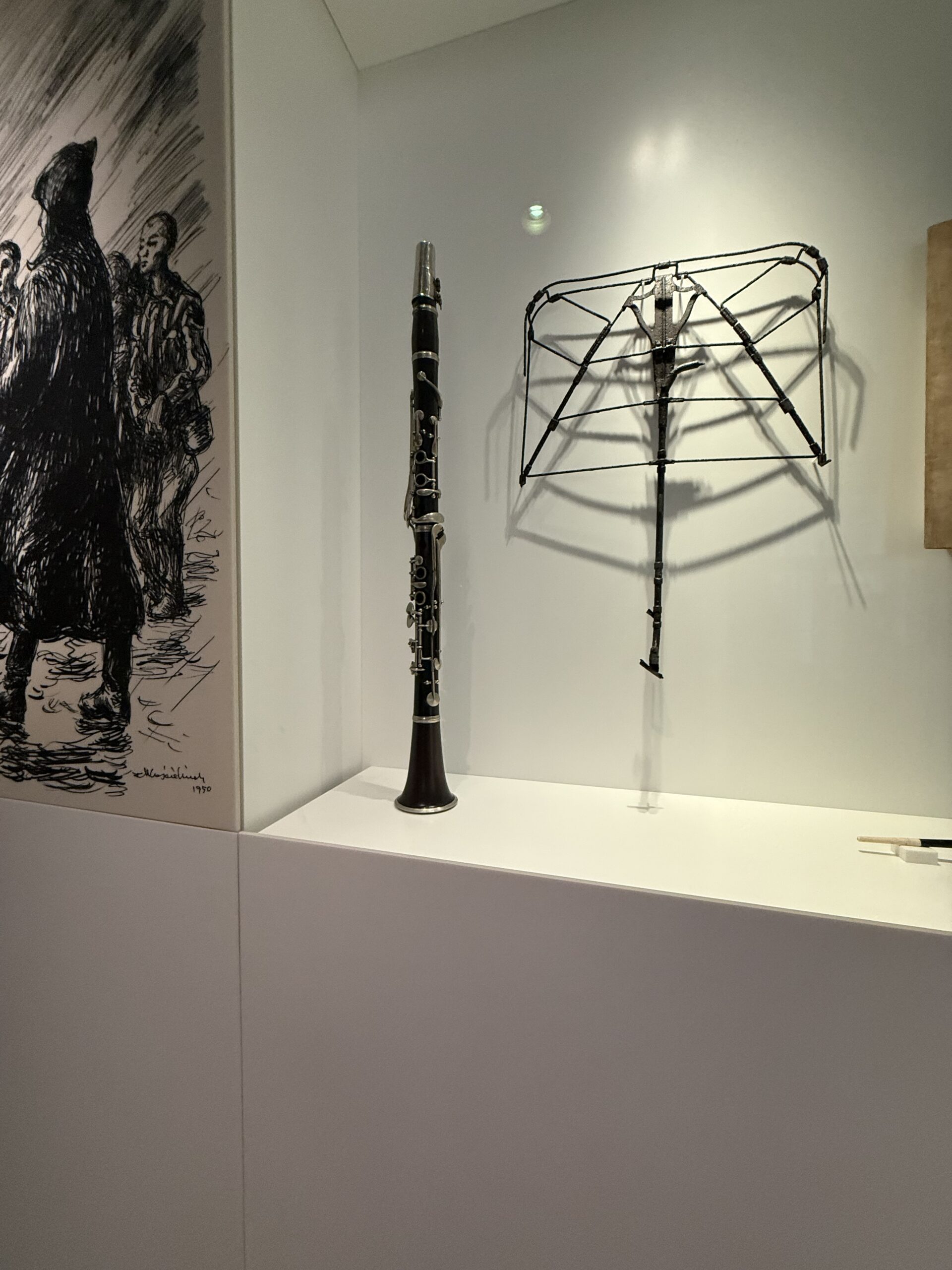
More items in the museum.
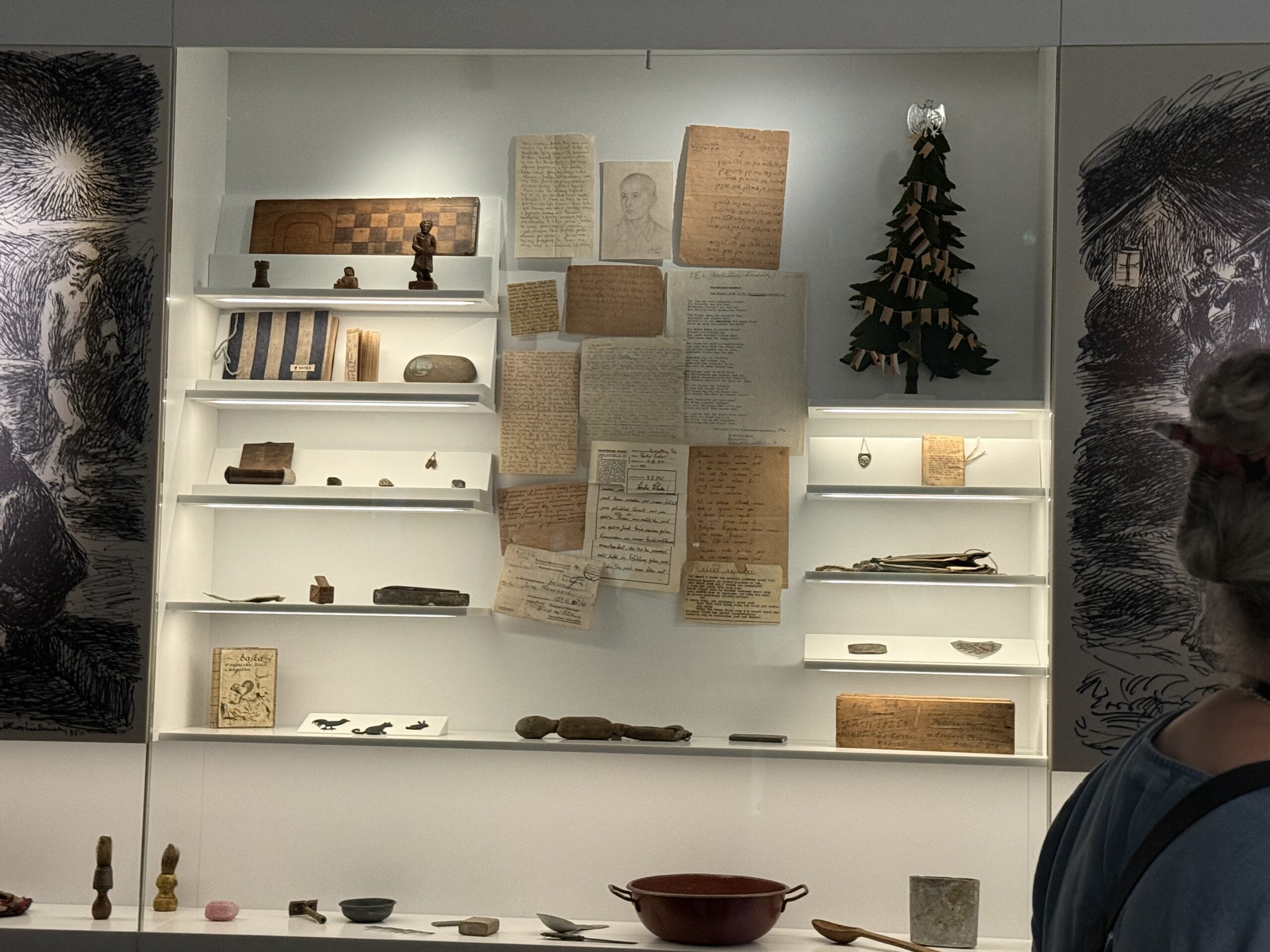
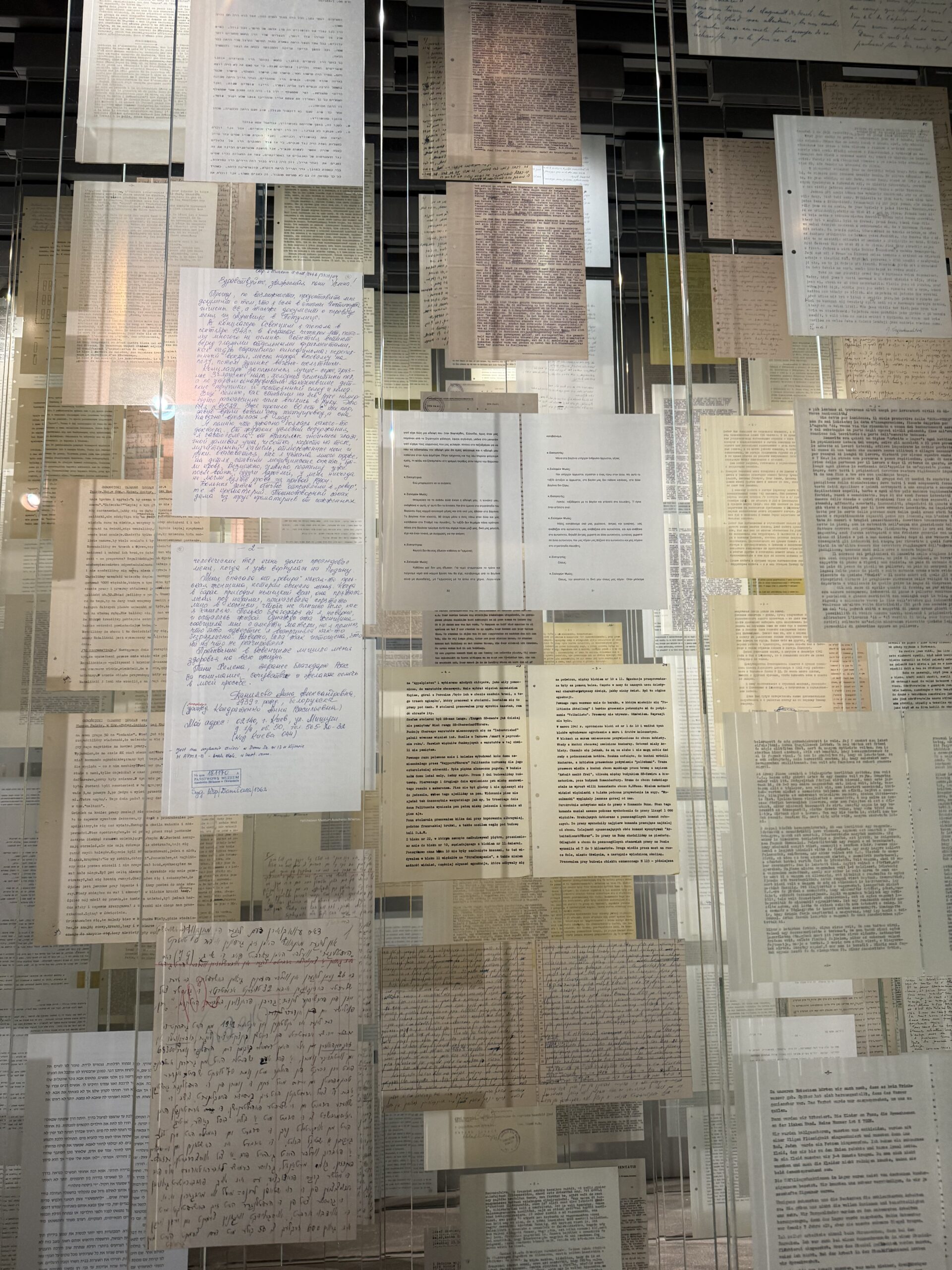
Another room has written testimonies from survivors.
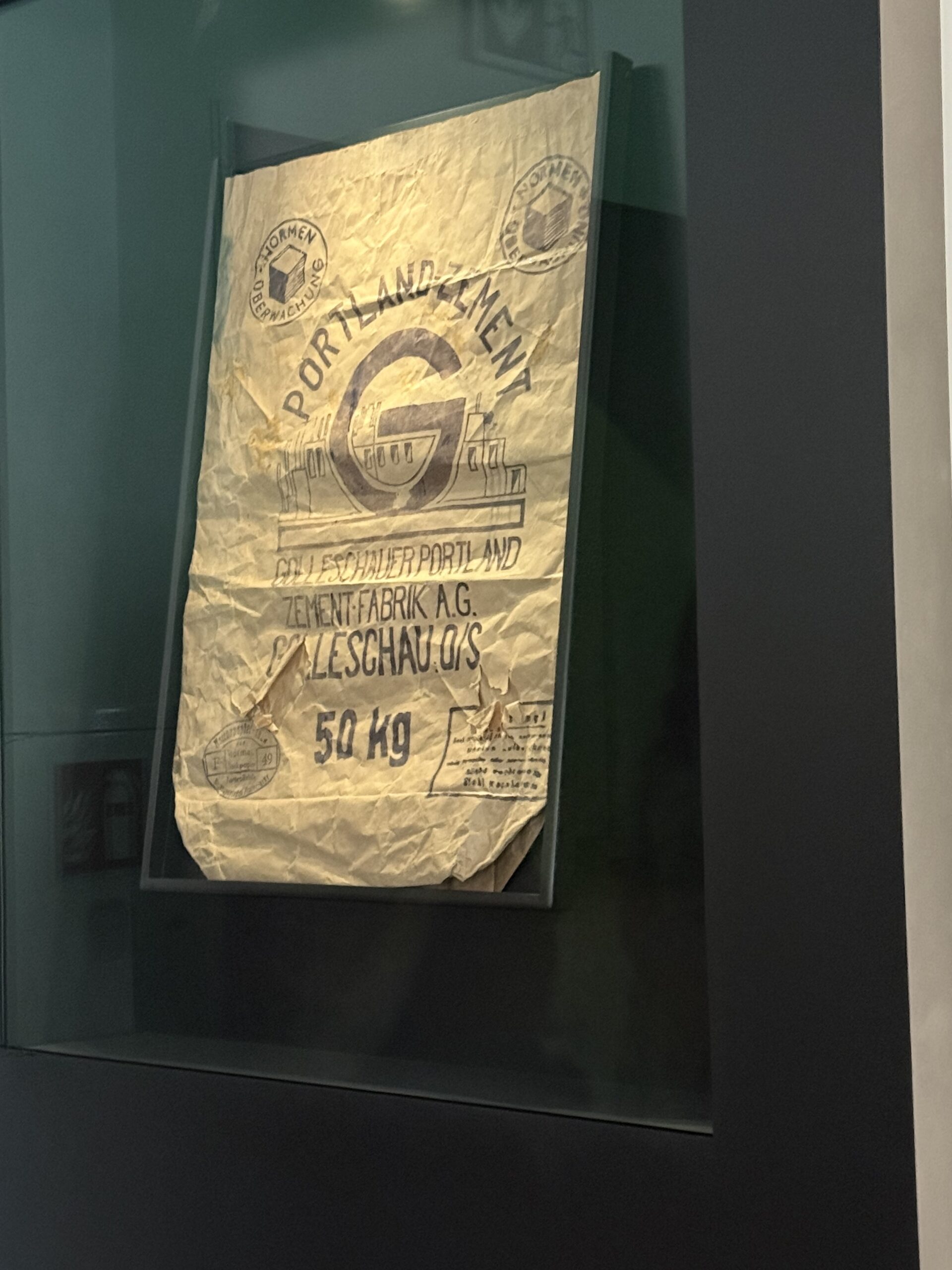
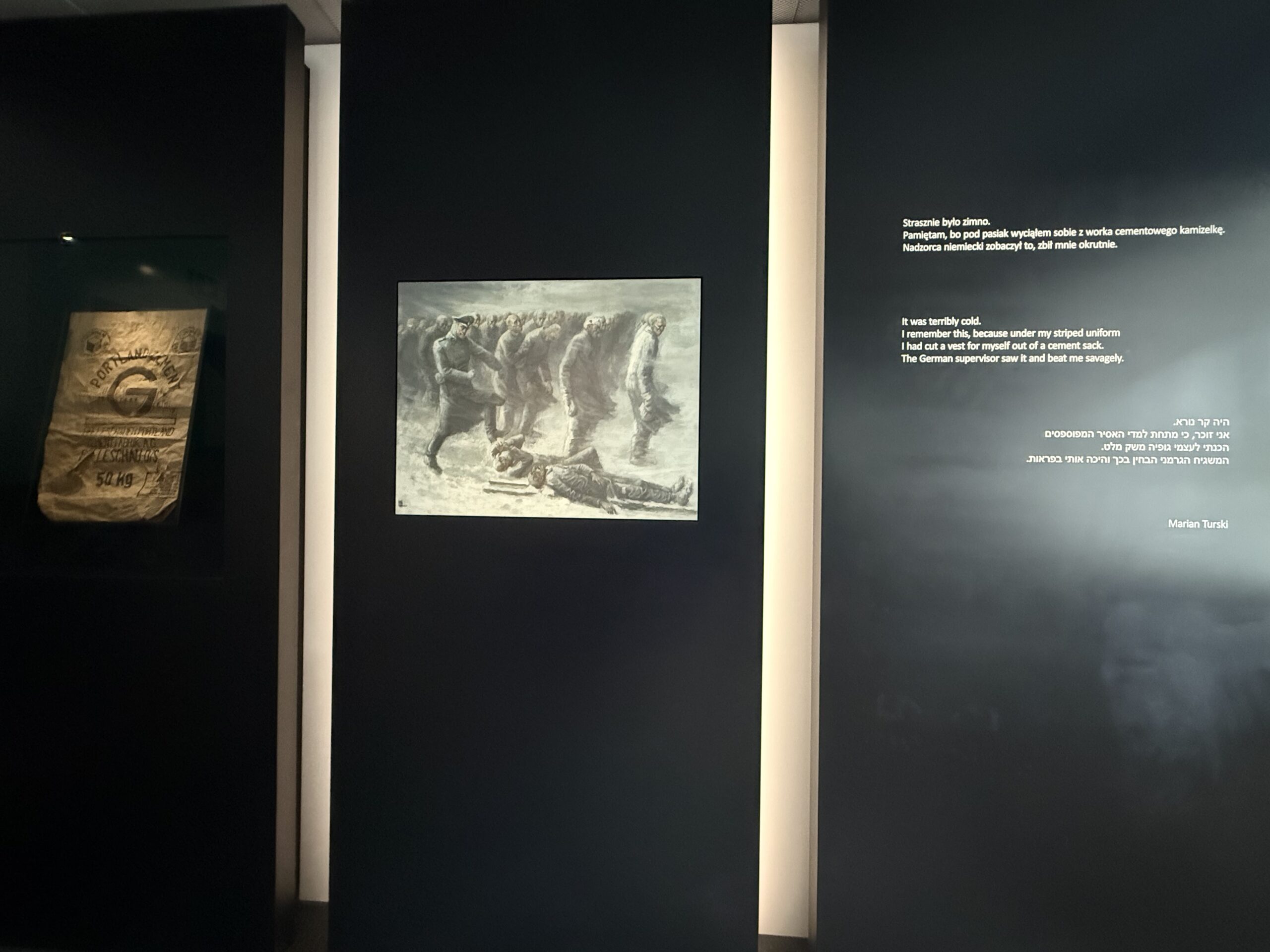
This is a bag that holds concrete. Some prisoners would wear them under the flimsy clothes they wore, but the Germans would punish them if they caught them wearing the bags.
Rudolf Höss commanded Auschwitz until 1943. He lived with his family at a villa behind the camp. His wife Hedwig described their time at Auschwitz as paradise.
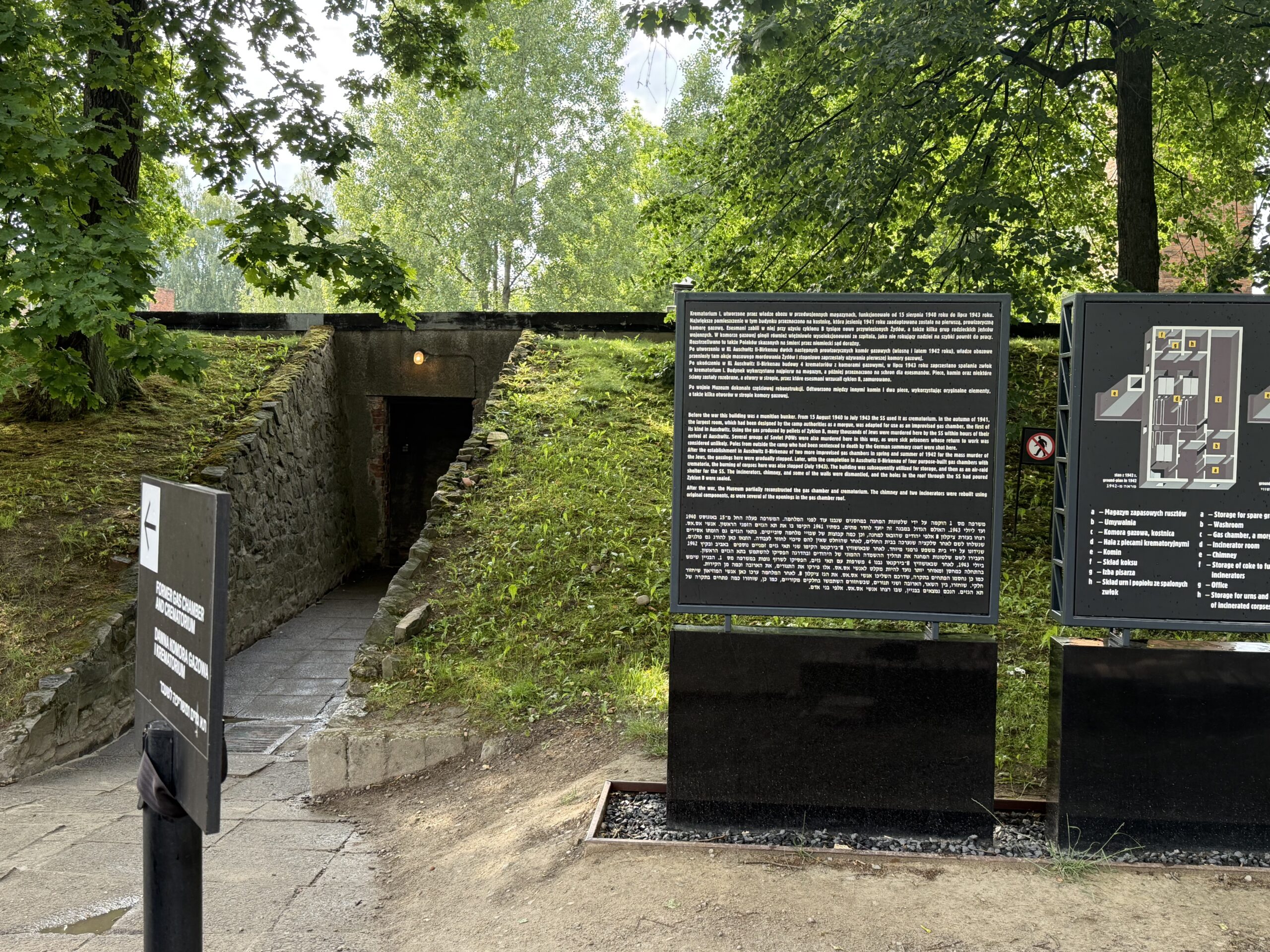
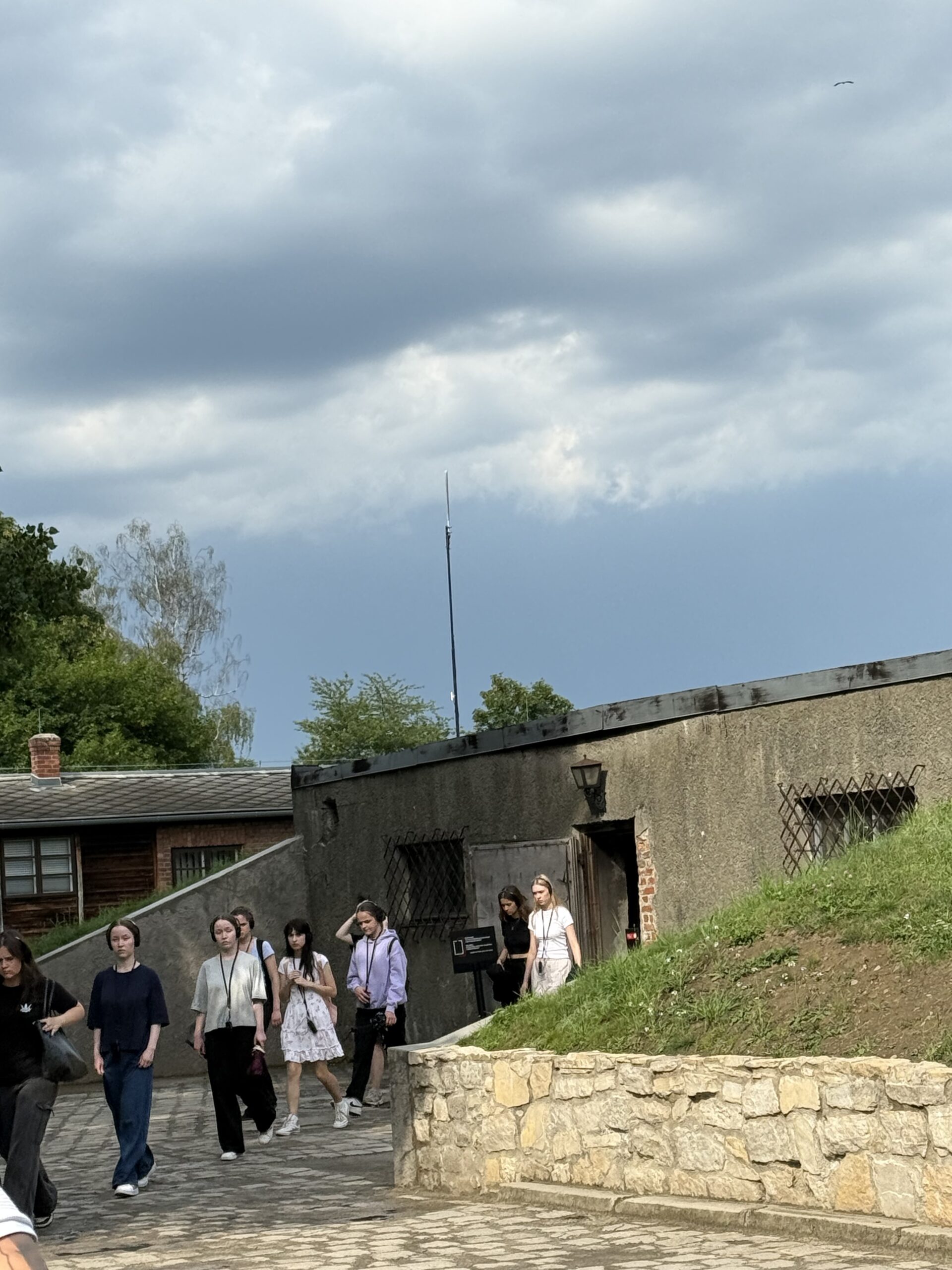

Höss helped Eichmann experiment with different gases to mass murder the prisoners. The only gas chamber that remains standing is down the road from their villa, where the experiments took place.
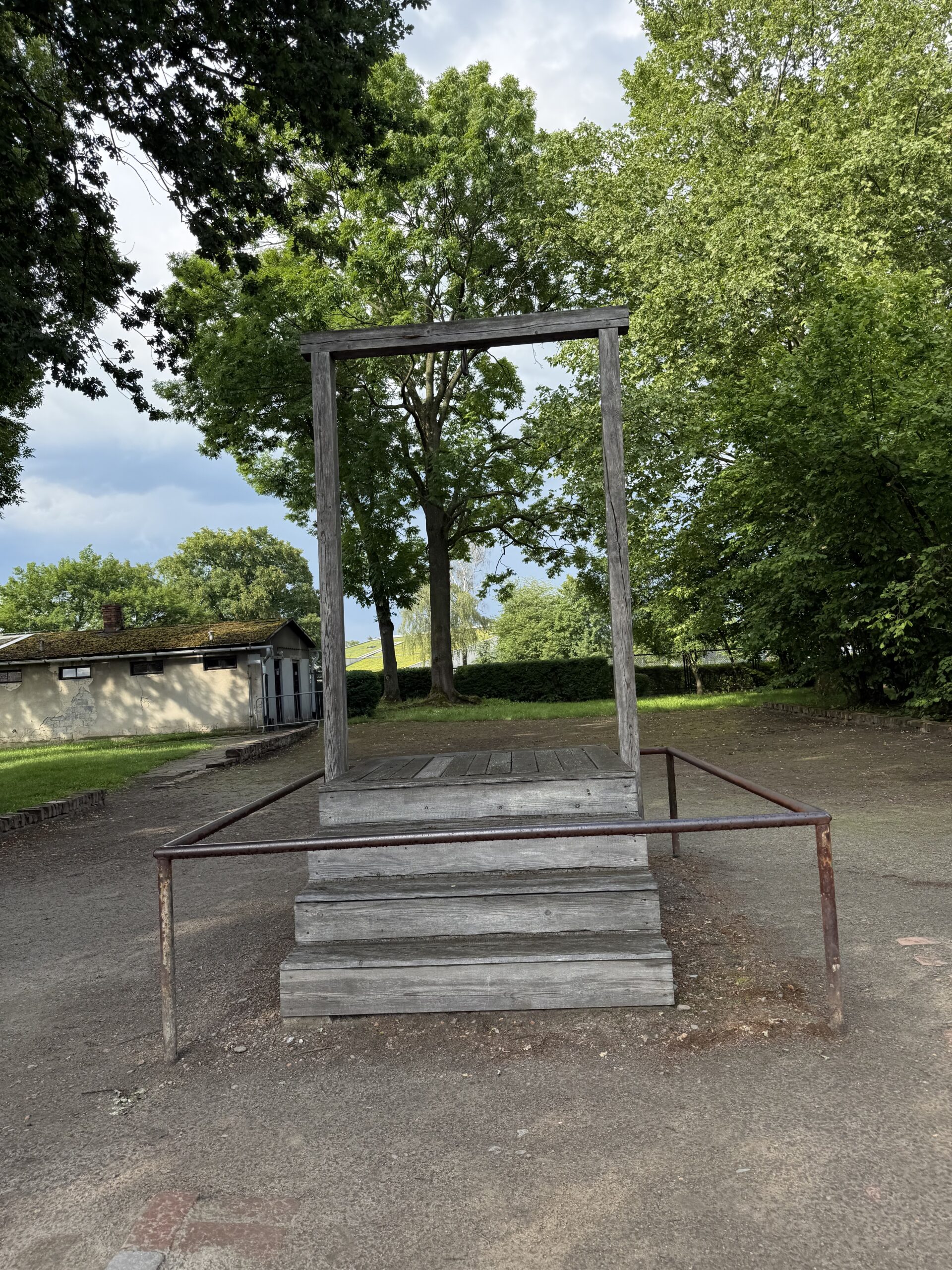
Another item by the gas chambers? The gallows where Höss was executed for war crimes.
We also couldn’t take pictures of the prison cells. We saw the cell where the Germans imprisoned St. Maximillian Kolbe, who sacrificed himself for Franciszek Gajowniczek.
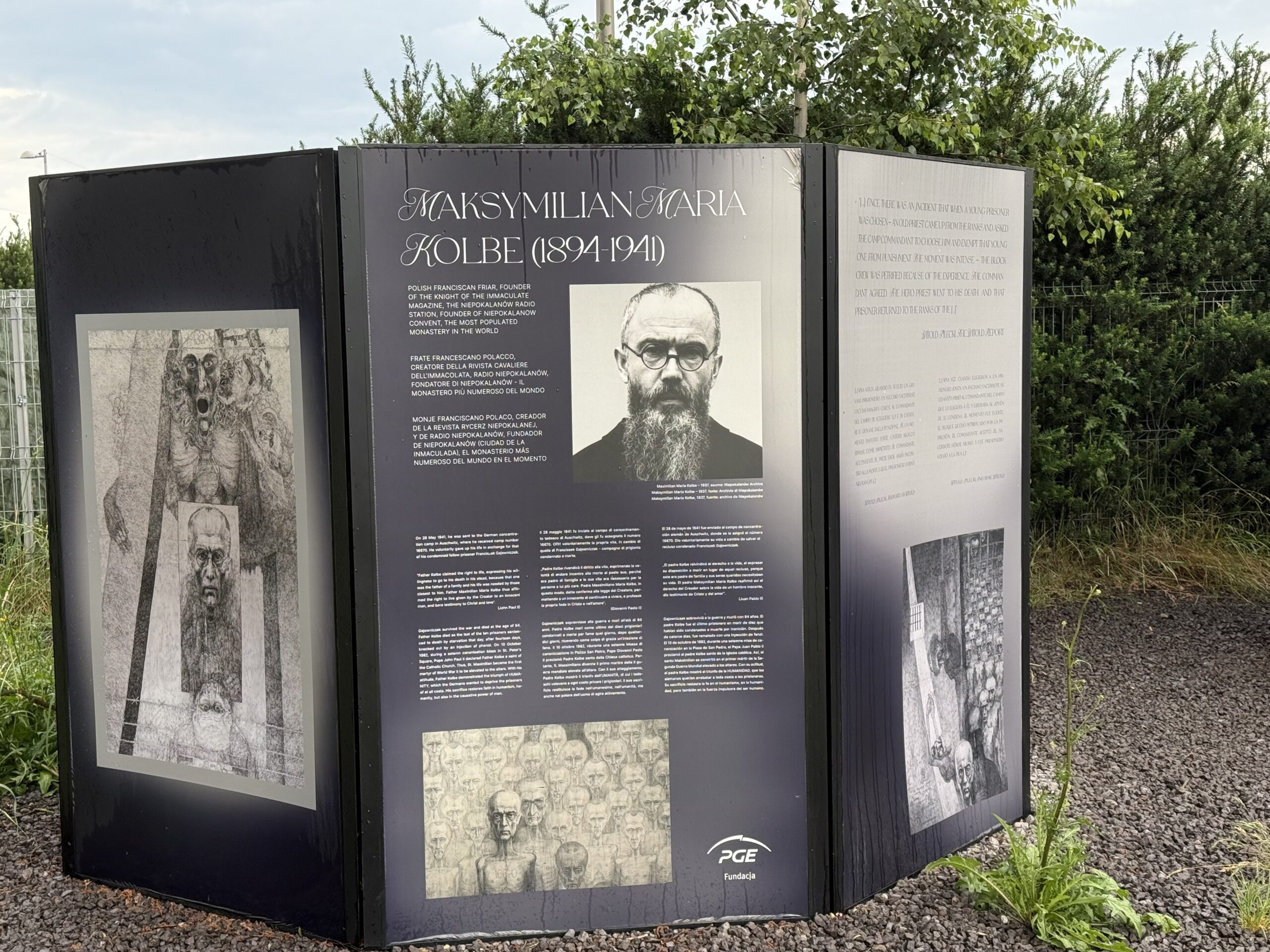
Gajowniczek survived the war and flourished.
Birkenau
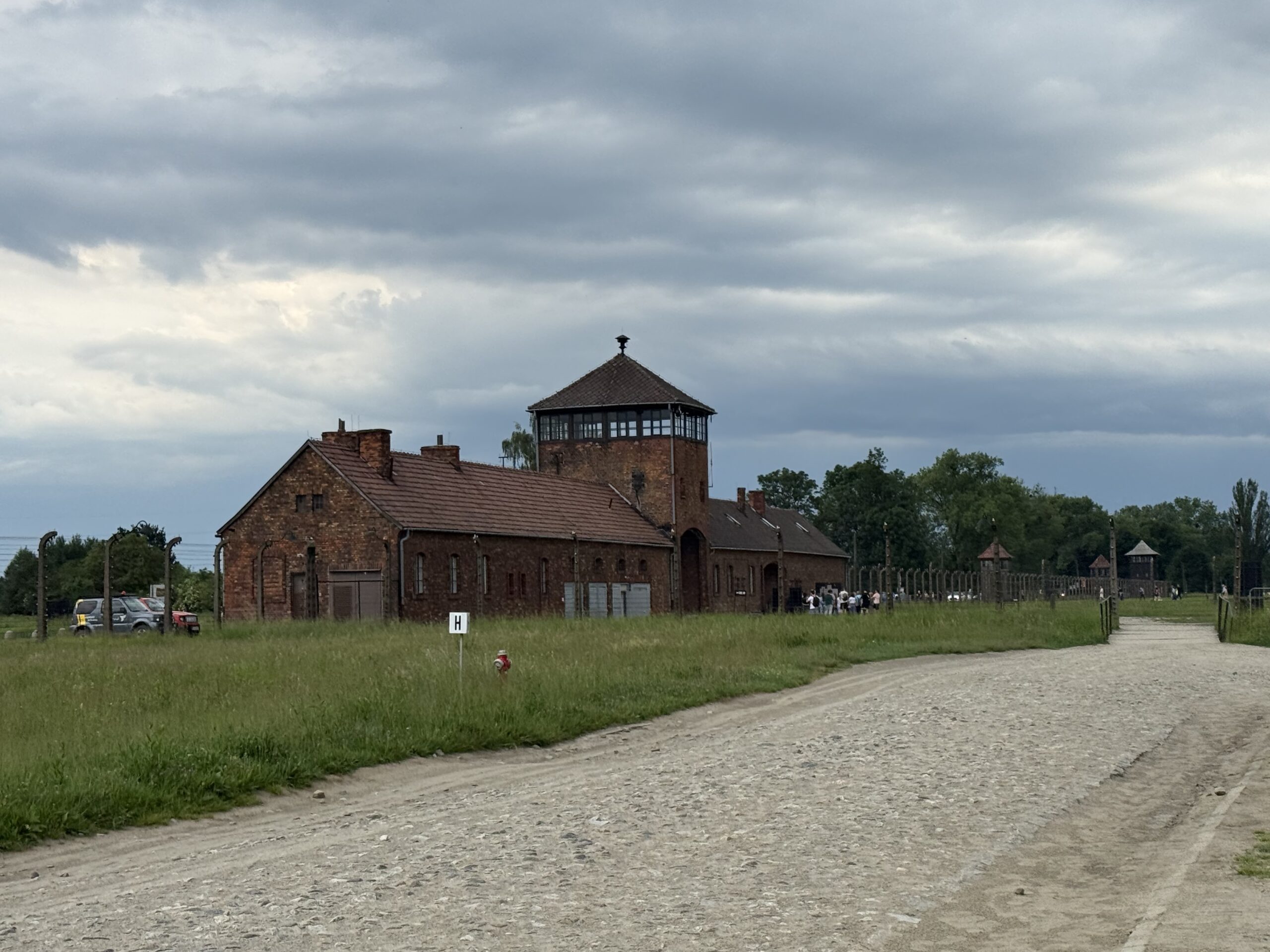
After the tour, you take a short ride to Birkenau. A shorter walk down the street, you see the entrance. Only one way in.
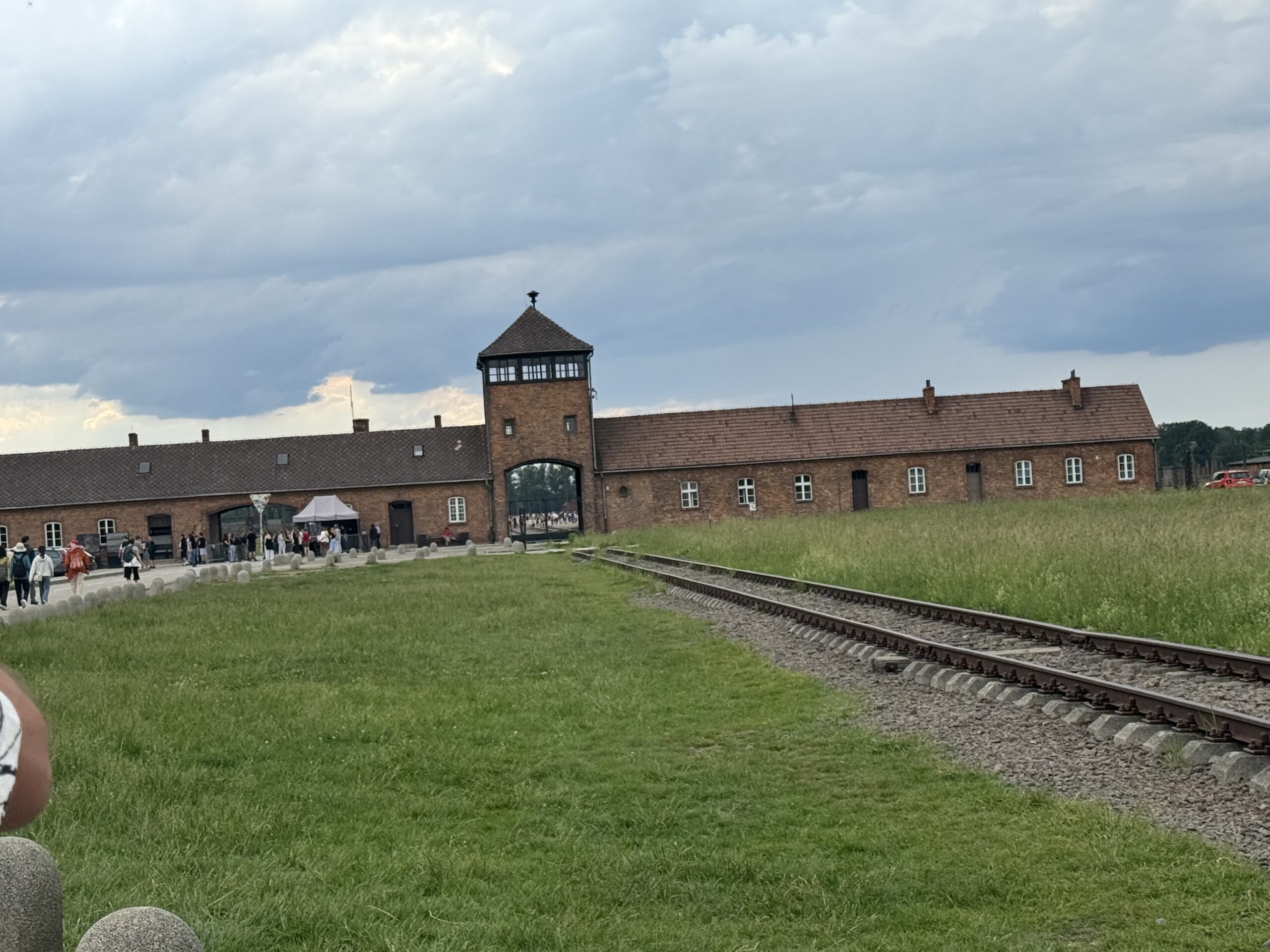
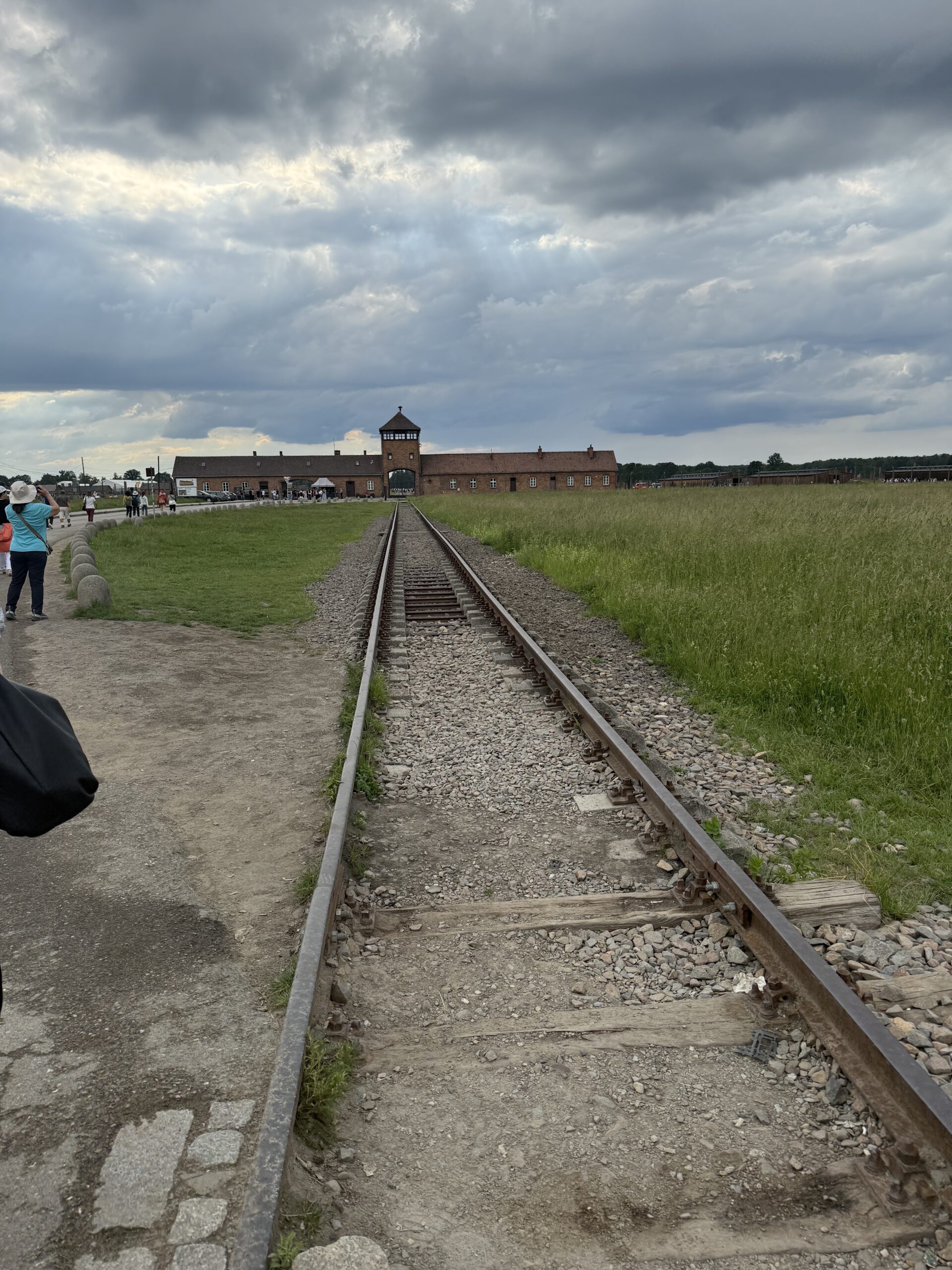
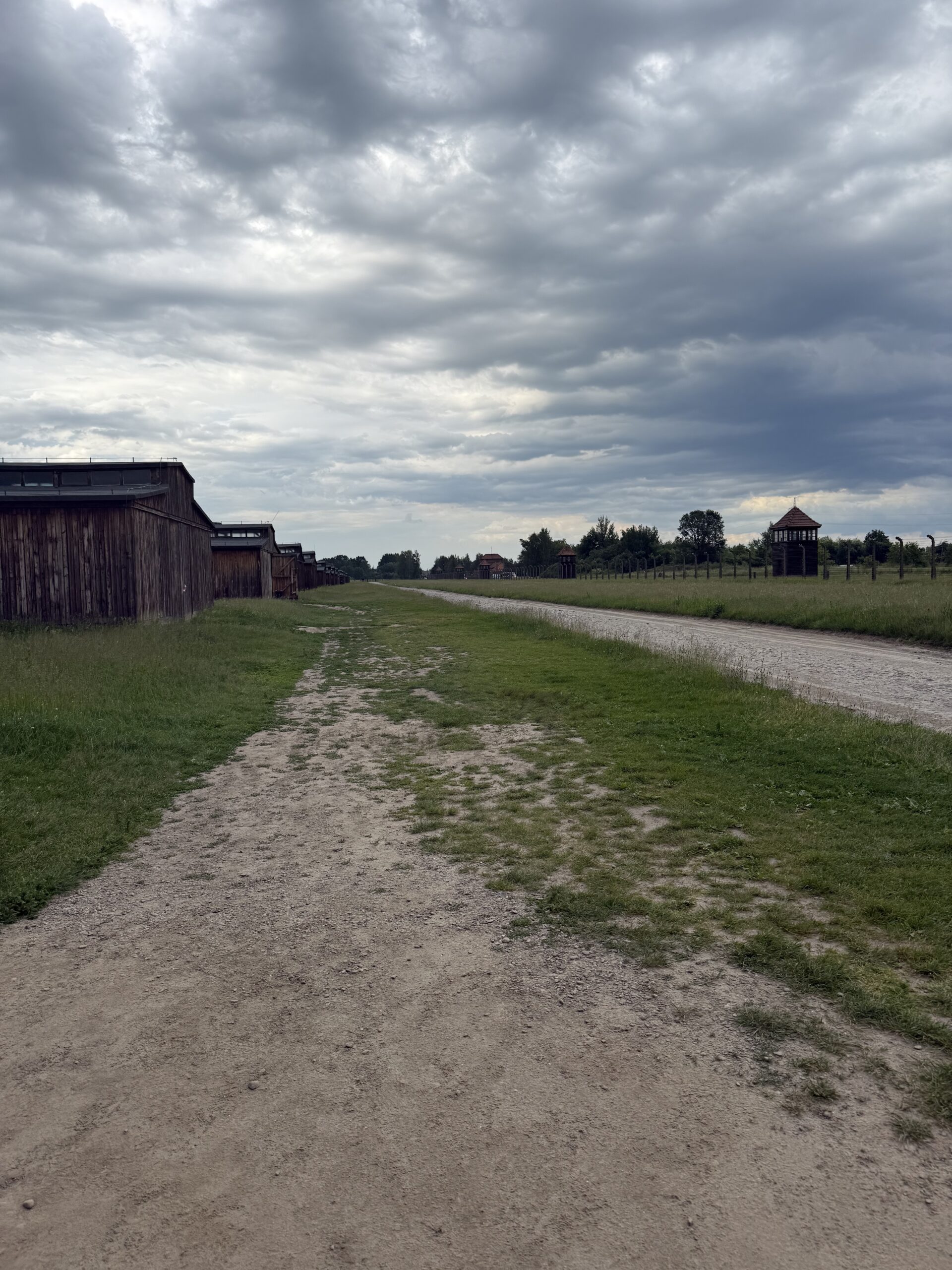
The Germans managed to destroy many of the buildings at Birkenau, but we saw the barracks and the lavatory.
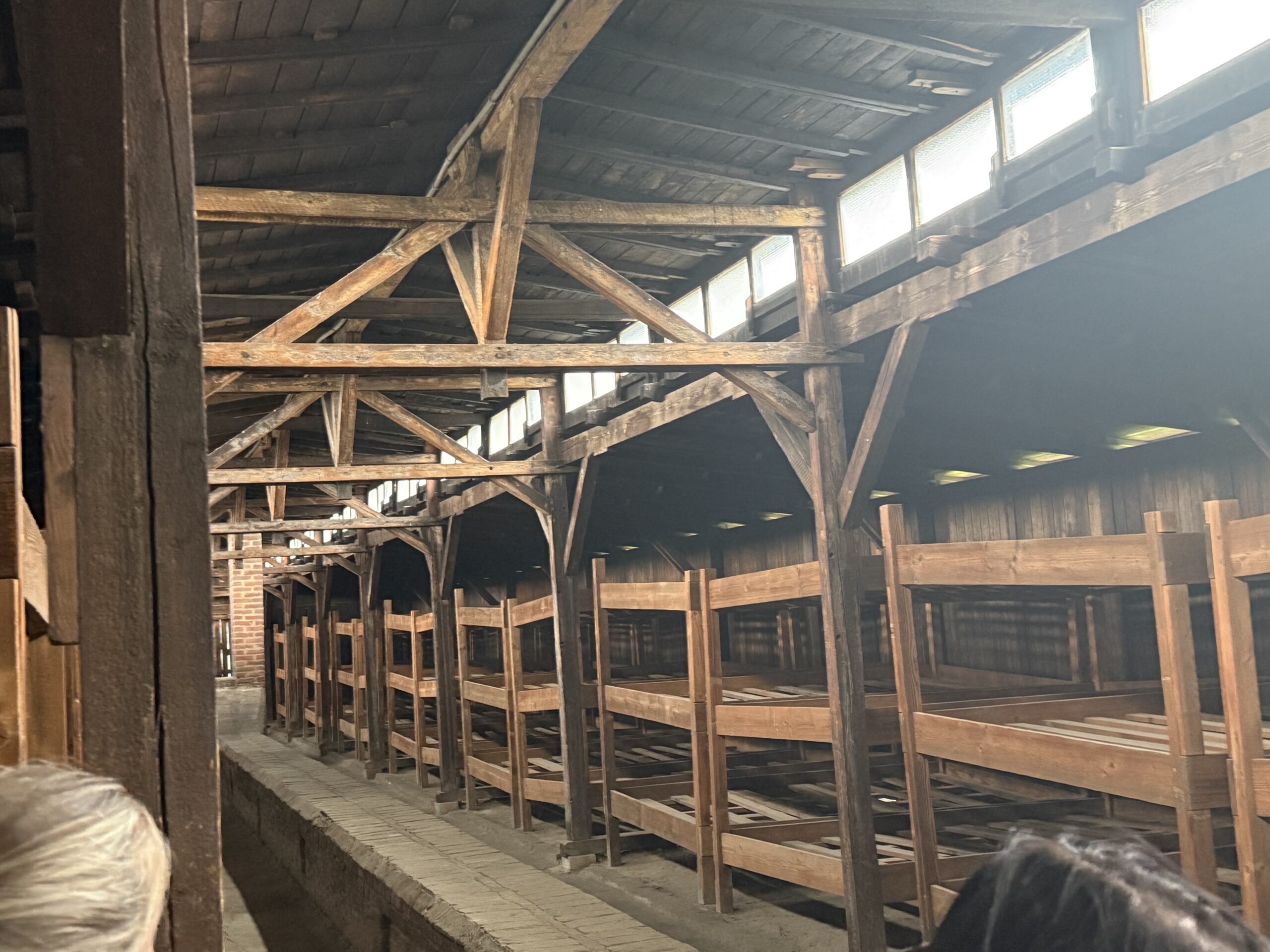

There is also a cattle car that carried hundreds of prisoners to their deaths.
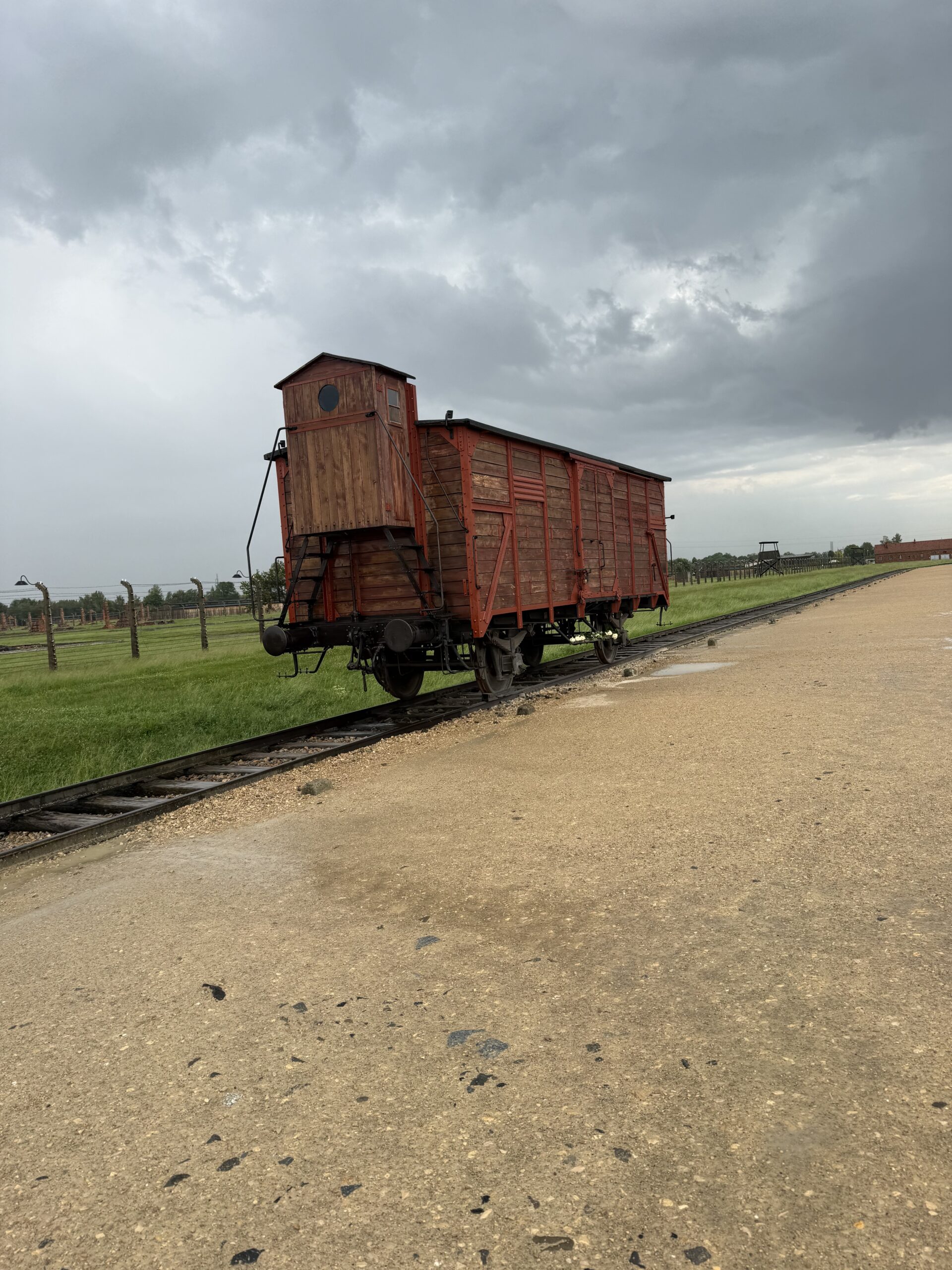
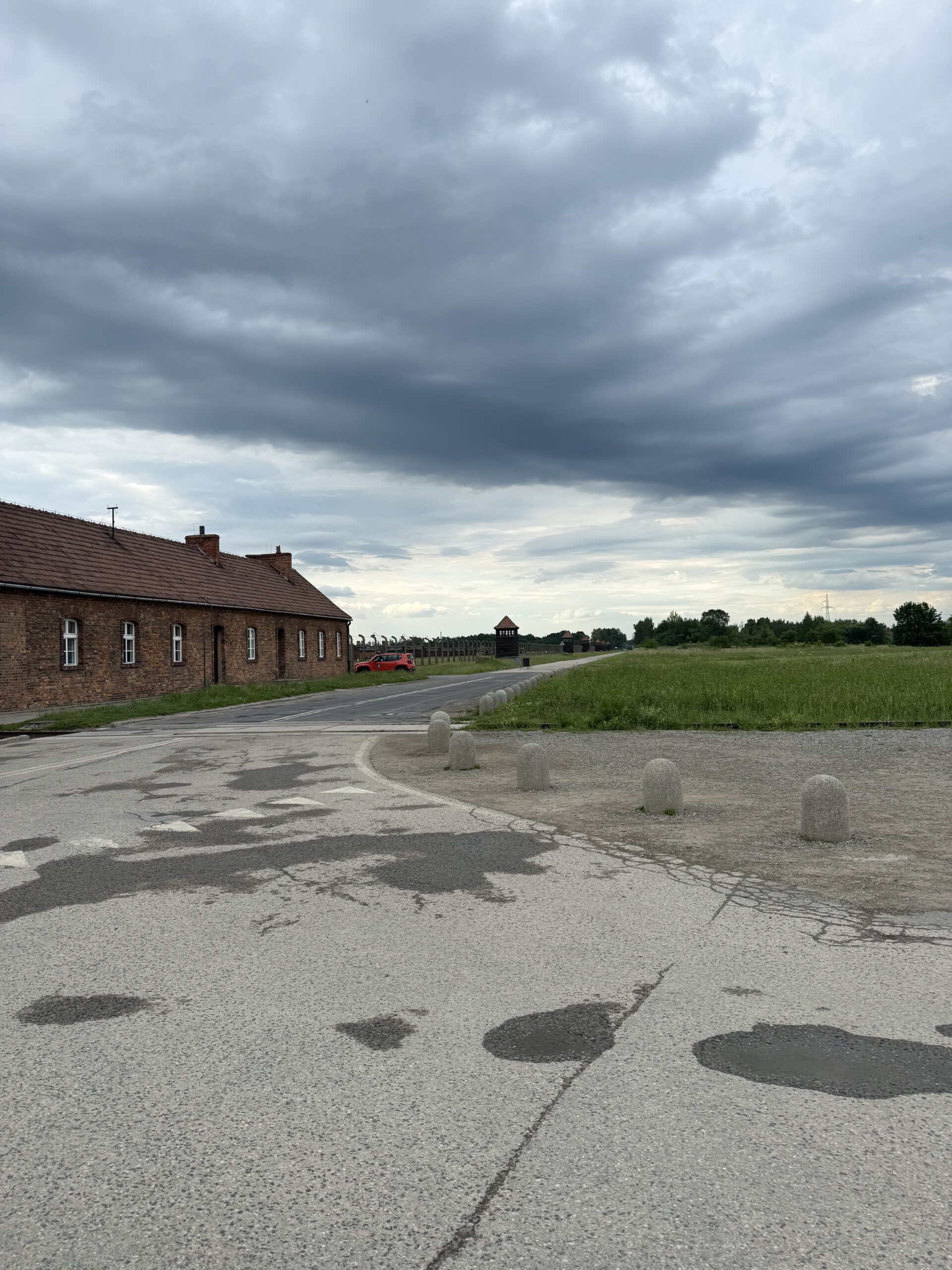
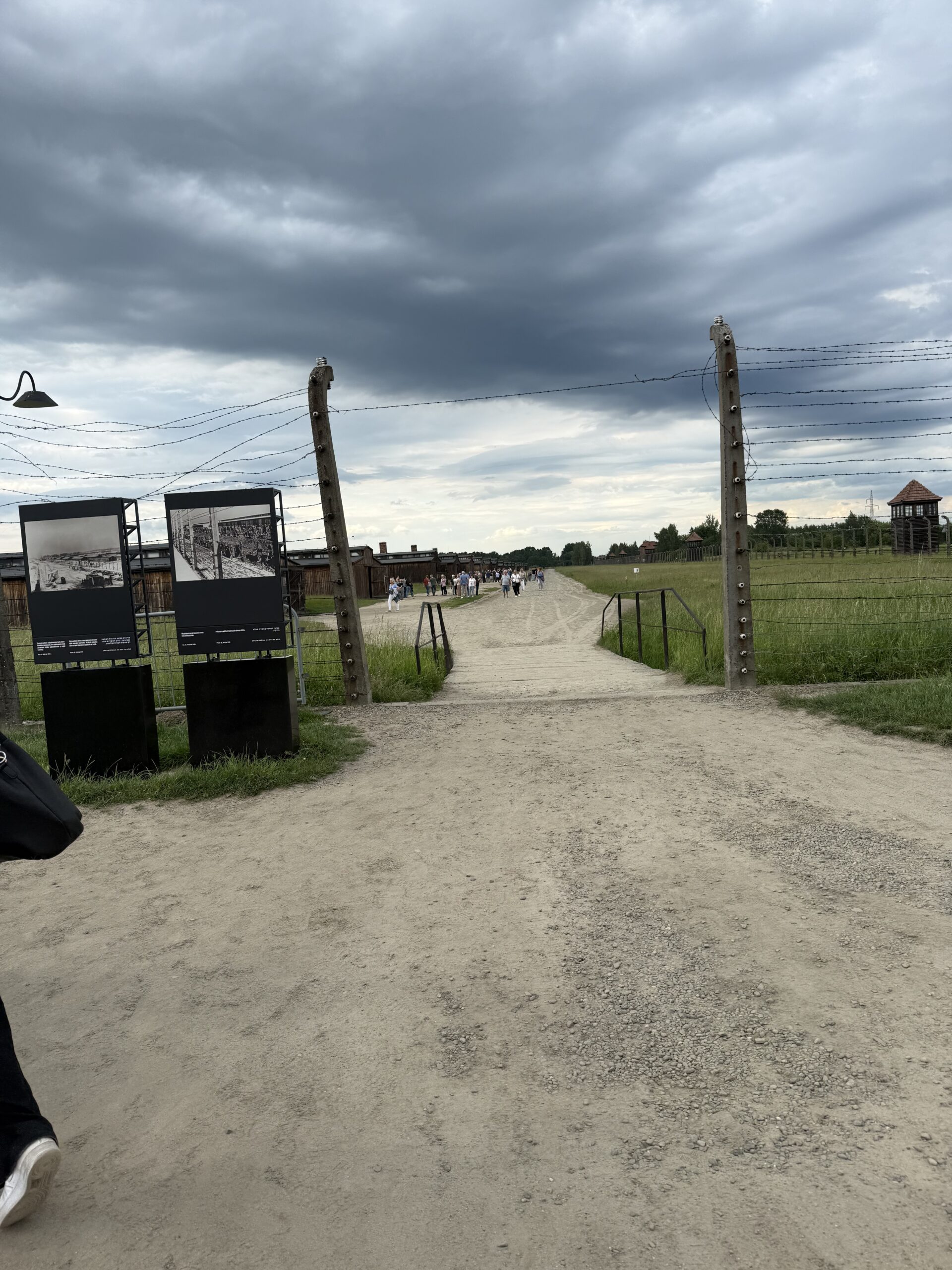
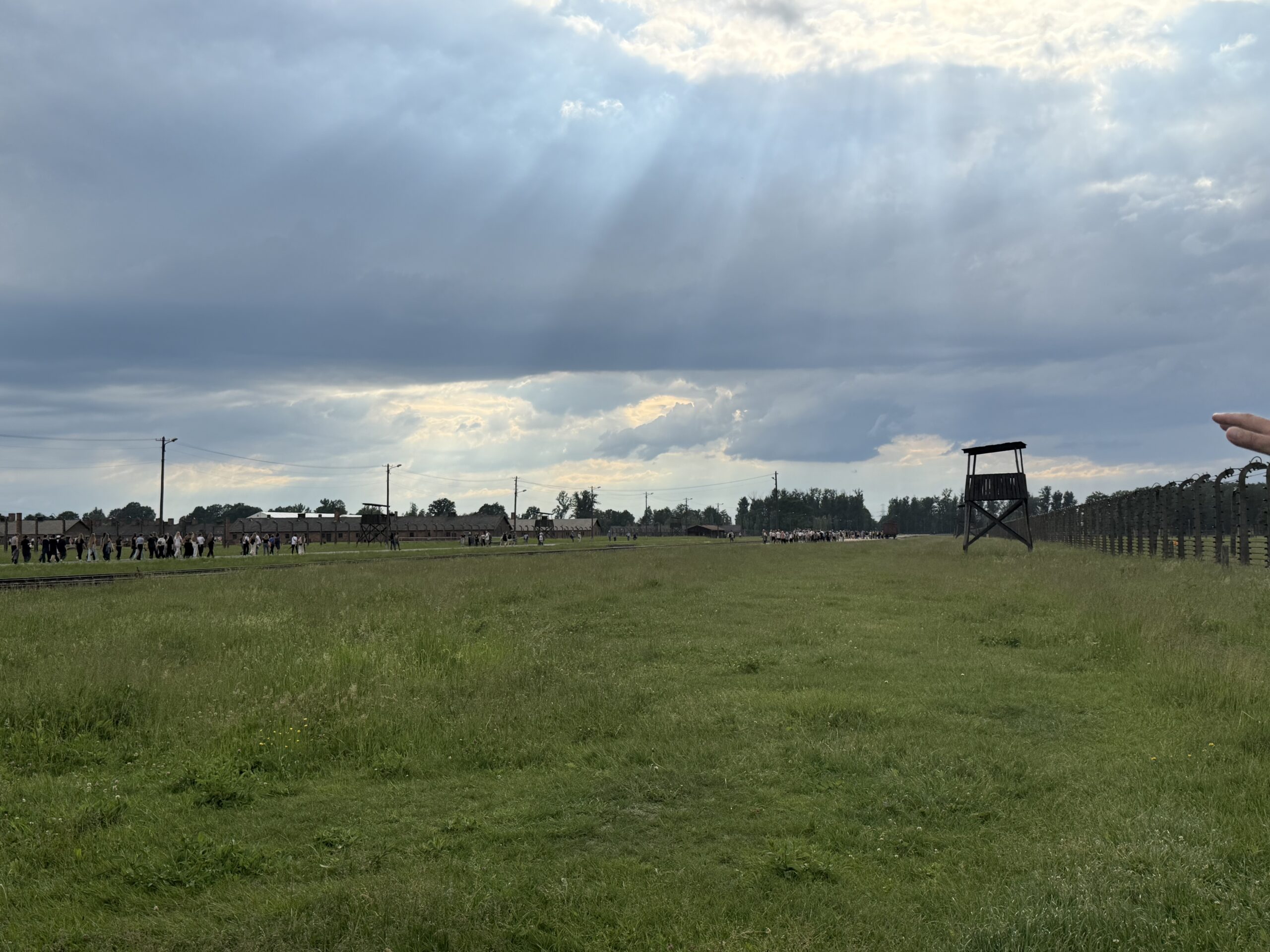
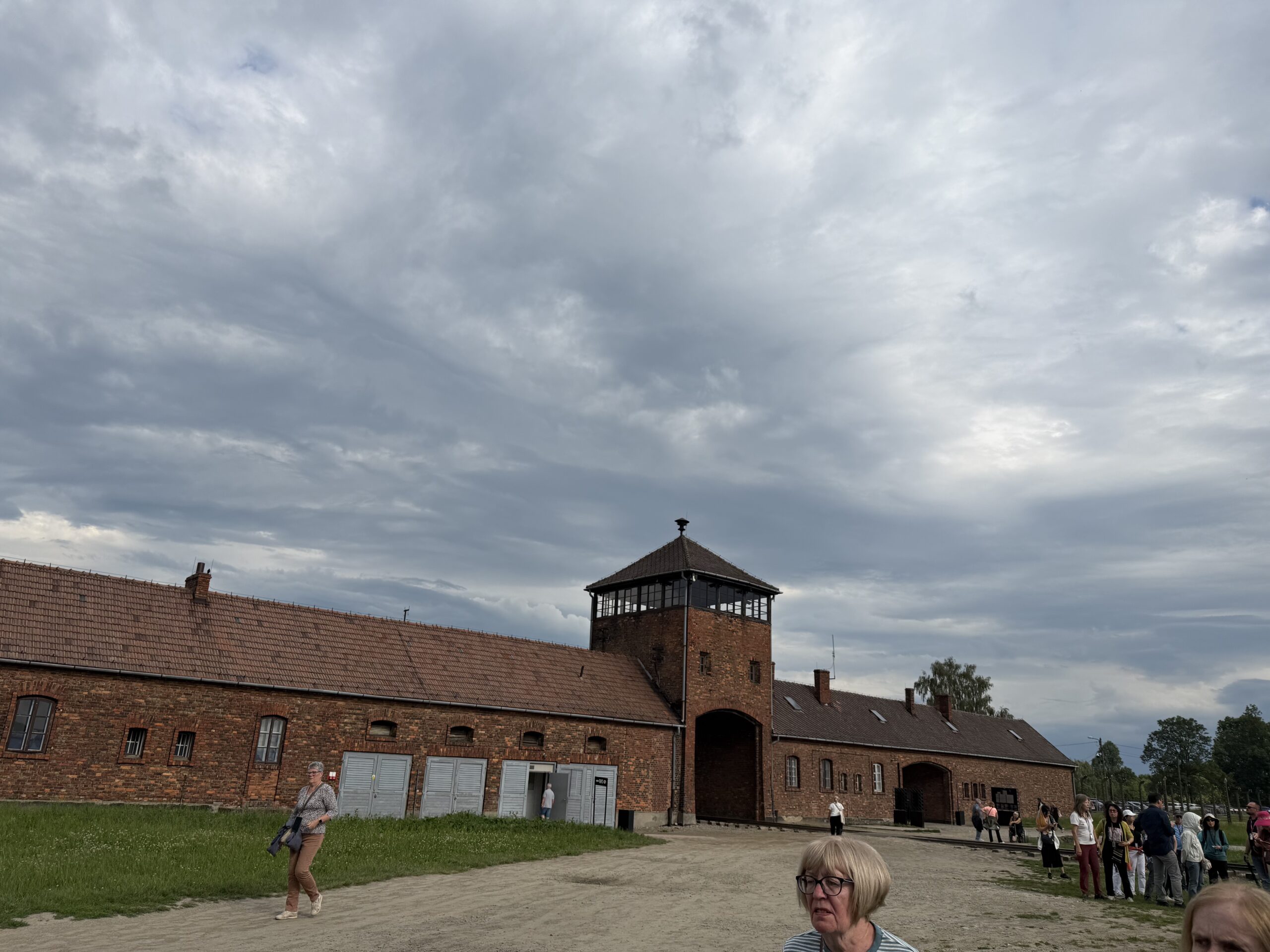

I did not walk down to the destroyed gas chambers because as we stood by the cattle car, the clouds opened on us with a torrential rain and Oklahoma-style winds!
We walked back to the entrance.
It poured on the way back to our hotel. Fitting, considering what we saw.
Auschwitz-Birkenau is a must-visit. We must NEVER FORGET.
NEVER AGAIN.
Donations tax deductible
to the full extent allowed by law.






Comments
another horrible chapter in human beings collective thinking in being tacit ,, that they would somehow escape that which they wanted to ignore
and here we are again,,,decades later but non the wiser as we have allowed the children to also ignore this travesty in favor of other travesties
blessed are the men and women who fought for the elimination of hitler and the rest of them
The poles couldn’t wait for the Nazis to roll into town
They immediately busted into Jewish neighborhoods, house, gave them up to the Nazis and moved right on in to their “ new houses”
….and the Pols were next on the list to be exterminated.
Exterminated or converted to slave labor.
The nazis disliked slavs. Considered them undermensch.
These Poles are idiots. Why did they wait for the Nazis? Why didn’t they invade the Jewish neighborhoods sooner? And who were these Nazis?
If you’ve never gone to one of these camps you should make it a priority to do so. There was, for me, a sense of evil/foreboding upon entering that was pronounced. I had a similar feeling a couple times while deployed when we came upon some truly horrific things. If nothing else a visit should reinforce the dangers of tribalism and how far humans are willing to go to eliminate the ‘other’. The sooner we stop the current movement towards a return of group and tribal identity ahead of individual merit/lack the better this Nation will be.
The problem is certain groups in this country have a tribal mentality. Blacks for one. A good portion of hispanics. Asians at least with first and sometimes second generation asians. Muslims obviously.
A tribal mentality among immigrants is to be expected and tolerated. This points out the danger of accepting to0 many immigrants too quickly and not allowing sufficient time for prior groups to assimulate. Current foreign born residents stand at about 15%. I doubt that include illegal aliens. Children with at least 1 foreign born parent are 25%,
The 15% foreign born is the highest its ever been. Second to 14% from 1890. I believe this number is way too high, I’d like t0o see it at about 5%.
A tribal mentality among immigrants to a slight degree might be expected but it is definitely NOT to be tolerated. You either want to be an American or you don’t. You either abandoned the ‘old country’ norms in favor of those of the USA or you didn’t. You either want to be here and willingly adjust/assimilate to the basic societal norms, dominant language of the Nation you chose to come to or you’ve made the wrong decision and need to go back until you are prepared to go all in on complete loyalty to the USA.
I was there in 1974. I was 12 years old. These pictures are seared into my brain. There are no words to describe this place or the emotions felt while visiting. I had a picture album that my parents purchased for me, but it went missing many years ago. I too, stood in front of the wall of death. Thank you for sharing this.
There are so many holocaust deniers now and they are open about it. They should be arrested and sentenced to spend a week in one of the concentration camps.
As for never again, it’s a good slogan and Israel is essentially founded upon it. However I’m afraid the muslims and the left have other ideas. I’m not sure what you can do about that.
Any cost is acceptable to prevent another Holocaust. Up to and including the purge of the evil that is of Islam.
Noting that my late father helped liberate the last concentration camp in German hands [Gunskirchen, where they were marching the last camp prisoners they had with the goal of starving them to death]. The Holocaust will not be forgotten. It is remembered by the Democrats. With nostalgia.
Subotai Bahadur
Thank You for sharing.
I have never visited Auschwitz but back in the mid 1970’s I visited the site of the Babi Yar massacre, just outside Kiev in the Ukraine. There was a ravine there but after the Nazis killed 30,000 or so Jews, the ravine was filled to the top with bodies and no longer existed. Somehow that made me recognize the SCALE of the horror.
Anti-semitism MUST be fought for the good of everyone. Tolerating the abuse of one group is merely waiting till the crocodile decides it’s time to eat YOU.
Local Ukrainians helped the nazi kill the Jews at Babi Yar That’s why I have no love for them and love the stalemate between them and the Russians. Let them kill each other. I’d be quite happy to sell arms to both sides at cost.
BTW: My fathers family is from Western Ukraine. Fortunately many immigrated to Detroit Michigan (maybe not so fortunate) in the 1920s. The area they left was decimated by the nazis and their Ukrainian helpers. (Will the muslims and their democrat helpers now finish the job),
My great grandmother was born in Ukraine, as were several ancestors of various branches of my mother’s line. They were not Ukrainian, but German farmers originally from Alsace and Brandenburg. My family immigrated to the Dakotas between the 1870s and 1905.
My daughter visited one of the concentration camps at age 14. She said she could feel the victims’ souls all around her.
Thank you, Mary. My only visit to the camp was roughly 50 years ago, and I can still cry over those lost forever. I try to keep those memories bottled up, but your essay forced me to relive them vividly.
As to “Never Again,” Jews have been saying that at least since Masada in 75 AD, and it has not stopped any of the attempts in every generation to slaughter us.
Every generation — the Muslims are right on time, they are this generation’s slaughterers. Who will lead us in our fight this time?
It is simply beyond words the level of depravity that humans can inflict upon other humans. Truly, evil exists.
I’m 69.
I graduated a private Catholic high school in ‘75.
I remember, freshman or sophomore year, the Brothers (Marist) brought us into the auditorium for an assembly. We had no idea what it was for.
The lights dimmed, and a documentary started playing. It was all about the camps and the holocaust, and it was very graphic.
I still remember it to this day. I never forgot it. Maybe that was the point.
Anyway, fast forward to today and what we see going on all around us.
It is truly, truly disgusting.
Maybe someone can explain an apparent contradiction: NAZI was the German national socialist party. Why, then, has the majority of the Jewish voting community supported socialist candidates and causes in the U.S.?
I was at Auschwitz and Birkenau two weeks ago, Mauthausen a week before that, and the Wannsee villa a week prior. It is difficult to imagine such cruelty, but there it is.
How will today’s generation remember the Holocaust if they never learn about it at school?
They don’t. They think it’s a Zionist myth.
In the Fall of 2024 I visited Wannsee in Potsdam and the Jewish cemetery there where my family is buried. Later we went to Auschwitz and Birkenau which was too much to take. We also visited two of the villages from which some of my family left for America. We were warmly greeted by the people in the museums at each village.