
Activist Judge Strikes Down SNAP Junk Food Restrictions, Dealing Major Defeat to MAHA
“With her solicitation and approval of the pilot projects in this case, the Secretary purports to waive not just a mere administrative or technical obstacle, but the very definition of ‘food’ as it was laid down by Congress.”
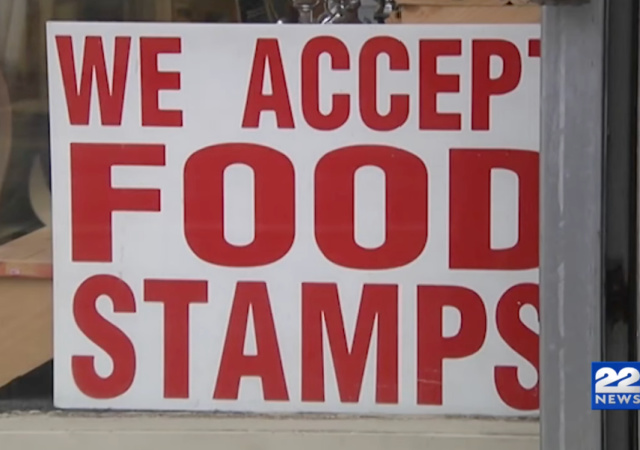
U.S. District Judge Amy Berman Jackson, an Obama appointee, ruled Monday that the U.S. Department of Agriculture, which administers the Supplemental Nutrition Assistance Program (SNAP), lacked the legal authority to approve state restrictions on the purchase of candy, soda, and other foods linked to obesity and related health problems.
The decision covers Colorado, Iowa, Nebraska, Tennessee, and West Virginia.
Removing unhealthy foods from the list of items eligible for purchase with SNAP benefits has been a central goal of Health and Human Services Secretary Robert F. Kennedy Jr.’s Make America Healthy Again movement. And Jackson’s ruling struck at the heart of it.
According to Jackson, Agriculture Secretary Brooke Rollins had “misapplied federal law” when she approved state requests imposing purchasing restrictions on SNAP recipients. She concluded that the USDA lacked the legal authority to approve those state restrictions in the first place.
Jackson’s ruling can be viewed here. She stated:
With her solicitation and approval of the pilot projects in this case, the Secretary purports to waive not just a mere administrative or technical obstacle, but the very definition of ‘food’ as it was laid down by Congress. Neither the USDA nor the states can force this square peg into a round hole to avoid the plain language of the statute and the requirements of 2026(k).
Politico reported:
Rollins and Kennedy have urged states to submit food restriction plans, arguing that they will improve health outcomes and that federal dollars shouldn’t be funding junk food. Kennedy also incentivized the states to apply by tying some federal rural health care funding to whether states had applied for a waiver to limit foods like soda in SNAP.
While many of the pilots deployed similar parameters restricting soda and candy, states have come up with their own definitions, leading to inconsistencies that might make a sports drink SNAP-eligible in one state but not in another.
Critics of the pilots argue that there’s little evidence such limitations will improve beneficiaries’ health, and that instead they create confusion and could discourage people from participating in SNAP altogether. [As if that’s a bad thing.]
According to USDA data, 23 states have applied for waivers so far.
Judge scraps SNAP junk food rules, dealing a blow to MAHA https://t.co/KaZfMmTAT2
— POLITICO (@politico) June 22, 2026
Reuters summed up the case in layman’s terms. The Trump administration argued that states should be allowed to experiment with restricting junk food purchases to improve health and reduce diet-related disease.
The plaintiffs maintained that Congress has already determined what counts as food under SNAP, and neither the USDA nor individual states can rewrite those definitions without new legislation.
Jackson concluded that any changes and/or restrictions to eligible foods must be made by Congress. If Congress wants SNAP to exclude soda, candy, or other foods, Congress must change the law. USDA cannot accomplish that through waiver approvals.
The decision is undoubtedly a defeat for Kennedy’s MAHA agenda, but it does not necessarily end the fight. Jackson did not rule that restricting SNAP purchases of soda, candy, and other unhealthy foods is unconstitutional or unwise. Rather, she concluded that the executive branch lacks the authority to make those changes on its own. If Kennedy and his allies hope to remove such products from the program permanently, their next battle will have to be fought on Capitol Hill rather than through administrative waivers.
Congress should revisit this issue sooner rather than later. Americans are already footing the bill for the explosion in healthcare costs associated with obesity, diabetes, and other diet-related illnesses. Asking taxpayers to also subsidize the purchase of products that contribute to those conditions makes no sense. Lawmakers should be looking for ways to encourage healthier choices — not using federal dollars to subsidize unhealthy ones.
Leftist activist Obama-appointed judge Amy Berman Jackson just ruled that SNAP must continue to cover junk food.
According to Amy, junk food like neon-colored pineapples dunked in Kool-Aid and Cheetos are nutritious and taxpayers must continue to foot the bill.
This is the same… pic.twitter.com/OQsDqV7mNS
— Bad Hombre (@Badhombre) June 22, 2026
Donations tax deductible
to the full extent allowed by law.






Comments
It isn’t fair that people using SNAP can’t buy “comfort food” like Colt 45 and Night Train! This ruling is a distillation of Leftist equity. It’s not about nutrition, it’s about food justice.
Well, they can’t legally use it for those things now. Those are NOT what “MAHA” was going after.
No, it isn’t “a distillation of Leftist equity”. It isn’t about nutrition or “food justice” — which, like every “adjective-justice” is not justice at all. It’s about one thing only: the statutory language. Either she’s right or she’s wrong, but no one who hasn’t looked at the statute is entitled to an opinion.
Fine, then ask the do-nothing Congress to simplify the language, or maybe the Administration ought to look for ways to reduce SNAP funding altogether or incentivize healthy food choices.
None of this is the judge’s business. Her job is simply to apply the law as written, and it appears that that is what she has done, so all the criticism is wrong.
Certainly the claim cited in this post, that “According to Amy, junk food like neon-colored pineapples dunked in Kool-Aid and Cheetos are nutritious and taxpayers must continue to foot the bill”, is an outright f***ing lie, and “Bad Hombre” is a lying liar who lies, and Elizabeth Stauffer was wrong to cite that tweet approvingly in the post.
I am not going to agree or disagree with the legal rationale for the decision – especially since I havent reviewed the statute.
I am only commenting to note that back in my graduate days of studying micro economics, that straight cash was a better mechanism to provide for the needy than food stamps or section 8 housing.
Granted the most effective anti poverty program was the 1996 era – “ending welfare as we know it”
Given her record on the law I would not trust her.
Our criticism is not wrong at all. The left does it all the time when they don’t get the decision they want. Yesterday, the left announced their plans to term-limit SCOTUS and pack the court. If they win back control that is what they will do. Now, is that fair and reasonable?
Of course Outhouse would be on the side of idiocracy…… gee he was silent as a mouse when Biden and Obama ran roughshod all over every regulation, rule, accepted practices and the Constitution….
Shut up you fucking liar.
The judge cites the intent of the statute as provided by Congress in her decision:
That is merely a statement of intent. It doesn’t define what food is.
That does not allow the secretary to override Congress’ definition of food unless you missed a cite. Your own statement that it “eliminated sugary **food**” contradicts your assertion.
The assertion is that people were using SNAP to buy “sugary foods.” That means that either they are “food” under the SNAP program or the SNAP participants were violating the program.
The contradiction is in the judge’s ruling.
The program (SNAP) is the Supplemental Nutrition Assistance Program. That’s not just the name of the program but the underlying basis for the program which is reflected in the statute itself.
The gov’t interest here is to promote better health outcomes via better nutritional inputs.. Congress didn’t explicitly authorize a program to hand out an allowance to buy Coca-Cola and fatty cakes. If we strip out the underlying govt interest of better health outcomes from a nutritious diet the basis for the program seems to be removed which arguably means there’s no govt interest to justify the program’s continued existence.
@gitarcarver
There is no contradiction. The decision explains that 7 U.S.C. § 2026(b) is restricted to programs related to administrative efforts not the nutritional value of food or the health of the recipients.
@CommoChief
And the ACA has provided us with affordable health care. It’s right in the name.
As the decision explains 7 U.S.C. § 2026(k) allows for programs that incentivize healthier foods, but nothing cited allows forbidding categories of food.
Nice snark.
Yet the legislation authorizing the program is not just predicated on supporting nutrition as opposed to ‘food’ but it is in the statue itself. Ergo a very reasonable case can be made that junk food can be totally eliminated at the Federal agency level much less authorization for an exemption for individual States to modify their own programs.
@CommoChief
Then why didn’t the USDA argue that they had the authority under whichever subsection you’re implying exists?
Not a clue as to the choice of legal.strategy employed. It remains at least possible that the Attorneys are holdovers with an ideological objection to Trump Admin goals.
FWIW the FY:26 AG bill passed into law authority for Sec AG to authorize ‘pilot programs’ to (among many things) ‘test innovative welfare reform strategies’ so long as the pilot programs are
‘Consistent with the goal of the SNAP of providing food assistance to raise levels of nutrition among low income individuals’.
That particular set of authorization by Congress would seem to fit precisely with the actions of the Dept AG. Plus it (as the statute re SNAP does elsewhere), invokes the explicit requirement for SNAP program to provide food that increases ‘nutrition’ to low income individuals. Junk ‘food’ may be ‘food’ but the authority/requirements for SNAP are to increase ‘nutrition’. Not sure why this is such a controversial point for the Judge or you. The statutory basis for ALLOWING not requiring a State to remove junk food aka not nutritional food seems explicit under the FY ’26 AG bill waiver authority for implementing pilot program.
Why do I have a problem with stretching the ordinary meaning of the statute thinner than tissue paper? Especially when a different section covers pilot programs concerning the nutritional value of the food purchased and not even that section allows for prohibiting categories of food?
Are you serious?
That’s a policy argument, not a legal one.
Stupid AWFUL.
“An Obama appointee…”
That description alone means that the decision is likely to be overturned on appeal.
At least her name isn’t “Sparkle”. She’s got that going for her.
She’s been overturned several times already.
How can you possibly predict that it’ll be overturned without citing the statutory language? Is she right about it, or is she wrong? I don’t know, because I haven’t read it — and it appears that neither have you, since you didn’t bother to refute her reading.
I can say it with perfect certainty because I’m an anonymous commenter on the internet who doesn’t care about what other people think about my opinions.
That and the last two democrat presidents have gone out of their way to nominate far left ideologues with no regard for the law rather than serious students of the law.
Or have you been asleep for the last dozen or so years?
Because he can read the statutory language and then predict …. Why does his not citing it negate his ability to predict… do you ever read what you write?
If the statutory language supported his position he would have cited it. That he didn’t cite it means either that he didn’t bother reading it, or that he did read it and knows that it doesn’t support his position. The first is the more charitable option so I went with that. As for you, you’ve forfeited the right to charitable assumptions. You’re a known quantity; a person who has no regard whatsoever for the truth.
“If the statutory language supported his position he WOULD have cited it. That he didn’t cite it means … blah blah blah”.
You have no logical basis on which to make this flat declaration. You may think it LIKELY, but you have no facts on which to base your belief or to declare your belief to be fact
For someone who strains over a gnat, you appear to be perfectly willing to swallow a camel if it supports your own bias.
There are seven different ways to Sunday to get around her. Take the fight to abolish welfare, now.
Rule by judges is garbage.
Weird how regulations can be expanded so “navigable waters” include seasonal puddles, but “nutrition” can’t exclude buckets of sugar.
Obama. The “gift” that keeps on giving.
Like herpes.
Giving or grifting?
The judge opposes restrictions on purchases? SNAP EBTs would be used to purchase pot, liquor and big screen TVs.
Not really. A couple of us have quoted the SNAP law below, and it specifies food.
No, she doesn’t oppose restrictions, or at least nothing in this ruling says she does. It’s got nothing to do with what she opposes, and everything to do with how she’s reading the statute. Is she wrong? You tell me, but if so tell me why she’s wrong. How do you read it?
Yes she did and stop your damn gibberish
or at least nothing in this ruling says she does
I’m going to disagree partly on the fact that it’s a 75-page decision. Seems to me that if she weren’t opining it could be about 1/10 that length. (Though, there probably is a half dozen pages, at the least, that are all the malarkey formalities.)
It’s their right as Americans to ingest lethal levels of sugar and get hooked up to heavy machinery to keep them alive
And to have their medical care paid for by the taxpayer.
Until the demonrats cheat out another victory, and legislate that we catch up to Canada and the Eskimos on “life efficiency” procedures. We may not have the ice flows to set old folks adrift, but death is a democrap specialty. And they’re a united front (affront?). The only possible DEMINO is Fetterman.
If that’s what the statute says, then yes, it is their right.
There isn’t an positive right to have a SNAP program; the states don’t have to implement one and indeed states have to make changes to their own laws to be allowed to have a SNAP program (they have to exempt SNAP purchases from sales tax, among other things, under 7 U.S.C. § 2013(a)).
This is part of why it’s odd to me to have SNAP participants having a right of suit here. I guess they probably still have standing and the federal government apparently conceded that an outright denial of SNAP benefits is an injury redressable under Article III. I guess the argument is that, once SNAP exists, you can enforce the entitlement it is to prove even if you need not get the entitlement in the first place.
It’s weird though.
Some typos here.
“you can enforce the entitlement it is to prove even if you need not get the entitlement in the first place” was supposed to read “you can enforce the entitlement even if you need not get the entitlement in the first place.”
The only people who should have standing are net tax-payers.
The modern world is so upside down, with the poor demanding their candy should be paid for by others.
Their “right”…. Really… Geesh you need to share that list of “rights”…. What comes after the right to eat junk food paid for by others….? I’m waiting here with bated breath….
It’s in the statute. If the statute says they have a right then they have that right.
Nope. It might be their entitlement, but it isn’t a right.
Thank you for making the distinction. It isn’t a right if you have to take other’s property to provide it.
It IS their right to eat buckets of sugar; What is at issue is whether that right should be tax-payer funded.
To date, “nutrition” (as understood by this judge) has meant any substance put in your mouth that either is, or is an imitation of, a substance which provides calories.
This would seem to be belied by the adjective form of nutrition which is “nutritious” and certainly no definition of “nutritious” includes snack cakes, candy and sugar drinks but the definition persists
Of course, even if the statutes were tailored more narrowly to avoid purchases of junk food, there are enough fringe “wholesome” products like Nutrigrain bars to the muddy the waters and create differential incentives to food manufacturers.
Narrowing SNAP to include only a limited and defined menu of fresh or least processed foods, like WIC does, would appear to be the answer for a “supplemental” nutrition program, but if it requires politicians to step up and do something that might be termed unprogressive, forget it.
I thought conservatives wanted judges to interpret the law as written, and not twist it to achieve a desired outcome. It seems this lady has done her job. She should be applauded for her judicial restraint.
On the other hand, we feel it’s important for all of America to experience the same lack of deference to the law as written as gun owners do every day.
We also recognize that the judge only stuck to the law as written to get the ruling she wanted. She would have found that Congress intended to give USDA authority to determine what was eligible if she had wanted to.
SCOTUS ruled on Mar 2026 that regulatory agencies must follow the specific intent of Congress for interpreting laws without extrapolation.
The biggest extrapolation was labeling CO2 as a pollutant under the Clean Air Act and thus declaring limits on carbon emissions.
Rules that prevent adults from using SNAP to purchase ANY items defined as unhealthy by the U.S. government goes too far. What if the next liberal administration labels beef as unhealthy?
The regulatory agencies have been predatory over the last 20 years. A little pushback is a good thing.
And that turnabout is exactly why we must insist on specific laws from Congress, rather than this handwave they like to do, ceding their authority to some Executive branch bureaucrat.
But, in the meantime, it means the Executive can’t take charge and fix what Congress has failed to handle, except in those cases where the Executive has narrowed things too much, rather than not enough.
Taxpayer provided food should be gruel and TVP. I’ll even go so far as to allow flavored TVP.
I have no problem with limiting taxpayer-provided food to gruel and TVP, as long as that is included in the text of the law. If the law does not include that limit, then I am against an executive order defining such a limit.
Why? Because executive orders can be reversed. Not only can they be reversed, they can be extended in ways that were never intended.
So the lesser of evils is to require this law (any law) to be carried out as written. No matter how good- intentioned MAHA is, a government mandate implemented for MAHA opens the door for future abuses of authority by government agencies.
inconsistencies that might make a sports drink SNAP-eligible in one state but not in another
Well, see, we have this thing called FEDERALISM….
That’s exactly how things are supposed to work. Anything else is an usurpation of state sovereignty. (As is the whole idea of funding state projects with money from the federal citizens.)
SNAP is a federal program. Applying a state’s rights argument doesn’t make sense.
Seems like the Obama judge may be right:
“ defines “food” as:
law.cornell.edu
(1) Any food or food product for home consumption, except alcoholic beverages, tobacco, hot foods or hot food products ready for immediate consumption (with some exceptions for specific vulnerable groups), and certain deposit fees.
“
Why is beer — liquid bread — excluded? Why exclude anything? If it doesn’t matter if it’s nutritious, how can we exclude glass shards from SNAP?
The plaintiffs maintained that Congress has already determined what counts as food under SNAP
Could we maybe see that definition somewhere in this article? It seems kind of important to the argument of whether this judge is right or wrong, doesn’t it?
Oh, look, here is what Brave AI says:
It also says a bill introduced last year would explicitly exclude soft drinks, candy, ice cream, and prepared desserts. Of course, that bill has gone nowhere.
That info seems like it would be pertinent to this whole discussion.
BTW, I do NOT think my compelled-charity-through-government should be allowed to be used for anything other than basic food items. But there are two major problems with that restriction.
First is “How do you write it” without compromising the principles one way or the other? It’s the same thing the anti-gunners have encountered trying to ban “assault weapons.” You get some set of definitions that someone promptly goes out and finds an exception or creates one. (Like a bullpup, belt-fed, lever action rifle, or an AR bolt-action pistol.) And sometimes the exception is going the other way: “What do you mean I can’t buy an apple with this because it’s labelled a ‘snack’ on the advertising sign here?”
Second is how do you get Congress to agree to restricting it? Honestly, the combination of these two is exactly why they shouldn’t be funding government charity at all. Or, even a lot of laws, in general. You end up with a bunch of people trying to buy votes and writing stupid crap into law.
(I think I might have actually been kinda pro-‘food’ when they passed the law. Primarily because if you were going to insist on stealing my money to give to others, you should do it in a way that wasn’t stupid – like trying to write a national law with a bunch of definitions that weren’t going to ever be as precise as they should be.)
Longer term Congress can make a sensible statute with a little effort and goodwill that’s more than pretty good if less than perfect; fresh fruit/vegetables ‘in’ as are ingredients to make a meal while prepared ‘ready to eat’ products are excluded. In the interim replace SNAP/EBT with food boxes picked up biweekly by recipient containing preselected items according to whatever USDA decides they may contain. If someone really wants a bag of Doritos or Snickers they can pay for it themselves using $ from their wages or given by their family or a charity.
The original motive for SNAP was to aid farmers by boosting demand for their products. Helping the needy was a secondary consideration.
Which makes it no less a welfare program. Just a different “for whom”.
It began the ‘twofer’ and the alliance of rural agricultural Congressmen with ‘urban’ Congressmen to jointly support annual appropriations and broad legislation to give handouts to ‘big’ AG/Corporate farming then on the backside support all sorts of ‘nutrition’ assistance programs which overwhelmingly go to the ‘urban poor’ in raw number of participants.
Reason number 113 the federal government should not be in the business of feeding people. Full stop.
This case is complicated and I suspect that almost nobody commenting on this story really understands it. I just spent a while looking at the opinion and statute and I’m still confused.
The foods at issue that the states want to exclude from SNAP benefits are clearly “food” as the statute defines it in 7 US.C. § 2012(k). That’s what the judge is focusing on.
However, a separate questions exists of whether SNAP must permit the purchase of any “food.” The most relevant provision to me is 7 U.S.C. § 2016(b):
—
7 U.S. Code § 2016 – Issuance and use of program benefits
. . .
(b) Use. Benefits issued to eligible households shall be used by them only to purchase food from retail food stores which have been approved for participation in the supplemental nutrition assistance program at prices prevailing in such stores: Provided, That nothing in this chapter shall be construed as authorizing the Secretary to specify the prices at which food may be sold by wholesale food concerns or retail food stores.
—
The key language is that benefits are used “only to purchase food.” The question is whether that language should not be interpreted literally to mean any use but for “food” is banned but also to mean that the benefits can be used for ANY “food.”
I don’t see anything in the judge’s opinion explaining why there is a positive right to purchase “any” food. To me, it seems reasonable that a state could create a program that pays for things that ARE “food” but not ALL “food.”
The issue is that isn’t how the federal government did it. Instead, it proposed the states submit requests to do a special type of pilot program under 7 U.S.C. § 2026, which seemed to accept that they had to pay for all “food” but wanted to change the definition of “food.”
Then the USDA said things like that it “is waiving this section [the definition of food] to allow the State to modify the list of items that can be excepted from the definition of “food” items
That seems like a problem to me and that the judge’s opinion was reasonable.
I do wonder if a state could just say that it’s normal plan is not to pay for all “food” by simply not accepting the premise that any such statutory obligation exists for any state that has a SNAP program. I don’t see why that would necessarily be a problem.
Thank you for that summary. You make a good point, that it may be possible to achieve what the government wants without going back to Congress, but not the way it’s gone about it.
Just because Jackson is a leftist doesn’t mean every decision she makes is wrong.
An interesting idea. But I think anything not excluded is included, and that anything not excluded can’t be denied to the beneficiary. You are correct to a point, but Congress has already declared some classes of what might otherwise be considered “food” to not be within the classes of food that can be purchased with SNAP benefits and the States have no authority to add classes of food to Congress’ list.
Its not over this pissant judge will get over ruled when a higher court reminds them in the 60 you got what you were given and you didn’t get cash back you got a voucher for change.
Given the statutory language I think it’s very unlikely that she’ll be overruled. I doubt the government will even bother appealing it, since it appears to be correct.
MREs for all!
The judge went to Harvard and was approved by the 112th Senate 97-0 in March 2011.
Then it’s a good thing that she appears to be able to read a statute correctly.
Solution: put them all back on farm surplus. Blocks of cheese. Sacks of cornmeal. Bags of flour. Tins of butter. It was good enough in the 1960s and it’s good enough now.
It’s not that I hate this. It has been proposed here multiple times. It is that it would be more expensive and problematic. Too many people on SNAP = too many items. Probably have to be acquired, warehoused, and distributed monthly. Lot of space considering their physical goods. Lot of people would be involved. Impractical in this day and age.
No the right practice is to restrict what people can purchase. It’s our money after all. We get to say what they use it for. If they don’t like that they can refuse to participate.
Part of the allure of food boxes is gonna be the pain in the ass factor for the recipient to go pick it up, then carry it home. Make it biweekly and since the recipient is coming in anyway their ID and continued eligibility can also be checked/updated. That discourages the grifters to a degree while ID the fraudsters and eliminates misuse of EBT and every bit helps to slow the drain on taxpayers.
While there may be some inconvenience with storage it isn’t that hard. Far less waste b/c almost everything is gonna be shelf stable other than fresh fruits/vegetables. Remember that folks gotta have jobs now to qualify and we can have some of the recipients on hand to assist in fetch/carry while a 2 or 3 bureaucrats run the lines. Use local neighborhood schools as distribution points. Set Saturday/Sunday as pick up day. The school cafeteria can take the excess each week and incorporate it into their meal programs.
“Too many people on SNAP”
That is the probem
The existence of SNAP is the problem.
I would take it one step further, Grizzly: bring back gleaning.
Insist that farmers not harvest to the edges of their fields and the poor can go get it themselves. Oh, sure, there’s lots of problems with that, but it would make them actually work for their food.
(Probably not a great answer for a supplemental program, but I’d be OK with full-on welfare going there.)
Hard pass on gleaning. What would be workable is assignment of a plot in their ‘community garden’. City owned land and undeveloped property/vacant lots rented to provide space. So welfare recipient can grow the food they want, assuming they put in the work and nobody vandalize or steals it. A requirement for sweat equity in their community garden plot might transform some these folks perspectives or not and they quit, either way they’d be off the welfare rolls.
I m guessing you are not a serious gardener?
You apparently are unaware that any glean or garden in any geographical location can only provide VEGETABLES and fruits over a limited time window, commonly a few days to a week or two.. And not even vegans can sustain themselves just on a few weeks of garden vegetables.
Succession planting and canning and freezing are how a person extends and preserves a harvest, but this requires a remarkably large amount of garden space one or two THOUSAND square feet per person; which is the equivalent of one entire vacant city lot to sustain a single family of 4) to produce enough garden commodities for a year, a significant expenditure of $ and skills which are not necessarily easy to acquire.
The lack of suitable gardening space is only one of hurdles that this Gardens-For-All idea must overcome, which is a concept that can only work on paper.
It’s a pilot program. Get the judgement suspended pending appeal and appeal it. Meanwhile let the pilot program continue.
A federal judge on Tuesday issued a nationwide block on ICE’s policy of arresting illegal aliens at courthouses.
California-based US District Judge Casey Pitts, a Biden appointee, ruled that ICE cannot detain illegal aliens at immigration courts
Another judge ordered the removal of barriers around a federal building that has been under nightly attack by ANTIFA. The judge apparently prefers federal law enforcement resort to force to defend themselves.
Your headline states “Activist Judge…” yet nothing in the article supports that assertion in general or specifically regarding this lawsuit.
She’d have ruled the other way if she wanted to.
She could have, but didn’t means that she was not being an activist.
So the law states that nutritious diets are to be funded, and an Obama judge ruled that candy, soda, and other foods linked to obesity and related health problems cannot be discriminated against because food = food?
No wonder America is considered the most obese nation on the planet!!! (It’s not actually in the top 10 for prevalence – assorted Polynesian, Caribbean, and Islamic nations are actually much much worse!)
So how do Democrat states get away with their discrimination against garbage food? Does legality depend on whether it’s a Democrat or a Republican standing before a Democrat judge?
The more junk food they eat, the more health care costs go up for taxpayers funding the costs for the junk and the care. Freebies don’t guarantee freedom of choice. That’s the price they have to pay.
Who is the plaintiff? Froto-Lays? M&M/Mars? Coca-Cola?
I hope her parents said Shiva for her. This feld hure for the Reich