


Elise Stefanik’s Poisoned Ivies Challenges the Direction of Elite Academia
Written with clarity and moral force, Poisoned Ivies is essential reading for anyone concerned about the future of American higher education.
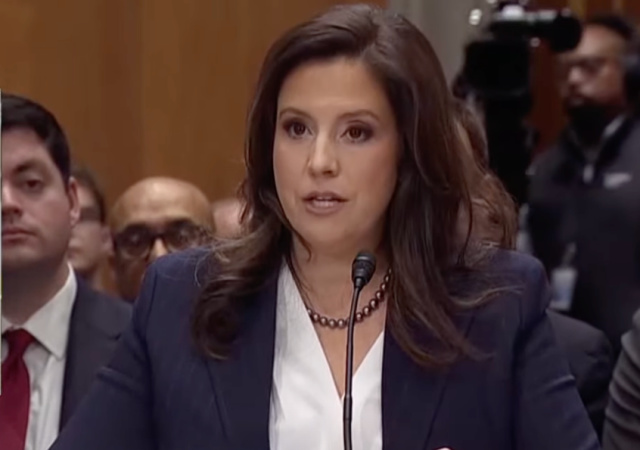
Review of Stefanik, Elise. Poisoned Ivies: The Inside Account of the Academic and Moral Rot at America’s Elite Universities. Threshold Editions, 2026, 256 p.
Elise Stefanik’s Poisoned Ivies is a blistering indictment of America’s elite universities and the moral collapse that now defines them. Organized around the institutions and events that exposed this crisis—from the congressional “hearing heard around the world” (Chapter 1) to the unraveling of leadership at Harvard, Penn, and Columbia—the book delivers a clear, urgent message: the rot is real and systemic.
In her Introduction, Stefanik notes:
America’s higher education system is in the midst of a historic reckoning. The compact that existed for generations between our republic, the American people, and our institutions of higher learning has irrevocably broken down. Universities once dedicated to the pursuit of truth and excellence have become centers of radical political indoctrination—all while being generously subsidized by hardworking American taxpayers.
Stefanik’s discussion of Harvard (Chapters 2 & 3) is especially devastating. She documents how the university that once symbolized intellectual excellence has become captive to ideological factions that suppress dissent while tolerating open hostility toward Jewish students. Her examinations of Penn (Chapter 4) and Columbia (Chapter 5) reveal the same pattern: administrators who equivocate in the face of rampant antisemitism, faculty who rationalize bigotry as “expression,” and campus climates where moral clarity has been replaced by radical political advocacy.
The book’s broader argument is equally unsettling. Stefanik reveals how anti‑Americanism has become embedded in curricula, administrative messaging, and student activism, producing graduates fluent in grievance but untrained in genuine critical thinking. Chapter 7, “What Went Wrong?,” connects these failures to the rise of sprawling bureaucracies and ideological gatekeeping that have hollowed out the university’s traditional mission. A major problem is the massive funding of our universities by regimes hostile to the United States.
Stefanik does not sugarcoat the truth. At the end of Chapter 8, she summarizes the crisis:
The explosion of antisemitism on campus in the wake of October 7th was not a coincidence. It was the result of years of rot deep within our most prestigious institutions of higher learning. Our elite universities chose ideological fanaticism over intellectual diversity. They chose groupthink over independence. They chose spineless moral bankruptcy instead of strong, principled leadership.
Yet Poisoned Ivies is not merely a stark diagnosis. In the same Chapter 8, titled “How We Fix It,” Stefanik offers a blueprint for reform: restore intellectual pluralism, enforce consistent moral standards, confront antisemitism without hesitation, and re‑center higher education on truth rather than ideology. Her tone shifts from indictment to determination, insisting that the academy can be reclaimed if complacency gives way to courage:
Our country is far too dynamic, interesting, intellectually curious, and hopeful to limit ourselves to brainless indoctrination and moral stupidity…. We’re also proud believers in the equal dignity of all people. Once upon a time, our elite institutions embodied the best of America. They can again…. We have the incredible opportunity to reform and refashion our elite colleges and universities into institutions that can once again educate and elevate American leaders who will serve and promote the good of all citizens…. We can renew the compact between our elite institutions and the American people. And we must.
Written with clarity and moral force, Poisoned Ivies is essential reading for anyone concerned about the future of American higher education. Stefanik’s warning is unmistakable: universities cannot remain engines of detrimental anti-American propaganda—and expect to produce free minds and good citizens. They must be radically reformed to restore academic excellence, recommit to the pursuit of truth, and produce benevolent leaders who would treat their national heritage with gratitude and responsibility.
Nora D. Clinton is a Research Scholar & Project Manager at the Legal Insurrection Foundation. She was born and raised in Sofia, Bulgaria. She holds a PhD in Classics and has published extensively on ancient documents on stone. In 2020, she authored the popular memoir Quarantine Reflections Across Two Worlds. Nora is a co-founder of two partner charities dedicated to academic cooperation and American values. She lives in Northern Virginia with her husband and son.
Donations tax deductible
to the full extent allowed by law.




Comments
Burn it all down and start again. Sometimes starting over is necessary and the fastest and cheapest way to proceed.
I’ve been saying that for a long time…
Close the schools. Fire the staff. Raze the buildings. Plow the land. Plant corn.
We may not be able to burn it down and start again. But we can stop all payments from the federal government.
No grants, no student loan money, no GI Bill.
Let them fend for themselves. But they also need to be audited for foreign money influence.
Harvard symbolized a lot of things. Intellectual excellence wasn’t at the top of the list.
They didn’t even invent the unit of measurement for their own bridge.
A part of the problem is staff bloat. Many “universities” have more administrators than students. This sort of thing also fuels the meteoric rise in tuition costs.
Huge tuition increases and subsequent staff bloat are enabled by government taking over the student loan industry. Gleefully they embroil witless students in large debt for pointless degrees without regards to their future ability to pay, enabling the colleges to increase costs knowing the government will simply increase loan amounts ad infinitum to cover their cupidity.
I was first embarrassed by my alma mater (Cornell) in the 1960s, when they (a) suspended my fraternity brother for lighting a firecracker on the steps of Willard Straight Hall, but (b) did nothing to the blacks who took over the same building and then came marching out armed with shotguns. Things have only gotten worse since then, both at Cornell and also the rest of the Ivies.
I’m putting sometime in late 1960 as the turning point at Cornell, September when the class of ’64 came on campus.
I agree with Thomas Sowell, who was teaching there at the time, that the Cornell I knew, loved and graduated from “died” in April 1969.
I was a Junior there when it died. Unfortunately, I was a pagan fool at the time. I have repented in dust and ashes.
Poison divey?! Little lamzy divey. A kiddley divey too, wooden chew?
Milhouse with a sense of humor. Who knew? 😁
Heh.
Heh, heh.
The old saying goes, “Democracy dies in darkness.”
The same holds true for our education system, from preschool through higher learning. Far too few people know just how poorly students are being educated; how little of actual use they learn; how many students cannot perform at their grade levels in reading comprehension, writing, mathematics, etc.; and how unprepared so many are to have real careers.
Objectively and independently produced “report cards” are needed for every school and institution, and they should be readily available, even published in news media.
How old is that saying?
I thought the WaPo invented it for Trump’s first inauguration.
The first step is ending student loans. The explosion in student loans allowed the rapid expansion of the administrative state at colleges. With most of those administrators being “Karen’s” or “AWFLS”. Tell the colleges that if the student needs a loan they have to provide it. Watch all the useless disciplines get the ax immediately.
^^^^THIS^^^^
We need to go back to the days when banks loaned money for higher education.
I would have loved to get the government to subsidize my education. I had to go the alternate route, by joining the military for my subsidy. I consider that earned.
I have been in the belly of the academic beast for many years, finally retiring, after persecution, biased evaluations and professorial infantilism (don’t worry; I served up some epic revenge!)
The problem is the turn of academics from educators to propagandists, creating useless “studies” courses and destroying actual learning from within. Even the hard sciences, of which I was a part, are falling to this infestation of Marxists, racists and petty bureaucrats.
I watched university presidents and faculty making snide remarks about conservatives, the free market and, in particular, President Trump. It was/is an echo chamber of anti=Western “thought.” Now you know why Chinese students call Harvard a “party school.” Communist party school is what they mean and they don’t disguise it.
As mentioned above, easy loan money allowed academia to write their own tickets, turning dorms into luxury apartments and hire infinite layers of useless bureaucrats, further driving up the cost of an alleged “education.”
Now DEI, and extension of “affirmative” action, adds a layer of excrement that is stripping away merit and rigor.
It is a mess, and will probably require new institutions to starve out this circus of academic failure.
Remember, you can always tell a Harvard man, you just can’t tell him much.
I loathe most Harvard grads.
Boston College, class of 1984.
Go Eagles, Ever to Excel
BC Football
1984 Final AP Polls: #5
Record 10-2
Head Coach: Jack Bicknell
Jan. 1, 1985 Bowl Game: Won – Cotton Bowl 45-28 versus Houston
Heisman Trophy Memorial Winner: Doug Flutie
The Hail Mary: https://youtu.be/nplbIx_O7Rs?si=iPb51OY0MnjsrfJk
A much needed expose of academia from Stefanik. Required reading!
Required reading. But don’t expect that in any undergraduate or graduate program.
Trump really screwed up by not supporting Stefanik for governor. She would have eaten Hochul for a snack and Mamdani wouldn’t have known what hit him. By the way, who is the President supporting? Yeah, I know.
Professors vote 90% dems? With grade inflation for equity?
Please pardon the length. I am inspired by Nora’s post.
I am grateful for Congresswoman Elise Stefanik’s book. But unless Nora’s helpful review has missed it, Stefanik has failed to identify the root cause of the decline of the university system.
The original main purpose of the university system was not to provide career paths for youths – it was to train them to be good people. In order to accomplish this it was necessary to have an understanding of what “the good” is. This is what “Western Civilization” is about. Western Civilization is a combination of Greek philosophy and the Judaeo Christian tradition. The Greeks asked the right questions – What is the good, the beautiful, and the true? – and the Jews and Christians provided the answer – the God of Abraham, Isaac, and Jacob, and Jesus, respectively.
The root cause of the decline of the university system is the secularization thereof. This was accomplished in several waves.
One wave is Andrew Carnegie’s effect on higher education. Carnegie, who may have been the most wealthy person of the 20th century, resolved to give away most of his money – but there were strings attached. The
following excerpt describes Carnegie’s “Ten Million Pension Fund” (a lot of money in 1905):
“Carnegie was referring to the first annual meeting of the board of yet another of his trusts, the Carnegie Foundation for the Advancement of Teaching. He had, as had become his practice, announced the establishment of the trust – endowed with $10 million of U.S. Steel gold bonds – in the spring before sailing to Europe. The foundation’s mission was ‘to provide retiring pensions for the teachers of universities, colleges, and technical schools in our country, Canada, and Newfoundland . . . without regard to race, sex, creed or color.’
“Faculty of public institutions were excluded because Carnegie believed the states would want complete autonomy in all financial matters.Andrew Carnegie (continued) Because the interest on $10 million was not enough to provide pensions for all professors and because he had no intention of giving money to institutions that were church-affiliated, he empowered his board to determine, within these guidelines, which institutions would be eligible for Carnegie pensions. It is doubtful that he had any idea, in doing so, of the unintended consequences of his action. His board of directors, comprised of the most distinguished presidents of the most distinguished American universities and colleges, did. Carnegie pensions would, in a relatively short time, change the face of higher education in America. Those institutions that were given the right to award Carnegie pensions reaped enormous rewards as potential professors gravitated to them. The most controversial aspect, and in the long run, one of the most important of the provisions in the deed of grant was Carnegie’s prohibition on giving pensions to professors at sectarian colleges. Colleges and universities that had once been church connected but were now ‘free to all men of all creeds or of none’ were invited to apply. Those which were ‘under control of a sect, or require Trustees (or a majority thereof), Officers, Faculty or Students, to belong to any specified sect, or which impose any theological test, are to be excluded.’ Carnegie was adamant that these rules be followed. Institutions that sought pension support were required to fill out a questionnaire and attach a ‘memorandum explaining sectarian connection.’ No exceptions were made, not even for schools like Brown and Northwestern, which considered themselves fully nonsectarian but had provisions in their charter that reserved trustee seats for members of particular denominations.”
Andrew Carnegie by David Nasaw, pp 671-672
Carnegie was an anti-Christian bigot. TIAA (where, ironically, my retirement funds reside) is the current embodiment of his creation.
Another wave is the leftist takeover of the universities. One of the inherent weaknesses of the university concept is the gathering together of large numbers of foolish adolescents in small areas. This used to be remediated by providing competent and wise supervision. Adolescent male students were prohibited from entering the dormitories of adolescent females. There were curfews. Cornell eliminated male curfews in 1967, and female curfews the next year. Since then, all of the Ivies have mixed-sex dorm buildings and floors, all have “gender-inclusive/mixed rooming” (optional in most cases), and some have “all-gender” bathrooms. Adult supervision consists of “resident advisors” who often are trained in LGBTQ+ ideology.
Leftists have also successfully eliminated required Core Curriculum in Western Civilization (“Hey hey, ho ho, Western Civ has got to go!”). Of the Ivy League schools, only Columbia still has such a thing. I hope you will pardon me for suspecting that is has been corrupted by leftism.
I have no hope for our current university system. Like our Public (Government) School system it is broken beyond repair. The only solution for both is to empty them of students and create alternatives. I believe this solution is under way.