

DOJ Investigating Alleged Antitrust Violations by Major Meatpackers
Acting AG Todd Blanche: “The current market structure and high concentration in the industry indicate anti-competitive activity.”
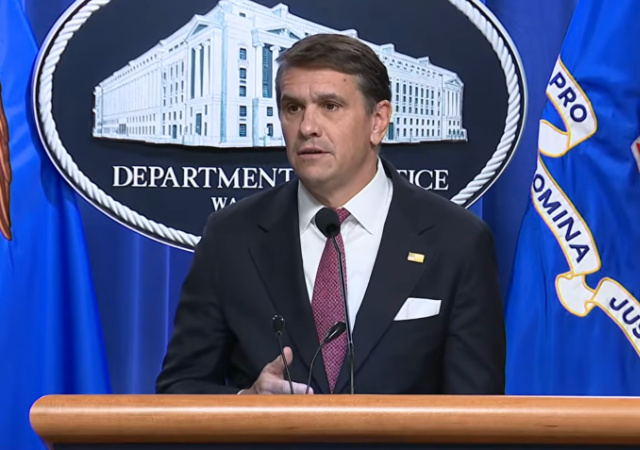
Acting Attorney General Todd Blanche confirmed the DOJ antitrust division has been investigating possible violations by the meatpacking industry.
Blanche spoke at a press conference:
As you all know, last November, the president tasked the department to investigate the costs and prices of beef. As a result, we prioritized investigating potential antitrust violations in US cattle and beef markets.
In the beef industry, the big four processors control over 85% of the beef processing market. Two of the big four are primarily foreign owned. Multiple plant closures across the country. The current market structure and high concentration in the industry indicate anti-competitive activity. Since the President’s executive order, the department has been actively investigating with a review of over 3 million documents. Hundreds of industry participants, including ranchers, cattlemen, producers, and processors have been contacted and many interviewed as part of this ongoing investigation.
More broadly, the department has also executed on the President’s executive order to stop anti-competitive behavior in the broader food supply market.
Later this week, we will be announcing an historic settlement that will directly affect the prices of proteins like chicken, pork, and turkey. This business model allows competitors to exchange competitively sensitive information on every aspect of the protein industry, and has raised the prices on chicken, raised the prices on pork, and raised the prices on turkey.
.@DAGToddBlanche: The Department has executed on @POTUS' Executive Order to stop anti-competitive behavior in the broader food supply market. Later this week, we'll be announcing a historic settlement that will directly affect the prices of proteins like chicken, pork and turkey. pic.twitter.com/PbxzG4OsZc
— Rapid Response 47 (@RapidResponse47) May 4, 2026
The four firms are Tyson Foods, Cargill, JBSm and National Beef.
JBS has its headquarters in Brazil. Brazil-based MBRF Global Foods owns National Beef.
Secretary of Agriculture Brooke Rollins broke it down even more:
Today, they don’t own them together, but in in total, there are 70 subsidiary companies that are owned by these four. This has led to a frightening landscape for cattle ranchers.
Industry consolidation reduces options for our ranchers looking to sell their cattle. It weakens their negotiating power, and it risks reliance upon a single buyer.
Today, the concentration of larger plants opens the door to tighter coordination by the Big Four with producers and perhaps the exertion, perhaps the exertion of control over them as well, given they have limited options to sell their cattle. As ranchers face fewer options for selling their animals, the Big Four grow stronger and stronger.
These companies now have an unprecedented ability to wield market power and influences, price influence, prices paid for cattle definitely more so than if we had greater competition. On top of that, half of these meat packing giants, including the largest meat packer in the world, are either foreign owned or have significant foreign ownership and control, making them a threat, not just to our cattle producers, but a threat to America itself.
And as time has gone on, it becomes more and more clear that food security is truly national security. One Brazilian owned company holds roughly a quarter of the market and has a documented history of international corruption and illicit activity. The brutal reality is that such foreign ownership of meat packers has been affiliated not just with corruption, but also cartels, and as recent as last week, slave labor, which is bad enough on its own, but it’s also to the detriment of America’s great, independent ranchers and consumers further when just four firms control a market.
Suppliers and food prices are rocked heavily when disruptions occur. The last few years have proven that the protein sector especially, and therefore our food security is especially at risk when global pandemics, animal disease outbreaks and facility issues like fires, labor disputes, food borne illnesses, and cyber security attacks occur.
As an example, in 2019 a fire at a Tyson slaughter plant in Kansas resulted in a 27% drop in cattle traded on the market just that following week, and in 2021 a cyber attack on JBS plants in the US caused ripple effects and delayed production.
The Wall Street Journal noted that a nationwide cattle shortage has caused problems, causing a spike in prices due to demand.
The U.S. cattle supply sits “at its lowest level since 1951.”
[Featured image via YouTube]
Donations tax deductible
to the full extent allowed by law.




Comments
What’s that got to do with the price of beef?
PS I’m genuinely curious.
What about China and their pork/chicken takeovers?
The real reason beef prices may be high is in the last sentence of the column: US cattle supply is at its lowest level since 1951. The federal government should try to figure out why that is rather than spend a whole lot of money on anti-trust case.
Do you think it may have something to do with the federal government (and not the states or private concerns) controlling vast tracts of the best cattle land in a half dozen large western states?
Regulations put in place by Biden. Biden’s administration, took lots of public grazing land off the market, put new regulations on cattle producers using the Clean Waters Act among others as a hammer and put farmers out of business. You don’t raise cows overnight.
Explain ‘The View’ then… 🙂
Under Bob Iger, Mickey Mouse took years breeding them, making sure they were all fed the proper leftist waste, etc.
Beef prices as others suggest are impacted by diminished herds primarily from prolonged drought. That said consolidation of big 4 is not good. The larger companies push for ever increasing regulations on meatpacking which their scale allows them to accommodate but are a huge burden for smaller regional, local slaughter and meat packers. IOW they use regulations to drive out competition. Some level of black balling where a grocery chain wants to carry brands outside the big 4.
Chicken/Pork production are similar. Chicken operation is nuts. The big 4 require farmer to make huge investments in chicken houses/equipment that’s basically unsuitable for anything else. They gotta sign a really bad contract to provide exclusively to the particular company. The company brings in the chicks it selects and drops them for the farmer. Feed is usually also single source from the company. When the flock is mature they get shipped.
In the past the big 4 have been guilty of manipulating the weight and thus price paid to farmer. Farmer gets paid based on weight of the flock. Company send truck, trailer and cages to be loaded. They weigh them prior to loading and then after loading and the delta is the weight of the birds…. except they used to deliberately alter/increase the unloaded weight so that when weighed with a load of birds the delta is smaller and they payout artificially reduced.
The farmer has massive investment in all this chicken growing operation. He’s effectively ‘tied’ to the land like a serf b.c the bank/lender wants the land itself as collateral. He’s dependent on the quality of chicks delivered to him. Same.for feed, vitamins/supplements. Basically everything but the water they drink comes from the company. Get ‘mouthy’ with a company inspector or question anything…. oops your future chicks are bad. Gee sorry you just built another three single purpose chicken houses at great capital expense like we required you to do but we can only support 2 out of the 6 houses the next few cycles. Break the contract? Oops you get effectively blacklisted by the big 4. Due to consolidation the local processing plants are run by the same big 4 as are most of the chick flock operations. Can’t ship mature chickens to some distant Indy processing plant without severe loss due to deaths in transport.
It was explained to me by someone in ag and I didn’t fully comprehend it. At any given auction there’s only 4 guys buying it 95%. They often get together and decide on price… which is a big antitrust n0-no. However I couldn’t see how they decide to jack prices on that basis rather than drive ranchers and feed lots into poverty.
The nub of it is there really is a lot of buggery going on at Crop Protein inc. We’ve already seen how happy they were to hire illegals- don’t think their moral compass improves from there. You all are so dead set against the Luigi sentiment, but these effers are truly horrible human beings with no qualms about breaking the law or putting America stomachs over a barrel… some capitalists are not capitalists, they are criminals. Stop making them out to be saviors- they aren’t. I deal with execs like this every day; they are BAD human beings. I even had one of them say to me “Is anyone going to jail over this?”… and then proceed full steam ahead with something 20 people raised an ethics complaint on. Then in the next all hands meeting is singing the praises of how they are set on re-earning employee trust. I’m not BSing you, corp America has some serious ethical rot.
Cost of raising is a big component. The price to buy a calf right now is astronomical. I have eyeballs old enough to have seen dairy farmers kill bull calves out rather than bother to take them to sale because it wasn’t worth the bother. Starting them is astronomically expensive… it’s been a minute since I’ve raised any and for the headache I won’t ever do it again, but milk replacer may as well have been baby formula for the cost. Let alone grain. Fences, vacs, maintaining the land.
Now do gasoline ⛽️
Just FYI UAE split off from OPEC today bc they are tired of Saudi control.
Gasoline or oil?
All of the above
Gas prices seem remarkably detached from oil prices as of late, and the historical relationship between the two.
Seems convenient for the TDS crowd…
Gas price at the pump usually has very short lag time from increased oil prices. They’re selling the fuel on hand to pay for the cost of the next fuel delivery which in a rising oil price environment, is gonna be higher. Margins for retail gas are very thin. Many States routinely take a larger share within price at pump via fuel tax than the profit of the retailer.
Lack of refining capacity is gonna be a growing issue. Very little slack in the system to account for routine shut down for maintenance much less an outage from accident/sabotage. The last major/large capacity oil refinery in the USA was built in ’77 and had a 200K bpd initial capacity. Has since been expanded to 600K bpd. Most major refineries in operation have been ‘maxed out’ for expansion. There’s smaller refineries that were built to serve odd/niche fuel blend but most are under 50K bpd. As I understand it the oil companies were able to get approval for those smaller refineries only b/c they served ‘eco’ environmental objectives of the usual suspects list of anti oil luddite whackos.
This fascinates me and has for some time. The disconnect between what I pay at the grocery and what cattlemen get for their livestock has to make raising cattle a discouraging endeavor.
Out here there is a Buy Local movement. Small ranches sell directly to (or even own) local retail outlets. The best deals are on “halves.”
Yep. IMO, this sort of direct farm/ranch to table arrangement is exactly what USDA should be working to encourage and facilitate. And of the day smaller, family owned farming/ranching operations gotta compete in the market but we gotta stop creating AG policy that caters to Big 4 AG and conglomerates. For that matter folks should be encouraged to create their own gardens, small orchard and maybe some chickens/ducks or even goats for farmers market or direct contract with consumers. That creates resilience in our AG sector, offers consumer choices but only if the regulators and policymakers stop prioritizing Big v smaller AG.
Democrats did this. They passed more and more regulations to the point small meat packers couldn’t afford to pay the price to meet them putting them out of business. This allowed large companies to step into the market and take the smaller ones share. The dairy industry has followed the same route so that now only industrial scale dairy farms can make a go of it. Taxes, regulations, equipment price all have hurt farmers. I just watched a farmer disc and plant a small field behind my house. He used a $600,000 Deere and that was just the tractor.
Im reading this as an attack on the porn industry
FDR still reaches deep into americas capitalist agenda with his pre pre mamdami agenda:
Agricultural Adjustment Act
no gop has seen fit to correct the obama of his time and hence we have no free market in reality which also limits the small ranchers etc from excelling and bringing prices down
which to no surprise the FDR admin did a workkk around after the scouts said the feds could not do this control over the industries:
was unconstitutional for levying this tax on the processors only to have it paid back to the farmers.[13] Regulation of agriculture was deemed a state power. As such, the federal government could not force states to adopt the Agricultural Adjustment Act due to lack of jurisdiction.
However, the Agricultural Adjustment Act of 1938 remedied these technical issues and the farm program continued.