


Argentina Formally Withdraws from the World Health Organization
President Javier Milei follows Dondald Trump’s exit strategy, citing disastrous covid response and concerns for national sovereignty. Meanwhile, WHO budget takes a $1 billion hit.
Back in January, the U.S. completed the withdrawal process from the World Health Organization.
In his executive order initiating this decision, Trump argued that the WHO had badly mismanaged the covid pandemic and was unduly influenced by China rather than acting as an independent, transparent global health body. In public statements and orders, he accused the WHO of repeating Chinese government assurances that downplayed the virus, not sharing timely information, and making poor pandemic policy choices that contributed to the global spread and U.S. death toll.
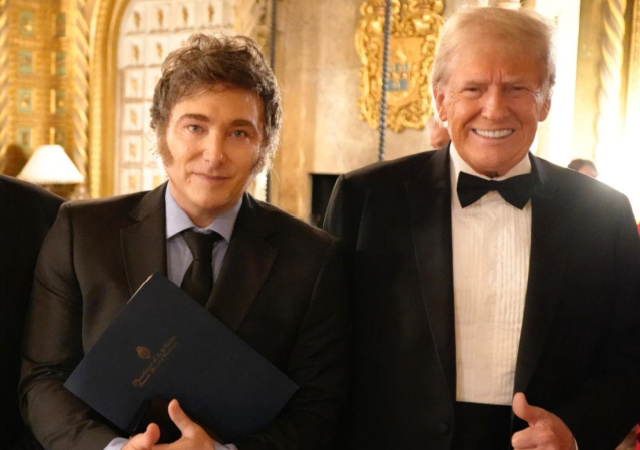
Argentina has now formally withdrawn from this organization. President Javier Milei initiated the Argentine exit in March of last year.
“Today, Argentina’s withdrawal from the World Health Organization (WHO) becomes effective, one year after the formal notification issued by our country,” said Foreign Minister Quirno in a post on the X social network, marking the one-year anniversary of the announcement.
Argentina “will continue to promote international cooperation in health through bilateral agreements and regional frameworks, while fully safeguarding its sovereignty and decision-making capacity in health policy,” Quirno said in his post on X.
The Milei administration announced the move in 2025 and completed the process within the timeframes established by international treaties, said Argentina’s Foreign Ministry.
Milei’s concerns about WHO mirrored Trump’s in many respects. Milei’s government argued that the WHO promoted prolonged lockdowns and other measures they consider unscientific and economically devastating, describing its pandemic response as driven by political pressures rather than evidence‑based medicine.
Officials also cited “deep differences” over health governance, complaints about rising financial contributions, and a desire to instead pursue bilateral or regional health cooperation while keeping full domestic control over health policy.
“Argentina will continue to promote international cooperation in health through bilateral agreements and regional forums, while fully preserving its sovereignty and its capacity to make decisions regarding health policies,” Foreign Minister Pablo Quirno said on X.
Last year, Argentina had declared that “the WHO’s recommendations are ineffective because they are not based on science, but on political interests.”
Argentina leaves the World Health Organization. Long live freedom, damn it! pic.twitter.com/7s66CcGDtv
— Milei in English – Official Account (@jmilei_english) March 17, 2026
As Argentina exits and more Latin American nations replace globalist leadership with one oriented more toward national sovereignty and prosperity, one has to wonder if more countries will follow the same trajectory.
The bigger question is whether other leaders who share President Trump’s world view, as President Milei clearly does, decide to take similar action.
If more states pull out – and that is admittedly a big if – the credibility of the WHO as the one truly global health body could take a hit.
WHO will find it hard to operate if it takes more hits. The organization has already trimmed back its 2026–2027 budget from $5.3 billion to $4.2 billion in the wake of the U.S. departure.
To make up for the shortfall, member nations that remain will have to ante up more to stay in the organization.
Member countries of the World Health Organization (WHO) will pay 20% more in membership fees as part of a revamped budget amid significant funding deficiencies due to the US withdrawal.
The ‘assessed contributions’ paid by WHO member states are a key source of funding for the organisation, though they cover a relatively small portion of the budget as a whole. Voluntary contributions from member states, philanthropic foundations, and private donors, among others, inject a large amount of cash into the annual budget. The higher fees for member states will add $90m in annual income to the WHO.
The 2026-2027 annual budget was approved yesterday (20 May) at $4.2bn, a knockdown from the WHO’s previous aim of $5.3bn. The organisation stated the downsizing was due to “financial constraints”. It is also significantly down on the 2024-2025 budget of $6.8bn – the organisation approves its budget programme biennially.
If the WHO had demonstrated true scientific rigor during the COVID crisis by demanding evidence instead of parroting Beijing’s talking points, valuing data over politics, and showing flexibility toward models like Sweden’s rather than doubling down on draconian lockdowns, the organization would not now be scrambling to salvage its finances and credibility.
The leadership’s choice to protect narratives instead of public trust continues to cost the organization dearly. As the U.S. and now Argentina walk away, other nations are watching closely.
I suspect a few more Latin American nations will take Argentina’s path, and work on bilateral and regional healthcare agreements that best suit their own nations and the needs of their citizens.
WHO’s woes are likely only beginning.
🚨 BREAKING: Argentina has officially WITHDRAWN from the World Health Organization thanks to President Javier Milei — following President Trump's lead
LET'S GO! Milei, a right-wing populist, is a BEACON of what every leader in Latin America should do
He's a great ally 🇺🇸🇦🇷 pic.twitter.com/Y8Lt3akhYe
— Eric Daugherty (@EricLDaugh) March 18, 2026
Donations tax deductible
to the full extent allowed by law.





Comments
take thattt you letfy csuckers
Not a hair’s difference between the two.
Argentina is leaving WHO. WHO’s next? WHO cares?
Has anyone been watching the market for pearl necklaces? I’ll be it’s been booming for a while now.
“I’ll bet”
I like the cut of his jib!
I’ll now hear arguments from Mr. Milei and Mr. Trump as to why we should continue to remain in the U.N. if we’re not to remain in the W.H.O.
A distinction without a difference.
“the WHO’s recommendations are ineffective because they are not based on science, but on political interests.”
Conquest’s Second Law:
Any organization not explicitly right-wing sooner or later becomes left-wing.
What does the WHO do for 1st world countries other than beg for money to transfer to 3rd world countries? Nothing much. It’s all a money transfer scheme.
It doesn’t just transfer money to 3rd world countries. It also transfers money to useless functionaries who would otherwise be forced to get real jobs.
Slowly, then all at once…
Spent a day touring Buenos Aires couple weeks ago. Seems a country very much on the upswing. With the caveat that the tour likely avoided unpleasant stuff, the city was clean, things worked. The tour driver volunteered that after 50 years of mismanagement, they were in the right track. It appeared that way to me.
WHO let the dogs out and the world is organizing to mitigate their progress.