


24 State AGs Target National Academies Over Alleged Climate Lawsuit Bias
Montana’s Republican Attorney General Austin Knudsen is leading the charge against woke institutional capture by taking aim at the National Academies of Sciences, Engineering, and Medicine (NASEM).
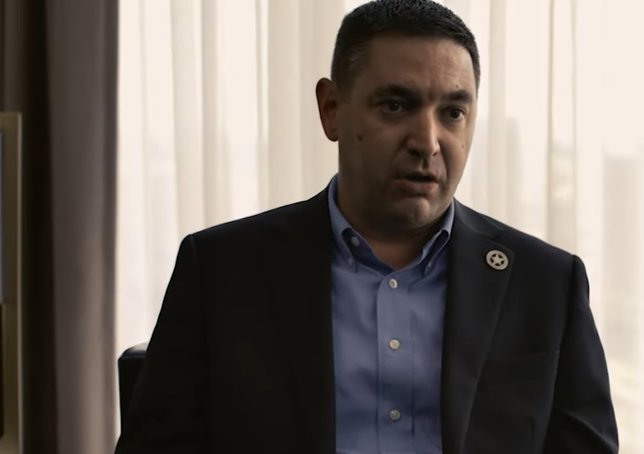
Montana’s Republican Attorney General Austin Knudsen is leading the charge against woke institutional capture by taking aim at the National Academies of Sciences, Engineering, and Medicine (NASEM).
In a new letter, a coalition of 24 state attorneys general, spearheaded by Knudsen, is urging the Trump Administration to scrutinize every dollar of federal funding flowing to NASEM, citing what they describe as pervasive left-wing bias masquerading as “independent” scientific expertise.
A March 11, 2026, letter was sent to Secretary of War Pete Hegseth, Secretary of Transportation Sean Duffy, and Secretary of Energy Chris Wright. The AGs urged them to review all federal contracts and grants with NASEM and consider suspending or debarring it from receiving federal funds due to alleged bias and performance issues.
Specifically, this letter focuses on the climate science section of the Reference Manual on Scientific Evidence (created to help both lawyers and judges understand and manage complex scientific and technical evidence in court cases). It asserts that “The Chapter” was created to sway judges in high-stakes climate lawsuits. The states’ AGs argue that its preparation was funded by groups that support climate-related litigation, written by scholars who reportedly lack strong expertise in climate science and have connections to advocacy groups involved in such cases, and was influenced by a lawyer representing climate plaintiffs.
JUST IN: 24 state AGs, led by Montana Attorney General Austin Knudsen, are calling on the Trump Administration to investigate ALL federal funding going to the National Academy of Sciences, Engineering, and Medicine (NASEM), following reports highlighting their extreme and… pic.twitter.com/jGByDAjZvg
— Will Hild (@WillHild) March 11, 2026
In their letter, the state attorneys general note that the federal suspension or debarment rules may apply when an organization that receives government funds violates ethical or integrity standards. In this case, there are three main reasons those rules could be triggered…and there was plenty of triggering related to the distribution of funds.
Under “conflicts of interest,” a chapter of the Judicial Climate Manual was funded partly by an $875,000 NSF grant. However, the people who created it did not fully disclose connections to funders involved in climate litigation (through the firm Sher Edling). The manual was influenced by groups that promote climate activism in the courts, and at least one author worked under a lawyer linked to those funders. This lack of transparency violates NSF’s rules that grant recipients must disclose financial ties and avoid inappropriate influence on research.
Contrary to those standards, the Chapter (i) was “made . . . possible” through a grant from a Sher Edling climate litigation funder;13 (ii) was designed with input from people associated with the Climate Judiciary Project (“CJP”),14 which has the stated goal to develop “a body of law that supports climate action;”15 (iii) was crafted to influence judges who might otherwise be “skeptical” of plaintiffs’ climate science;16 (iv) was authored by two academics employed by Columbia climate centers funded by Sher Edling’s climate litigation funders17 (with one author supervised by Michael Burger, a Sher Edling attorney actively leading pending climate-change cases);18 and (v) pending climate-change cases)….
Under “improper peer review“, NSF requires that funded work undergo fair and ethical peer review, which includes inputs from reviewers with differing viewpoints. In the cate of “The Chapter”. only reviewers from Columbia University centers funded by the same climate litigation sources were acknowledged and none representing dissenting views participated in the critical “peer review process”.
Finally, under “lack of objectivity and possible research misconduct“, “The Chapter” presents climate attribution science as more certain than global scientific consensus supports. For example, it asserts that scientists can quantify human-caused contributions to specific damages, when the Intergovernmental Panel on Climate Change says such direct causation cannot be definitively proven. These exaggerated claims and misleading statements could amount to “research misconduct”, and are clearly a sound basis for federal exclusion under contracting rules…especially those related to “science”.
The Chapter also overstates scientific evidence, such as by warning that the El Niño weather pattern “may . . . be impacted” by human-caused warming,29 even though the IPCC has said it is “virtually certain” that El Niño will continue.30 The Chapter’s material misstatementsmay be “research misconduct,” which courts have upheld as a basis for exclusion under the FAR or NCR.
It must be noted that an earlier letter from Knudsen as part of a 21-state AG coalition informed the National Academies that “The Chapter” in Reference Manual on Scientific Evidence, Fourth Edition is biased, politically motivated, and written by advocates involved in climate litigation, so it should be removed from all versions just as the Federal Judicial Center has already done. They also demand an explanation of why the chapter was included, how many copies were distributed, and what steps will be taken to prevent similar advocacy-focused material in future editions.
Hopefully, Knudsen and his fellow attorneys general succeed in forcing real consequences for institutions that dress up advocacy as “science,” so that genuine scientific work can be rigorously and honestly understood, reviewed, and debated in the courtroom…where it makes an enormous impact on lawyers, litigants, and the rest of our society.
Donations tax deductible
to the full extent allowed by law.



Comments
not sure how the mid terms are going to play out but if we dont get some maga in congress
omar is going to be head of finance or be given lead position at the Fed
It’s worse. Climate expertise is not peer reviewed by anybody but climate experts, in particular not peer reviewed by experts in the tools they use.
The result is climate convention without regard to mistakes in physics and mathematics.
Sheldon Whitehouse could not be reached for comment.
“In the cate of “The Chapter”. only reviewers…”
Should likely be: “In the case of “The Chapter”, only reviewers…” (Note both corrections.)
“The Chapter’s material misstatementsmay be ‘research misconduct…'”
(As a quote from the letter, this may be in the original or may be a transcription error.)
We heard rumblings of this last year and I wondered if it had been dropped or if someone would finally step up and take aim at this judicial capture. I had hoped it would be the Trump Administration but they do have their hands full.