


U.S. Geological Survey Report Shows Massive Untapped Oil, Gas Reserves in Texas
An estimated 1.6 billion barrels of oil and 28.3 trillion cubic feet of natural gas in famous Permian Basin may now be technically recoverable,..showing while resources matter, innovation can make all the difference.
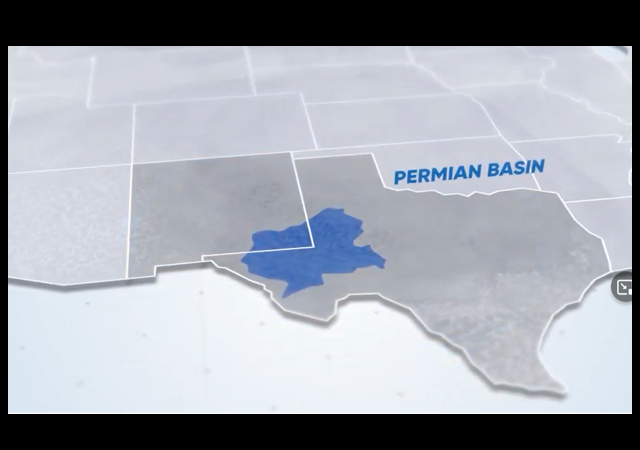
Legal Insurrection has featured the Permian Basin several times in our reports.
The Permian Basin in Texas is a critical hub of American oil and natural gas production, supplying a large share of the nation’s total output and underpinning our energy security. Its activity generates tens of billions of dollars in taxes and supports hundreds of thousands of jobs, making it a cornerstone of state and regional economies.
Previous stories included several stories about the Biden administration trying to halt fossil fuel enterprises in the region by hiding behind the Dunes Sagebrush Lizard and the magical global-warming threat of methane.
The region is back in the news, and this time the news is more positive for those of us who appreciate a short supply chain and affordable fuel prices. A new report from the U.S. Geological Survey (USGS) shows that the area’s reserves contain 1.6 billion barrels of oil and over 28 trillion cubic feet of natural gas.
A recent geological survey released by the U.S. Geological Survey (USGS) on January 14, 2026, has confirmed that the Permian Basin in Texas contains an estimated 1.6 billion barrels of undiscovered, technically recoverable oil, along with 28.3 trillion cubic feet of natural gas in the Woodford and Barnett shale formations. These findings add to the Permian Basin’s already significant oil reserves and reinforce its continued central role in the U.S. energy landscape.
The survey emphasizes the massive untapped potential in Texas, underscoring how much still remains beneath the surface of this prolific region. As the U.S. faces growing energy demands, these newly confirmed reserves could play a critical role in ensuring the country’s energy supply in the years to come. The announcement has sparked renewed interest in the future of U.S. energy security, particularly given the scale of these resources.
Geological Survey Confirms Huge Texas Oil Discovery https://t.co/9lJb4Fa0RP
— Papa Kent (@kkrause99) January 19, 2026
What boosts these numbers is new technology that makes previously economically inaccessible deposits usable.
What makes the finding notable is not just the scale, but the location. The Woodford and Barnett shales stretch from the Permian Basin into southeastern New Mexico, and they sit far deeper than many of the formations that made the Permian an energy powerhouse. In some places, they occur up to 20,000 feet below the surface, the USGS said.
That depth helps explain why these layers have not been the stars of the Permian’s decades-long boom. The shales have produced about 26 million barrels of oil since the late 1990s, which the agency described as about one day of national consumption.
The new assessment focuses on what could still be extracted, resources that were not counted in previous tallies because they had not been discovered or were not accessible with older tools. The USGS noted that advances in production technology have changed what is possible in formations that were once simply too deep to reach economically.
How quickly the new reserves are tapped depends on the global oil market, as significant infrastructure and development will be needed to make the venture profitable.
The reserves are deeper than the formations where oil companies traditionally drill. It’s also hotter, meaning there will be more associated gas. Both the depth and the additional gas pose cost challenges to oil and gas producers.
…”And then the other complexity is just really trying to identify the sort of sweet spots,” [Toti Larson, principal investigator at the Bureau of Economic Geology’s Mudrock Systems Research Laboratory at the University of Texas] said. “Where across the Permian Basin is the Woodford most likely going to produce oil? And so I think that’s what makes the Woodford still an exploration target.”
Flagging oil prices don’t help these exploration efforts, Larson said. But if the price signals change and oil companies increase drilling efforts, the Woodford and Barnett present an untapped opportunity.
“Neither of them are small. And so if they are successful,” he said, “then that really does have a strong potential to increase oil and gas production out of the Permian Basin.”
In a nutshell, American innovators turned a “mature” basin like the Permian into a frontier all over again. The Woodford and Barnett shales were long known but largely overlooked; it took advances in geology, data analysis, and drilling techniques to identify the region’s enormous potential.
That is an important lesson for U.S. energy security: the resources themselves matter, but innovation can make all the difference. By continuing to invest in American science, engineering, and technology, the U.S. can squeeze more value out of existing basins, reduce dependence on hostile suppliers, and stabilize prices for American families and industry.
In a world where geopolitical shocks can disrupt supply overnight, energy security will belong to nations that can rethink the familiar and unlock what others miss. This new Permian assessment is not just a story about barrels and cubic feet; it is a reminder that when our nation’s businesses are given the tools and freedom to work, they can turn uncertainty into opportunity and keep our energy future firmly under American control.
Donations tax deductible
to the full extent allowed by law.






Comments
Should we still invade Texas? Ceremonially of course.
Mexico, though, would probably like to.
They kind of have.
The better question is “should Texas secede?” And if we get President Newsome (or worse, AOC), then the answer is “hell, yes!”
Or Spanberger.
Apparently there were far more dinosaurs than previously thought.
In any case, this is yet another example that any decision made by the Biden administration is contrary to the best interests of the American people.
It’s freaking 9 degrees here this morning. My access to natural gas is the only thing standing between me and hypothermia.
Dinosaurs: Bernie Sanders and every marxist/socialist on the planet.
The tunnel-vision of the Greens drives me crazy and has for decades. They aways insisted that because we were running out of oil we could reach with 1950’s technology, we must shift to the underdeveloped technology of windmills and solar panels. When we objected because the these didn’t work, they said, ” but they are improving every day, and soon they will be good.”
However they never considered that oil drilling technology could be improved. Then suddenly: fracking appeared. Of course that was going to destroy the planet too, but have you heard of any fracking-related earthquakes or polluted water supplies in the past several years? Trust me, if there were even ONE you’d have hears about it repeatedly.
In summary, I think we have a couple of hundred years in which to refine nuclear power, before we really do run out of oil.
To the greens old/gas exploration is kind of like climate change:
Climate change: The world will end as we know it in 10 years (first uttered probably in the 70s)
Fossil Fuels: Only 30 more years before we run out (als0 first uttered probably in the 70s)
Th Socialists ran out of good ideas in the 1800s.
Don’t listen to them or their descendants.
Good news! This should ensure a couple more seasons for Landman.
In all seriousness, as someone who had a career in oil and gas and loves the industry, we must ramp up nuclear energy. It is the future of mankind.
texas is also leading in renewables
that hurt them in that disaster from a few years back where the electrical grid was destroyed by the lefts agenda
Make that area off limits for Muslim Epic City type developments.
People don’t realize that we don’t run out of oil. We run out of oil at various price levels. We ran out of $20 a barrel oil. Then we ran out of $30 a barrel oil. But, we had p[enty of $50 a barrel oil left in the ground.
The Permian Basin is hardly untapped.
“Massive?” Better than nothing, but it’s 3 months of production, or 2% of total U.S. reserves.
Easier said than done. Horizontal drilling requires assembling much land than vertical drilling. That blows up the cost number fast.