


New Lawsuit Claims Ziploc Plastic Bags Dose Food with Microplastics
The complaint contends that despite the risk of microplastic exposure and food contamination, there is no warning, disclaimer or disclosure on product packaging.
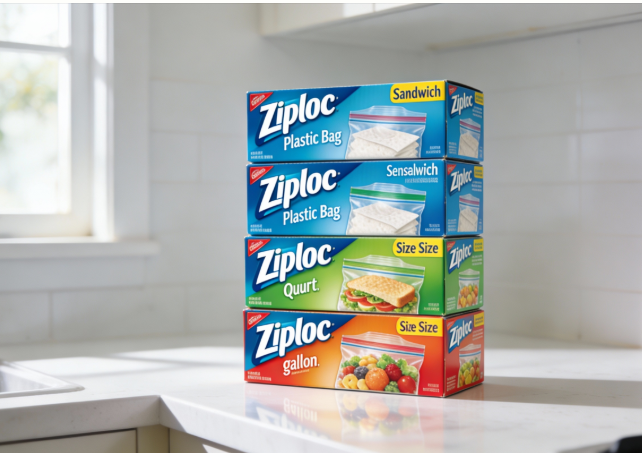
If you look in my pantry, you will find it stocked with plastic Ziploc bags of all sizes.
In part, it’s because I find them helpful for food storage as well as some of my work activities. I am sure many Legal Insurrection readers use sealable plastic bags daily without trepidation.
Now, in the land of the setting Sun and lunatics, a California woman is suing the maker of these bags because they supposedly emit microplastics.
The lawsuit — filed by Linda Cheslow of Santa Rosa, California, in the U.S. District Court for Northern California April 25 — claims that Ziploc’s assertion that its products are freezer- and microwave-safe is incorrect and misleading, causing customers to unknowingly expose themselves to dangerous microplastics “during routine kitchen practices.”
“In reality, these Products are made from polyethylene and polypropylene — materials that scientific and medical evidence shows release microplastics when microwaved and frozen — making them fundamentally unfit for microwave and freezer use,” the lawsuit states.
The complaint names several specific products, including but not limited to: pint-, quart- and gallon-sized freezer bags; quart- and gallon-sized slider freezer bags; quart- and gallon-sized slider storage bags; and storage containers.
Ziploc is being sued over claims its bags release harmful microplastics into food increasing risks of cancer and dementia. pic.twitter.com/EMlNpdMSyY
— Dr. Dennis Walker (@drdenwalker) January 11, 2026
The lawsuit will focus on the lack of warnings and looks like it will encompass all impacted American residents.
The complaint contends that despite the risk of microplastic exposure and food contamination, there is no warning, disclaimer or disclosure on product packaging to inform consumers of the potential health hazards posed by using the items as directed. This is particularly dangerous given that the Ziploc products are meant to be used on a daily basis during routine kitchen activities, the filing argues.
…Reasonable consumers would not have paid as much for the Ziploc containers and bags, or bought them at all, had they known the products could leach harmful microplastics into their food, the case asserts.
The Ziploc bag lawsuit looks to represent all United States residents who, during the applicable statute of limitations period, purchased any of the Ziploc products listed on this page for purposes other than resale.
I have covered the topic of microplastics before, as it looked like it might be revving up to be the next big environmental cause to target big business and corporate dollars.
I suspect the arguments supporting this case will be countered with that from agencies that have asserted that microplastics are not known to cause harm to human health. For example, this is the current information on the subject from the Food and Drug Administration (FDA):
The presence of environmentally derived microplastics and nanoplastics in food alone does not indicate a risk and does not violate FDA regulations unless it creates a health concern. While many studies have reported the presence of microplastics in several foods, including salt, seafood, sugar, beer, bottled water, honey, milk, and tea, current scientific evidence does not demonstrate that the levels of microplastics or nanoplastics detected in foods pose a risk to human health.
Additionally, because there are no standardized methods for how to detect, quantify, or characterize microplastics and nanoplastics, many of the scientific studies have used methods of variable, questionable, and/or limited accuracy and specificity.
The case is interesting because of how ubiquitous plastic bags for food storage and preparation are. I suspect the debate over microplastics and consumer safety will continue, despite existing evidence indicating that these particles pose no proven health risk.
Still, it’s difficult for the public to trust the science when so much research and regulatory guidance have proven inconsistent or untrustworthy over time.
Image by perplexity.ai.
Donations tax deductible
to the full extent allowed by law.





Comments
The evidence on microplastics is deeply flawed: https://www.theguardian.com/environment/2026/jan/13/microplastics-human-body-doubt
Microplastics are simply not detectable in the human body; the indirect evidence cannot distinguish between fat and plastic.
If you offer grants “to find microplastics” then they will be found.
Unfortunately, the state of science these days is atrocious. Publish first, get attention, ask questions later.
I was going to point out the same thing. Some people cannot abide the modern world and want us to return to some romantic idea of an imaginary utopian world without modern conveniences. BTW, who is funding this anonymous California woman?
Last I checked –
As the saying goes – What goes up, must come down.
To paraphrase – what goes in, must go out!
Nature Medicine has just published a paper completely obliterating the oft broadcast “studies” of microplastics’ in the human brain that have been sensationalized by the ignorant, lazy press. In commentary rare for a scientific paper, those studies were dismissed as “jokes.”
Can anyone be surprised?
Global warming
Food pyramid
Intelligence being influenced mostly by environmental factors
Diversity is our strength
Not Proven – that these particles cause damage.
That needs to be proven at trial before any claims that product X introduces them even matters.
There needs to be more penalties for lawyers who bring frivolous lawsuits.
And judges that allow them to proceed need to be kicked off the bench.
A trial court is the WRONG venue. Rules of evidence restrict what is permitted at trial, and a single judge and a few lawyers is the WRONG GROUP to make BROAD POLICY DECISIONS. This is why we have LEGISLATURES.
Doesn’t this chick have to show actual harm in order to even file the suit?
What is her standing? If she claims to know the harm that will be done then she is protected from buying these bags. So who is she suing for?
It seems to me that this sort of issue is one that would have to be petitioned to the relevant government agencies to regulate as this idiot thinks they should be. It is not to be sued in court and have some retard jury and a demented judge lord over when there’s no harm shown and nothing but speculation to allow leftists to further dismantle American industry.
That’s the insidious part of California’s environmental legislation. Standing is not required. Anyone can bring suit, and the person who successfully sues gets a big cut of the proceeds.
The same is true of ADA accessibility suits.
Sorry, my legal eagle friends. This is on you and your unwillingness or inability to police your own in the product liability failure-to-warn business.
It is 100% legal extortion and if it’s not curtailed – and curtailed severely – it’s going to ruin the free market.
Case in point is the ongoing glyphosate failure-to-warn suits, especially Monsanto v. Durnell that was taken up by SCOTUS on Friday.
There is so much disinformation surrounding this issue that it would take days to explain it. Suffice it to say that you can either have a full belly or you can have wealthy tort attorneys like RFK, Jr.
You cannot have both.
“Additionally, because there are no standardized methods for how to detect, quantify, or characterize microplastics and nanoplastics, many of the scientific studies have used methods of variable, questionable, and/or limited accuracy and specificity.”
Oh, what to do? I know. Let’s have the trial lawyer bar set those standards. Who could argue with their expertise, motivations and objectivity? I mean, it’s not like they’re just looking for a nice class action settlement.
When we buy large amounts of meats to divide and freeze, I wrap them in waxed paper before putting them in zipper bags to go in the freezer. They’re less messy to thaw. If it keeps alleged microplastics away from them, that’s only a secondary benefit.
.
We are dealing with a fallacy here.
“Microplastics are not known to cause harm to human health” is not the same as “Microplastics DO NOT cause harm to human health”.
The only true statement as of today is: “We DO NOT KNOW if microplastics cause harm to human health”.
Myself, I do believe they most likely do cause harm and I have made a personal choice to reduce the use of plastic in my everyday life, including teflon cookware. I got rid of all teflon and now only use stainless steel and cast iron for cooking. I replaced almost all plastic containers with glass. I still sometimes use ziplock bags for storage, but I try to be responsible about it, choosing glass containers when possible. I also still use plastic bags at the grocery store, but I try to be responsible about it.
All about balancing convenience and responsibility. Period.
Should we blame the companies that make these products? Categorically NO. It boils down to personal responsibility. This woman is a dishonest P.O.S. looking for a payout. She reminds me of the one that sued Nutella years ago.
And the lawyers that took the case? Yeah, “bloodsucker parasites with a suitcase” if anyone gets the reference.
The lawsuit completely left out pico, femto, and atto plastics, not to mention zepto and yocto.
Come on, if you’re going to sue, go for the whole thing man!!!
Simple solution. Add this label: “Microplastics from Ziploc bags are known to cause cancer in the State of California. Move somewhere else.”
Good one.
First world non-problems.
Here in Arizona, a report just came out listing all the community and municipal wells that are overlimit on arsenic. Our Californicator contingent are Highly Concerned, whereas the old-timer natives realize that they grew up drinking from wells with three times the arsenic, all of which were considered perfectly safe under pre-EPA government standards… and almost certainly were.
Here is a significant point, and not just for environmentals. When I started out as an allied health professional, the upper limit to cholesterol was 400. Now it is 200. Why? I think because the former number didn’t affect significantly the health outcomes (since, in my research, it isn’t the main driver of heart disease) so “they” had to lower it. It’s the same with blood pressure.
Hopefully someday these “standards” will revert as did the use of butter and eggs!
Actually, after 30 years in the cardiovascular space I would add this to your mention of cholesterol. If 400 was acceptable and many adults tested to that level, there would be comparatively little need for statins.
However, let researchers who are funded by Pharma postulate on safe levels of cholesterol, they will be likely to find “safer” levels which require a lifetime of statins.
Voila, cash cow patients for life…
Mr Peabody and Sherman built up a poison resistance level in Lucrezia Borgia’s husband that allowed him to survive his wife’s eccentric seasoning tendencies, via low level exposure.
Can e ziploc her head for a week and see if there is any deleterious effect?
Who’s your control? Andy Kaufman?
how about Don Lemon.
Lemon is more of a pathogen than a plastic.
Good one.
If ziplock is found liable in some way about microplastics, why just ziplock brand plastic bags? Even a casual glance suggests the entire food and medicine supply chain relies on plastic packaging.
In an era when a tobacco company can claim immunity from health lawsuit on the basis of “we printed the disclaimer the government forced us to print,” I can’t believe Ziploc couldn’t make the same sort of claim of “we met all government regulatory requirements.”
By the way, I love that photo.
I always put my sensalwiches in the Quurt Size Size.
Do they use these bags at the Learing Center?
They eat them, along with the contents.
California woman is suing the maker of these bags because they supposedly emit microplastics.
Demopukes can’t define what a woman is unless it has a biology degree. Case has no merit, by definition.
Ziplock plastic bags have been on the market in the U.S. since 1969.
Even allowing 25 years for plastic bags to become ubiquitous, the should be some empirical evidence of harm noting that it impossible to prove a negative
What’s your favorite flavor of Ziploc bag?