


New China Deal Buys U.S. a Reprieve in Race for Critical Minerals and Rare Earth Elements
The Chinese may be beginning to regret the threat to global supplies, as the U.S. begins gutting its monopoly with mine development and international agreements to process materials.
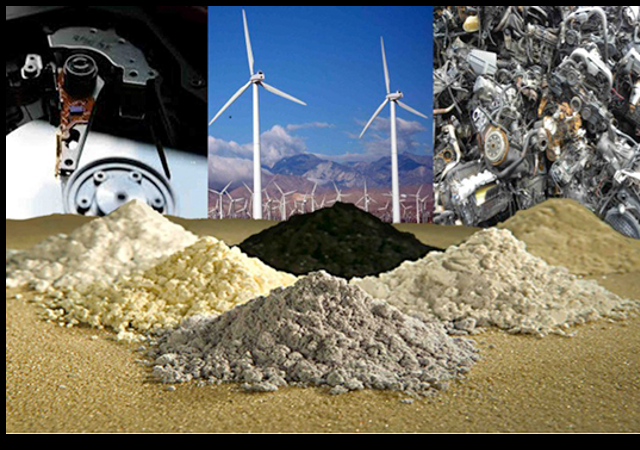
There have been some fascinating developments related to the U.S. access to rare earth elements and critical minerals essential for modern technology, defense capabilities, and communications equipment.
To begin with, a new deal has been struck with China, which gives our country a reprieve from a spate of export controls on these substances that have been in effect since 2023.
On October 30, the White House announced a deal with China that it later said would “effectively eliminate” all current and proposed export controls on rare earths and other critical minerals. This followed China’s decision in April to virtually halt exports of rare earths and its announcement in October of further restrictions that were expected to chokehold exports of critical minerals to the United States.
“China will issue general licenses valid for exports of rare earths, gallium, germanium, antimony, and graphite for the benefit of U.S. end users and their suppliers around the world,” the White House said on November 1.
“The general license means the de facto removal of controls China imposed since 2023,” the White House said, although industry insiders are awaiting clarity on the scope and impact of the new licenses.
The agreement “is clearly a good move for the global economy because it will take time to build up the strength of the supply chain outside China,” said Barbara Humpton, the CEO of USA Rare Earth, which owns the mining rights to the Round Top Deposit of heavy rare earths in Texas and is building a 5,000 ton magnet production facility in Oklahoma.
However, the deal may be too little too late… for China. The export curbs have apparently lit a fire under American innovation.
Since China's export suspension in April, at least nine U.S. companies have announced or advanced rare earth processing/separation or magnet production facilities.
We might be seeing a 'fracking situation' with rare earths, where foreign lockouts lead to American onshoring. https://t.co/TV7BDDf928 pic.twitter.com/KcWFmjDO3j
— Crémieux (@cremieuxrecueil) November 4, 2025
The Trump administration and Congress have been moving the end Biden-era restrictions on mining in Alaska. This is particularly timely, as Alaska’s Graphite Creek project has recently confirmed the presence of rare earth elements (REEs) in its deposit, creating major news in the North American mining sector.
Recent geological investigations at Graphite One’s Graphite Creek facility in Alaska have revealed a potentially transformative development for North American critical minerals energy security. In November 2024, the company confirmed the presence of five permanent-magnet rare earth elements within garnet-bearing rocks at the same location designated for graphite extraction in their February 2025 Feasibility Study. This Graphite One rare earth elements discovery positions Alaska’s Seward Peninsula as a potential source of two Defense Production Act Title III materials in a single mining operation.
The identified elements include neodymium, praseodymium, dysprosium, terbium, and samarium, each critical to permanent magnet manufacturing and defense applications. Furthermore, this development reflects broader mining industry trends towards dual-commodity operations that maximise resource utilisation from single deposits.”
🚨 BREAKING: In a massive blow to China, a project accelerated by President Trump just confirmed that Alaska's Graphite Creek contains RARE EARTH ELEMENTS
This is HUGE for ending our reliance on the CCP, just like Trump promised.
START MINING IT! China hates this.
"REEs found… pic.twitter.com/RIKHrJnSmU
— Eric Daugherty (@EricLDaugh) November 18, 2025
Meanwhile, during the recent meeting between President Trump and Saudi Arabia’s Mohammed bin Salman, a deal to move forward with a massive rare earths processing project has been struck.
So the U.S. and Saudi Arabia have agreed that an American company, MP Materials, whose biggest shareholder right now is the U.S. government, in fact, will own just about half of a rare earth refinery in Saudi Arabia. The U.S. and Saudi will mine and process the rare earths, and then that will go to the U.S., Saudi, and its allies in order to produce those magnets.
In the long run, the idea here is to reduce U.S., reduce Western reliance on China, because we saw China withhold some of those rare earth magnets in the conversations with President Trump this year. It also taps into something that Saudi officials say, that they are looking for the next big oil giant, like Aramco, and that it might be there in rare earths.
Signed an agreement with Saudi Arabia to boost investment & production of rare earth elements. Critical minerals power everything from hot water tanks to our defense, energy & tech sectors. @POTUS is securing our supply chain & advancing U.S. mineral independence with this deal! pic.twitter.com/SeMbDjALmX
— Secretary Doug Burgum (@SecretaryBurgum) November 19, 2025
Finally, Recent developments at the Cowboy State Mine in Wyoming reveal major progress in rare earth resource definition and project advancement, as the projected resource estimate has expanded with new analysis.
The updated mineral resource estimate (MRE) for the Cowboy State mine area is approximately 547.5 million tonnes using a TREO cut-off grade of 1,000ppm, the company said.
The MRE update incorporates the results from 18 additional channel samples and coincides with the acquisition of two new exploration drilling permits.
The channel sample results enabled reclassification of approximately 63.9 million tonnes to the indicated category from the inferred category from the Mineral Resource Estimate presented in the February 2025 updated CSM Scoping Study.
Additional mapping associated with channel sampling expanded the resource area to increase the CSM mineral resource estimate by approximately 4.5 million tonnes, ARR said.
American Rare Earths boosts Mineral Resource Estimate for Cowboy State mine https://t.co/Hq3vJ69syy
— MINING.COM (@mining) November 19, 2025
Donations tax deductible
to the full extent allowed by law.







Comments
China will cave because it hurts their economy heavily not to sell to us.
The CCP could very well underprice rare earth exports in an attempt to abort development of alternatives outside China. The US needs to pay attention to China’s pricing on rare earth exports, and be prepared to slap tariffs on Chinese rare earth exports if it thinks the prices are intentionally to low.
Or they could just strategically buy them at these prices and build a “Strategic REM reserve”.
Minerals tend to last a long time
The thing is, these minerals are rare not because theres feck all of it out there but because the extraction process is messy!
China doesnt have the ecolological issues we have hence their dominance in the market.
Refining some of the minerals requires over 200 different acid baths that are boiled away for the precipitates. Much nastier than an oil refinery.
And if they’re going to sell cheap we should buy for a stockpile and resell within country, as needed. It’s just good business and strategic. If they are going to try and price US production out of the market we will just buy from them at a discount and can use the savings to invest in our own mining with subsidies.
If they raise the price, we use our own production to force them back down or just buy less from them. This should have been done decades ago.
Interesting that China has about 8% ownership in MP Mining.
https://en.wikipedia.org/wiki/MP_Materials (The company was bought out of bankruptcy by 2 financial investors who I imagine, brought in a “specialist” who knew a thing or two about rare earth mineral mining.) https://en.wikipedia.org/wiki/MP_Materials “In June 2017, the Mountain Pass mine was purchased at auction for $20.5 million by a new entity called MP Mine Operations LLC (MPMO).[15] MPMO was a consortium formed principally by JHL Capital Group, a Chicago-based investment firm led by James Litinsky, along with QVT Financial LP and Shenghe Resources.[16] Shenghe Resources held a minority, non-voting interest.[17]”
Search term: coal ash rare earth minerals