


New MAHA Guidelines Could Melt Fears About Unsaturated Fats
Perhaps the toxic food pyramid topple will soon topple.
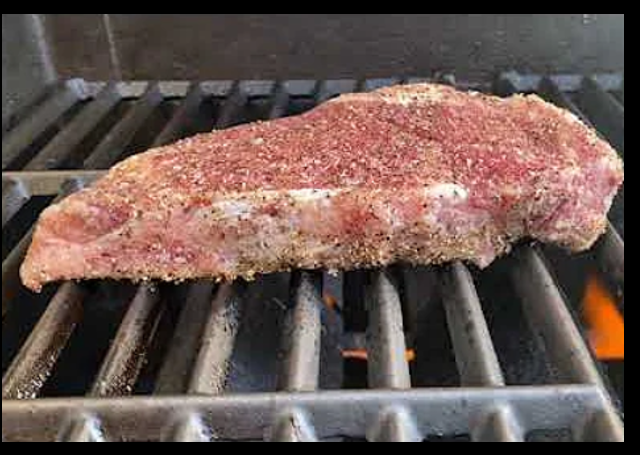
While President Donald Trump has been finalizing peace deals and trolling “No Kings” demonstrators, his team has been hard at work carrying out other critical aspects of his second-term agenda.
Health and Human Services Secretary Robert F. Kennedy, Jr., is pushing forward with his Make America Healthy Again (MAHA) objectives. There are plans to significantly alter U.S. dietary guidelines, shifting the emphasis toward whole foods and encouraging a higher intake of saturated fats, such as butter, cheese, and red meat.
Kennedy has argued that Americans need more trans and saturated fats, not less, saying foods like butter, cheese, milk and red meat have been unfairly demonized for decades. The updated guidance could be released as soon as this month.
Kennedy has long argued that refined carbohydrates and ultraprocessed foods are the main culprits of an unhealthy diet and that they have largely been ignored in conversations surrounding obesity and inflammation.
Currently, U.S. dietary guidelines, which are updated every five years, suggest Americans limit saturated fats to 10 percent of their daily calorie intake. However, the American Heart Association advises keeping that intake under 6 percent.
Of course, establishment “experts” and their media minions are already demonizing this proposal, despite the fact that Americans were far less obese when steak and butter were regularly on the menu. A classic example is from NPR:
If he follows through on this promise, it will cause “substantial chaos,” says Kevin Klatt, a nutrition research scientist at the University of California, Berkeley.
Many people still think of the dietary guidelines as synonymous with the food pyramid, which was phased out more than a decade ago in favor of a new graphic called “MyPlate.” In reality, they function primarily as a policy document.
I have long asserted that food science is the most unsettled science of them all. I noted how the sugar industry actually poisoned food science, so that fats were falsely identified as being the cause of many health problems. Red meat is healthier than “settled science” suggests.
The smear against eggs and their impact on cholesterol was bogus. As a reminder of what occurred 10 years ago:
The nation’s top nutrition advisory panel has decided to drop its caution about eating cholesterol-laden food, a move that could undo almost 40 years of government warnings about its consumption.
The group’s finding that cholesterol in the diet need no longer be considered a “nutrient of concern” stands in contrast to the committee’s findings five years ago, the last time it convened. During those proceedings, as in previous years, the panel deemed the issue of excess cholesterol in the American diet a public health concern.
Let’s take a look at what recent studies have to say about saturated fat, without the clutter of politics or paid science hacks.
A University of Minnesota study, reviewing data collected from 3,000 participants and published in The American Journal of Clinical Nutrition, found that very long-chain saturated fatty acids (found in nuts and dairy) may slow cognitive decline over a 20-year period. These particular saturated fats performed similarly to Omega-3 fatty acids in maintaining brain function, suggesting they play a protective role in neurological aging.
The research data was based on the ARIC (Atherosclerosis Risk in Communities) Study, in which participants were followed for over 20 years. Each participant provided blood samples at the study baseline to monitor different types of fatty acids, which was used to correlate mid-life fatty acids in blood with changes in cognitive function over time.
“Usually people think that saturated fatty acids are bad for your health,” Dr. Li said. “That’s why people avoid fats and have concerns about saturated fatty acids, but our study actually shows that those very long-chain saturated fatty acids are good for cognitive function.”
Dr. Li says saturated fatty acids are very abundant in the body and work as building blocks for cell membranes and energy sources.
A 2025 meta-analysis in the Japan Medical Association Journal concluded that reducing saturated fat intake does not significantly decrease cardiovascular disease or mortality risk. The review of nine major trials that included data from over 13,000 participants indicated that blanket restrictions on saturated fats may not be justified without considering individual metabolic profiles and the types of replacement nutrients.
The study findings indicate that the evidence available from RCTs [Randomized Control Trials} does not support SFA [Saturated Fatty Acid] restriction for the prevention of CVDs. Specifically, regarding statin administration, only 1 RCT showed no significant difference in CVD [Cardiovascular Disease] events and LDL-C levels between the intervention and control groups. To maintain the recommendation for SFA reduction in CVD prevention and LDL-C level improvement, further clinical trials are needed to evaluate its effects alongside statin administration. In such trials, researchers should address the sex-related differences, which would address the knowledge gaps that have contributed to the controversies.
Finally, in 2025, the American Journal of Clinical Nutrition reported that full-fat and low-fat dairy consumption are neutrally associated with cardiovascular disease risk, meaning dairy fat may not harm heart health as once thought. Milk, yogurt, and cheese—regardless of fat content—showed no clear link with higher CVD rates. Furthermore, there could be adverse health consequences on the ability to take up fat-soluble vitamins if there is too much SFA reduction.
It is increasingly recognized that overall dietary patterns have a greater relevance to cardiovascular health than SFA intake alone [13,70]. Broad recommendations to reduce SFA intake may also result in a lower intake of key nutrients such as vitamin D, calcium, iodine, and vitamin B12 if implemented without appropriate replacement strategies.
As much as I love pyramids, I am very happy to see the toxic food pyramid topple.
As much as I love pyramids (and those of you who know me well know how much), I will be happy to see the food pyramid topple. https://t.co/F4ajoofehy
— Leslie Eastman ☥ (@Mutnodjmet) October 21, 2025
Donations tax deductible
to the full extent allowed by law.







Comments
these food “scientists” continue to drive me crazier with their “do this” and their :”no do that” suggestions. I wish they would just STFU already.
My opinion is everything in moderation tends to be best. Also the less processed the better. In other words if it ain’t broken don’t fix it. The food companies will muck things up the more they process it.
“Everything in moderation, including moderation.”
As my dear old Gram used to say. Minus “including moderation.” She was not averse to foregoing moderation on our birthdays or holidays, however.
You are talking about a nutritionist or dietitian. A “food scientist” is more of a chemist than a biologist.
1. Science is never, ever settled. Anyone who says otherwise is lying to you. Science is contigent on the next experiment. Also, in this regard, reference to consensus is not science for the same reason.
2. IMO climate science is as spurious if not more so than nutrition science.
More so. The climate crazies really haven’t changed, At least the food scientists have made changes based upon new information. What screws up everything is the politicians and the media who can’t do anything but glom onto other people’s efforts and massage it to fit the narrative they wish to run with,
I think the food scientists have one hell of a lot more atoning to do. These people, along with government, have caused a gigantic public health problem in the form of epidemics of diabetes and obesity that emanated from their attack on dietary fat. On the scandal meter, I think that one is 10/10.
You are talking about a nutritionist or dietitian. A “food scientist” is more of a chemist than a biologist.
Way to totally miss the point. Really. Nice job there.
I didn’t miss the point at all actually. I can walk and chew gum at the same time and was issuing a simple correction.
But since you want to throw snark, I’m not peddling a book on here claiming it is “very scientific” and built on 15 years experience. I would expect an author in the sector to know the distinction.
Well that’s good news, because last night I had the best ribeye I’ve ever had, at a Mexican restaurant in El Paso, of all places
Some of the best Chinese restaurants have Mexicans in the kitchen.
Well, that’s true for you and me in Arizona, at any rate.
If you’re interested, we need to find a way to meet. I’ll be in Phoenix Friday morning assigning paperwork at Navy Federal credit union. I’ll be there by 10 AM.
Bell or Highland? I have half a chance at the former.
When you’ve got the old time entertainers living into their late 80’s with a life style of steaks, eggs, whisky and cigars it really makes you wonder about science.
Fats are critical for healthy brain development in children so when you see the government recommending that children drink skim milk, you really need to question the motives of the people making that recommendation.
Their motivation is whoever is greasing their palms.
I am the author of the self-published “One Potato Chip At A Time: The Fat Guy’s Honest Diet Guide.” I laugh at myself for publishing the 3,974,631st diet book, but at least it’s based on solid science and includes the sources.
RFK Jr. is on the money with saturated fat. Let me explain why.
In 1955, Dwight Eisenhower had a heart attack on the golf course. Like most heart attacks, it was caused by arterial sclerosis, a/k/a hardening of the arteries, when plaques build up on arterial walls and obstruct blood flow. These days, treated by stents and bypasses.
The academics traced the plaques to high cholesterol (still not proven), and the cholesterol to dietary fat (debunked). They went on the attack against saturated fat. People were told that eggs, whole milk, cheese, cream, butter, and beef were dangerous. This was the “scientific consensus,” and it built up through the 1960s and 1970s and is still with us, even though it’s been toppled.
By the mid-’70s, the federal government was on board, and they leaned on the food companies to reduce fat in their products. The era of “low fat” and “fat free” was born. Now, what’s food made of? The answer: fat, protein, and carbohydrates. There are limits to how much protein you can consume before messing with your digestion, so the fats were replaced en masse by carbohydrates.
Here’s the problem. Carbohydrates are fine in balance, but they metabolize to glucose and can overwhelm the pancreas and lead to diabetes. And unlike saturated fat, which produces satiety (feeling full), carbohydrates do much less of that. But they are, in the end, sugar, and the craving causes many people to eat too much.
The proof.
Between 1959 and 2015, diabetes went from 0.93% of the population to 7.4%, an eight-fold increase. Obesity went from 13% in the early 1960s to 43%. Morbid (severe) obesity from 1% to 10%. I’m not making it up. The sources are in my slim, cheap, quick-read of a diet book.
The solution? Well, Aktins had a pretty good one. So did I, a calorie restriction method based on the work of two researchers, Harris and Benedict, who studied food rationing during World War I. For good reason, they wanted to know how many calories people needed to maintain their weight. They figured it out, and published their formula in 1919. It works.
The other solution? Semaglutide, the active ingredient in Ozempic, Wegovy, et; al. Guess what it does? Yep, produces satiety, just like saturated fat. But for a lot more money and a lot more side effects. Thanks so much, Big Medical.
So that’s the story. Yeah, so I’m hawking a book. It cost me $2,000 to produce it, and the royalties have been about $230. It it one of the 94% of books that never make money. RFK Jr. should order 50 million of them and send them en masse to Americans. I’ll give him a great deal on the royalties. Anyone else, last time I look you can get one on Amazon for 3 bucks.
My dad has had two eggs, easy every for a long time. He’s only 92. And survived prostate cancer. (radiation therapy.)
Let me add something. It’s why I titled that book the way I did.
In devising their formula, Harris and Benedict made a crucial discovery. Human metabolism declines in a straight line after the age of about 25. As people get older, they need fewer calories. Eat the same in your 30s and 40s as you did in your 20s, and you’re going to get fat.
It’s not a matter of pigging out. It’s because you didn’t know the essential fact about metabolism. You got fat “one potato chip a time.” See, the calorie requirement decline is unnoticeable from one year to the next. But over a decade or two, watch out.
And, one buys the book where?
“Amazon for three bucks.”
The best $3 anyone could spend, but I have no illusions.
https://www.amazon.com/One-Potato-Chip-Time-Honest/dp/B0CQKNKPSY
The negative reviews are from liberals who didn’t buy the book but trashed it because I leave pointed comments on Facebook. LOL
I splurged and bought the Kindle edition.
Thanks, Grizz. I don’t read via Kindle so I have no idea whether you can share those. In any case, if you like it please leave a good review. Non political please. I really don’t want people thinking it’s a “MAGA” book. I wrote it before the ’24 election, and it’s based on experience that goes back >15 years. It just turns out that RFK Jr. and I think the same way about saturated fat. On some other issues, like “ultra processed food” and seed oils, I’m not part of his bandwagon.
You’ll see that the book itself says that I didn’t write it for any money but only in the naive hope that it somehow catches on. Everything is really scientific, old school, and I think the most important part is the material about metabolism. The main audience is middle aged people who got fat because they didn’t know about metabolism, and the secondary audience would be to younger people so they can avoid that widespread ignorance about metabolism.
Anyway, I hope you enjoy it. I think my royalty is about 3 bucks. Something like that. Which means I’m only about what, $1,770 in the hole. LOL
If one looks at the reviews, the negatives are from people who didn’t buy the book.
Fun fact: cholesterol is necessary for optimal brain health, and your body (i.e. the liver) will produce it. There’s no cause & effect relationship between cholesterol levels and heart disease.
Makes you wonder why Ancel Keys and his buddies were so keen to demonize it.
DDE’s heart attack was blamed more on red meat, not his chain smoking…
The lines we’ve been fed and reality are two very different things.
Correct! White Powder. White Death. was strangely not a book on cocaine, but the dangers of sugar. It was crushed and faded into oblivion, but was right over 50 years ago.
Per-capita consumption of sugars in the U.S. has fallen by 15%-20% since peaking 26 years ago.
The claim is that saturated fat raises cholesterol levels (false) and that high cholesterol causes the plaques that causes arterial sclerosis (also false). What’s true is that most heart attacks are caused by arterial sclerosis, but the rest of the causal chain is not true.
Looks like we need a Time Traveling Dietitian:
https://www.youtube.com/watch?v=5Ua-WVg1SsA
Thanks. Sent that to all my well-intentioned friends.
Very fun, and actually very accurate.
Sugar has been mentioned in the writeup. Better to look at consumption of “caloric sweeteners,” which include cane and beet sugar, corn sugar (a/k/a “high fructose corn syrup”), honey, and molasses.
Per capita consumption peaked in 1999 at 153.7 pounds a year, and fell to 123.6 lbs a year in 2023. Corn sugar peaked in the late 1990s, and now is less than cane and beet sugar.
About that HFCS that gets so much hysteria. There are two main varities, HFCS 43, which is used in food and comprises the majority of HFCS, and HFCS 55, which is used in soft drinks and juices. The numbers stand for the percentage of fructose vs. sucrose. Cane and beet sugar is 50% sucrose and 50% fructose. Thus, most “high fructose” corn sugar actually has less fructose than cane or beet sugar.
Cane and beet sugar, and HFCS, have contain about 4 calories per gram, or 50 calories per tablespoon.
I always learn something reading comments on LI. Thank you all for your inputs. (Yes, I check them unless they are the same ideas as I’ve read in other places.)
NOTHING works for 100% of humans. Fauci was wrong – “we’ll ‘vaccinate’ 100% of the earth’s population. Yeah, right.
Did RFKJ really say trans fat????? He’s wrong about that but I think the media is being dishonest about what he said. I’d like to see a direct quote where he said trans fat and not just saturated fat. Those two should not be lumped together.
He didn’t. In fact, it’s exactly the other way around. He’s against “trans fats,” i.e. hydrogenated vegetable oil. What is that? Blowing hydrogen through vegetable oil solidifies it. Hydrogenation started with peanut butter 100 years ago. Then shortening (Crisco is a prime example), then margarine.
RFK Jr. is anti-vegetable oil. I am unconvinced. He’s anti-“ultra processed” foods, and I disagree. I am agnostic on hydrogenation. One thing I do no do is lie about his views. That’s what liberals do.
Partial hydrogenation is the problem. That creates trans fats. If you are going to hydrogenate an unsaturated fat then you need to commit to it happening completely thereby making it saturated.
The makers were trying to have their cake and eat it too by making a shelf stable semisolid fat that was technically “unsaturated” and thus “healthy”. A trans fat is an unsaturated fat that is unhealthy because your body can’t break it down. Your enzymes only recognize cis unsaturated fats.
I doubt RFK jr is leading the parade in favor of transfats. I’ve read nothing to suggest he supports making the part of our diets. They are not the same as saturated fats.
Agreed but I’ve seen at least 2 pieces on the web that lump claims about what he said together saying he is calling for the return of both saturated fats and trans fats.
Anyone with a basic knowledge of lipid chemistry would know that there’s no such thing as a trans saturated fat (it’s a type of unsaturated fat that’s not found in nature).
Thats why I can’t tell if they are misquoting him out of sheer ignorance or intentional obfuscation to discredit him.
See my comment right above. Liberals are lying about him.
Back in the late ’40s or early ’50s my grandfather did research on cholesterol and diet. His conclusion was that unless you ate only cholesterol or no fats at all, cholesterol in your diet would have essentially no effect upon your blood cholesterol level.
I also saw a reference recently to a Dutch(?) study which concluded that the current cholesterol guidelines are wrong. It was a longitudinal study, and the folks who had both the fewest cardiac events and the lowest all-cause mortality were those whose levels were in the mid 200s. It was an inverted bell curve with both lower and higher levels (especially less than 200 or more than 300) showing increases in cardiac and all-cause mortality. I believe the less than 200 was almost as bad as the slightly over 300.
Every time someone tells me how bad fats are for me, I ask how the inuit survived on a diet of fish and seals for centuries with nary a carb passing their lips for years on end except for nursing babies who would get some in the breast milk.
From that book of mine: “Beware of modern nutritional dogma. It’s a bit ironic for me to say so, given that this book rests on nutrition research. But the nutrition establishment made a critical, even criminal, error when so many authorities launched a war on dietary fat in the 1960s and 1970s.”
Look at the Maasai as well. Milk, meat and fat make up the bulk of their diet yet the incidence of heart disease is extremely low.
Sorry, I just pulled a loaf of bread out of the oven. Red wheat berries ground into flour to add to a sourdough starter with a few other ingredients for bread. It is a hardy bread with a flaky crunchy crust.
Most of my veggies are through local venders. There is a few year round greenhouse operations that produce veggies for the Army that have roadside veggie stands.
My red meat is farm grown and processed through an abattoir. The same for pork. I buy fish/shrimp from local venders that get their product off the boats.
BYW: I can grow Vidalia onions in my back yard..
I don’t know about the trans fats. But I know damn well the body knows what to do with saturated fats. We evolved to eat that stuff and let’s be honest. If God didn’t intend us to eat animals then he wouldn’t have made them so delicious.
Steak & Shake now uses Beef Tallow to cook its fries.
I’m hoping McD’s goes back to this as well.
Otherwise, I’ll have to complete my time machine so I can go back and get some pre-1990’s fries.
When I was growing up in the 1960s and McDonald’s was cooking its fries in tallow, we liked the burgers but we absolutely LOVED the fries. Then the “health” weenies got to them, and I stopped even ordering fries after the early ’90s.
The same health weenies the wooden sit foot at a McDonald’s in the first place.
After WWII a lot of data was obtained from research done by German scientists. Some of it was dietary and food data. What was discovered was the complete disproval of the famous food pyramid that came out shortly after the war. What the Germans had found was the opposite of the pyramid yet American doctors and research people refused to consider it. I personally don’t pay any attention to all of the rantings about food. I do know things like smoking are very dangerous but when it comes to food, I eat what I like and do not over eat any one type of food. I’m 84 years old so it must be working for me!
Trump has made some really great appointments this time around.
One that has NOT been so great is his choice for Surgeon General.
Hasn’t done jack squat.
Surgeon General could be leading this particular effort on revising the infamous “food pyramid”. At a minimum, could be adding a strong supporting voice to what RFK Jr and HHS are trying to accomplish.