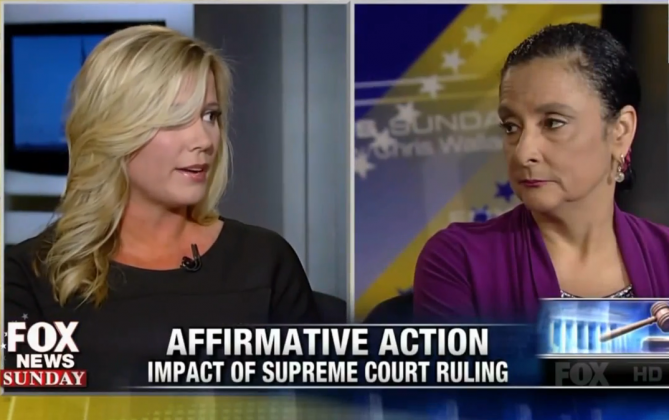


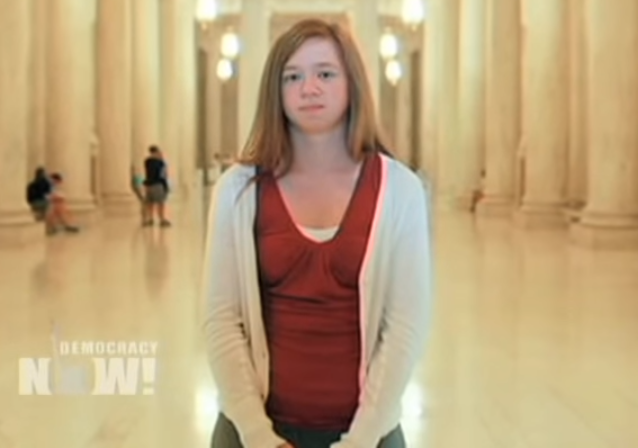
Lawsuits challenge affirmative action as discriminatory against Asian-Americans
Federal Court Complaints filed against Harvard and UNC-Chapel Hill...
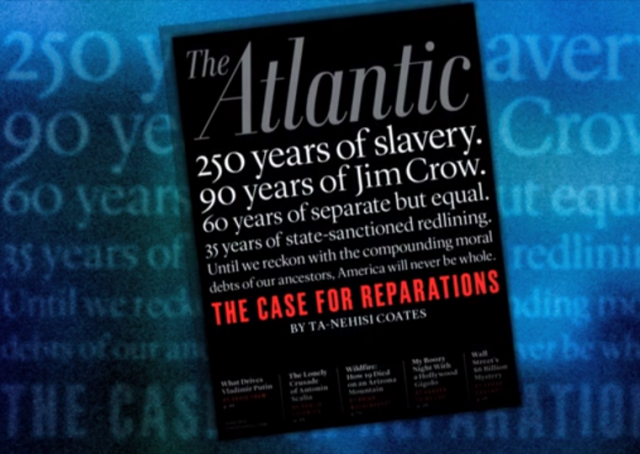
... the crime with which reparations activists charge the country implicates more than just a few towns or corporations. The crime indicts the American people themselves, at every level, and in nearly every configuration. A crime that implicates the entire American people deserves its hearing in the legislative body that represents them. .... No one can know what would come out of such a debate. Perhaps no number can fully capture the multi-century plunder of black people in America. Perhaps the number is so large that it can’t be imagined, let alone calculated and dispensed. But I believe that wrestling publicly with these questions matters as much as—if not more than—the specific answers that might be produced. An America that asks what it owes its most vulnerable citizens is improved and humane. An America that looks away is ignoring not just the sins of the past but the sins of the present and the certain sins of the future. More important than any single check cut to any African American, the payment of reparations would represent America’s maturation out of the childhood myth of its innocence into a wisdom worthy of its founders.Coates never gives the answer as to who gets what and how. And that's ultimately the problem with reparations arguments that are not based upon the people causing the harm paying the people directly harmed by specific conduct soon after the conduct is remedied.
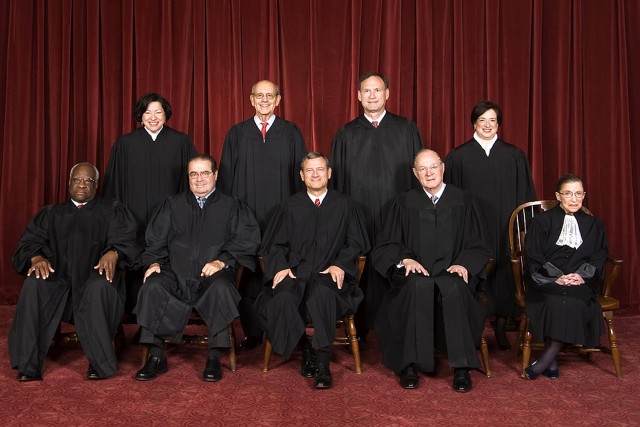
Sotomayor dissent: Removal of "race-sensitive" preferences equals "stacking the deck" and "forcing the minority alone to surmount unique obstacles"...
An analysis of the The Bar Passage Study (BPS) reveals that minorities are both less likely to graduate from law school and less likely to pass the bar compared to whites even after adjustments are made for group· differences in academic credentials. To account for these adjusted racial gaps in performance, some researchers put forward the "mismatch hypothesis," which proposes that students learn less when placed in learning environments where their academic skills are much lower than the typical student. This article presents new results from the BPS that account for both measurement-error bias and selection-onunobservables bias that makes it more difficult to find a mismatch effect if in fact one exists. I find much more evidence for mismatch effects than previous research ang report magnitudes from mismatch effects more than sufficient to explain racial gaps in performance.Here is part of our email exchange:
WAJ: I just want to confirm your ultimate finding in layman’s terms: There is evidence of a mismatch effect, and that effect is sufficiently pronounced as to account for differences in bar passage rates. Do I have that right? EDW: Yes this is accurate. Much of the difference in bar passage rates by race is explained by differences in academic credentials. But a significant gap still persists after controlling for these entering credentials. It is this remaining gap that the mismatch effect found in the paper can explain.Some other reading on the mismatch effect and related controversy:
The petition in this case challenges a highly unusualpractice followed by one District Court Judge in assessingthe adequacy of counsel in class actions. This judge insiststhat class counsel “ensure that the lawyers staffed on the case fairly reflect the class composition in terms of relevant race and gender metrics.” App. to Pet. for Cert. 35a. The uniqueness of this practice weighs against review by this Court, but the meaning of the Court’s denial of the petition should not be misunderstood.
The Supreme Court has another affirmative action case on its docket for next term, as explained by Jennifer Gratz (the plaintiff in Gratz v. Bollinger / U. Michigan), The two-faced defense of affirmative action (emphasis added): Though last week’s Supreme Court ruling in Fisher v. University of...
A follow up to the Supreme Court's decision in Fisher v. U. Texas. John Yoo writes at National Review (emphasis mine): Some conservatives are probably taking heart that the Court, by seven to one, reversed the lower court, which had upheld UT’s explicit use of racial preferences in...
[Note -- More decisions will be released Tuesday -- check back here at 10 a.m.] Full opinion embedded at bottom of post Via ScotusBlog live blog: 10:14 Amy Howe: The opoinion by Kennedy. The Fifth Circuit is vacated and remanded. 10:15 Amy Howe: The holding is because the Fifth...
Donations tax deductible
to the full extent allowed by law.
Founder
Sr. Contrib Editor
Contrib Editor
Higher Ed
Author
Author
Author
Author
Author
Author
Editor Emerita