


WHO Investigating Second Suspected ‘Plague’ Death Reportedly Associated with Siberian Lab
The U.S. State Department has also formally requested more information on the first incident of “pneumonia of unknown origin” from Russia.
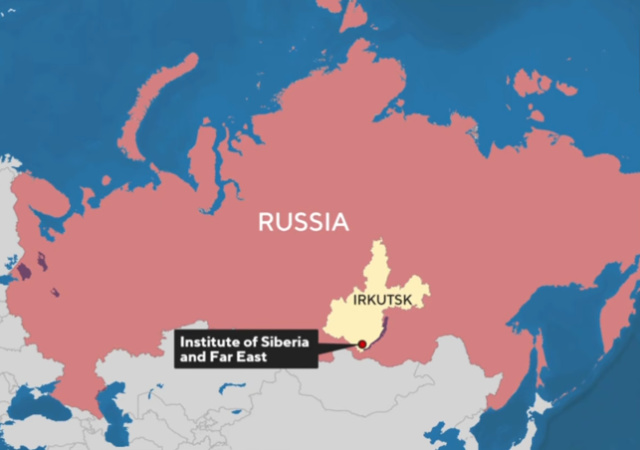
Early this week, my colleague Mary Chastain reported that a laboratory employee at the Irkutsk Anti-Plague Research Institute in Siberia reportedly died after allegedly breaking a tube containing live plague bacteria. At the same time, nearly 200 contacts were hospitalized or monitored, and a local hospital was quarantined.
Initial reports suggested that the 27-year-old employee, Daria Sh., may have contracted pneumonic plague (the airborne version of the bubonic plague of medieval fame), which can spread person-to-person through respiratory droplets and progress rapidly without prompt antibiotic treatment. The Russian reaction clearly reflected a rapid response to a significant biosafety incident.
Shortly after these reports went viral on social media, Russia’s government has sought to allay concerns and has walked back parts of the story. Russia’s health watchdog, Rospotrebnadzor, also reported that no lab accident occurred. Furthermore, the agency also insisted that the young woman did not die of exposure to any pathogen that she had been handling, and none of the identified contacts are showing symptoms of any illness.
However, amid this rapid reversal, reports of a second “plague” case have emerged. The World Health Organization (WHO) is investigating.
The World Health Organization is looking into reports of a second pneumonia case linked to an anti-plague institute in Irkutsk, Siberia, after the Kremlin said there are no plague cases in the region following the death of a lab worker.
The latest reports suggest Russia is not fully cooperating with international health authorities by rapidly sharing its data on the cause of death of a 28-year-old woman who worked at the anti-plague lab, who died Oct. 2.
“WHO has requested further information to clarify the cause of the severe pneumonia, the pathogen that prompted the public health measures, and media reports of a second employee with pneumonia of undetermined cause,” WHO Director-General Tedros Adhanom Ghebreyesus said Wednesday.
“Timely, complete and transparent information sharing under the International Health Regulations is essential to clarify conflicting reports and enable an accurate assessment of potential public health risks,” Tedros said in his social media post.
The World Health Organization is looking into reports of a second pneumonia case linked to an anti-plague institute in Irkutsk, Siberia, after the Kremlin said there are no plague cases in the region following the death of a lab worker.https://t.co/qPx9MR16kM
— Rand Paul (@RandPaul) October 7, 2026
The Russians seem a little unhappy with this extra scrutiny.
The Kremlin said Russia had properly informed the WHO about the incident in line with established procedures.
When asked about the WHO’s request to respond to reports about a second person in Siberia allegedly falling ill, Kremlin spokesman Dmitry Peskov urged caution when it came to using media reports as a reference for what was happening.
“There is a great deal of media coverage, and the vast majority of what the media are reporting about this situation is false information,” said Peskov.
He advised the media and others to rely on information provided by the health regulator. It did not immediately respond to a Reuters comment request on Wednesday about the WHO’s questions.
The U.S. State Department has formally requested more information on the first incident.
The State Department has sent a formal diplomatic note to Russia asking for more information about a possible outbreak at an anti-plague research laboratory in Siberia.
“We have officially requested additional information from the Russian government,” the department said in a statement on Tuesday. “We are also in official communication with other countries around the world to share information.”
🚨JUST IN: U.S. sends formal diplomatic note to Russia demanding more information about the possible plague outbreak at a Siberian anti-plague lab.
Hey @grok verify immediately
— Swetha (@Swetha_xai) October 7, 2026
The Daily Mail also reported on this second case and provided details on the Russian efforts to retract previous claims that Darya Shipilova, the lab employee who died of “pneumonia of unknown origin,” was not infected with the plague bacterium in a lab accident at the Irkutsk Anti-Plague Institute in Siberia.
Now the Kremlin is scrambling to cover up the details as Russian media outlets report a second person has died at Irkutsk district hospital after allegedly contracting the plague.
Russian plague reports have allegedly been disappearing across national media, including one from Moscow’s Channel 5 broadcaster and one nationally distributed daily newspaper, Kommersant.
Independent Russian outlet The Insider said on October 2 the federal television channel REN TV also deleted all five of its publications about the plague in the Irkutsk region.
The administration of Baikalsk, a city in the Irkutsk region near the Mongolian border, published a Telegram post on October 3 urging residents not to travel to the Shelekhov district.
‘Due to unofficial information about a confirmed case of plague in a person in the city of Shelekhov, we ask you to limit visits to Shelekhov and nearby settlements until the circumstances surrounding this threat are clarified,’ the Baykalsk city administration said in a post.
It deleted the post two hours later, independent local news outlet Lyudi Baikala reported.
I would add a note of caution regarding WHO’s interest, as it has been driving for an international pandemic treaty and is still reeling after the U.S. left the organization.
Whatever the investigation reveals, under no circumstances should policies be driven by COVID-like hysteria rather than verifiable evidence and proportionate risk assessment.
Protecting public health must not become a blank check for sweeping restrictions, censorship, and excuses to manipulate election processes.
Donations tax deductible
to the full extent allowed by law.






Comments
WHO is on first.
No they aren’t. They are not even on second or third. They are led by a man named Tedros who doesn’t know his rear end from a hole in the ground.
I certainly don’t expect the Russians to tell the truth, but it is a good thing that travel to and from Russia is very restricted, so whatever happened there is unlikely to spread.
Sadly at this point we can only hope. At least there has not been numbers (that we know of) of Russian scientists going back and forth as with the Chinese.
Smells of the Wuhan fiasco. Hope Anthony Fauci hasn’t been there lately. Both the Russian and WHO aren’t the most reliable sources on the planet.
This is a bacterial infection not a virus. Unless a plague of rats and fleas comes with it, it’s not that easy to spread. FYI, 50 years ago, my brother was quarantined at the Philmont Scout Ranch in New Mexico because of Bubonic Plague spread by local ground squirrels. But, the quarantine ended after 3 days.