


Coca-Cola Confirms Launch of New Product Line Made With … American Cane Sugar
This initiative is set for the fall, and the marketing campaign will likely capitalize on the public’s growing demand for more ‘natural’ ingredients in food and beverages.
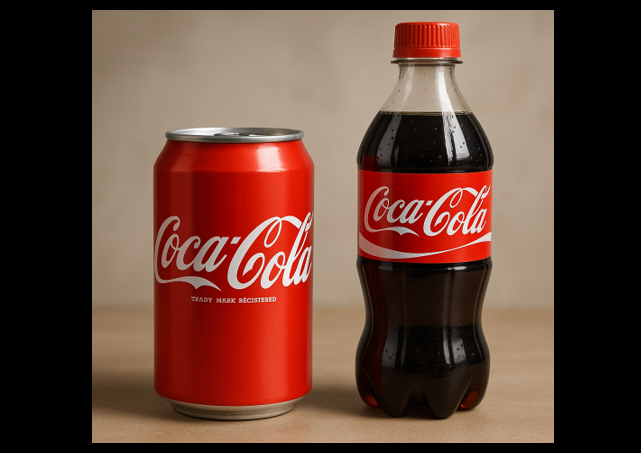
A few days ago , President Donald Trump reported on social media that Coca-Cola was reformulating its iconic product using cane sugar instead of high fructose corn syrup (HFCS).
And, indeed, the company has now announced it will launch a new version of Coke in the U.S. sweetened with American cane sugar. Even better!
The company revealed in its earnings report Tuesday that as “part of its ongoing innovation agenda,” it will launch in the fall an “offering made with US cane sugar” as part of its product range. Some versions of Coke already use cane sugar, including Coca-Cola sold in Mexico.
The firm thanked Trump for his enthusiasm for its products during the announcement.
Coke has used high-fructose corn syrup to sweeten its namesake soda in the U.S. since the 1980s, although it still uses cane sugar in other markets such as Mexico. “Mexican Coke” has gained popularity in the U.S. over the past decade or so, as retailers such as Costco and Target have stocked the drink, following the lead of bodegas and restaurants catering to Hispanic clientele.
In a news release announcing its second-quarter earnings Tuesday, Coke said the new product offering is “designed to complement the company’s strong core portfolio and offer more choices across occasions and preferences.”
The product announcement comes after President Donald Trump posted on Truth Social on Wednesday that he has been speaking with the company about using “REAL Cane Sugar” in its U.S. soda. Trump is a longtime fan of Diet Coke, which uses the artificial sweetener aspartame, and even has a button in the Oval Office to summon the drink.
“As you may have seen last week, we appreciate the president’s enthusiasm for our Coca-Cola brand,” Coke CEO James Quincey said Tuesday on the company’s earnings conference call, before announcing the new product.
Donald Trump not only broke news about Coca Cola bringing back cane sugar before their shareholders knew, but the company's CEO is now thankful for Trump's "enthusiasm" for the brand pic.twitter.com/C0j9flKUiC
— Tom Pappert (@realTomPappert) July 22, 2025
This initiative is set for the fall, and the marketing campaign will likely capitalize on the public’s growing demand for more ‘natural’ ingredients in food and beverages.
Coca-Cola CEO James Quincey discussed the coming product on an earnings call Tuesday morning, telling investors that the company already uses cane sugar in the company’s tea, lemonade, coffee and Vitamin Water offerings.
“I think that it will be an enduring option for consumers,” he said.
“We are definitely looking to use the whole toolkit of available sweetening options where there are consumer preferences.”
The Trump administration’s “Make America Healthy Again” initiative, named for the social movement aligned with Health and Human Services Secretary Robert F. Kennedy Jr., has pushed food companies to alter their formulations to remove ingredients like artificial dyes.
Coca-Cola’s competitor, Pepsi, indicates that it plans to make no changes to its formulation, but it appears plans could change if the domestic sugar supply became less expensive.
Meanwhile, rival PepsiCo isn’t making any major changes. However, its newly announced prebiotic soda contains cane sugar as does its recently acquired Poppi brand.
“Sugar is more expensive in the US than in many parts of the world, so I think there is a conversation with the government probably on how do we make sugar more affordable in the US, how do we have a farming strategy probably that reduces the cost of sugar and that will facilitate a lot of the transition for us and for the whole industry,” PepsiCo CEO Ramon Laguarta said on CNBC last week.
Meanwhile, it looks like Coca-Cola has been having a good quarter, and the future may become even brighter — especially for American cane sugar producers.
While U.S. sugar consumption outstrips domestically produced cane sugar, he said Coca-Cola has enough to launch the line. “Over time, if there’s more demand, they’ll plant more acres,” Quincey said. “We’re confident that supply won’t be an issue.”
For the second quarter, Coca-Cola posted a profit of $3.81 billion, or 88 cents a share, compared with $2.41 billion, or 56 cents a share, in the same quarter a year earlier.
Now it will be up to consumers to support the reformulated product with their purchases. I know I plan to, as I personally have chosen to avoid HFCS.
It will be interesting to how many products contain HFCS at the end of Trump’s second term.
But for now, it appears we won’t have to rely on “Mexican Coke” for the cane sugar version of this famous beverage.
Coca-Cola using real cane sugar is a great win. High fructose corn syrup is terrible for you. Cane sugar will be a huge improvement.
even Mexican coke is getting deported.
Good work! pic.twitter.com/fDAwjukf2G
— Ape𝕏 (@CubanOnlyTrump) July 16, 2025
image by perplexity.ai.
Donations tax deductible
to the full extent allowed by law.







Comments
When do we bring back the cocaine?
When Hunter becomes president and ceo of coke.
You owe me a monitor and keyboard!
Mouse ok?
I haven’t seen anybody else suggest this yet, so I’ll give it a shot:
Please, please, please name it:
“Coke-Cane”
License Clapton for the rollout ad theme music.
The “cocaine” never left. Coca cola’s base syrup, which isn’t changing, contains a decocainised extract of coca leaf. You get the coca leaf flavor, but not the drug.
This change is not at the manufacturer but at the bottling plant. Coke ships its unsweetened syrup to bottling plants all over the world, and each plant decides for itself what sweetener/s to add, and in what proportions, as well as what water and carbonation to use. The US plants have been using HFCS; now, in addition to that, they will produce a specialty line that uses sugar.
BREAKING: A D.C. district court judge has issued a temporary restraining order blocking Coca Cola from using U.S. cane sugar in their product.
Oh, you think it couldn’t happen?
If Trump is in favor of it, there’s a “judge” somewhere ready to block it.
Is woke still one of the ingredients?
I hate HFCS.
My wife and I avoid it like the plague whenever possible. Aldi’s makes that really easy.
It will only be a niche product line and I guarantee it will not be like the old product from decades ago. It will have some smaller amount of sugar mixed with some other junk to try and pass. The bent congress was bought off a long time ago by the sugar lobby. It is just too expensive.
Now if they can bring back the nickel Coke in the vending machine with the large metal paddle. OK… too far back but I think Coke will bring back the full recipe post-1911 and it will be a hit.
Read about the sugar lobby. It is a national disgrace.
Would this be the cane sugar lobby, the beet sugar lobby, or the corn sugar lobby? LOL
Both corn and cane sugar industries receive an abundance of price supports and subsidies from government and it costs consumers dearly.
Politicians could address it. Ted Cruz went after ethanol in Iowa in ’16 and won their primary proving it isn’t the ‘kiss of death’ at least among the voting public in Iowa….the Iowa Congressional delegation and the corn lobby would probably have objections and carry a grudge.
President Cruz, you say?
A few years back, Pepsi did a “throwback” line, I know it included Pepsi and Dew, using sugar instead of corn syrup. They both tasted so much better, and at least at the store in CT I was working in at the time, they were quite popular.
I have no idea why they didn’t continue it given how well it seemed to sell.
Price point.
For the Mass Market.
As long as the govt makes HFCS a cheaper sweetener than real (cane) sugar there’s always going to be incentive for soda makers to sell HFCS versions that are cheaper than competitor’s non HFCS products.
Do we know for a fact that the new sugared product will be Coca Cola? A lot of chyrons are being vague about the soda possibly being a new non-cola. In fact, so is a lot of the quoted language in this article.
Not usually a carbonated beverage drinker – but do occasionally drink sprite – it settles my stomach (if I 1st open it to let it go a bit flat) – would prefer it too to use cane sugar.
Is Coke just swapping the Coca-Cola recipe or also the other sodas they sell?
Sheesh, even L.I., which is usually quite factual, misses it.
So-called Mexican Coke with cane sugar is called, internally, “Nostalgia Coke.” It is for export to the U.S., and not sold within Mexico. Down there, Regular (a/k/a not Diet) Coke comes in three varieties that I know of. Two of them are made with HFCS.
The main one is the same as the regular Coke sold here. The second one has one-third less HFCS, and replaces the rest with sucralose, a/k/a Splenda, an artificial sweetener. The third one is “Kosher for Passover Coke.” It is sweetened with cane sugar because the enzyme used to make HFCS is derived from barley, which is off-limits to kosher-keeping Jews. It has a yellow cap with some Hebrew writing on top.
The “Nostalgia Coke” (100% cane sugar) sent to the U.S. harkens back to when HFCS was banned in Mexico. Not for health reasons, but to protect their sugar industry. The Int’l Trade Commission overturned the ban, and ever since 2013, the main variety of non-diet Coke sold within Mexico is sweetened with HFCS. If you can read Spanish, it’s disclosed on the cans, but not in those words.
About HFCS. There are two main types, HFCS-42 and HFCS-55. The numbers refer to the percentage of fructose in the syrup, which is derived from corn syrup. Ever heard of Karo? If you made your own candy, pie fillings, or gooey cookies, you have.
The most common HFCS is HFCS-42, which is 42% fructose and 58% sucrose, the latter which is digested to glucose in the intestines. HFCS-42 is in foods that otherwise might use sugar. HFCS-55 is used in soft drinks and juices. Cane sugar? That’s 50% fructose and 50% sucrose. Calorie-wise, cane sugar has 49 per tablespoon and HFCS has 53 per tablespoon.
The market is what it is, often having little to do with reality as opposed to perception. You have this population of Karens who think HFCS (which always should have been called “corn sugar,” because that’s what it is — hey Karens, should we give up sweet corn too?) is Bad For You.
In fact, HFCS is essentially identical to cane sugar. I have blind tasted that “Mexicoke” several times vs. regular Evil Corn Coke. Couldn’t tell the difference, and I seriously doubt that anyone else can either. It reminds me very much of the Karen I once sat next to in a gastropub who made a big deal about keeping the gluten out of her lunch, which she accompanied with a beer.
Bottom line: This whole thing is a lazy joke. If I were Trump, I’d be laughing my ass off right now. I’m sure the Coca-Cola executive told him everything I’ve just written, and that Trump replied: “Make some cane sugar Coke. You’ll increase your sales.” LOL
I think the concern is not the balance of fructose and sucrose in HFCS vs. cane sugar, it’s about the effects of possible adulterants other than sugars in the resulting HFCS. For example, cane sugar processing doesn’t involve barley, or whatever other lab-magic substances they may use to process the corn.
It reminds me of a warning I got many years ago about “200 proof” ethyl (drinking) alcohol. You could get high-proof ethyl alcohol up to a limit, but true “200 proof” alcohol was liable to have unsafe traces of (poisonous) benzene in it, because that was the only practical way (at least at the time) to get all the way to 200 proof.
If the Karens are going to get their panties in a twist over the enzymes, well, how do they think fermentation happens? Yep, enzymes. Dang. Who knew? I guess they’ll be giving up all kinds of fermented foods, starting with their treasured kombucha. And chocolate, yogurt, blue cheese, soy sauce, vinegar (yes, balsamic vinegarette — off the list!), creme fraiche, sour cream, sourdough bread, anything that’s pickled, kimchi, sauerkraut, salami, beer, buttermilk, and wine. LOL
Correction: It wasn’t the Int’l Trade Organization that overturned Mexico on HFCS, but the World Trade Organization. And Mexico didn’t ban it, but put a 20% tax on soft drinks and syrups with HFCS. This was to protect their sugar industry. The WTO ruled against Mexico in 2006.
A bit more: The corn growers are not directly subsidized like people think. They are indirectly subsidized in the form of ethanol mixed with gasoline, required for the past 20 years. This actually RAISES the price of corn used to make HFCS. The reason that HFCS is so common is that the production cost is much lower — one-third the cost of cane sugar.
If corn wasn’t subsidized by ethanol and the crop stabilization program (which applies to all crops, not just corn), HFCS cost and price would be even LOWER than it is today.
One other thing. Within the U.S., corn sugar has 39% of the sugar market; cane sugar 36%, and sugar beets 29%. To put it differently, if we put corn sugar (HFCS) in a separate category, cane sugar has 55% share and sugar beets 45% share of the non-HFCS, non-diet sweetener market.
I point this out for those who think HFCS is “in everything.” No, it’s not.
Apparently, they’re not actually “ditching” the corn syrup. They’re going to introduce a new product with actual sugar, but “Coca-Cola” will still be made with HFCS.
Correct, that’s what they will do. The level of laziness and misinformation across the board (liberal media, wingnut media and blogs) is high and amusing.