


Space Force Creates Special Operations Command as Its Military Role Expands
Space Force is expanding its military role with a new special operations command, classified satellite launches and electronic-warfare systems supporting real-world missions.
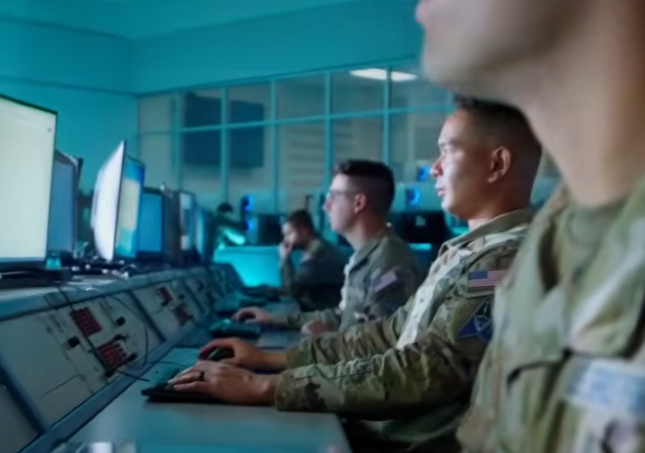
The last time I reported on the U.S. Space Force (USSF), I noted that President Trump’s creation of this military branch has proved valuable during recent important operations, despite the skepticism and ridicule it initially received.
During Operation Epic Fury, Space Force satellites reportedly detected and tracked Iranian ballistic-missile launches, supporting early warnings, interceptions, targeting, and battle-damage assessments. Space Force personnel also provided satellite communications, navigation, geolocation, and missile-warning capabilities during Operation Midnight Hammer, demonstrating the branch’s growing importance to U.S. military operations.
Now Space Force is getting its own “Special Operations” team.
The Space Force activated a command this month to work with U.S. Special Operations Command to formalize the space capabilities already integrated into the missions of the military’s special operators. The service scheduled a ceremony for Nov. 2 at MacDill Air Force Base in Florida to mark the new Space Forces Special Operations component command within Special Operations Command. Col. Peter Norsky will lead the headquarters.
The Space Force field command institutionalizes how the military’s newest service branch organizes, trains, equips and presents forces for the special operations enterprise, placing it alongside U.S. Army Special Operations Command, Naval Special Warfare Command, Air Force Special Operations Command and Marine Forces Special Operations Command. The move “marks another milestone” in the Pentagon’s ongoing effort to make sure that “space effects are fully operationalized across every domain of modern warfighting,” the Space Force said Wednesday in a statement.
JUST IN: The US Space Force recently activated Space Forces Special Operations (SPACEFOR-SOC), its new component under SOCOM, formally established on October 7, 2026.
Their mission is to integrate specialized space capabilities such as satellite communications, navigation,… pic.twitter.com/lGpnf8Wbzw
— Special Ops Magazine (@specialopsmag) October 14, 2026
The Navy has the “SEALs.” The Army has the Rangers and Delta Force. It will be interesting to see how the USSF brands its Special Ops forces.
Officials indicate that Space Force aims to boost the number of uniformed Guardians over the next five years, increasing its ranks from about 11,000 to 25,000 by 2031. USSF planners may want to take a page from the Department of Transportation’s successful air traffic controller campaign.
Meanwhile, SpaceX has launched a secret payload for the USSF.
As the bugle call and National Anthem sounded across Vandenberg Space Force Base, a SpaceX Falcon 9 rocket launched carrying a classified payload for the United States Space Force on Thursday evening.
Liftoff from Space Launch Complex 4 East happened at 5:01 p.m. PDT (8:01 p.m. EDT / 0001 UTC). The mission, designated USSF-481, took a southerly trajectory upon leaving the pad. Hazard warnings suggest that it flew to a low Earth orbit inclined about 80 degrees from the Equator.
SpaceX launched this mission using the Falcon 9 first stage booster B1081. This was its 28th launch following four missions for NASA, three nationals security missions, two Transporter rideshare missions, two missions for Europe, and 16 Starlink missions.
…The USSF-481 is also referenced as “TH-2” in public notices. It’s the second “TH” mission launched in as many months with the first being USSF-259 or TH-1 on Sept. 16.
A SpaceX Falcon 9 rocket launching on a secretive mission for the U.S. military gets a musical send-off from Vandenberg Space Force Base with the five o'clock bugle call 'Retreat' followed by the National Anthem. pic.twitter.com/4YMB8Ha6ih
— Spaceflight Now (@SpaceflightNow) October 16, 2026
To wrap up this update, the USSF confirmed the elements of the report I did earlier this year… that its electromagnetic weapons played a crucial role in U.S. military operations in Venezuela and Iran.
The WSJ was granted access to a US Space Force base in Colorado, where it was shown some of the Pentagon’s space warfare capabilities, including systems designed to disrupt enemy satellites and detect threats to the US military.
Among the weapons demonstrated was Meadowlands, an offensive system that can jam enemy satellites and disrupt their communications.
According to the WSJ, these satellites are used for surveillance, communications, and navigation.
Meadowlands often operates alongside a defensive system known as Bounty Hunter, which scans the electromagnetic spectrum to detect and locate potential threats to US forces, the report explained. Commanders can then pinpoint the location of a specific threat and order a defensive strike.
NEW: The Space Force Showed Us Its Weapons Used in Iran and Venezuela (!)
We also spoke with a Guardian who deployed to SOUTHCOM for the Maduro raid, then had 72 hours to pack up electromagnetic warfare equipment and head to CENTCOM for the Iran war 👀
— Shelby Holliday (@shelbyholliday) October 14, 2026
Clearly, the “expert” predictions made about Space Force missed by a few light-years.
With a new special-operations command, classified launches, and electronic-warfare capabilities reportedly supporting real-world missions, the Guardians are building a record that deserves attention and accolades… not tedious, needless ridicule.
Donations tax deductible
to the full extent allowed by law.






Comments
This article does not describe many new missions. These new Space Force commands are really just new layers of bureaucracy to carry out missions which already existed (maybe to justify general officer billets?).
As for supporting operations in Venezuela and Iran, the WSJ stated that the Guardian deployed to SOUTHCOM, NOT to Venezuela. This means that he or she likely flew to SOUTHCOM in Miami, FL. Then he had to pack up in 72 hours for deployment to CENTCOM, which means that he likely flew to ….. Tampa, FL. So this Guardian was not down range.
The Space Force does provide important capabilities to theater warfighters. But many of the activities described in this article were performed as far back as Desert Storm.
There seems to be an ongoing effort to take credit for space capabilities that did not suddenly emerge after the Space Force was created.
The use of generic combatant command names (EUCOM, CENTCOM, etc) for deployments, especially for combat troops et al, does not mean they will go to the HQS of the command. It just means generally that they will probably deploy to somewhere in the area of responsibility. A combat troop can deploy to CENTCOM which has an enormous AOR and end up in any number of countries. I was stationed in EUCOM, but not at the command’s main headquarters.
I went back and re-read the references. I guess the TSgT did deploy to Venezuela, but then claims it was “deployed to Iran”, which would be breaking news since we supposedly don’t have boots on the ground. The article is not very clear.
That’s for you below by the way.
Your petty criticisms are not very clear. Are you objecting to the establishment of Space Force? China has a military branch dedicated to space. Russia has a military branch dedicated to space. While there may be overlap occasionally, we have military branches dedicated to the land, sea and air. Are you arguing that the US doesn’t need force for, well, space?
The implication is that the capabilities described in this article are new. That is, as the result of the creation of the Space Force, we can now do these new missions. That is NOT true.
I don’t mind the US having a Space Force. But I am still waiting for a clear description of what new benefits have resulted.
I do expect that to happen. For example, the Golden Dome reaching IOC would be very worthwhile.
The article made no such claims. Obviously the US military and civilian apparatus could probably accomplish piecemeal what Space Force is accomplishing now. No one is implying that the capabilities don’t exist. The implication, if anything, is simply that Space Force is fulfilling its role to effectively mobilize and implement defense technologies in the space sector in furtherance of US security interests. Not sure why you find this so objectionable.
I’m ready to go when the Space Shuttle door gunner slots open up!
We make a distinct function when distinctiveness becomes useful. Extracting the AF from the Army, for example. Lots of fighters n bombers before that.
One wonders if Operation Obfuscation is its own thing enough to deserve its own name; or maybe part of Operation Demoralize; or maybe roll them both into Operation TechSlop. Grub up the medium n the messages get obscured.
It’s not like it ain’t happening already, name or no.
From Spaceweather today: