


Nature Retracts Study Linking “Atmospheric Thirst” to 40% Greater Drought Severity
Shortly after the retraction, Nature published a new study that found just the opposite: “Global drought shows no detectable recent acceleration under climate warming.”
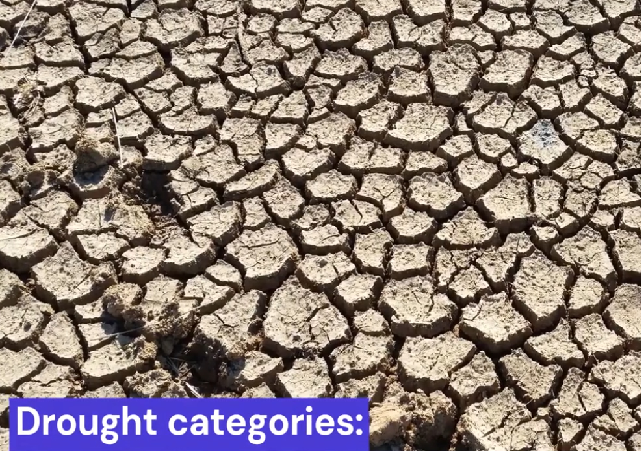
A Nature study claiming that global warming–driven “atmospheric thirst” intensified drought severity by roughly 40% has been retracted after researchers discovered coding and calculation errors.
Despite the paper accumulating 337 citations and favorable media coverage, its authors now say the corrected estimate will be lower… all while insisting their central conclusion remains intact.
The article, published in June 2025, found an increase in “atmospheric thirst,” or atmospheric evaporative demand — a measure of how much water the atmosphere draws from rivers, lakes, soil and so on — has exacerbated the severity of droughts by about 40%. The New York Times covered the work, claiming the study found atmospheric thirst “played an even bigger role than previously thought” in drought severity. The paper has been cited 337 times, according to Clarivate’s Web of Science.
But the authors discovered “a calculation error” that was “not related to our data or methodology, but a coding error,” lead author Solomon Gebrechorkos told Retraction Watch in a statement sent by the University of Oxford in England. Of the 11 authors on the paper, three, including Gebrechorkos and senior author Simon Dadson, are affiliated with the university.
…The errors “changed the percentages reported, but none of the paper’s conclusions are affected,” Gebrechorkos said in the statement. “The new number will be slightly lower but the conclusion remains the same: that it is reasonable to conclude that global warming likely contributed to exacerbate global drought severity.”
𝗧𝗵𝗲𝗿𝗲 𝗜𝘀 𝗔 𝗗𝗿𝗼𝘂𝗴𝗵𝘁 𝗶𝗻 𝗔𝗰𝗮𝗱𝗲𝗺𝗶𝗮: 𝗔 𝗗𝗿𝗼𝘂𝗴𝗵𝘁 𝗶𝗻 𝗛𝗼𝗻𝗲𝘀𝘁 𝗥𝗲𝘀𝗲𝗮𝗿𝗰𝗵 𝗼𝗻 𝘁𝗵𝗲 𝗦𝘂𝗯𝗷𝗲𝗰𝘁 𝗼𝗳 𝗗𝗿𝗼𝘂𝗴𝗵𝘁 𝗮𝗻𝗱 𝗢𝘁𝗵𝗲𝗿 𝗪𝗲𝗮𝘁𝗵𝗲𝗿 𝗘𝘅𝘁𝗿𝗲𝗺𝗲𝘀
A Nature study claiming the atmosphere's growing thirst made global… pic.twitter.com/cjGTBQXBUb— Watts Up With That (@wattsupwiththat) September 29, 2026
What exactly did the article, Warming Accelerates Drought Severity, assert? The following are the key points made based on their faulty coding:
- An increased “thirst” of the atmosphere made droughts from 2018 to 2022 40% more severe than in the 37 years before that.
- Comparing the two periods: 5 years since 2018 versus 37 years since 1981, the area affected by drought has become 74% larger, 58% of that due to an increased “thirst of the atmosphere.”
- Since 2022, 30% of the Earth’s land surface has been affected by moderate to extreme drought;
- With further climate change, all of this will become much worse.
Nature found four problems with the data on which all the doomerism is based. The publication offered a highly technical explanation for the retraction; the following is a summary of those key points:
- Grid cells were not weighted by their land area when calculating study-wide averages. This impacted the results of all the calculations and averages.
- The authors used V3 of the Global Land Evaporation Amsterdam Model (GLEAM v3) and not GLEAM V4. There are successive generations of the same modeling system and the global datasets they produce, estimating how much water moves from land into the atmosphere and how much moisture remains in the soil. GLEAM V4 improves the representation of vegetation and groundwater, provides finer spatial detail, and the numbers generated (theoretically) would be more accurate.
- A “timestepping” coding error improperly parsed dates when separating 1981–2017 from 2018–2022, which impacted the regional averages used in comparing the two periods.
- The authors did not clearly explain how masking (excluding certain areas from calculations) was applied, which raised concerns about transparency and interpretation of the calculations.
Interestingly, shortly after the retraction, Nature published a new study that found just the opposite: “Global drought shows no detectable recent acceleration under climate warming.”
The paper shows that a common method used to estimate water loss in drought assessments overestimates evapotranspiration. This exaggerates drying trends in the Standardized Precipitation Evapotranspiration Index by at least sixfold, making droughts appear more severe, frequent, and prolonged than warranted.
“We find no significant acceleration of drought trends across ~99% of quasi-global land area under either PET type,” write the authors of that paper. “This finding remains robust across centennial timescales (1901– or 1950–2024).”
The second paper has yet to receive the widespread coverage the now-withdrawn paper got. Evidently the finding of no climate-change drought disaster doesn’t make for good headlines or riveting copy. It will be interesting to see how many scholarly, peer-reviewed studies will cite the second paper and its findings that there has been no climate-change-induced changes to drought trends. My suspicion is that the result will be well south of the 337 citations the now-debunked paper received in its first year.
Major 2025 Nature paper on drought was recently retracted for several reasons related to data and methodology.https://t.co/TeX3y25ePJ
Another paper published today points out even more problems with their calculation of drought indices with PET https://t.co/4cDZhYkUcU pic.twitter.com/DZsl1HNxrF
— Ryan Maue (@RyanWeather) September 11, 2026
I don’t expect Nature’s second drought paper will receive anything like the breathless attention lavished on the now-retracted study and its 337 citations. It doesn’t support the preferred climate-catastrophe narrative and is therefore far less useful to headline writers and activists eager to turn alarming model output into settled fact.
However, “Warming Accelerates Drought Severity” is a near-perfect case study in confirmation bias: start with the “climate crisis,” produce an alarming number, and watch the grants, citations, and headlines follow. That is the natural outcome of a research culture in which funding and publication incentives favor dramatic, affirmative findings while null results struggle for attention.
If the second paper fails to be promoted and cited, then the logical conclusion is that “scientific consensus” is nothing more than poor modeling and masked numbers wrapped in institutional approval.
Donations tax deductible
to the full extent allowed by law.






Comments
A Nature study claiming that global warming–driven “atmospheric thirst” intensified drought severity by roughly 40% has been retracted after researchers discovered coding and calculation errors.
Sounds to me like AI did their homework.
This makes how many “studies” Nature has retracted in the last few years? It almost sounds like they’re faking it, or trying to advance a narrative…
Droughts are caused by cooler climate, not warmer. Warmer climates cause more ocean evaporation — which increases rain. There’s archaeological evidence of a cooling climate in the late 2nd century, and actual written records of the extent of the Nile floods year by year — there were LOWER floods in the cooler years.
So-called climate scientists get many fundamentals wrong. For another example, their own models show that more warming will take place in the mid-latitudes than equatorially. Yet they insist that this will result in “
more frequent and more intense tropical storms and hurricanes.” This cannot be so. Storms are formed by temperature gradients as heat tries to flow from where it is to where it isn’t. If temperatures are increased, but the slope of the gradient is decreased, this should lower the frequency and intensity of storms because the heat exchange taking place from the tropics to the mid-latitudes is less energetic. Imagine a homogenization of heat from equator to poles. There would be very little heat transfer from anywhere to anywhere, therefore storms wouldn’t be produced, or would be produced less frequently and with less power due to the lower amount of heat that is traveling from where it is to where it isn’t.
The melting ice will counteract the increased droughts, surely.
Surely.
Trust the science?
There was no calculation or coding error.
They did what they needed to do to get the result that they wanted.
The only “error” is that they were caught lying.
Just curious. Would any real, credible scientists give Nature climate propaganda any credence in the first place? I doubt most climate grifters really believe them. The media talking heads though might be that lacking in IQ.
Scientists prove:
1. The globe is warm
2. The atmosphere is thirsty
3. Storms are possibly increasing
4. Equally possible storms are decreasing
5. Data shows nobody knows anything for sure
So now that USAID isn’t funding this… 🙂
First, it’s a Nature study. No need to go further.
We need a meme of the atmosphere being handed a plastic bottle of Poland Spring water.
Retraction Watch and similar websites should ask papers that refer to this paper to PROVE that their papers’ conclusions and estimates are significantly unaffected if this paper is not used in the references. Until that time those papers themselves would be placed on a “watch list” and idsentified as suspect. I believe that would go a long way to rectify a generic problem afflicting so-called “climate science”.
Leave a Comment