


More Than Halloween Scares: Two Virus Cases Leave Scientists Searching for Answers
Nigeria is reporting its first Ebola case during the current outbreak in Africa. Meanwhile, France is reporting the first case of Shamonda virus infection in humans.
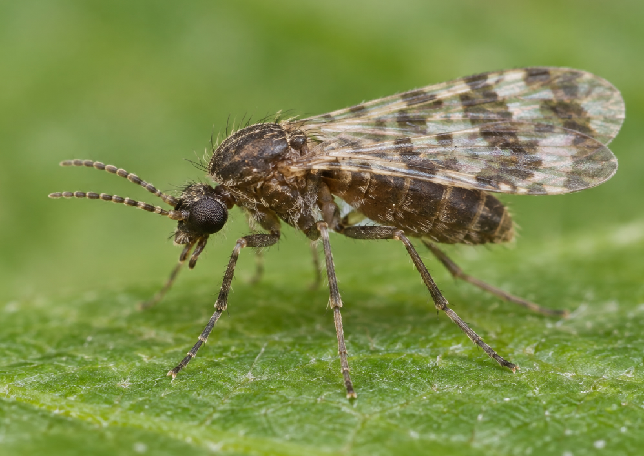
October offers plenty of Halloween-related scares, but this week’s infectious-disease headlines supply a medical mystery double feature.
Officials are investigating how Nigeria’s first Ebola patient in more than a decade became infected, while France has reported the first documented human case of Shamonda virus, previously detected only in animals.
The unsettling twist in both stories: Identifying the virus hasn’t yet unmasked the source of infection in either of the above cases.
Let’s look at the case of the Nigeria Ebola case first. Legal Insurrection readers will recall that Kenya had recently reported its first case of the highly infectious strain of this hemorrhagic disease earlier this month.
The man had been residing in Congo for the past seven years before becoming sick in September. He was treated at various hospitals before traveling by road to Kampala, Uganda, where he boarded a flight to the Kenyan capital.
The fact that he managed to bypass health security checkpoints while ill underscores the difficulties in trying to contain pathogens to specific borders.
Now, Nigeria is dealing with its first Ebola case in more than 10 years, and this outbreak has been recorded as having the “widest geographic spread” of any outbreak in Africa.
The Swiss government said on Friday the patient in Nigeria, the Ugandan-born wife of a Swiss diplomat based in Abuja, had not travelled to the Democratic Republic of Congo, where the outbreak was first detected in mid-May before spreading to Uganda, Kenya and now Nigeria.
The Swiss Federal Department of Foreign Affairs said the woman was believed to have contracted Ebola while travelling with her husband in Uganda, which the World Health Organization declared Ebola-free in August.
The outbreak has now been reported in four countries across eastern, central and western Africa, giving it the widest geographic spread of any Ebola outbreak on the continent to date.
The possibility that the Nigerian patient became infected in Uganda, where officials say she spent a two-week holiday before returning to Abuja, has fuelled concerns about undetected transmission in a country where the outbreak had appeared to be under control.
Nigeria becomes fourth African country to report Ebola case – its first in over a decade https://t.co/3hkAW1rOUH pic.twitter.com/rH2OW7rzUX
— New York Post (@nypost) October 21, 2026
Meanwhile, in France, a virus that traditionally infects animals after a bite of a small insect known as a midge has claimed its first human victim.
France has reported the first documented human case of the Shamonda virus, which was previously detected only in animals.
The patient was immunocompromised and died, health officials said.
The Shamonda virus is spread by tiny biting flies, which are known as midges.
In animals, the virus has been shown to cause fever, diarrhea, reduced milk production, and reproductive disorders, including abortions and fetal malformations, according to the World Organization for Animal Health.
First identified in Nigerian cattle in 1965, Shamonda virus mainly infects livestock (including cattle, sheep and goats). The virus was later detected elsewhere in Africa, Japan and Europe. Infection can cause fever, diarrhea and reduced milk production; infection during pregnancy can also lead to pregnancy loss, stillbirths or young animals with serious birth defects. Before the French case, no human disease had been documented, and there were no vaccines or specific treatments for the virus.
🇫🇷 France has recorded the world’s first human case of Shamonda virus
The patient died.
Health authorities said the virus, which normally infects farm animals, was detected in a person for the first time. It was previously believed not to infect humans.
The patient is thought… pic.twitter.com/CM56cEik6G
— Visegrád 24 (@visegrad24) October 22, 2026
Officials suspect the patient caught Shamonda virus from a midge bite in eastern France, where the virus was spreading among animals during spring and summer 2026. However, this remains speculation.
For what it’s worth, the World Health Organization is offering assurances there should be no further spread to humans.
A broader outbreak of the Shamonda virus is not expected despite the recent death of a man in the first documented case among humans, according to the World Health Organization (WHO).
Based on the available information and knowledge of closely related viruses, the infection in France appears to be an isolated human case, WHO spokesman Christian Lindmeier said in Geneva on Friday.
The indications are that it is “currently unlikely that further spread will occur,” he added, while noting that the WHO had not yet prepared a formal risk assessment.
For Ebola, investigators must reconstruct the chain of human exposure; for Shamonda, researchers are comparing the patient’s virus with animal strains and studying midges to determine how the infection occurred. A single Shamonda infection in a severely immunocompromised patient does not establish that the virus spreads between people, and no such transmission has been identified.
This Halloween, unmasking these medical mysteries calls for laboratory testing and field investigation…not a leap from unanswered questions to worst-case scenarios. We learned with covid that panic-based policy is monstrous and destructive.
.
Donations tax deductible
to the full extent allowed by law.






Comments
Migra.
WHO says?
Won’t get fooled again!
Very nice!
“Officials suspect the patient caught Shamonda virus from a midge bite in eastern France, where the virus was spreading among animals”
Sure. that’s the ticket. No human has ever caught it previously, but the midge must have changed, because we all know nothing else has.
When ya gonna give me some time …Shamonda
I was in Vegas at the height of the ShaNaNa epidemic. It was gut-wrenching..
Bioweaponry labs must be working overtime on the avian/human jump.
Bioweaponry labs? With the French 20-hour work week? Way down my list.
Keep Fauci out of there there.