


U.S. Military Confirms Deployment of Weapons in Space
The U.S. Space Force Comes of Age as America Deploys Orbital Deterrence
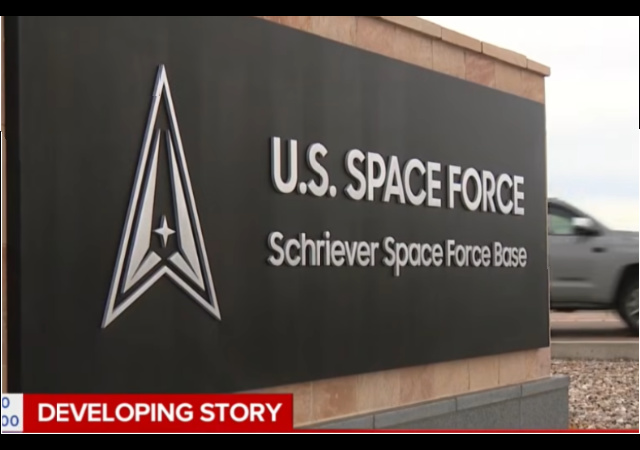
The U.S. military’s public acknowledgment that it has deployed “space control weapons” in orbit should surprise no one who has followed my reporting on the accelerating contest for the ultimate high ground.
The United States has stationed weapons in Earth’s orbit, Air Force Secretary Troy E. Meink said on Monday, the first such public acknowledgment by a Pentagon official after years of preparations to counter potential deployments by Russia and China.
“We are increasing readiness against existing threats, and the United States has on-orbit space control weapons capable of defending the Joint Force against hostile adversary action,” he said at a convention in Maryland, according to a news release published on the Air Force’s website.
Mr. Meink did not provide details about the type of weapons or say when they had been deployed. He made his remarks in a keynote speech at the Air, Space and Cyber Conference in National Harbor, Md., an annual forum hosted by the Air and Space Forces Association, a nonprofit organization for members of both services.
The Space Force did not immediately respond to a request for comment late Monday.
BREAKING: The U.S. has confirmed in a landmark revelation that the nation has deployed operational weapons in space.
Air Force Secretary Troy Meink became the first U.S. official to publicly acknowledge the orbital defense capability in what is widely being interpreted as a… pic.twitter.com/2IT69Hbznd
— USA TODAY (@USATODAY) September 15, 2026
In 2025, I covered a story about China’s satellite “dogfighting” maneuvers and stalking activities near U.S. assets. These tactics are exactly the kind of hostile in-orbit behavior that makes the passive American space policy perpetrated by the Biden administration a luxury the nation can no longer afford.
The Trump administration clearly takes these threats seriously.
Meink said that for more than a decade, the U.S. has been aware that adversaries such as China and Russia were developing their own capabilities to threaten U.S. systems.
“We need to maintain dominance in space as it becomes more and more important to how we function, how we operate militarily and economically, civilian-wise,” he told reporters.
The secretary called it necessary for deterrence, but he would not give more details about the weapons, saying that would negate its purpose.
“I’m not going to talk about the specifics of what we’re doing, whether we’ve tested or not tested or anything else,” he said.
President Donald Trump’s decision to create the Space Force in 2019 was dismissed by Democrats and late-night comedians, yet that force has matured into an essential instrument for missile warning, secure communications, positioning, navigation, and defending U.S. and allied forces. The new disclosure is therefore less a sudden militarization of space than confirmation that Trump’s foresight gave America an organization built to deal effectively with a strategic reality our rivals were already exploiting.
The announcement underscores how rapidly the new space race has evolved, both in speed and direction.
The secretary’s limited remarks are sure to raise eyebrows, as frank discussion of orbital weaponry generally was taboo for the US government for many years amid fears of sparking a global space arms race — even as the Pentagon loosened policies related to potentially offensive capabilities and began to speak openly about their necessity. The US has also spearheaded efforts to promote responsible behavior in orbit, including a ban on destructive anti-satellite testing advanced during the Biden administration.
“Space control” has been defined as defensive actions to protect US and friendly space forces and offensive actions to “negate” an adversary’s space capabilities. While Meink did not specify what types of weapons are on orbit, options in theory include both kinetic and non-kinetic systems. (Any weapons of mass destruction, however, would be expressly forbidden by the Outer Space Treaty.)
In a subsequent roundtable with reporters, Meink bristled at suggestions that publicly discussing space weapons could embolden America’s adversaries.
“Is there any question in the room by anybody about whether or not the Chinese and Russians have been developing these sorts of weapons?” Meink asked. Officials for over a decade have raised concerns that Moscow and Beijing are pursuing orbital weapons, the secretary said, emphasizing that “we are focused on making sure that we can protect ourselves and operate in that environment as we’ve done for decades.”
The U.S. has officially announced that it’s keeping both offensive and defensive weapons in space.
The type of weapons and how many are up there hasn’t been revealed.
It’s the first time the U.S. admits to having combat capabilities in space. pic.twitter.com/9babKcWxzg
— Visegrád 24 (@visegrad24) September 15, 2026
How good is this development for our country? We can gauge the benefits by reviewing the response of China’s Foreign Ministry spokesperson Guo Jiakun, who urged Washington to stop expanding its military space capabilities and “preparing for war in outer space.”
The Foreign Ministry said it opposed the move, warning against the “weaponisation of outer space, turning it into a battlefield, as well as an arms race there”.
“We urge the US side to stop expanding its military capabilities and preparing for war in outer space,” ministry spokesman Guo Jiakun said in a news briefing.
It must also be noted that U.S. authorities allege that Chinese satellite-imagery firms supported Iranian strikes on U.S. forces in the Middle East.
China’s predictable protest is perhaps the clearest evidence that our nation is finally addressing a vulnerability Beijing hoped to exploit without meaningful resistance.
Deterrence in orbit does not automatically equate to war in space. This move merely ensures that China, or any other adversary cannot blind, disrupt, stalk, or destroy the satellite systems on which America’s military, economy, and allies depend….at least without suffering meaningful consequences.
After years of treating space as a sanctuary while our rivals treated it as a battlefield in waiting, the U.S. is wisely preparing to defend the ultimate high ground.
Thank you, U.S. Air Force and U.S. Space Force.
Donations tax deductible
to the full extent allowed by law.






Comments
SDI has finally come to fruition.
Thank you, President Trump…never cede the high ground!
And suddenly, the Chinese spy satellite that has been funneling target information to Iran, suffers a catastrophic anomaly.
Why would they call it the Space Force if they were never going to exert any force into space?
If all they were going to do was just sit around and look at space they would have called them the Space Watchers.
And I sure we had stuff up there prior to the establishment of this new branch.
US Space Force members are called Guardians, which implies they are “Space Watchers”.
For those worried about the legalities
The 1967 Outer Space Treaty — signed by the U.S., Russia, and China — prohibits placing weapons of mass destruction in orbit and bans military installations and weapons testing on celestial bodies
However, the treaty does not ban:
Electronic warfare systems
Directed energy weapons
Other counterspace technologies not envisioned in 1967
This legal gap means many modern “space weapons” could be deployed without violating the treaty, though they may still be considered “weaponization of space” by other states
Russia and China are upset because they have done the same thing,
Can’t we just call it Star Fleet? Please.
Not until we get interstellar travel.
I’ve signed you up Milhouse to be the first to go. You might have to wait 100 years though.
Can we just melt Iran with our space lasers already?
I don’t know; I think we’d have to ask the Jews first 🙂
Working on it.
Load up Star Ship with telephone pole size tungsten rods. Kinetic reentry to a target would be …ah… invigorating!
I’m pretty sure that would count as a weapon of mass destruction. Literally.
Rods from God are non nuclear and are allowed.
Does the treaty say “nuclear”, or does it say “weapons of mass destruction”? Rods from space are weapons of mass destruction. Both figuratively and literally.
No they are not. They are not NBC. Their yield is far below N and well contained to the point of impact.
Actually the Space Force believes the Chinese have already done this.
Tungsten rods are pretty heave. You need a very large lift capacity to get the into orbit. I suspect with todays technology you’d orbit the rods and satellite separately and then mate them in orbit.
So if I’m understanding this right, the “news” is not that we have “space based weapons,” e.g., targeting earth, which has been on the table and under development since Reagan, but that we have space-based weapons targeting other things (like weapons) in space. I can’t see getting all out of shape over satellites blasting each other when we’ve already accepted the possibility of satellites blasting our neighborhoods.
The only thing worrisome is the debris field created. It is already somewhat of a mess up there.
And on that note, a curious coincidence in today’s mail:
We’ve had designs for space weapons since Eisenhower after WWII.
“Dynasoar, an American manned spaceplane. Cancelled 1963. The X-20A Dynasoar (Dynamic Soarer) was a single-pilot manned reusable spaceplane, really the earliest American manned space project to result in development contracts. … DynaSoar evolved from the German Saenger-Bredt Silverbird intercontinental skip-glide rocket bomber. Walter Dornberger, former head of Peenemuende, was at Bell Aircraft in the 1950’s and developed the Sanger-Bredt concept through various iterations “