


White House Weighs Extending Jones Act Waiver as Oil Prices Remain Elevated
Meanwhile, critics argue the Jones Act distorts markets, raises costs, and adversely impacts safety.
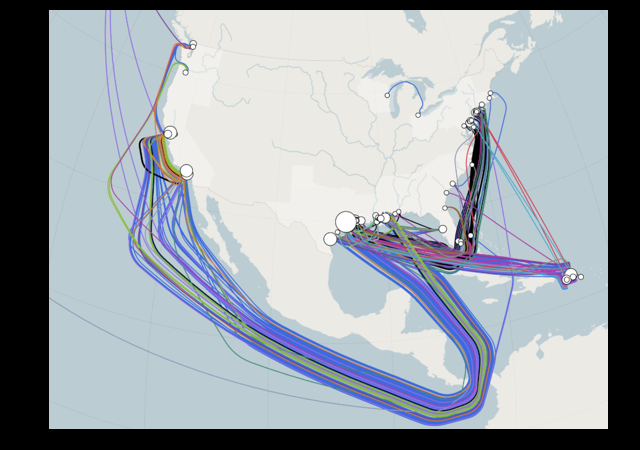
The Jones Act, officially the Merchant Marine Act of 1920, is a U.S. law that requires shipping between U.S. ports to use American-built, American-owned, and American-crewed vessels. It was created to support the domestic maritime industry and is often discussed in connection with national security and supply-chain policy.
My Legal Insurrection colleague Mary Chastain reported that President Donald Trump issued a waiver on this act in March to help reduce gas prices. She argued strongly that the Jones Act, “shouldn’t even exist anymore.”
The waiver is due to expire in mid-August, and it is being reported that an extension is being seriously considered.
The White House, along with the heads of the Energy, Transportation and Interior Departments, met earlier this week to weigh options ahead of a potential decision before the end of July, the sources said.
Waiving the shipping law is one of several levers the White House has pressed in an attempt to control oil prices, with domestic crude now about $80 a barrel. The White House has also loaned oil from the Strategic Petroleum Reserve, which is now at its lowest level since 1983.
A White House official said that no decision has been made on whether to issue a third waiver extension, noting the current waiver doesn’t expire until August 16.
“President Trump’s decisive action to waive the Jones Act has helped prevent supply chain shortages across the country. The administration is regularly monitoring how the waiver is being used,” the official said.
Trump administration waived the Jones Act requirements to steady the oil market, ease energy costs, and counter supply chain disruptions caused by the conflict with Iran
Foreigner flagged and built vessels are permitted to transport critical commodities in the domestic market https://t.co/fXrDUMCmu5
— IamLegend 🇺🇸 (@DarkSideAdvcate) July 31, 2026
As Mary noted in her piece, there are many good reasons to make this waiver permanent.
For example, an article written by Thomas Grennes for the Mercatus Center rebuts a critical position paper from the American Maritime Partnership (AMP), arguing the law imposes high, concentrated costs on consumers while its benefits flow narrowly to shipyards, carriers, and maritime unions.
He systematically addresses AMP’s claims on cost comparisons, job creation, and national security, contending that American-built ships cost far more than foreign equivalents, that job figures ignore offshoring of shipbuilding components, and that the Act actually hampered disaster relief after hurricanes Harvey, Irma, and Maria due to delayed waiver approvals.
What caught my eye was a section on safety:
Proponents have argued that the Jones Act would contribute to a strong merchant marine and a strong navy. However, there is increasing concern that the Jones Act may have the unintended consequence of making the American merchant marine less safe.
A tragic example of the possible safety issue is the sinking of the El Faro in 2015 that killed the entire crew. The El Faro was a 40-year-old Jones Act–eligible ship, and the extremely high cost of new American-built ships has contributed to the older age of the American-flag fleet. Higher costs have led owners to delay purchases of expensive new ships in favor of extending the lives of older ships.
On October 1, 2017, the Coast Guard issued its report on the causes of the El Faro sinking, and it criticized the ship’s vulnerable design (possibly owing to its age), its failure to use the latest information about the hurricane, and its use of open life boats.
And if one is focused on safety, an analysis done by the Cato Institute’s Colin Grabow argues that a pro-Jones Act group’s claim about foreign waiver vessels posing a unique safety risk is misleading because it compares those ships to the wrong baseline.
Using Coast Guard inspection data, Grabow asserts that Jones Act vessels had a higher deficiency rate than waiver vessels overall, and that the gap persists in a tighter tanker-only comparison with the same inspector and time window.
Beautiful pic.twitter.com/bbDw2YNrgK
— Colin Grabow (@cpgrabow) July 29, 2026
On the cleanest comparison the data allow, with the same inspector, the same vessel type, and the same time window, the Jones Act tanker fleet has a meaningfully worse deficiency record than the waiver fleet. The effect isn’t marginal. The domestic fleet not only has a higher deficiency rate but also a notably higher number of deficiencies.
To be clear, this isn’t a claim that the waiver fleet is “safer” in some general sense or that Jones Act tankers are unsafe. PSC deficiency counts are imperfect proxies for risk, sample sizes among both fleets are modest, and deficiencies can range from a fire door improperly propped open with a hold-back hook (Clearocean Fuku) to missing lock-out valves on a fire-suppression system (American Energy), the two vessels already cited above as each fleet’s highest-deficiency ship.
What it does show is that TI’s specific claim that the waiver fleet’s PSC record demonstrates a unique threat to American infrastructure doesn’t hold up once both the Jones Act and waiver fleets are given equal treatment.
Meanwhile, while the situation with Iran remains hot, it appears that the Jones Act will remain.
For markets, an extended waiver is generally viewed as slightly bearish for oil prices, or at least a measure designed to limit price spikes, because it improves the efficiency of moving energy around the US.
The price of crude oil is trading down $-0.62 at $78.70. The low price today has reached a $78.19. The high prices up at $80.93. The low price from July 14 reached $77.84. That represents the next target followed by the underside of the downward sloping trend line near $77.11 (see the chart below).
Donations tax deductible
to the full extent allowed by law.






Comments
How about linking the waiver to shipping companies that are placing orders for US built, US crewed, US Flagged vessels? That seems a reasonable comprise to address:
1. Short term shipping availability
2. Replacement of aging US fleet
Which Increases safety, expands (restores) domestic ship building, provides a ramp up timeline to train additional US crewmembers. Reducing dependence on Foreign built/Flagged vessels, controlled by foreign companies in foreign Nations not all of whom are truly friendly to the USA. Arguments about consumer costs seem rich coming from corporate interests who have already off shored and outsourced to cheaper foreign labor and cheaper foreign platforms over domestically manufactured/crewed vessels. We could say the same about every decision between US built/US labor/US product v foreign substitutes.
The fact is that when the chips are down, it is unwise to not have your own ship-building capability or to rely on foreign crews. Period.
Maybe the Jones Act is no longer the best way to address this national security issue, but certainly some act or another must address these concerns.
“Meanwhile, critics argue the Jones Act distorts markets, raises costs, and adversely impacts safety.”
Gripers, what’s your point? The Jones Act is a creature of Congress, and if you don’t like it, it’s going to take Congress to repeal it — strike that, nobody ever repeals anything anymore — “modify” it.
Trump’s acting as a pressure relief valve on this. He’s acting above and beyond what he is technically expected to do to fix this problem. Now go home and lean on your own pinstriped cookie-pushers to actually fix the problem.
Crazy how much oil the oil-rich state of California is importing. What a mess those idiots are.