


Nike’s Stock Collapse Vindicates a Warning From 2021
“These ads weren’t just pure ephemera. Michael Jordan’s commercials were so good that, as he nears age 60, his sneaker still outsells any modern athlete’s.”
Nike stock fell to a 12-year low Monday on the New York Stock Exchange, closing at $40.18 — nearly 80% below its all-time high of $177.51, reached in November 2021.
Earlier this month, JP Morgan downgraded the stock from neutral to underweight, warning that Nike’s “Win Now” turnaround strategy “will likely drag on earnings through at least fiscal 2028.”
What makes Nike’s unraveling especially striking, however, is that it was predictable. In fact, the warning signs were identified five years ago — not by a Wall Street analyst or retail industry expert, but by sports writer Ethan Strauss, who recognized a dramatic shift in Nike’s once-iconic advertising.
Aware that his brutal assessment was unlikely to be well received by the outlets he typically wrote for, including ESPN and The New York Times, Strauss published his missive, titled “Nike’s End of Men: Why Nike no longer wants us to Be Like Mike,” on Substack in August 2021.
“Mike,” of course, is a reference to Michael Jordan, an alpha male whose obsessive determination to win was one of the defining characteristics of his career.
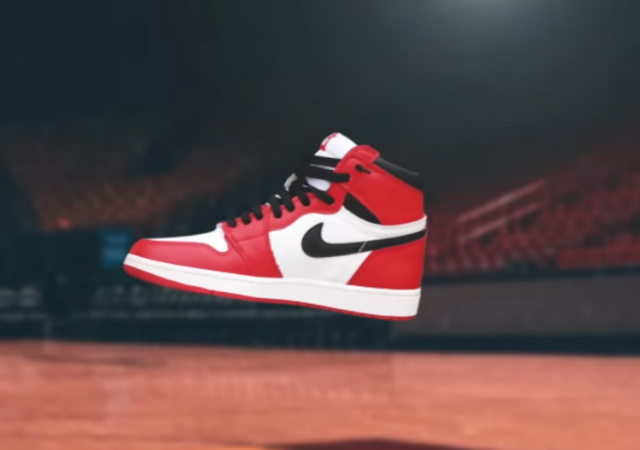
Nike was already a major athletic-shoe company when it signed Jordan in 1984. But the Jordan partnership — and especially the launch of Air Jordan in 1985 — transformed Nike’s stature, helping turn it from a successful sportswear company into a dominant global brand with enormous cultural cachet.
Called the Nike top years ago.
Nike:
1. made Kaepernick the face of the 30-year anniversary campaign
2. cancelled the Betsy Ross sneaker
3. partnered with Dylan Mulvaney.
4. set goals including 35% U.S. racial and ethnic minority representation in the corporate workforce and… https://t.co/YOl8jJpLVv— Douglass Mackey (@douglassmackey) August 18, 2026
Strauss introduced readers to a Nike ad released in 1996 called “Good vs. Evil”
[Where] Nike’s best soccer players team up to play Satan’s literal army. The blending of sacrilege, theology and comedy just worked, like a more ambitious version of Space Jam that somehow took itself less seriously than Space Jam.
Action movies of this era usually featured a hero who coolly tagged his kills with a catchphrase and this ad was no exception. Extremely French superstar Eric Cantona pops his collar, his trademark look, and calmly intones, “Au revoir,” before literally killing Satan with a fiery screamer of a goal, right through Beelzebub’s belly. This ad rules. 10 out of 10.
“These ads weren’t just pure ephemera,” Strauss wrote. “Michael Jordan’s commercials were so good that, as he nears age 60, his sneaker still outsells any modern athlete’s.”
This ad was one of many Strauss used to argue that Nike had begun abandoning the very identity that made it one of the world’s most powerful brands.
Strauss contrasted Nike’s iconic advertising of the 1990s and 2000s with its newer advertising. The older campaigns celebrated athletic greatness, fierce competition, irreverence, and winning. Winning, he noted, was presented as glorious and losing was painful.
The newer ads focused on social activism, identity politics, and progressive cultural messaging. They delivered political and social messages. He pointed to Nike soccer advertisements rejecting “toxic masculinity,” a Euro Cup campaign emphasizing inclusion and social causes, and basketball advertising celebrating women partly by denigrating men. His contention is that Nike had stopped “marketing greatness” and begun “marketing resentful insecurity.”
His central concept is what he calls “Existence Dissonance”: Nike was built around athletic excellence and, in particular, the hypercompetitive ethos embodied by Michael Jordan, yet the company had increasingly come to regard aspects of that traditional competitive masculinity as something problematic. At the same time, Nike reorganized its business away from individual sports such as basketball and soccer and toward men’s, women’s and children’s divisions, while aggressively pursuing women as an underdeveloped market.
He traces some of the change to Nike’s internal upheaval following allegations of sexual harassment and discrimination, which resulted in the departure of several senior male executives. He argues that management subsequently became increasingly responsive to younger, socially progressive employees and that both Nike and its advertising agency had fewer people deeply immersed in sports culture. The result, he said, was advertising driven more by progressive ideals and language than by an instinctive understanding of athletes and sports fans.
He attributed Nike’s sputtering growth to its “identity crisis.” The company became enormously successful by selling aspiration, competition and victory. Once dominant, it began distancing itself from those qualities and from the core audience — masculine men — that had made the brand successful in the first place.
He acknowledged that Nike’s enormous reservoir of brand loyalty could sustain it for a time. But in his view, the company was steadily alienating the very customers who had powered its extraordinary rise, gambling that a new, more progressive audience would take their place. In the process, Nike was dismantling the formula that had made it one of the most formidable brands in the world.
Over the past few years, Nike has discovered that maybe paying millions to former NFL quarterback Colin Kaepernick — who became famous not for his football prowess, but for kneeling during the national anthem to protest systemic racism and police brutality — wasn’t such a great idea. Nor was caving to the DEI hires in its marketing department, who cared more about staying woke than appealing to the company’s core customers.
Nike’s story has become a case study in the oft-repeated maxim, “Get woke, go broke.”
[Note: Though lengthy, I highly recommend reading the piece in its entirety.]
In 2018, NIKE made an abrupt pivot into woke marketing.
They tried to make a hero out of Colin Kaepernick for disrespecting the American flag.
They paid Kaepernick a staggering $25M and dished out a fully guaranteed multi-year contract.
The message was loud and clear: if you… pic.twitter.com/9YF8iXZXOE
— Pro America Politics (@proamericapol) August 17, 2026
[Featured image YouTube]
Donations tax deductible
to the full extent allowed by law.






Comments
TL;dr version:
Nike went Woke and now they’re going Broke.
EoT
I stopped buying this wretched company’s gear when it contemptibly decided to give a lavish endorsement deal to the utterly vile, America-hating ingrate, Colin Kaepernick. I root for companies to succeed, but not where the company is enabling and rewarding anti-America sentiment and is enthusiastically promoting leftist/Dhimmi-crat ideology.
That was their downfall right there.
Making an anti-American turd the face of your advertisements is ill advised. Never bought another of their products once they went through that door.
Perfect metaphor which applies to most of America’s sad decline. Go Woke, Go Broke. Hyperemotionalism. Everybody get in touch with, and be ruled by, your feminine side. We can make life fair!
Toxic femininity, more like.
They paid Kaepernick $25 million???? I rest my case.
Watching soccer is pretty equivalent to spending time in the underworld so the old ad was on point.
Nike got the right steer for selling to women from What Do Women Want? (2000) an ad agency plot trying to sell to Nike
https://www.youtube.com/watch?v=V8qxlpY68xs
That is a great advertisement. It’s so sad that Nike has lost that understanding of why people do sports.
“[Where] Nike’s best soccer players team up to play Satan’s literal army.” And Satan’s actual army goes by the name ‘progressivism’. Faust would smile over this collapse.
It’s more than that.
In the running realm, Brooks (which was nobody in the early 90s) has the best trainers and carbon fiber super shoes, and Nike is back in the pack of – you could also try these shoes.
Nike has also become synonymous with cheating.
Lance Armstrong hasn’t done them any favors.
Alberto Salazar’s Nike Oregon project and an Olympic team that was on steroids (Galen Rupp) just makes them villains. Also- Alberto is a terrible person as is the Nike Corporate culture at large.
I’ve had many interactions with the guy. I was part of the Nike team he put together in the early 90s (full of local college and recent college runners and other studs) so that Nike could claim the Hood to Coast relay. That was a neutral experience and for a summer I got to rub shoulders with former college team mates and be part of the Nike fold. I found out later Alberto and a few others on the team were using steroids which is sad because at the time Alberto was barely carrying tempo runs at 5:30 pace (even mediocre college runners never go slower than 5:20 for that workout). My later interactions with Alberto and some of his athletes were far from positive. Alberto’s lifetime ban along with the collapse of Nike is just a fitting end.
He and the Nike crew are just Tonya Harding with nicer houses and nicer cars up the street from her trailer park.
Kaepernick killed Nike for me. I’m an old dude and although I walk five miles a day I only buy a couple of pairs of walking shoes a year, so my boycott doesn’t amount to a hill of beans in this crazy world. Still -F**k ’em. I even gave away to charity any T-shirts etc with their logo. Petty? You bet but it’s what I can do, and if every man and woman do what they sometimes the devil takes a step back.
Their child slave labor did it for me.
Never forget the little 4 year old dirty girl sewing up a soccer all to make money ad
That’s o e boy copies never veered from
The labor laws are trickier than that. I try not to let our own standard bias a hard reality across the rest of the world. Not defending Nike- they are scum and a horrible culture. BUT….
On one hand, it’s easy to see child labor fall into abuse and slavery. On the other, the alternative is the child and the family starve or live off of eating trash from a garbage dump otherwise. Minimum wage here is what a Dr makes there. I take “Shoe Dog” with a grain of salt, but there is some reality to it.
I quit buying their shoes in 1990. The soles fell off my shoes two weeks after purchasing them. It was pathetic when they sucked up to Kaperdick and his kneeing BS.
Same here. I noticed the shitty quality when I was a teenager and haven’t bought anything Nike since then.
Nike shoes were always worse than the company and that is saying something. Pure crap. The real problem is that the execs will bail and go and screw up other companies. God knows I’ve seen that happen before.
In the 80s (especially late 80s) their running shoes were the best and a generation ahead. By the end of the 90s, they were equal.
I’d say Basketball sneakers followed the same trajectory.
No widths. Give me NB everytime.
Maybe Nike could beef up it’s image by getting Dylan Mulvaney to show how well their footwear looks with really hot dress.
Nike went Hollywood! Hollywood did the same thing and their industry is in shambles because of it. People want heroes not activists and Nike chose the wrong side. If they survive, they’ll probably back some trans WNBA player next.
So much for the push for more women in the boardroom. But, it’s even worse. Everyday I witness upper level executives in their fifties beclowning themselves as effeminate cucks. They talk in the high rising terminal of valley girls and do the tieless, stubble dress routine. And, they all seem proud of this presentation style. They act as if they are objects of admiration or envy rather than the execrable, soulless buffoons we older men mark them as.
Nike is going to be like “Saturday Night Live”, the sort of thing that will continue for years without actually being something WORTHY of contination.
. . . continuation.
“Nike stock fell to a 12-year low Monday on the New York Stock Exchange, closing at $40.18 — nearly 80% below its all-time high of $177.51, reached in November 2021. [….] The company became enormously successful by selling aspiration, competition and victory. Once dominant, it began distancing itself from those qualities and from the core audience — masculine men — that had made the brand successful in the first place.”
Somewhere in Greek history, the word “victory” was carried over 26 miles of Pelloponeesian plains when an exhausted warrior reached Athens and died uttering “Nike.” There’s no victory in the death Nike is inflicting on itself.