


New Rules on Duration of Student Visas From DHS Will Stop ‘Endless College’
“For nearly half a century, the outdated ‘duration of status’ system has compromised national security and created an environment ripe for immigration fraud”
The era of coming to the United States on a student visa and staying for decades is over. A new set of rules from Trump’s DHS going into effect next month, will limit the amount of time that a foreign student can attend school in the U.S. to a four-year period, the time typically needed to obtain a college degree.
The student visa program has been abused for years and these rule changes are long overdue.
The College Fix reports:
New student visa rule stops endless college, expert says
Student visa fraud will be reduced under a new Trump policy limiting how long foreigners can attend college, an expert told The College Fix.
Set to go into effect on Sept. 15, the “duration of status” rule will now set a fixed, four-year limit on student visas or shorter, depending on the normal length of the program. Prior to this change, students could stay here as long as they were enrolled in school.
The program ensures temporary visas remain “just that: temporary, with a fixed end date,” according to Ira Mehlman.
The spokesman for the Federation for American Immigration Reform praised the move in emailed comments to The Fix.
“The new policy makes it clear to everyone up front — the applicant, the university and the government — that the terms of entry are for a specific purpose, for a specific duration, and that when those have been fulfilled the student must depart the country,” he said.
The policy “will also end the practice of endlessly enrolling in classes beyond completion solely for the purpose of extending a student visa.”
Under this rule, the American government, and not “universities which often have a financial interest in having a foreign student remain,” will have the say in case-by-case visa extensions for students, Mehlman said.
The Department of Homeland Security put out this press release, outlining the changes:
Trump Administration Issues Final Rule to End Foreign Student Visa Abuse
Today, the Department of Homeland Security (DHS) announced the publication of a final rule that officially eliminates the “duration of status” loophole that allowed foreign students, exchange visitors, and media representatives to remain in the United States indefinitely without routine government oversight.
The new regulation establishes a fixed period of admission for nonimmigrant visa holders in F, J, and I classifications. This decisive shift restores integrity to the nation’s immigration system, combats rampant visa abuse, and strengthens national security through regular vetting. A fixed period of admission is currently in place for many other types of nonimmigrant visas.
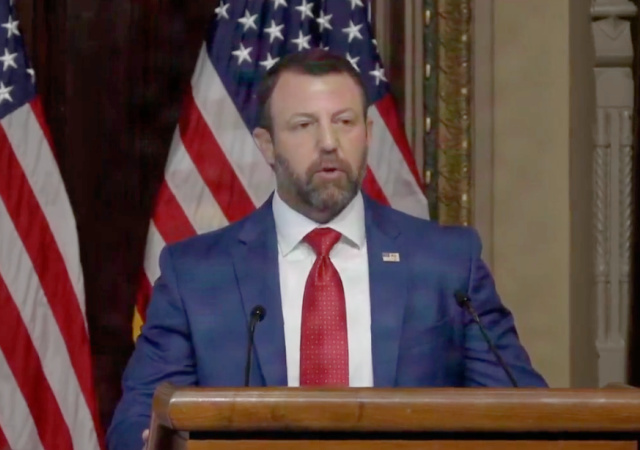
“For nearly half a century, the outdated ‘duration of status’ system has compromised national security and created an environment ripe for immigration fraud,” said DHS Secretary Markwayne Mullin. “For decades, foreign students have been admitted into the U.S. indefinitely, allowing thousands to abuse our immigration system by perpetually enrolling in courses to avoid having to leave the U.S. By implementing clear, finite limits on these visas, the United States is reclaiming its ability to properly screen, vet, and monitor individuals within our borders. This final rule ensures that foreign students remain focused on their primary purpose: completing their studies and returning home.”
Since 1978, foreign students have been admitted into the U.S. for an unspecified period, enabling thousands to become “forever students” by perpetually enrolling in courses to avoid departure. The final rule ends this exploitation through several major reforms:
- Fixed Admission Caps: Nonimmigrant students (F visas) and exchange visitors (J visas) will be admitted for the length of their specific program, not to exceed a maximum period of four years.
- Mandatory Federal Extensions: Visa holders requiring additional time to complete an academic program must formally apply for an Extension of Stay (EOS) directly through U.S. Citizenship and Immigration Services (USCIS). This transitions oversight from university staff back to federal authorities and subjects applicants to biometric vetting, background checks, and fraud screenings.
- Reduced Departure Grace Period: The time allowed for F-1 students to prepare for departure, transfer schools, or change status following graduation is reduced from 60 days to 30 days.
- Program Change Restrictions: The rule introduces strict limitations on academic changes.
Donations tax deductible
to the full extent allowed by law.



Comments
Yes!!!! More of this, please!
Good. Come in, get your degree and GTFO. They should be expected to maintain a full course load so they can graduate on time.
Yes and no. There should be a path to legality (that is coupled to workforce demand in areas of need).
Basically, no “studies” or academic bubble majors and no permastudents, but if you want to come here, learn here, then work here legally, there should be a path for that. It’s actually the backbone of the American way.
Basically, an H1B through college.
I’m not sure I want that. If you want to come here after you’ve graduated, you can apply for a work visa. I might even let you apply for it during your last semester. But you’re still going to have to go home, then return on the new visa.
No, I don’t think so. If they want to come after they get their degree they should apply legally and that should be counted as a positive toward their application because they would be able to provide for themselves instead of drawing upon the resources of the American people. But no I don’t think automatic is a good plan. We should always vet people to come become citizens separately.
I never once said “automatic”. I said a path.
We can’t have a direct pipeline from a temporary student visa to any other category of visa. There’s too much incentive to game that and create extension after extension.
These folks come here to study for X academic program with the understanding/agreement to maintain academic progress/standing within the course of study, graduate and go home.
Sending them home afterwards is a condition of the program. Any arguments that we should allow them to stay runs headlong into the problem of competition for jobs with US Citizens and lawful resident aliens already present.
I might be willing to alter that viewpoint when the facts on the ground change; when every illegal alien is deported, when every temporary visa holder is forced to go home on time and a decade has passed to make sure we keep can maintain that vigilance. By that point any supposedly unmet labor force needs would have been addressed by market forces which would cause employers to raise wages and /or offer academic support to their workforce to earn the academic credentials the employer claims to require.
Why don’t you only make them valid for the end of August through the beginning of June each year. You want to keep attending you have to renew. And you have to show grades and such. (And, since you’re renewing, you have another chance to lie on your forms if you’re doing stupid stuff, giving State another opportunity to catch you and boot you out for good.
Yes – very similar to athletic scholarships.
We know a lady as a member of our church who came to the U.S. as a college student and met her husband (also a student and also here on a student visa). They married and stayed illegally. He became a GM Master Technician and she became a Montessori school teacher. They never corrected their visa statuses and had absolutely zero problems. I have no idea what they did for SSN’s or taxes. We knew them for well over a dozen years and knew nothing of this. It only came out when our state began to require an identity check in order to renew a driver’s license. Fortunately (ultimately) for her, this was before Trump came to office and she was able to hire a lawyer and sort things out. (Unfortunately her husband passed away while all this was happening.)
I was shocked when I learned all this of course, and since then I’ve often wondered about how many others have done the same thing.
For the schadenfreude folks, the couple spent all their savings sending their kid to college and the paying the wife’s lawyers. She’s entitled to almost zero Social Security since neither her payments nor her husbands went into legitimate accounts. We haven’t heard from her in a few years. She had to leave our city and move in with her sister (who has always been a legal immigrant).
“I have no idea what they did for SSN’s or taxes.”
Well, that’s quite easy: almost every foreign visa holder (except visitors/business visitors) can get an SSN. Depending on the status, the card will say either “NOT VALID FOR EMPLOYMENT” or “VALID FOR WORK ONLY WITH DHS AUTHORIZATION.” For example, with a 4-year student visa, work authorization is based on the program and DHS rules, not the visa’s validity date. So if the program is only 2 years, the relevant student status/program period is 2 years, even if the visa itself is valid for 5 years. The longer visa validity simply allows you to enter during that period; it does not extend your student status or work authorization. Students may also be allowed to arrive before the program starts to get settled before classes begin.
‘No idea what they did for SSN or taxes’ …that’s simple; they didn’t pay them or they used a stolen and/or false identity and submitted fraudulent documents to the State and Federal govt …possibly with the knowledge of their employer which isn’t at all unusual.
You can actually get an employer, identification number, even if you are an illegal alien.
This is so you can pay your taxes on any income.
Sure but a Tax ID # ain’t a SSN and you’re only allowed to work with permission and someone who overstayed a student visa generally ain’t granted permission to work.
In the discussion here that Hodge described these folks were on student visa and didn’t alter their status when student status ended. Assuming that’s the case it means they illegally over stayed the visa, were employed unlawfully and without valid permission to work they had to submit bogus info to the employer for their I-9 or given the prevalence of scamming the system and misguided willful blindness they did so with assistance from or knowledge of their employer. Some employers prefer illegal workers b/c they seem easier to control, under pay and otherwise be taken advantage of by that employer.
Does this mean that if a college runs a six-year course (e.g. something in medicine) foreigners can’t apply for it?
Post graduate degrees are different. The way I read the article was that this rule pertained to a 4 year degree. I would prefer that a graduated student who wanted to pursue a post graduate degree return to their home country and reapply for a post graduate visa.
No. Foreign students can still apply for a six-year U.S. program, such as a medical program. Under the old system, F-1 students were admitted for “duration of status,” so they could remain as long as they maintained valid student status; they could also have permitted breaks, change programs, or otherwise remain in valid F-1 status without having to obtain a new fixed-period admission each time. The new rule replaces that system with a fixed admission period of up to four years. A student in a six-year program can therefore still complete it, but must apply for an extension for years 5–6. The purpose of the change is to put the federal government—not the school—in control of extensions and to prevent the old system from being used to remain in the U.S. indefinitely through continued or repeated enrollment…
Exactly and it ends the practice of changing degree plan/course of study plus stops the eternal student status of a visa holder changing majors or getting additional degrees without permission.from Immigration. In the past the University could authorize those things internally with the Feds basically rubber stamping changes.
Why can’t they apply for an undergraduate degree, then separately apply (assuming their grades are good enough) for the medical program? If the undergraduate degree is 6 years then someone is doing something wrong.
Fixed Admission Caps: Nonimmigrant students (F visas) and exchange visitors (J visas) will be admitted for the length of their specific program, not to exceed a maximum period of four years..
Mandatory Federal Extensions : Visa holders requiring additional time to complete an academic program must formally apply for an Extension of Stay (EOS) directly through U.S. Citizenship and Immigration Services (USCIS). This transitions oversight from university staff back to federal authorities …”
Getting Straight (1970)
Doorways in The Sand (1976)
It’s an old, old con game.
Kudos to President Trump and his administration for implementing these common-sense rules. What’s crazy is that these changes weren’t implemented, decades ago.
Status should be reviewed early to make sure each holder is making sufficient progress.
yearly.
Who’s going to determine whether a student actually leaves the US after the four years? And how are they going to determine that?
What are the consequences if the student doesn’t leave?
DHS monitors outbound flights/border crossings. Write a daily batch job to compare expired visas against everyone who exited. If someone didn’t exit, track them down and put them on the next flight home.
That would probably work well! But it would contribute the the ongoing development of the totalitarian surveillance state, as does the solution to every act of criminality.
Only 4 years? That is good. That stops foreign students getting Pharmacy degrees, all Masters programs unless they can complete the master with their BS in the 4 years. No more foreign students taking up slots in medical schools or doctoral programs.
There should be a requirement that foreign students must show their visa to register for class. Those running out during the semester or expired sends a flag to ICE to make sure they go home but they are allowed to register. ICE picks them up later.