


Dept. Education To Investigate 32 Florida State Discriminatory Scholarships After Equal Protection Project Complaint
“They try to couch this in terms of offloading the blame onto the donor. These are scholarships promoted by and awarded through the Florida State University system. Legally, they are responsible.”
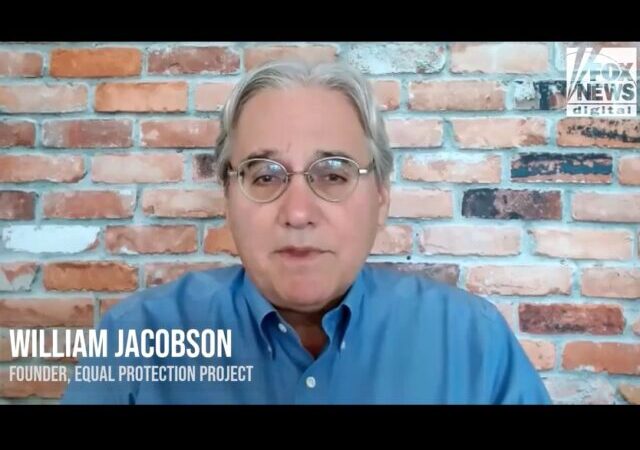
The Equal Protection Project (EqualProtect.org) has challenged over 850 discriminatory programs and scholarships at over 290 colleges and universities. We find such problems not only in blue states, but also from time to time at state universities in red states that have anti-DEI policies.
Such was the case a little over a year ago, July 18, 2025, when we filed a Civil Rights Complaint with the U.S. Department of Education, Office for Civil Rights (OCR), against Florida State University. We described the details and legal arguments in our post, Thirty-Two Discriminatory Scholarships at Florida State Univ. Challenged By Equal Protection Project. Fourteen of the scholarships discriminated based on race, color, or national origin; 13 based on sex; and five based on both race and sex.
The scholarships were promoted, awarded, and administered by FSU, but the money was put up by private donors. Legally that’s meaningless because FSU is bound by the Civil Rights Act and Equal Protection Clause, and it is responsible for scholarships. As we explained in the Complaint:
FSU frequently references the “preference of the donor” for discrimination. That is not a defense for FSU since it is promoting the scholarships in a manner that would dissuade nonfavored groups from applying. There would be no reason for FSU to include such preferences in the scholarship description unless it intended to honor donor intent.
On August 4, 2026, we received a Letter from OCR stating that it was opening a formal investigation:
On July 18, 2025, the U.S. Department of Education (Department), Office for Civil Rights (OCR), received your complaint against Florida State University (University). Your complaint alleges that the University discriminates on the bases of race, color, national origin, and/or sex by offering and administering the scholarships below (collectively, “Scholarships”). Specifically, you allege that Scholarships 1-14 have preferences based on race, color, and/or national origin; that Scholarships 15-27 have preferences based on sex; and that Scholarships 28-32 have preferences based on sex, as well as race, color, and/or national origin:
***
OCR enforces Title VI of the Civil Rights Act of 1964 (Title VI), 42 U.S.C. Sections 2000d2000d-7, and its implementing regulation, 34 C.F.R. Part 100, which prohibit discrimination on the basis of race, color, or national origin under any program or activity receiving federal financial assistance from the Department. OCR enforces Title IX of the Education Amendments of 1972 (Title IX), 20 U.S.C. Sections 1681 et seq., and its implementing regulation at 34 C.F.R. Part 106, which prohibit discrimination on the basis of sex in any education program or activity operated by a recipient of federal financial assistance. As a recipient of federal financial assistance from the Department, the University must comply with Title VI, Title IX, and their implementing regulations.
OCR will investigate the following issues:
1. Whether the University discriminates on the basis of race, color, or national origin with respect to the Scholarships, in violation of Title VI.
2. Whether the University discriminates on the basis of sex with respect to the Scholarships, in violation of Title IX.
Please note that opening an investigation in no way implies that OCR has made a determination with regard to the merits. During the investigation, OCR is a neutral factfinder, collecting and analyzing relevant evidence from the complainant, the recipient, and other sources, as appropriate….
Fox News covered the opening of the investigation, for which I was interviewed (video at bottom of this post):
The Trump administration has opened a federal civil rights investigation into Florida State University (FSU) over 32 scholarships accused of discriminating against students based on race or sex, according to a Department of Education (DOE) letter obtained by Fox News Digital.
The DOE’s Office for Civil Rights (OCR) said it will investigate whether FSU discriminated on the basis of race, color or national origin in violation of Title VI of the Civil Rights Act and whether the university discriminated based on sex in violation of Title IX.
The investigation stems from a July 2025 complaint filed by the Equal Protection Project (EPP) that targeted 32 FSU scholarships. The DOE’s Aug. 4 letter lists all 32 programs and confirms FSU is a recipient of federal financial assistance and therefore must comply with Title VI and Title IX.
William Jacobson, founder and president of the EPP and Cornell Law professor, told Fox News Digital that FSU stood out even among the hundreds of colleges and universities his organization has challenged.
“Florida State, surprisingly, has one of the largest contingencies of discriminatory scholarships that we’ve seen anywhere,” Jacobson said of the Tallahassee institution with an enrollment of more than 46,000 students. “We have challenged over 290 colleges and universities, and only a handful have this many.”
Jacobson said the allegations were particularly surprising because of Florida’s aggressive efforts to eliminate diversity, equity and inclusion initiatives, and discrimination in higher education.
“The culture on the campuses has not caught up yet with the politics,” Jacobson said. “Florida famously has cracked down on wokeness and DEI and discrimination more so than blue states. So it’s very surprising to find such aggressive discriminatory scholarships at Florida State University.”
The Equal Protection Project’s 34-page complaint divides the programs into 14 scholarships it alleges discriminate based on race, color or national origin, 13 based on sex, and five based on both.
FSU pushed back on the allegations, telling Fox News Digital that all students are eligible to apply for and receive the scholarships under investigation.
“All Florida State University students are eligible to apply for and receive the scholarships listed,” the university said in a statement. “While donors may express preferences, these do not constitute eligibility requirements.”
FSU said the scholarships are funded entirely through private donations rather than institutional funds and maintained that all applicants are “evaluated equally based on merit,” with no student disqualified or given an unfair advantage because of a donor preference.
The distinction between a donor’s stated preference and an eligibility requirement is at the center of the dispute.
Among the programs cited is the Crockett Family Fund for Excellence, whose FSU listing, reproduced in the complaint, stated that any student could apply but that it was the donor’s preference that the recipient be an African American or Black student.
Jacobson zeroed in on that language during his interview with Fox News Digital, arguing that FSU cannot shield itself from discrimination allegations by attributing the preference to private donors.
“They try to couch this in terms of offloading the blame onto the donor,” Jacobson said. “These are scholarships promoted by and awarded through the Florida State University system. Legally, they are responsible.”
“So that’s what I found [at] Florida State to be most interesting, is that they seem to try to wordsmith around it,” he added….
Jacobson argued the distinction between an eligibility requirement and a stated preference does not resolve the underlying legal issue.
“Rather than doing away with it, they play word games,” he said. “And that’s just not good enough.”
Reminder: we are a small organization going up against powerful and wealthy government and private institutions devoted to DEI discrimination. Donations are greatly needed and appreciated.
=====================
Donations tax deductible
to the full extent allowed by law.






Comments
“if he dies, he dies”
Also, I’d like to know the “hit rate” of these scholarships along the lines of donor preference based on this poorly attempted legal dodge.
That seems fine, so long as this doesn’t influence the university’s selection. The question to ask is whether the recipients have historically all fit the donor’s preferences, or has the university been awarding it to whomever it thinks is best, without reference to the donor’s preference.
I can think of two ways around this that would be legal.
The first is straightforward. The university steps back from administering any of these programs, and transfers that responsibility to a private organization, which acts for and is responsible to the donors alone. Rather than each of 32 donors having to find its own administrator, and all of them reaching out to students independently, they have one organization working for them all, doing everything the university was doing before, but with no university involvement. There can’t be anything illegal about that.
The second way I can think of, which I think would be legal, is for the university to keep running the programs, but rather than choosing a winner for each program it produces a list of, say, the top ten by merit, and forward that to the program’s donor. The donor can then choose anyone on the list as he likes, or can even substitute someone else of his preference. I think this would be legal too; but it runs the risk (for the donor) that the list submitted might not contain any of the donor’s preferred race/sex/whatever.
Even simpler: IF a donor wants a racially discriminatory scholarship then he can do the work himself without asking the taxpayer’s employees.
No, that’s not simpler, because it means each of 32 donors must run an independent application process, and advertise it, and that’s very inefficient. That’s why my first suggestion was for the university to establish a private organization to provide this service for all the donors; it would do everything that the university is now doing.
But I think my second suggestion would also work, except for the risk I noted, that since they can’t take race/sex/etc into account in making the list to submit to the donor, they might end up not listing anyone who meets the criteria.
Yes the donors can hire it done but the university’s don’t need to establish anything. There’s a million nonprofits who would be happy to have that contract.
The university is currently handling it, so it makes sense for it to create a new entity to do it instead. Or to contract with an existing entity.
The bottom line is that the university itself can’t do it.
I expect this in blue states … I don’t understand why state run universities in red states can’t clean this up
The rot runs deep – it is like cleaning the Augean stables.
Because all academia is overrun with this garbage. Those unis might as well be a progressive embassy in foreign territory.
Accountability is kryptonite to leftist wokiestas.
Professor, there too many of these cases!
The Dept of Education must take a more creative approach of getting compliance.
Perhaps, requiring each school that is deciding who gets a scholarship, confirm in writing that they know the rules and will comply with the rules.