


U.S. Orders Anthropic to Disable Claude Fable 5, Mythos 5 Over Security Concerns
“Our understanding is that the government believes it has become aware of a method of bypassing, or ‘jailbreaking’ Fable 5″ to identify minor software vulnerabilities in the model.”
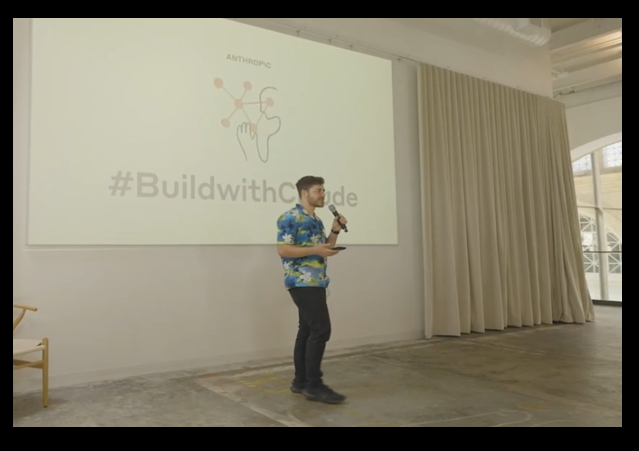
Artificial Intelligence (AI) startup Anthropic’s two newest frontier models, Claude Fable 5 and Claude Mythos 5, were abruptly taken offline worldwide last week after the U.S. government issued an export‑control directive citing national security authorities.
Axios first reported that Commerce Secretary Howard Lutnick on Friday sent a letter to Anthropic CEO Dario Amodei stating Mythos 5 and Fable 5 models would be subject to export controls to any location outside of the U.S. and to all foreign persons within the country, including Anthropic employees.
To ensure compliance, Anthropic said in a statement that it disabled the two models for all customers. No other Anthropic models were affected.
“Our understanding is that the government believes it has become aware of a method of bypassing, or ‘jailbreaking’ Fable 5” to identify minor software vulnerabilities in the model, Anthropic said.
…Among other advanced skills, Fable 5 generated novel molecular biology hypotheses and conducted largely autonomous genomics research.
Mythos 5 enabled researchers to accelerate the drug discovery process by 10 times and matched or outperformed experienced scientists on certain protein design tasks, the company said.
The US government, citing national security authorities, has issued an export control directive to suspend all access to Fable 5 and Mythos 5 by any foreign national, whether inside or outside the United States, including foreign national Anthropic employees.
The net effect of…
— Anthropic (@AnthropicAI) June 13, 2026
In a nutshell, the U.S. government ordered Anthropic to cut off access to its newest Claude models under an export‑control directive that barred all “foreign nationals” from using them, citing national security concerns tied to a claimed jailbreak technique that could allegedly bypass safeguards and assist in discovering software vulnerabilities.
Legal Insurrection readers may recall that in March, I reported that hackers reportedly “jailbroke” Anthropic’s Claude chatbot and used it to help steal roughly 150 GB of sensitive data from multiple Mexican government entities, including tax and voter records.
This order forced Anthropic to disable the models globally rather than attempt real‑time nationality filtering.
Anthropic asserts that the demonstrated jailbreak threat was narrow, non‑universal, and exposed only minor, previously known vulnerabilities that other public models can also exploit.
The models built on the release of Claude Mythos Preview, which captivated Wall Street and government officials with its advanced cybersecurity capabilities in April. The company said it did not plan to make the model generally available, and it has limited the rollout to a select group of companies as part of a cybersecurity initiative called Project Glasswing.
In its statement on Friday, Anthropic said the government did not provide specific details about its national security concern. The company apologized to its customers for the disruption.
“As we have stated publicly, we believe the government should have the ability to block unsafe deployments, as part of a statutory process that is transparent, fair, clear, and grounded in technical facts,” Anthropic said. “This action does not adhere to those principles.”
A few cybersecurity “experts” and Anthropic employees believe the Trump administration is unfairly targeting the AI startup.
Some cybersecurity experts said the Trump administration was unfairly targeting Anthropic. By Tuesday afternoon, more than 150 of them had signed an open letter to Howard Lutnick, the commerce secretary, and Sean Cairncross, the national cyber director, calling for them to lift the restrictions on Anthropic’s models.
The list of signatories included cybersecurity luminaries credited with large contributions to internet security, as well as an A.I. expert at the chip giant Nvidia and a former top official at the National Security Agency who oversaw responsible A.I. use.
“Anthropic has built multiple protections into the Fable model to prevent its use for cyber offensive uses,” the letter said. “These protections were so aggressive as to be the source of humor in the cyber community on launch day.”
At Anthropic, some employees shared the letter with one another, seeing it as proof that they were being unfairly targeted. On company channels, workers also asked how their employer planned to move forward if the White House continued limiting their ability to release new A.I. models.
Ultimately, while Anthropic and its supporters argue the government’s response is disproportionate and risks stifling innovation, the episode underscores a broader reality: frontier AI systems with demonstrated cybersecurity applications are now firmly within the scope of national security scrutiny.
Given the prior incident in which a jailbroken Claude model was reportedly leveraged in a significant data breach involving Mexican government systems, policymakers appear inclined to act preemptively rather than reactively.
That precedent, whether fully representative or not, reinforces the rationale for a cautious approach, suggesting that even narrow vulnerabilities in highly capable models can have outsized real-world consequences when scaled or misused.
AI is a tool. All tools can be forged into weapons by those motivated to do so.
Donations tax deductible
to the full extent allowed by law.





Comments
I know the rush is on, being money based, to adopt AI with all possible speed, but remember this:
1) the more AI you have, the less NI (natural intelligence) you get. Students prove this everyday, as do “person in the street” quizzes. Brains are already atrophying from leftist maleducation, why automate it?
2) anything mankind can create, mankind can destroy/weaponize.
3) you can’t really punish AI, and AI makes mistakes with both impunity and certainty that some folk will blindly follow, much like the leftist media.
4) AI leads to systemic mediocrity, as if we needed more. Look at the morass of “original” stories on YouTube and the fakery that passes for posts on social media. Who needs Photoshop and video editing anymore? And fool can call up their sincerest delusions and make them visible.
5) Skynet, Colossus, HAL etc.
6) AI is already consuming enormous resources, both RAM and CPUs, and the energy requirements are daunting.
YMMV, but I see no good coming from this. For automation, perhaps, but innovation, as well as driving cars/trucks, I think not. I won’t be around to see the results, but my children will.
Agreed. Add water consumption required for cooling and the ‘little’ issues of where the electricity is gonna come from to run the data centers, vast potential for govt overreach in applying eminent domain for new transmission lines, lack of available capacity to support these data centers in many locations selected, goofy State/local luddite ‘green’ energy policies driving the quest to being in electricity generated far away and the foolish govt giveaways of tax breaks to attract datacenters.
“5) Skynet, Colossus, HAL etc.”
You forgot Samaritan.
Apparently, nobody here watched the “Person of Interest” series. It’s streaming on Prime Video.
Man’s Own Understanding will be our downfall as opposed to a Memorandum Of Understanding.
As a youngster at age 30 I was a white-hat demon at hacking into systems. It’s all just “what could it possibly do if I asked it to do this” asking and trying.
Nobody ever coded a defense for anything unusual.
The standard way of reporting a bug was in fact self-executing files, exhibiting all the so far discovered bugs if they still existed. It served as a to-do list for the fixers. When it passed, it was all fixed. Self-executing files depend on trust, which probably no longer exists.
As we see occasionally with airlines when their computer system goes down, a world dependent on AI Is headed for the same future. How many of us have had computer issues with newer autos that cannot be fixed by a mechanic? Thats only a micro view of what’s in store for the AI world.
I have an auto computer issue now, My new auto requires a system update. It won’t let me do it. I have to take it in for a half day. It babbles at me to do it every time I start it.
Just wait until all your home appliances go down due to malicious updates.
We were already unable to use our new dishwasher because the WiFi was down.
I had a freaking GAS PUMP crash and reboot on me today, in the middle of my fillup. It took over five minutes as it started its filesystem, compressed logs, contacted the cloud, loaded its manifest and printer extender (could save time there, there’s never any paper in it)… It was like waiting out a Windows update with a nozzle in my hand. I never realized that gas pumps suffered from such software bloat. As compensation, I suspect I got the gas free that I had pumped before the crash.