


Lawmakers Warn China May Be Fueling US Data Center Backlash as Local Bans Spread
Voters in a California city ban AI data center construction, plans for Utah data center shrinking over backlash, Seattle issues one-year prohibition on center construction.
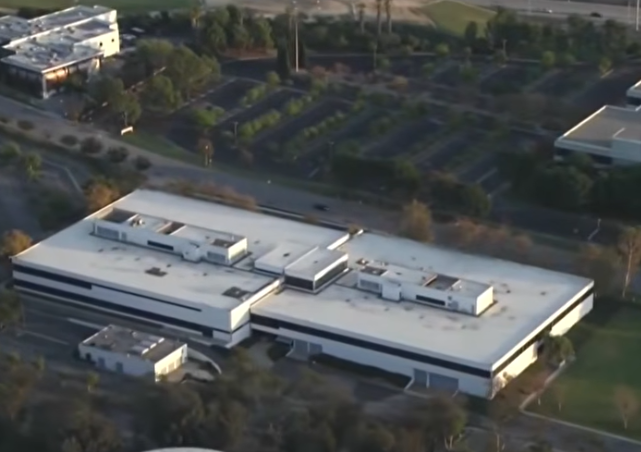
In addition to some interesting developments in the Los Angeles primary — the results of which are yet to be completely determined — voters in the nearby city of Monterey Park had the chance to consider the fate of artificial intelligence (AI) data centers in the region.
They chose to ban them.
About 86 percent of voters in Monterey Park, Calif., voted in favor of the measure in Tuesday’s elections, according to election results from the county clerk.
The measure declares a prohibition on data centers citywide in order to “protect air quality, drinking water resources and public health” and “prevent impacts to electricity and water rates.”
It comes in response to a proposed data center project in Monterey Park, which was ultimately withdrawn earlier this year after the city council adopted a moratorium on data center construction.
Data center moratoriums and restrictions have gained traction across the country at the state and local level in the face of rising community pushback to the sprawling server warehouses that are central to the AI boom.
In first, California city overwhelmingly votes to permanently ban datacenters | Sanya Mansoor, The Guardian
Residents in Monterey Park, California, became the first in the US to vote on a permanent ban on datacenters on Tuesday, and early results indicate a resounding victory… pic.twitter.com/fXcCbFFJgu
— Owen Gregorian (@OwenGregorian) June 4, 2026
In the wake of backlash to a data center being in built in Utah, businessman Kevin O’Leary has agreed to cut the project area in half, from around 40,000 acres to around 20,000 acres.
Of the remaining 20,000 acres or so of the project area, around half would remain undeveloped and set aside as agricultural space or for wildlife, reducing the effective area facing development to 10,000 acres.
In a letter Thursday to Utah Senate President Stuart Adams, O’Leary said he’d remove two of the three proposed project areas from the data center initiative, one measuring around 19,430 acres in the Locomotive Springs area, another measuring around 620 acres abutting I-84. That would leave the third, more southeasterly parcel in the Hansel Valley, measuring around 20,000 acres.
“We agreed to remove the 19,000-plus in Locomotive and the 600 or so by the highway,” said Paul Palandjian, chief executive officer of O’Leary Digital, chaired by O’Leary and the business entity pursuing the initiative. “I think (that) addresses a lot of people’s concerns.”
"O’Leary shrinking Utah data center after backlash" – The Hill #SmartNews #Ban DATACENTERS https://t.co/YaV8BjKvmQ
— Sweet Tea (@LaurenSexyGirl) June 4, 2026
In Seattle, the city’s Land Use and Sustainability Committee voted unanimously this week to advance a moratorium on large-scale data centers.
If passed by the full City Council, the city would impose a one-year ban on data centers that use more than 20 megavolt-amperes, roughly equivalent to 20 megawatts. In that time, the city would study regulations that might allow large-scale data centers under certain conditions.
There were 30 public commenters at Wednesday’s meeting, the overwhelming majority who expressed concern about data centers’ electricity and water use, financial and environmental impacts, land use and noise. Several also voiced broader opposition to artificial intelligence.
Committee Chair Eddie Lin, who co-sponsored the moratorium bill, said he was concerned about the impact of “mega data centers” and how they may require the city to rely more on electricity generated from fossil fuels.
Amazon engineers in Seattle slam employer for building AI data centers while laying off 30,000 staffers | Annie Palmer, CNBC
Key Points
– Amazon engineers railed at their employer for conducting mass layoffs while committing to spend $200 billion this year on AI infrastructure,… pic.twitter.com/R4MgOJvLpX
— Owen Gregorian (@OwenGregorian) June 4, 2026
In the wake of these developments, it’s important to note that the House Energy and Commerce Committee asserts there is evidence that “strongly suggests” China and other foreign adversaries are fueling campaigns opposing data centers to undermine the U.S. in the artificial intelligence race.
Lawmakers on the panel urged in a new letter to the Trump administration to step up oversight of possible ties between China and anti-AI forces in the U.S., fretting that the international subterfuge could undermine American dominance.
“Our nation is locked in a race with China to innovate and lead the world in the development of Artificial Intelligence technologies,” House Committee on Energy and Commerce Chairman Brett Guthrie (R-Ky.) told The Post.
“The fact that Chinese Communist Party-backed entities and other foreign adversaries may be attempting to influence decisions related to American data center infrastructure puts into perspective how serious of a fight we are in.”
🇺🇸 — REPORT: House Republicans warned that evidence “strongly suggests” China and other foreign adversaries may be helping fuel anti-data center campaigns in the United States in an effort to slow American AI development and gain an advantage in the global race for artificial… pic.twitter.com/UIMQViXbpO
— Belaaz News (@TheBelaaz) June 4, 2026
The local votes in Monterey Park and Seattle may look like ordinary civic environmentalism, but the House Energy and Commerce Committee’s warning reframes them in a far more sobering light.
Evidence “strongly suggests” that CCP-aligned entities and foreign adversaries are actively fueling campaigns to block American AI infrastructure, which is the same infrastructure Beijing is simultaneously subsidizing at home for its own AI competitors.
Paired with “virtue signaling” and NIMBY attitudes, these developments suggest that the future of AI in this country may not be quite what its promoters have advertised.
Donations tax deductible
to the full extent allowed by law.






Comments
It would be more accurate to write China IS fueling data center backlash.
Chinese agents are operating all over the country. Read Schweizer’s The Invisible Coup. It’s not just China, either.
What;s worse is our governments seem unwilling to do anything about it. How many officials are on the take from China? 50%? 80%? Why do we allow immigration from China now and the employment of Chinese through H1Bs? Why are 500K students allowed to spy in this country? Why does the West have such a death wish? Is bankrupting your children’s future worth a few dollars or even a lot of dollars?
It’s not China. Local plans here have ground to a halt over the massive amount of water it will use and the electricity which will drive already rising electricity rates even higher. No one wants these things.
I admit I don’t know too much about AI, or the complications that come with it, but i do question the business savvy of anyone investing an enormous amount of money in California, Oregon, or Washington, and expecting to turn a profit.
After taxes, and who knows what new taxes would be levied against a megacomplex of this size, I see bankruptcy before it’s completed.
Maybe China is funding anti-data center propaganda, maybe they’re not, but this NIMBY sentiment is perfectly in line with progressive thought – they will be screaming to their internet providers that service isn’t fast enough on Line 1, while planning the next data center protest with equally benighted colleagues on Line 2. To them, goods and services arise magically from the ether, goods and services that they feel entitled to at no cost to them, all the while screeching about corporate greed and the evils of capitalism (on their laptops connected to a fiber optic system no less).
The future is here, and the future is stupid.
Well, I for one do not want a data center near me and O think they should be put in places like West Texas
They are loud, horrible buzzing sound heard for miles, affect all wildlife, double your electric and use up your water sources
Amazon was going to put one very close to where I live, about a mile, instead they put up a small distribution center.
They think they are fooling us when they say they changed their mind regarding a data center “later”
Not just no, but HELL NO
Sorry but it’s coming whether you like it or not. Have you also considered living innawoods and dumping your cellphone? If you’re gonna be a Luddite go all the way
If I already dumped my cellphone and live ‘innawoods’ in a very rural area will you promise to keep any project from impacting me like building new power transmission lines along a new route through my ‘woods’ instead of following the existing easements?
Our local utility already told my wife’s employer that their plan to go to an all electric semi fleet isn’t happening because there is no power capacity and no transmission lines to carry it even if it it was available and yet the Board just rezoned some land for an expected application to build a data center. How they expect to power it is a mystery as there just isn’t electricity or infrastructure for it. A town 50 miles away already told them to go away so they are knocking on the door of a more rural place. This after the endless solar farms taking up the fields in every direction.
I would add: i) land use (of non-federal) lands is a state and local issue; ii) today’s technology is going to be obsolete in the near future; iii) data centers and mini / micro nuclear power reactors will go “hand-in-hand” (disastrous enough is the lithium car and other batteries; iv) all the solar farm lands could be reclaimed and remediated as part of any re-purposing to “AI data center”; v) the CCP is factionalized which makes it dangerous but incapable of its many aspirational goals. …
Separately, I object to Pres. DJ Trump, who I generally support, promoting “industries” of his choice (in the name of US defense). This is more of the same, not just emblematic of Eisenhower’s warning re: “military industrial complex” but also solidifying the US economy as essential “1930-40s Italian facism” now having been designated as “public-private partnerships” by obama.
The US People continue to be managed by “fear” of [“your paranoia here”].
NIMBY jerkoffs are the absolute worst. They don’t care about whatever they’re banning. They just don’t want it near them.
Personally, I don’t want anyone or anything near me. I could Jeremiah Johnson it and be perfectly happy (as long as the stock market goes up of course).
You want your utilities doubled, go ahead. Don’t expect the rest of us to go along
Chinese communist agents, by definition, are not here to help us. But if they are trying to manipulate matters in this case, they’re probably doing us a favor in the long run. This data center overbuilding is absurd.
The main complaints that seem reasonable to me are:
1. Water availability
2. Available electricity capacity
3. Eminent domain
Lots of water used and lots of additional electricity required. Developers should build these things where the spare capacity for those currently exists OR build out the on-site power generation to support the electric + figure out how to supply water without impact and then build the AI facility.
Using eminent domain to run additional high power transmission lines to supply power is gonna be opposed and rightly so. The use of eminent domain is supposed to be for projects that provide a direct community benefit to the community members; A sewer system project, waterline project, electric lines. Those connect to individual homes/businesses not to some project which doesn’t directly benefit the property owners whose land is seized.
I think the problem is that most of the people complaining about these data centers were the same people complaining about nuclear plants, coal plants and anything else that technology relies on.
Had we worked on our infrastructure properly a lot of this stuff would’ve been built in large areas that major suburbs weren’t located.
A huge problem is the US is trying to build off energy infrastructure from the early 1900s while the Chinese are balls to the wall with every type of power plant they can utilize.
You live within a mile from one amd then write your experience
So, build them two miles from anyone. Lots of land in the West two miles from anyone.
Correct about usual suspects whining… but there’s a lot of opposition that’s legitimately grassroots, most often from the angle of eminent domain.
Our infrastructure is limping along and could do with upgrading…. but that’s true with or without data centers. IMO it makes far more sense to locate these where the spare electric generation capacity and plentiful water exists. Instead it seems like the companies backing these projects are more interested in getting the most State/Local govt subsidies to include financing not just tax breaks than choosing a better location from a resource needs perspective.
We’ve already got easements in existence electric transmission lines. If additional.routes are needed then use the railway easements. Any notion of building an entirely new grid to support data centers is flipping stupid and deserves to be opposed. Some locations have spare electric capacity and plentiful water…. build the dang things there and if that’s inconvenient b/c Utah or wherever offers better tax breaks and greater direct financing than Georgia or Alabama (which just completed and are building more new nuclear power plants and have lots of water or the investors don’t want to build in the deep South b/c it gives them ‘the ick’ then those investors better be prepared to build on site power plant and figure out water without PO the locals.
Eminent domain! That’s a pet peeve of mine for sure. It’s used waaaay to freely by our elected bribery enthusiasts for their friends and their pocketbooks.
Local issue right here, right now. The problems are the first 2. Eminent domain isn’t as the land has been bought up from private individuals by a LLC that builds data centers however, at the local meeting for an applied re zoning the company’s lawyer would not say what the rezoning was for or what the company had in mind.
1) Water. Our town draws from a reservoir as does 5 surrounding counties and a client on the East Coast. Each county has a water allotment. When the numbers are run, a data center will use up the entire remaining water allotment for our county stopping all future development. No water
2) Electric Capacity, Our capacity is already at it’s limit with current infrastructure. When my wife’s company announced they were going all electric vehicles the utility said “not so fast, bunky”. Not only is there no excess power to do that, there is no infrastructure in place to carry it even if it was available. A data center will cause the utility to buy expensive power out of our area raising our rates even further. The Utility has already raised our rates 10% last year and want’s another 14% in the future. The problem is that in their push to go all green they shut down coal powered electric plants and built intermittent solar farms that do not supply a constant source of power. It takes years to build a power plant and even if they do, transmission lines would be even worse to get permitted and built. A proposed natural gas pipeline through our state was fought endlessly in the courts by the usual suspects.
The objections to data centers are not just NIMBY. There are serious infrastructure and cost problems involved.
I raise eminent domain not for the site of the facility nut for the new transmission lines to bring them power. The folks along the route who get burdened with the transmission lines don’t receive any tangible direct benefit from the project and IMO that makes use of eminent domain inappropriate. Eminent domain should be reserved for projects that provide direct benefits to each property owner impacted, as with a sewer line project that connects them to a municipal/County sewer line.
IMO the proper policy when these developers choose build a facility in an area without sufficient spare electric capacity to support their operation then they gotta build out the generation capacity on site OR they pay for parallel transmission lines to run along existing easements to bring them sufficient power.
I agree but that doesn’t solve the water issue. There are more expensive closed loop systems but they still use a bunch of water and are not the preferred cheaper cooling method.
https://www.zerohedge.com/energy/spain-style-blackout-risk-rises-ercot-flags-boston-sized-data-center-loads-tripping-offline
You have to notice patterns…
Russian Interference is the squirrel Democrats use to gaslight the public (think Trump electoral victory, the Biden Laptop, and the SPLCC’s excuses).
Now, Republicans are citing Chinese Interference to gaslight us in the service of the Tech Industry and the financial support they use to run DC to their advantage.
These evil foreigners, it seems, only show themselves at times when people have control by voting.
Patterns.
I don’t want to hear claims that ‘evidence strongly suggests’ without showing the actual evidence, especially if it’s Congress making the claims. Otherwise, I’m disinclined to lend it any credibility.
A major cause of backlash is that these projects are sold through county commissions or city councils by claiming there won’t be any cost to the community to support the projects. Then, when push comes to shove, the local citizens are left with the bill for power plants, water projects, or road construction to support the data centers, and/or higher utility bills.
Add to that any positive employment impact usually does not accrue to the local community, aside from temporary construction jobs to build the physical plants. High paying, skilled jobs are filled by outsiders brought in instead of training locals for them.
Then there are the ‘tax incentives’ given to the corporations building these things which end up being little more than tax giveaways, again ultimately billed to the taxpayers.
Exactly. The power bills go up for the Same Service. So money is extracted from local homeowners to put more money in the pockets of people like Jeff Bezos who is also extracting our money from the U.S.P.S. by shipping under the cost of the postal service and by taking OUR INFORMATION and HABITS and selling that information as “data,” making millions and billions off of it.
I suspect that AI/data center construction is close to hitting the wall of high end logic and memory chip availability. Elon has also mentioned that gas turbine electrical generators are also hitting a availability wall due to supply problems associated with high temperature turbine blades. There are only 2-3 companies in the World producing them and they are booked into the 2030s.
The Chinese may not have a gas turbine blade problem since the bring on-line about one coal fired plant a week.
Just like Bitcoin, I’m not going to blindly embrace AI data centers just because they’re the new cool thing. I especially don’t trust Sam Altman, his husband, and their company—along with others like them—particularly when their revenue comes off our backs (no Pride Month pun intended).
AI is “really cool, man,” but has anybody seriously looked at the long-term costs to jobs and the environment? I think there are too many unanswered questions at this point to back these projects based on blind faith and hype.
Just like politicians who make promises they don’t stand behind and don’t put up escrow to cover when they’re wrong, I think some of these large companies are blowing smoke. If they want a power plant, they can build one themselves. That’s the cost of doing business.
We’ve survived as a species for a very long time without any documented dependence on AI, so we can certainly continue to survive without it. I’m not completely against it, but I don’t want to foot any hidden bill for someone else’s adventure. As it is, we already pay enough in taxes and hidden fees for all sorts of boondoggles. If you want to pay for it, by all means write your own personal check. But I don’t want my power rates to go up, my service to degrade, and the environment damaged just so someone else can get rich.
“I think there are too many unanswered questions at this point to back these projects based on blind faith and hype.”
You mean like giant solar farms and offshore wind generators?
China may well be funding groups to oppose data centers, but there is ample reason to oppose how and where they are built.
I am not against data centers per se, but do object to their placement next to homes and schools.
1) The structures are huge: 6-8 stories with perhaps an acre footprint. The picture shown above is a very SMALL data center.
2) The structures are an eye sore. Local zoning requires a few trees, but they are not set off far enough to avoid dominating the scene in Virginia.
3) There are dozens of data centers going into my county, which will soon overburden local power companies and require expansion to meet demand. There is no provision for the data centers to fund this expansion, so in effect localities are subsidizing national data centers.
4. Data centers do not result in significant employment after construction is complete, so local citizens do not reap much benefit from their presence.
5. Data centers do pay a recurring tax to counties, but the rate is low (in Virginia) and the dollars are not used to reduce other taxes. In effect, the tax is used as a slush fund for pet projects.
6. Data centers are often sited next to homes, schools, and historical sites. There are literally thousands of acres away from metropolitan areas that would be ideal for new data centers, but developers aggressively put them into more populated areas, probably due to the lower cost of utilities.
So yes, I am not thrilled with data centers in my local community.
There are locations in the country where older industries went bust and left thousands of acres open where manufacturing plants used to be decades ago. Think the Rust Belt where old steel plants moved out.
In Alabama west and northwest of Birmingham, you’d not believe the open areas where heavy industry was but is no longer there. Lots of abandoned space in northwest Jefferson, east Walker, and east Tuscaloosa counties easily served by railways and major highways such as I-22 and I-59/20. Interestingly, infrastructure such as roads, rail spurs, and transmission towers are still there along with easements. These utilities probably could be repaired and upgraded to suit a large footprint data center or two. Power comes from coal, gas, hydro, and nuclear. The state is second only to New York in hydroelectric generating capacity. The Black Warrior River flows right through the area for river barge traffic and a water source. Hardly anybody lives there. Almost all the area is fallow.
I have a hard time thinking the NIMBY crowd would have a problem putting something where nothing is now. It can be done if people will stop yelling NO, and just figure out a way. We don’t need China eating our future for lunch.
.
I suspect the reason for not choosing Alabama is the ‘ick’ factor/bias and that our business incentives require substantial workforce development long-term which the data centers don’t provide. Despite all the progress the State has made there’s people who perceive Alabama as full of racist rubes and either don’t know about or ignore our Aviation industry, space/missile industry, automobile manufacturers and so on. Don’t underestimate the impact/influence that decision maker’s spouse can have. If they can’t imagine going to/living in Alabama b/c ‘reasons’ that’s gonna have some impact.
Agreed, but that’s only one part of the problem. IMO, the greater problem is so many here have gotten accustomed to saying NO to anything that might improve the lot of the state. Our aerospace industry, auto plants, the medical industry (esp in Birmingham), the Robert Trent Jones Golf Trail, hunting and fishing, the Gulf Coast are things we can be proud of but I sometimes think we have them in spite of, rather than because of the efforts of some of our fellow Alabamians. Living in the past hurts us all.
.
Well, TBH, if they say no then whomever is selling it needs to be more persuasive and/or offer greater financial incentives to change that no to a yes. Often these developers choose a location based on how much $/tax incentives or direct investment a particular State offers them. The incentive tail often wags the dog then the developers say ‘hey, we need more electricity, so y’all gotta give up land along a 50 or 100 mile route to install transmission lines’. Build the facility next to the power plant and there’s far less need for new transmission lines. But the most spare capacity and the States most friendly to nuke power and building new nuke plants are in the deep South (not to mention available water) and they don’t want to come here b/c our incentives are tied to hiring/training/maintaining a workforce v the incentive structure of others with a throw $ at the developer to get the project attitude. Add the ‘ick’ factor of negative PR about the deep South + humidity, heat and they choose ….Utah instead.
I moved out to the ‘country’ down a State Hwy to a paved County Rd then to a dirt road for a reason. I don’t want traffic or noise. I sure as heck don’t want some developer demanding the Govt use eminent domain to take my land for some project that doesn’t directly benefit me. There’s plenty of old industrial sites available, lots of closed up textile mills or steel mills or even mining sites they could choose instead across the State some of which are close to power generation.
It’s not China that has people in southern New Mexico riled up about new data centers. It’s the fact that water is a critical concern for everyone who lives here and any industry that might stress our aquifers is not going to be popular.