


California Coastal Commission Apologizes to SpaceX CEO Elon Musk as It Settles Retaliation Lawsuit
By apologizing for “improper” statements and pledging not to factor in “perceived political beliefs” or speech in future decisions, the California Coastal Commission effectively conceded what many of us have long suspected: its gatekeeping power ove our shores has been distorted by ideological crusading rather than grounded in law, science, or the genuine interests of Californians.
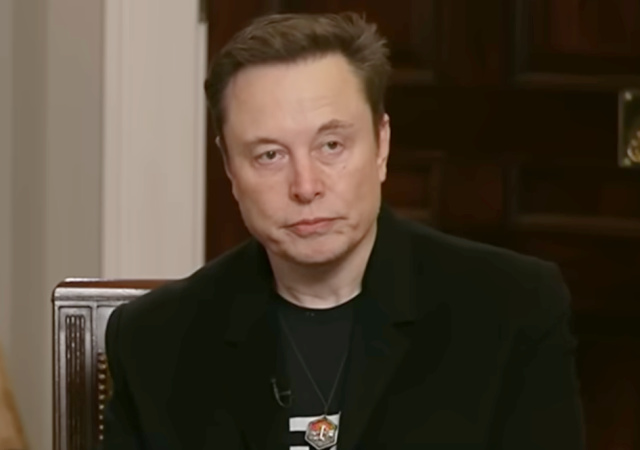
Legal Insurrection readers may recall that when I covered the national celebration over the SpaceX booster catch, I noted that the California Coastal Commission denied launch permits to the company because commission members are unhappy with CEO Elon Musk’s comments on “X.”
Musk was angered at this direct attack on his free speech rights and subsequently sued.
Now, this gaggle of California regulators has been forced to apologize to Musk after settling a lawsuit claiming the state agency was politically biased against the rocket company and its chief executive.
As part of the settlement, the California Coastal Commission acknowledged its members made “improper” statements about Musk’s political beliefs at a 2024 hearing on SpaceX’s Falcon 9 launch program.
“The commission agrees that it may not consider irrelevant factors in performing its function and specifically agrees that it will not take into account the perceived political beliefs, political speech or labor practices of SpaceX or its officers in considering any regulatory action concerning SpaceX,” the commission said in federal court documents filed Tuesday.
SpaceX had sued the commission over its opposition to expanding the launch schedule for Falcon 9 rockets from the Vandenberg Space Force Base on the Southern California coast near Santa Barbara.
California Coastal Commission apologizes to and settles with Elon Musk. Says it won't politicize regulation going forward.https://t.co/pofFicxsSS
— wretchardthecat (@wretchardthecat) May 1, 2026
SpaceX alleged in its complaint that the commission engaged in blatant political discrimination by refusing to follow the U.S. Air Force’s recommendation to raise the number of launches at the base north of Santa Barbara from 35 to 50.
Citing comments the commissioners made at the Oct. 10 public hearing, where they voted 6-4 against the Air Force’s proposal, SpaceX claims the decision was based on their dislike of Musk’s outspoken political views and, as such, was in violation of the right to free speech and due process enshrined in the First and 14th Amendments of the U.S. Constitution.
As part of the settlement, the commission also acknowledged it can’t require a coastal development permit for an expanded launch schedule that has been sanctioned as consistent with the U.S. Coastal Zone Management Act by the federal authorities in charge of the base.
The commission’s approval or disapproval of an expanded launch schedule for SpaceX’s Falcon 9 rockets at Vandenberg, which at the time was from 36 to 50 a year, is somewhat moot.
The coastal commission in October of 2024 voted against the U.S. Air Force’s finding that the increased launch schedule was consistent with California’s coastal management program. The Air Force, as allowed by federal law, disregarded the commission’s objection and proceeded with the expanded schedule anyway.
🚨 SpaceX Secures Apology from California Regulators Over Political Bias
California regulators have issued an apology to Elon Musk and reached a legal settlement with SpaceX, ending a lawsuit that accused the California Coastal Commission of political bias in its oversight of… https://t.co/y9BbIPQSK6 pic.twitter.com/C8dB7U9jR4
— XCorpHub (@XCorpHub) April 30, 2026
As a reminder, these are the comments that led to the lawsuit and provide insight into the kind of thinking these regulators use when considering what is best for the California coast.
Citing a reason for their rejection, Commission Chair Caryl Hart stated, “We’re dealing with a company, the head of which has aggressively injected himself into the presidential race.”
Commissioner Gretchen Newsom added, “Elon Musk is hopping about the country, spewing and tweeting political falsehoods and attacking [the Federal Emergency Management Agency] while claiming his desire to help hurricane victims with free Starlink access to the internet.”
Commissioner Mike Wilson piled on the anti-Musk commentary, saying of SpaceX, “This company is owned by the richest person in the world with direct control of what could be the most expansive communications system in the planet. Just last week that person was talking about political retribution.”
The SpaceX settlement is more than a personal vindication for Musk; it is a rare and pointed rebuke of California’s activist regulators, who openly weaponized their hostility to his politics and were forced to back down when dragged into a courtroom.
By apologizing for “improper” statements and pledging not to factor in “perceived political beliefs” or speech in future decisions, the California Coastal Commission effectively conceded what many of us have long suspected: its gatekeeping power over our shores has been distorted by ideological crusading rather than grounded in law, science, or the genuine interests of Californians.
Personally, I am looking forward to more launches from Vanderberg and, hopefully, more circumspection from state bureaucrats who oversee matters important to Californians and the rest of the nation. I have a good shot of getting about 50% of this ask.
Donations tax deductible
to the full extent allowed by law.




Comments
Heavens, Glad to hear that they will no longer consider perceived political beliefs in their decision making. An undefined, unenforceable criterion will clearly frighten them.
Nobody lost their job, lost a bonus, or had their livelihood destroyed. They will do it again. And again.
They simply do not care. TDS/MDS is madness. There was no punishment. It was not their money. It was ours. Believe me. They are still engaging in the exact same conduct a hundred times over.
In California’s lived experience, they identify as an independent country. Every so often they need a good jerk on their leash to remind them that they are not.
This is what I’ve been arguing on this forum for a long time, and that so many otherwise-reasonable commenters have vigorously denied — that even a decision that is entirely within a government entity’s discretion, and that it can make for almost any reason it likes, becomes unconstitutional when it’s made because the government doesn’t like someone’s speech.
And that’s why Mahmoud Khalil is going to win his case, when it finally gets to court. Rubio made it clear that the only reason he canceled Khalil’s visa was Khalil’s outspoken support for Hamas, and his organizing pro-Hamas protests.
He has not alleged that Khalil has broken any laws, because he hasn’t; he simply doesn’t like Khalil’s speech, so he canceled his visa, and that is unconstitutional. For over a year he’s kept the case out of the courts, but now that the administrative process is finally over Khalil gets his day in court, and I don’t see how he can lose.
All he needs to do is show Rubio’s own words, when he foolishly told Congress that he doesn’t see why, if he can deny someone a visa for the person’s speech, he can’t cancel a visa for the same reason. All Khalil has to do is play that for the court and his case is made.
You sure do love you some non American citizen terrorist lovers, don’t you and your wrong again. The Dept of State can deny, rescind or non renew a visa or green card for any reason under the sun and tell that person to get out and don’t come back. No one has a right to come to this country.
As this story shows, you are wrong. The State Dept can rescind a visa for any reason except for reasons that are unconstitutional. Having an unconstitutional motive makes the decision unconstitutional, exactly as we saw in this case.
The Coastal Commission can deny permission for launches for any reason under the sun, except the one it actually did have. Having that motive was the only thing that made its decision unlawful. How do you distinguish that from Rubio’s decision on Khalil?
Milhouse – I don’t pretend to have ANY actual knowledge in this area, but I can type a question into an A.I. app. Noting that A.I. is frequently wrong, here’s -part- of the answer I received. Essentially it says that Milhouse is occasionally wrong and is so in this instance. I recommend asking your favorite A.I this question so as to see the entire answer as it’s too long to fully quote here.
Can the U.S. government deny a visa for political speech reasons?
The “Unreviewable” Nature of Consular Decisions
A critical legal principle here is the doctrine of consular non-reviewability. Generally, courts will not review the decision of a consular officer to deny a visa unless the applicant can show that the denial was based on a violation of a specific constitutional right that applies to them or a clear violation of statutory law. Since non-citizens outside the U.S. generally do not have First Amendment rights regarding entry, courts rarely overturn denials based solely on political speech unless there is evidence of discrimination based on race, religion, or nationality that violates specific statutory prohibitions (like the prohibition on nationality-based discrimination in the INA, though exceptions exist for national security).
Hodge, you asked it the wrong question. Of course the government can deny a visa; no one disputes that. And the reason it can do so is, as your AI told you, because “non-citizens outside the U.S. generally do not have First Amendment rights”.
We are not talking about that, we are talking about canceling the green card of someone who is already here, for speech he engaged in here, where he does have first amendment rights.
As we have seen in this case, the Coastal Commission, which could have denied Musk’s launches for any other reason, acted unconstitutionally when they did so because of his speech. Had he been an alien and not present in the USA when he said those things, the denial of his launches would have been upheld because he would have had no constitutional rights. But since he does has constitutional rights, taking the exact same action against him for his speech is unconstitutional.
In exactly the same way, had Khalil been overseas and applied for a visa he could have been denied it for his speech, which would not be constitutionally protected. But he is here, and a legal permanent resident of the USA, and therefore has constitutional rights, so the exact same action that would have been valid for almost any other reason is unconstitutional when it’s done for his protected speech.
My understanding is that Khalil’s visa was revoked because he lied about his association with UNRWA along with other material facts on his visa application.
Now it is likely that Rubio had his application reviewed as a result of his speech, but I don’t think a visa review due to his speech is unconstitutional.
As I understand it he didn’t lie, he simply didn’t disclose some things that he wasn’t asked about and weren’t material.
Working for UNRWA would not be a material fact, because at least under the Biden administration that would not have been a reason to deny his application. The Biden administration supported UNRWA and funded it, so it would not have minded someone working for it. So even actually lying about it would not be a material lie and thus not grounds for canceling the green card.
F1 or F1n?
LOL. “New” F1.
Hama’s is designated bythe U.S. State Dept. as a foreign terrorist group. Khalil is a supporter of Hamas so does Rubio have the power to remove terrorist supporters or not?
No, he does not. The first amendment protects every person’s right to express support for terrorists or anything else.
However the constitution only protects people who are either US citizens or residents, or who are in the USA. It doesn’t protect aliens who are not here. Of course those people have the same unalienable rights that we do, but the constitution doesn’t protect their rights, so US courts can’t force the US government to respect them.
That and only that is the reason why the government can refuse a visa to an alien seeking permission to enter the USA, just because it doesn’t like his speech. A visa is a privilege, not a right, and it can be denied for any reason that is not unconstitutional. Retaliating against an alien for his speech that took place abroad is not unconstitutional.
But when that same alien already has a visa and is in the USA, the constitution does protect his rights. He has the right to speak his mind, and the government may not retaliate against him, even by doing things that are in its absolute discretion, such as denying his space launches, or cancelling his visa. You can’t draw a distinction between the two cases, Musk and Khalil.
Whether he wins his case first hinges on whether the Third Circuit will grant an en banc hearing. He is not likely to win on the jurisdictional issue, although there was a strong dissent by one of the three j panel judges who argued imminent harm. If the full court refuses to hear his case or he loses, he will have to exhaust his remedies through the Board of Immigration Appeals. The chances of the BIA overturning the order is low; the process will take time and since he cannot be deported yet, he benefits. If he loses there, he will have to apply for cert at the Supreme Court, and hope the Court takes the case. If the DOJ loses at the en banc hearing, then it would have to apply for cert. I lay my odds on the Court not taking the case if the Third Circuit hands hKhalil a loss under either scenario and deferring to the immigration judge who determined what was material and what was not on the application.
Typos, uggh I also meant the Court not taking the case or deferring to the judge if it does.
No, once the BIA is done and refuses him, he will then have the right to go to a real court, for the first time, and have his case heard as of right. He will not have to go straight to the supreme court.
I didn’t realize he has an appeal already at the Fifth Circuit. So the same process applies as with the Third Circuit, although different issues. If the Fifth Circuit rejects his appeal, he can ask for an en banc hearing there as well. I can’t see either case going his way. I expect he will appeal to the Suprene Court after denied at both circuits.
I expect he will win at the circuit level. No court has yet heard him on the merits, because he has to first exhaust the administrative process.
This is good news but a proper settlement would have saw the board members that were caught on camera attacking someone’s political beliefs in order to deny an action should be immediately fired off the board and prohibited from holding any other office in California Government.
Just like Colorado’s total war against Christian businesses, this will NEVER stop.
the only punishable by law people appear to be maga supporters
If anyone thinks I’m wrong on Khalil, they must distinguish his case from Musk’s. Tell us how you do that. If the secretary of state is allowed to revoke a visa even if his reason is the person’s speech, then why can’t the coastal commission deny a launch permit if its motive is the person’s speech?
Okay.
Musk is a full U.S. Citizen.
Khalil is not.
Musk’s speech “sin” was supporting the sitting U.S. president and one of the two major parties.
Khalil’s sin is supporting a designated terrorist organization, Hamas.
In Musk’s case, the California coastal commission was denying a permit to a company he happens to own. Punishing the whole industry (including Vanderberg AFB) due to one man.
Khalil’s case, he, and only he, is being punished.
In Musk’s case the commissioners flat out stated their goal was to “get Musk”.
Khalil’s case – The statements were about policy – why are we allowing terrorist supporters to rabble rouse in the U.S.?
In Musk’s case, there are no issues with his citizenship.
In Khalil’s case there are also issues with whether he lied on his applications. Yes, it was a lie of ommision.
Irrelevant. Anyone who is in the USA has the same freedom of speech and the same constitutional protection of his rights.
Again irrelevant. That’s viewpoint discrimination, which is explicitly prohibited under any first amendment analysis. The government may not distinguish between speech it likes and speech it doesn’t like. And the California Coastal Commission hates Trump just as much as Rubio hates Hamas. From the first amendment’s point of view both opinions are equal.
Again irrelevant. The company has no rights separate from its owner’s. Had the commission’s beef with Musk been constitutionally legitimate, then it would have had every legal right to deny his company’s launch permits in order to punish him.
That’s a distinction without a difference. In Musk’s case it was also about policy — why are we allowing Trump supporters to do business when it’s in our power to prevent them?
There was no omission unless he was asked about working for UNRWA. And even if he had been asked, and had outright lied, that wouldn’t be grounds for canceling his green card unless he told a material lie, i.e. one where the truth would have caused his application to be denied. Since there is no way the Biden administration would have seen working for UNRWA as disqualifying for a green card, even an outright lie about it would not have been material.
Remember that even when you are under oath in court, it is not perjury to tell an immaterial lie.
AAUP versus Rubio is a case favorable to Khalil if hevwere before the First Circuit. I see a different result in the Fifth, We won’t know for awhile. Whoever loses will appeal, so it will ultimately depend on if the Supreme Court takes the case. If there is a split in circuits, I think the Court would take it.
Most of the commas should be periods.
Actually one grrrr