


Good News on Bees: White House Installs Hive and Science Breakthrough Helps Support Colonies
First lady Melania Trump added a beehive in the shape of the White House to the South Lawn grounds. Meanwhile scientists create new nutritional supplement for bees that works wonders.
It’s been a while since I did an update on the status of bee populations.
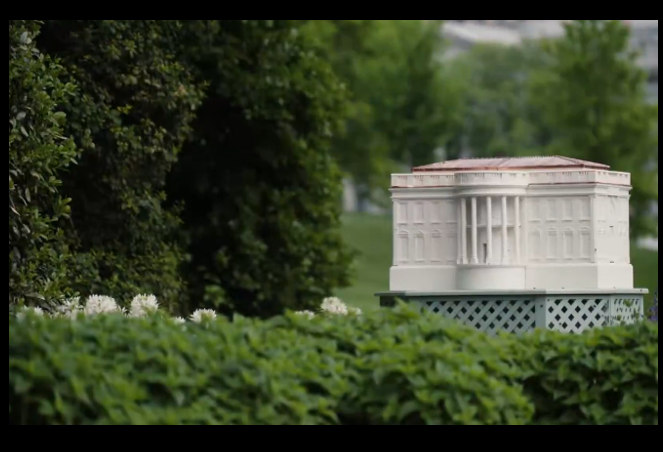
I have a fun update to share. A new decorative beehive has just been added to the existing White House beekeeping program on the South Lawn, expanding the resident honeybee colonies and their annual honey production.
It’s a buzzzzy time at the White House. First lady Melania Trump added a new, fully functioning beehive in the shape of the White House to the South Lawn grounds, the White House announced Friday, expanding the existing honey production and beekeeping program at 1600 Pennsylvania Avenue.
The new hive will add two new bee colonies to the two current existing colonies producing honey, the White House says, with thousands of bees increasing honey production by about 30 pounds a year. Currently, bees on the property are producing about 200 or more pounds of honey in a productive year. The honey is used at the White House as well as for donations to local food kitchens.
The White House executive residence staff designed the hive and its base, which was hand-crafted by a local Virginia artisan, the White House says. The Trust for the National Mall, the nonprofit partner of the National Park Service, is funding the beekeeping program’s expansion.
According to the White House, its honey has a light clover and basswood flavor, with citrus notes and is used by chefs in the Executive Residence in teas, salad dressings and desserts.
First Lady Melania Trump announced the expansion of the @WhiteHouse honey program with the addition of a newly installed and fully functioning beehive on the South Lawn.
Hand-crafted by a local artisan in the image of the White House, the beautiful, new hive will add two new bee… pic.twitter.com/Kcy0f3HY5f
— FLOTUS Report (@MELANIAJTRUMP) April 24, 2026
The White House honey sounds delectable.
As the White House organizes for the 250th anniversary of American independence, it is a great tribute to honey’s role in the Revolution. Honey actually helped colonists dodge British sugar taxes: because honey was produced locally, it became a tax‑free sweetener and even part of “country pay,” where some workers were partly paid in honey instead of cash.
Much like today, beekeepers in colonial America had to constantly fight off pests, mites, and moths, adding tremendous risk to the difficult task of managing bees and harvesting honey. As a result, most beekeepers were not full-time. Instead, farmers treated bees like any other livestock, just like goats, steer and chickens. Properly cared for, they could be a lucrative source of honey, beeswax and mead – sure to make a farmer popular with the neighbors.
But their were economic advantages as well. Since honey could be produced locally, it was a rare kind of sweetener that didn’t need to be imported, avoiding the high sugar taxes that were a major cause of the American Revolution. In parts of the colonies, some workers were even paid in honey as part of a simplistic barter system called “country pay.”
As the American economy grew, bees became a huge source of prosperity. Honey and beeswax became candles, shoe wax, lipstick, waterproofing, furniture polish, barrels, and medicine.
Finally, some good news to wrap up the latest buzz on bees. A recent report notes that scientists have developed a breakthrough “superfood” for honeybees by engineering yeast to produce the essential nutrients normally found in pollen.
A team of researchers led by the University of Oxford has developed a breakthrough food supplement that could help reverse the alarming decline of honeybees.
Working with Royal Botanic Gardens Kew, the University of Greenwich, and the Technical University of Denmark, the scientists engineered a diet that mimics the key nutrients bees normally get from pollen.
When tested, colonies fed this supplement produced up to 15 times more young. The findings were published in the journal Nature.
…Beekeepers often use artificial pollen substitutes made from protein flour, sugars, and oils. These provide calories but lack the sterols bees need, leaving colonies nutritionally deficient.
To fill this gap, researchers engineered the yeast Yarrowia lipolytica to produce a precise mix of six essential sterols.
Scientists uncovered the nutrients bees were missing — Colonies surged 15-fold https://t.co/JAcRkuOu0G
— Lifeboat Foundation (@LifeboatHQ) April 3, 2026
From the South Lawn to the lab bench, it seems the outlook for America’s hardest-working pollinators is now a bit brighter.
Between a White House that’s literally investing in the hive and scientists engineering practical solutions to nutritional stress, we’re seeing the kind of innovation and stewardship that actually makes a difference.
Maybe this will be the one environmental story that may finally have a sweet ending.
Donations tax deductible
to the full extent allowed by law.





Comments
John Belushi would have been proud… 🙂
Trump should be helping the bears, not the bees!
Waiting for a District Court King to issue an injunction because Melania didn’t get Congressional approval for the beehive.
Don’t worry. The bees have a tiny Situation Room in the basement of the hive. The above ground structure is just a ruse to throw you off the scent. 🐝
I want to see the bee bowling alley.
it’s only 6-pin
They had to replace the candlepin lane, only the moths were using it.
Waiting for the left to announce once Trump is gone, they’re going to tear down Melania’s bee house and destroy it for “democracy”.
Nice touch. Better than a carrot garden.
Schumers gonna have a conniption.
How DARE those Trumps destroy more lawn without going through congress. THEY THINK THEYRE ROYALTY!
Or: Those Trumps don’t care if more ground keepers get stung because some of them have brown skin and we know how they feel about people with brown skin.
OK. I’m done.
There’s a group in RI, maybe elsewhere, promoting “DONT MOW IN MAY” signs to help all pollinators when the flowers are blooming, including dandelions and other flowering weeds that might grow in your lawn.
I’ve done it the last couple years and am amazed at the butterflies, humming birds, and some bees attracted to them.
Plus, its a great excuse to not mow the lawn.
Also, it’s a super way to pit the HOA AWFL Karens against the enviromental-cases AWFL Karens.
New Dhimmi-crat complaint: “Melania Trump exploits bees’ labor, without providing them adequate compensation and benefits.”
Only if they’re killer bees that came across the southern border.
Embrace the stickiness of collectivism.
Beekkake?
Amazing that we would feed the. Bee’s useless white four and it was literally killing them
Honeybees are not native. They are a manufactured agricultural product.
Colony collapse is unfortunate, but it’s a cost of doing business.
Improving bee health will lower the cost.
They are one immigrant population that pulls its weight and enriches America, Michael missed out … What’s not to like if one is a leftist feminist? Matriarchal society ,,, classless society. Selfless dedication to one goal. Males are temporary. I would suggest looking at the horizontal bee hives versus the stacked style. Friends import bees each year… remember Delta screwing up millions of bees to Alaska? Anyway…. they get gallons of honey each year… Fireweed honey is yummy. There are now feral bees in Alaska.. I had one hive near the house. I bought a horizontal hive and will give it a go with feral bees… not only for the summer but to see if I can have them winter over . Another class act at the White House…. already buzzing anyway.
Many of you have already covered the jokes (?) about leftist reactions. I got up too late this morning.
I think this whole beehive thing at the White House is really great. For some reason I really enjoy bees. I like seeing them going about their work, and really don’t mind having one land on my arm. I’m just not afraid of them.
Any bets as to the White House shaped hive being removed when the communists take power again?
I think this is great.
However, the think the hive should have had a ballroom attached to it.
And why not? Bees dance!