


Radar Readings Suggest Possibility of a Second Sphinx — Archaeologists Remain Doubtful
Meanwhile, an exciting find of Old Kingdom tombs has been reported in southern Egypt.
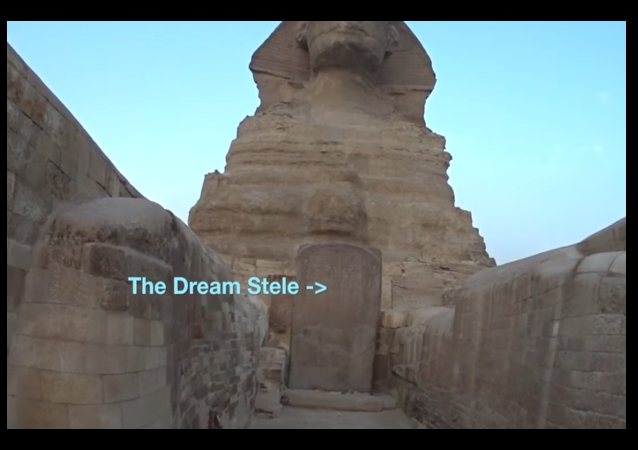
The Great Sphinx is one of the most iconic images associated with Egypt.
Therefore, it is not surprising that the claims of Italian researchers that they have potentially identified the presence of a second one underneath the Giza pyramid complex are creating a stir.
Radar engineer Filippo Biondi dropped this alleged historical bombshell during a recent episode of the “Matt Beall Limitless” podcast, the Daily Mail reported.
He said, “There is something very huge that we are measuring” beneath the Giza Plateau, which features the Great Pyramid of Khufu, the Pyramid of Khafre, the Pyramid of Menkaure and the Great Sphinx.
He and his team said they were tipped off to the alleged underground guardian by explaining that lines between the pyramids to the known Sphinx also point to a parallel mound under which the second feline facsimile supposedly resides — like a cryptic puzzle from an “Indiana Jones” movie.
Satellite images of the Giza Plateau have reportedly captured this dune, which the signal processing researcher claims measures approximately 108 feet tall.
“The first Sphinx sits slightly below the surrounding surface, in a shallow depression, so it is possible the second Sphinx could be hidden beneath this higher mound,” he said.
Second sphinx buried under sand suggests 'megastructure' below the Pyramids of Giza https://t.co/aUhgurefVt pic.twitter.com/kub3Kv5iJ0
— New York Post (@nypost) March 27, 2026
One of the supporting pieces of evidence that the Italian team notes is that the “Dream Stelae” between the paws of the Great Sphinx shows two animals.
The Dream Stela, produced by pharaoh Thutmose IV around 1401 BC, says that when he was a young prince, Thutmose rested in the shade of the Great Sphinx and fell asleep, and the Sphinx appeared to him in a dream.
In the dream, the god complained that drifting desert sand was burying his body and asked the prince to clear it away. The Sphinx then promised Thutmose that, if he did this, he would become king and rule all Egypt, with long life, prosperity, and dominion over the “Two Lands.”
The dream stelae now it's looking the same as the real one🥹 pic.twitter.com/wZm7O0Gmc7
— Mirko 𓇽✨💫🦋 (@sleepingAnubi) February 22, 2025
After he became pharaoh, Thutmose IV set up the stela between the Sphinx’s paws to record this divine promise and to present his kingship as granted and legitimized directly by the god.
However, it must be noted that the announcement has been met with skepticism.
Zahi Hawass, Egypt’s former minister of antiquities, dismissed similar assertions, stating that the area around the pyramids and the Sphinx has been extensively studied and excavated over decades without uncovering anything resembling a second monument. He has described the underground megastructure claims as “fabrications” lacking scientific foundation.
“The rumors suggesting the presence of columns beneath the Pyramid of Khafre are nothing but fabrications propagated by individuals with no expertise in ancient Egyptian civilization or the history of the pyramids,” Hawass said.
Experts also caution that the radar and satellite techniques cited by the researchers cannot reliably detect detailed structures at the depths claimed. Ground‑penetrating radar and related methods typically resolve features only a few meters below the surface, not massive carved monuments buried tens or hundreds of feet underground in dense limestone.
The Great Sphinx and Giza pyramid complex were built during Egypt’s Old Kingdom. A less dramatic, but authentic Old Kingdom discovery was recently announced: A cluster of Old Kingdom rock‑cut tombs was found at Qubbet el‑Hawa in Aswan, southern Egypt.
Inside the tombs, archaeologists found pottery vessels, jewelry, and amulets, with about 160 pottery vessels in just two of the burial chambers. Many of these pots are well preserved and inscribed with hieratic text, and early analysis suggests they were used to store liquids and grains, which could offer new data on the Old Kingdom economy and funerary practice.
An Egyptian archaeological mission from the Supreme Council of Antiquities uncovered the tombs in the Qubbat El Hawa area during the current excavation season, the ministry said in a statement.
The tombs date back to the Old Kingdom (2686 to 2181 BCE) and contain burial shafts and chambers. Archaeologists found pottery vessels, jewellery and amulets inside.
…In the statement, Mohamed Abdel Badie, head of the Egyptian Antiquities sector, said two of the burial chambers contained about 160 pottery vessels of different sizes and shapes. Most of them are well preserved and inscribed with hieratic text. Preliminary studies suggest they were used to store liquids and grains.
The mission also found a collection of bronze mirrors, alabaster kohl containers, beaded necklaces and amulets from the Middle Kingdom in the tombs’ outer courtyard. Excavations are continuing, the ministry said.
Like us, Egyptians could not get enough of their tombs https://t.co/1dCPm3Y9Mm
— Biblical Archaeology Review (@BibArch) March 23, 2026
Whether or not radar waves have truly uncovered a second sphinx, the renewed fascination with Giza proves that Egypt’s ancient wonders still have the power to capture our imagination. However, it is worth appreciating the efforts of more traditional archaeological practices.
Donations tax deductible
to the full extent allowed by law.







Comments
Swiss banking giant, UBS, has made a bid for naming rights to this Unidentified Buried Sphinx.
Fillips Bondis interview on Rogan
https://open.spotify.com/episode/6viS5R5VpncMRBUZHuFZLC?si=4N3cuBDwQM6bmo2Fr4kqqg&pi=jLQmOGpGT3SAp&t=1390
Radar hoaxes seem to be trending in Egypt these days. Someone is pushing the ethical limits to secure more funding.
The mystery has been solved. During their 1990 Hot in the Shade tour KISS featured a giant sphinx stage prop named “Leon” After the tour, they sent Leon the Sphinx to Egypt for burial. This second sphinx has now been located by radar.
You joke, but it reminded me of a real-life incident…
Between 1960s and 1990, Phoenix was the home of the second-largest model rocket manufacturer in the US, In the mid ’70s, they were successfully developing model engines with the same propellant as the Shuttle solid boosters, mass produced for the hobby market. One large production run was found to be faulty, with voids that would cause failures in flight. The fellow tasked with disposing of the product run simply trucked it way out into the Sonoran Desert and buried it.
No one predicted the housing boom that hit Phoenix in the mid ’80s. Developers tearing up the desert far north of Scottsdale unearthed the (fortunately unlabeled) black polymer propellant tubes, and panic ensued. The Arizona Republic printed an article about the discovery of a secret cache of explosives buried by some yet-to-be-identified patriot militia. I don’t recall whether the company fessed up, or just let the furor blow over.
Leave a Comment