


CDC Issues Spring Break Travel Warning as Polio Spreads in 32 Countries
In a bid to remain relevant after the US withdrawal earlier this year, WHO issued a statement about the recent spate of international polio cases.
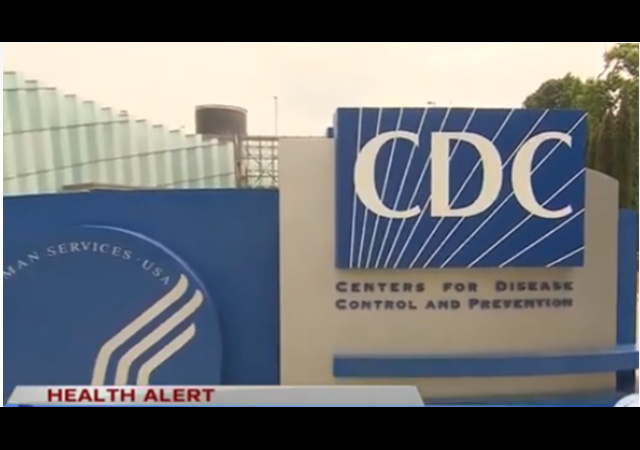
Just in time for Spring Break, the Centers for Disease Control and Prevention (CDC) has issued a travel warning as cases of poliovirus continue to rise worldwide.
Fortunately, not many of the affected countries are on the traditional list of spring break destinations!
In March 2026, the Centers for Disease Control and Prevention issued a level 2 travel advisory for 32 different countries across Europe, Africa, and the Middle East. The CDC issued the warning because the affected regions have cases of polio spreading among their populations. The following countries were named in the official advisory:
- Afghanistan
- Algeria
- Angola
- Benin
- Burkina Faso
- Cameroon
- Central African Republic
- Chad
- Côte d’Ivoire
- Democratic Republic of the Congo
- Djibouti
- Ethiopia
- Finland
- Gaza
- Germany
- Ghana
- Guinea
- Israel
- Niger
- Nigeria
- Pakistan
- Papua New Guinea
- Poland
- Senegal
- Somalia
- South Sudan
- Spain
- Sudan
- Tanzania
- United Kingdom
- Yemen
- Zimbabwe
CDC Issues Global Polio Travel Warning, Cruise Regions Included. https://t.co/UzHkFzMiYe #cruise #cruises #cruisenews #travelnews
— Cruise Hive (@CruiseHive) March 6, 2026
The CDC is urging travelers to check their vaccination status for polio.
Polio is a crippling and potentially deadly disease that affects the nervous system, according to the CDC. While many people infected with the virus don’t experience symptoms, some may develop fever, fatigue, nausea, headache or muscle stiffness. In rare cases, the disease can cause permanent paralysis or death, particularly if breathing muscles are affected.
The virus spreads primarily through contact with contaminated food or water, often due to poor hand hygiene. Because the virus lives in the feces of infected individuals, it can spread when people don’t wash their hands properly after using the bathroom.
For travelers, vaccination remains the best protection.
The CDC recommends that children and adults be up to date on their routine polio vaccines before any international travel. Adults who previously completed the full vaccine series may also receive a single lifetime booster dose if they are traveling to a destination where poliovirus is circulating.
As a reminder, the United States withdrew from the World Health Organization earlier this year.
The United States formally withdrew from the World Health Organization on Thursday, making good on an executive order that President Trump issued on his first day in office pledging to leave the international organization that coordinates global responses to public health threats.
While the United States is walking away from the organization, a senior official with the Department of Health and Human Services told reporters on Thursday that the Trump administration was considering some type of narrow, limited engagement with W.H.O. global networks that track infectious diseases, including influenza.
In a bid to remain relevant, WHO issued a statement during the 44th meeting of the Emergency Committee under the International Health Regulations (IHR or Regulations) .
The committee concluded that the international spread of polioviruses still constitutes a “Public Health Emergency of International Concern,” driven by ongoing wild poliovirus type 1 transmission confined to Afghanistan and Pakistan, continued detection in wastewater in Germany, and persistent circulating vaccine-derived poliovirus (especially type 2) outbreaks across multiple regions. One can only speculate as to why Germany is having issues (/sarcasm).
This committee cited insecurity, access constraints, surveillance gaps, and large pockets of under‑immunized children in areas such as southern Afghanistan, South Khyber Pakhtunkhwa and Karachi in Pakistan, the Lake Chad Basin, the Horn of Africa, Nigeria, and northern Yemen as reasons risks are high and response efforts are complicated. I suspect no amount of money or effort in any of those regions is going to control polio outbreaks, or the spread of any other pathogen that resides within those communities.
The committee issued plenty of temporary recommendations, including urging affected states to treat polio as a national public health emergency, strengthening immunization programs, tightening vaccination requirements for international travelers from infected countries… and securing adequate financing to sustain eradication activities.
“Sustaining eradication activities” is probably code for non-governmental agency funding. The US spent billions on all sorts of eradication activities. The only one that worked was smallpox, and that program wrapped up decades ago. WHO has been living off that glorious achievement for 45 years.
The current CDC approach is the correct one: get informed, assess your status, and make the vaccination decisions appropriate for you — especially if Gaza or Somalia are your go-to spots for spring vacation.
Donations tax deductible
to the full extent allowed by law.




Comments
Hmm. Could there be any correlations:
“Vaccine hesitancy within the Muslim community: Islamic faith and public health perspectives.
Ahmed R Alsuwaidi a,✉,*, Hamza Abed Al-Karim Hammad b,*, Iffat Elbarazi c, Mohamud Sheek-Hussein c,d,e
PMCID: PMC10038058 PMID: 36914409
ABSTRACT
Vaccine hesitancy is a growing public health concern that has fueled the resurgence of vaccine-preventable diseases in several Muslim-majority countries. Although multiple factors are associated with vaccine hesitancy, certain religious deliberations are significant in determining individuals’ vaccine-related decisions and attitudes. In this review article, we summarize the literature on religious factors linked to vaccine hesitancy among Muslims, thoroughly discuss the Islamic law (sharia) viewpoint on vaccination and offer recommendations to address vaccine hesitancy in Muslim communities. Halal content/labeling and the influence of religious leaders were identified as major determinants of vaccination choices among Muslims. The core concepts of sharia, such as “preservation of life,” “necessities permit prohibitions,” and “empowering social responsibility for the greater public benefit” promote vaccination. Engaging religious leaders in immunization programs is crucial to enhance the uptake of vaccines among Muslims.
KEYWORDS: Halal-based vaccine, religious leaders, Muslims, vaccine hesitancy, sharia
I was going to say much the same thing but you did so much better than I would have.
Distilled to a message even an airhead college sophomore could understand: you can’t get a suntan in a place that requires a burka.
And your chances of being beheaded are greater than your chances of contracting polio.
In that entire list, I see maybe five places where I would even CONSIDER traveling for Spring Break, and though I’d feel mostly safe in those, I wouldn’t expect to have a great deal of traditionally hedonistic fun.
Allah is satan
lefty :
this has nothing to do with immigrants
except of course the whts who massacred the only true americans..the indians
It has everything to do with immigrants — ease of travel, not vaccinated, ignorance, whatever.
And the 4 years of the regime let’s this garbage with the hopes of replacing their adopted voters.
. “I suspect no amount of money or effort in any of those regions is going to control polio outbreaks, or the spread of any other pathogen that resides within those communities.”
Clean water. I went o Africa, 4 countries and you had to drink bottled water everywhere. Aw many people getting water from horribly polluted wells, I looked down after he was done getting the water and
Couldn’t see the water through the trash.
Water plants, clean water available to the world… this is the way
And a long way to go it is
FTA … Except for 2 of the locales, the outbreaks are of vaccine-related polio, not wild polio. Maybe we should reconsider dead vs live attenuated vaccines. Maybe polio vaccine related polio being more common than wild polio has something to do with polio vaccine hesitancy. Maybe WHO hiding this and pushing their agenda instead of objective science makes things worse instead of better.
Lawdoc, Your comment reminded me that I had read about this issue before. I could not find the exact landing of my memory hole fall by I did find this,
“Lessons from the elimination of poliomyelitis in Africa”
https://pmc.ncbi.nlm.nih.gov/articles/PMC8544186/
This is not the first vaccine lead outbreak, there was another in 2020 just two weeks after Polio had been declared eliminated. Umm.
That was my first thought:
How many of these polio cases are actually vaccine-induced cases?
Funny how the fearmongers generally neglect to include this type of information….because “vaccine hesitancy”…..
Oh, look. Disease the western world nearly eradicated making a giant comeback in muslim countries and those that imported an invasion of third world muslims. What a shocker. What’s next, rape gangs and bombings? Oh, wait. That’s already happening.
I think I have a teeeny clue why we are seeing the reemergence of Polio. Put it in a column marked how the response to COVID went wrong.
“The immediate impact of the COVID-19 pandemic on polio immunization and surveillance activities”
https://pmc.ncbi.nlm.nih.gov/articles/PMC8531002/
So if I read this right, unsexy polio campaigns got neglected because of the “earthshaking importance” of dancing with the coronavirus of the week?
Maybe the reason the Muzzies don’t want the vaccine is because of what happened to Osama in Pakistan after the HUMINT we got from the folks who offered the vaccine to his household.